Corruption

Russia’s Tahrir?

From our UK edition

Just a couple of days after Vladimir Putin's electoral setback, Russian police have arrested a number of protesters, including veteran liberal politician Boris Nemtsov and the popular blogger Alexei Navalny. This is the umpteenth time that Nemtsov, the former deputy prime minister of Russia, has been manhandled by the Russian state. He also spent some time in jail at the beginning of 2011 and was subjected to strenuous treatment. But, it is unusual for Navalny to have been pulled in. He is an activist who's gained prominence among Russian bloggers and reformers. He is not "Russia's Erin Brockovich", as hailed by Time Magazine, and many of his recent remarks contain more than a dollop of Russian xenophobia.

Cameron’s letter to Watson

From our UK edition

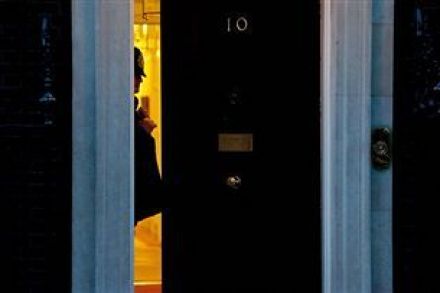
Tom Watson fired a barb at David Cameron during the oral questions following the prime minister’s statement. He referred to a letter about allegations against Andy Coulson he had sent to Cameron on 4th October 2010. The letter had gone unanswered and Watson wanted to know why. After struggling to answer for a while, Cameron eventually said he would respond, forgetting that he appears already to have done so. Here is his letter, just released by Downing Street: '1O DOWNING STREET LONDON SW1A 2AA 20 October 2010 Mr Tom Watson MP Thank you for your letter of 4 October. The Standards and Privileges Committee and the Home Affairs Committee have both announced inquiries. The Home Secretary has made an oral statement to the House.

From the archives – Yates had previous

From our UK edition

As Theresa May put it in an impressive statement to the House earlier, “These allegations are not, unfortunately, the only recent example of alleged corruption and nepotism in the police.” She then vowed to open an inquiry into these matters, which will stand in addition to the two already announced by the government. The panel will have plenty to look at, as Michael White explained in the Spectator a few years back. John Yates has previous, by Michael White, 10 March 2007 When I was a young reporter on the London Evening Standard nearly 40 years ago I spent a lot of time in the press room at Scotland Yard, not learning very much.

Does the trouble at FIFA really matter?

From our UK edition

The news that the votes which ended up with Russia and Qatar winning the rights to host the 2018 and 2022 World Cups might not have been model, clean elections is about as surprising as the news that the faeces discovered in the woods are believed to be of ursine origin. In the Independent today, Dominic Lawson cuts through the seemingly continuous media coverage of the matter to the question of whether it actually matters: “More to the point, given that there are no objective economic benefits to the nations holding such competitions (whatever the kudos to local political dignitaries such as Boris Johnson) shouldn't we as taxpayers feel grateful if other countries managed to offer more successful bribes? They, and not us, are the ones who've been Blattered.

EXCLUSIVE: The Yes2AV campaign’s dysfunctional strategy

From our UK edition

A few weeks ago, I revealed the curious conflict of interest faced by the organisation funding the case for electoral reform. Now, it seems that ‘Yes to Fairer Votes’ (YTFV) has adopted a very peculiar new tactic: let’s call it the ‘erectile dysfunction strategy’ - certainly, it’s one worthy of the most unscrupulous online pharmacists. The pro-AV gang have taken to spamming innocent members of the public and, worse, seem to be claiming that those they spam are ‘registered supporters’. Earlier, I spoke to Henry Chance who sits on Bitterley Parish Council in Shropshire. Though he never signed up to their campaign, he has been inundated with pushy correspondence from YTFV.

Developments in the Middle East are beginning to affect Europe

From our UK edition

After yesterday’s spontaneous clean-up operation on the streets of Cairo, protestors gathered at Freedom Square today to maintain the revolution’s momentum. There have been minor developments, with the army and its interim civilian administration dissolving President Mubarak’s gerrymandered parliament, preparing the way for an election in the future. The timetable for that election remains a mystery – something about which the international community, led by President Obama and assorted European leaders, is questioning without yet expressing concern.

Rome smoulders

From our UK edition

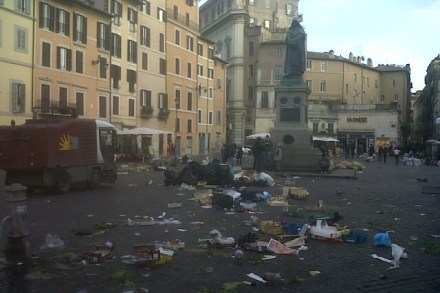
I'm visiting a stylish but tense Rome today, just as the Italian legislature has voted down a non-confidence vote in Silvio Berlusconi, Italy's mogul-cum-leader. "Rome is at war" my taxi driver told me and numerous demonstrations are going on. Ill Cavaliere, as Berlusconi is sometimes known, put in a strong defence of his record in the Senate and managed to coax, cajole and, some claim, bribe enough parliamentarians in the Chamber of Deputies to secure a small victory. He pulled not a Full Monty but a "Full Andreotti", using every trick and tactic in the book (and some scribbled in the margin too). For now, Berlusconi survives and can resume a life of partying pleasure-seeking and friendship with Vladimir Putin, which caused the political ructions in the first place.

What now?

From our UK edition

The BBC is reporting that the embattled Silvio Berlusconi has survived confidence votes in both of Italy’s Houses. The vote in the second House is understood to have been particularly close; apparently, there were just a couple of votes in it.   Theoretically, Berlusconi could soldier on. But his governing coalition is extremely fragile, and Berlusconi’s credibility is surely irretrievable. That said, the memory of Romano Prodi’s debacle of a government casts a long shadow and the opposition left remains totally disorganised by all accounts. Plus, Berlusconi was expected to lose both votes, particularly the second, so he now has a little momentum. Will it be a case of better the devil the Italian centre and right knows?

A crackdown on kleptocrats

From our UK edition

The law is catching up with Russia’s corrupt oligarchs Moscow’s White House is a fairly pleasing pile, at least by the standards of late Soviet architecture. Its colonnaded white stone façade enjoys handsome views over the Moscow River, and its interiors are a symphony in green malachite, light teak and gold ormolu, a mid-1990s decorating style best described as mafia rococo. From the corner offices, now occupied by the Prime Minister, Vladimir Putin, and his deputies, one can gaze over gridlocked traffic, enlivened by the blue flashing lights of government Mercedes as they charge down the reserved central lane. ‘Do you remember Mabetex?’ I asked one of Putin’s deputy premiers a few months ago.

Phil Woolas, four investigations and a funeral wreath

From our UK edition

It may take another week to discover if Phil Woolas has the right to challenge the election court ruling that destroyed his career. To the delight of his cadre of supporters in the House, judges have said there are "difficult questions to resolve" - not about the evidence of Woolas' campaign making "false statements", but about the specific application of the Representation of the People Act (RPA). Before the last die is cast, here are two quick contextual points. First, it is not just Harriet Harman who is keen to shut down this episode - many folks on all sides of the House of Commons would like to pretend skulduggery of this kind is exceptional. It is not - Phil Woolas' behaviour is far from untypical of northern politics.

The vanity appointments

From our UK edition

If this is what bespoke PR produces, save your money. The Standard alleges that Number 10 has hired 26 ‘civil servants’. These latter-day Sir Humphreys include: a photographer, a stylist, a PR consultant to run the PM’s personal website, a diary keeper for Sam Cam and another addition to the Behavioural Insight Team at the Cabinet Office. Now, I like a bit of behavioural insight as much as the next man. But most, if not all, of these recruits have worked together in CCHQ for years: how much more insight can they glean in their new surroundings? Open up the field, many say, which poses another problem because it may transpire that these positions were not advertised.

Coulson loosens the noose

From our UK edition

The New York Times has produced what last year’s Guardian phone-hacking campaign lacked: direct testimony against Andy Coulson. Sean Hoare and an unnamed former News of the Screws editor allege that the practice was widespread and that Coulson encouraged it. These new revelations have rightly forced the Met to re-consider the case. At present, the political furore surrounds the Met’s incompetence not just the allegations against Coulson. Bill Keller, executive editor of the NYT, has claimed categorically that the ‘police already have evidence that they have chosen not to pursue’.

Cricket’s dilemma

From our UK edition

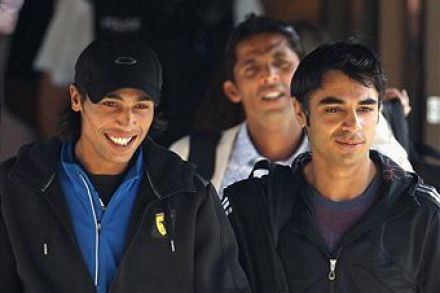
That the three Pakistani cricketers involved in the spot-fixing allegations have withdrawn from the rest of the tour means that the T20s and one day games will now definitely go ahead. If the accused had played, it would have been hard to see how the matches could have gone ahead and if they had, how they could have been taken at face-value by anyone. If the allegations against the men turn out to be correct, then the game will have to decide how to punish them. This is going to be a hard call. On the one hand, banning them for life would serve as a real deterrent to anyone tempted to get involved in future scams. But on the other, depriving Pakistan of two cricketers of the talents of Amir and Asif would further weaken Pakistani cricket.

Progress in Afghanistan?

From our UK edition

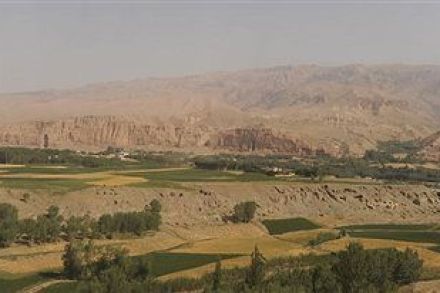
The Times (£) is reporting that ISAF has made a significant progress in pacifying the death circle around Sangin. The key, it seems, is driving a wedge between the tribal insurgents and religious insurgents foreign to Helmand: ‘British commanders believe that they are close to achieving a significant tribal uprising against the Taleban that could lead to the reintegration of hundreds of insurgents fighting around Sangin, the most dangerous place in Afghanistan. The number of violent incidents in Sangin has fallen by about 80 per cent in the past month. British commanders believe that this is partly the result of tribal leaders delivering on a promise to restrain tribal elements aligned with the Taleban and to expel the insurgents.

People loathe politicians – but do they loathe the political media too?

From our UK edition

One thing's for certain: the Lib Dems are coming in for greater scrutiny and attention from the media.  The covers of the Telegraph, Sun, Mail, Express and, yes, The Spectator are testament to that - even if some are less substantial than others.  But the question is: will this derail the Clegg bandwagon?  And, like Iain Dale, I'm not so sure. Iain's point is that some of the coverage is so spiteful that it will "serve to increase his popularity and position in the polls".  He adds that this would be a "sure sign that the power of the press to influence an election is on the wane".  He's right, and the theme he identifies is one of the major currents that's swirling about underneath the surface of this election campaign.

Paul Rowen and the anatomy of a Lib Dem expenses scam

From our UK edition

Now the Lib Dems are riding high in the polls, they attract greater scrutiny – which, to put it mildly, they do not always stand up to. In this week’s Spectator, we look at what can be seen as the Lib Dem vice. They may not charge for duck houses, or mortgages. But they do specialise in taking money intended for MPs expenses, and finding “innovative” ways of putting it into their war chest. Here is a hard example that may interest CoffeeHousers and it stars Paul Rowen, whom Mr Clegg visited last week – and declared “has done a great job”. He certainly has: for filling the Lib Dem political machine with cash.

The scene is set for a bust-up

From our UK edition

PMQs today is going to be the last time that Gordon Brown and David Cameron face-off against each other before the debates. Both men will be keen to score pyschological points against the other and to send their troops off in good heart. This means that PMQs will be an even noisier affair than usual. But both leaders will have to remember that if they behave in the debates as they do in PMQs it would be a disaster for them. The aggressive, shouty nature of PMQs would not translate well to the debates. One thing to watch today is what Nick Clegg does. He’s racheting up the rhetoric again, repeating his claim that the other two parties are corrupt.

The most corrupt parliament ever?

From our UK edition

It makes you proud to be British. Where resourcefulness and self-worth are concerned, our political class is unmatched. Former Sports minister and ambassador for the 2018 World Cup bid, Richard Caborn, has been stung by the Sunday Times soliciting influence for £2,500 a day ‘plus expenses, obviously’. Obviously Richard, we would expect nothing less from a man of your eminence. So to for former Defence Minister, Adam Ingram, who takes lobbying so seriously he charges VAT. I wonder how Colonel Gadaffi reacted to the 17.5 percent extra charge when Ingram facilitated the construction of a new Libyan defence academy? Hypocrisy is more ubiquitous at Westminster than Pugin.

Another shaming day for Westminster

From our UK edition

There was something particularly depressing about Harriet Harman’s statement to the House today on this lobbying scandal. The MPs involved have damned themselves more effectively than anybody else could and so the anger of the Commons lacked bite. Though, it was noticeable that the personal attacks on those involved tended to come from their own side not the opposition benches; proof that for many this is another episode in the long running battle for the soul of the Labour party. David Heath, the Lib Dem shadow leader of the House, made probably the best speech. He wanted to know why the House was always reacting to these problems rather than pre-empting them.

Carry on Karzai

From our UK edition

The New York Times reports that 15 Afghan ministers, past and present, are under investigation on suspicion of corruption. Obama’s and Brown’s unequivocal stance on the Mk.3 Karzai government leaves the president with no choice but to sacrifice a few lambs. However, if ever there’s a bolthole Karzai will scamper through it. Corruption is Afghanistan’s chief political currency and Karzai’s authority, such as it is, rests on backhanders. Oligarchic Afghan law decrees that ministers must be prosecuted by a specially convened court, and guess who controls judicial patronage? It’s an ingenious constitutional contrivance for seeming to do something but actually doing nothing. The recent history of Afghan special courts is hardly illustrious.