Coronavirus

Paradise lost: the decline and fall of Hampstead’s ladies’ pond

From our UK edition

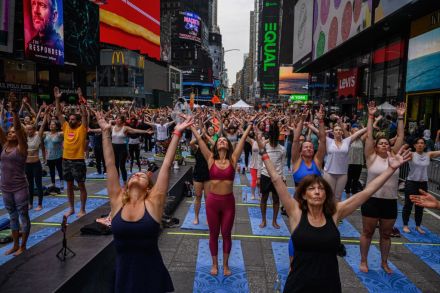
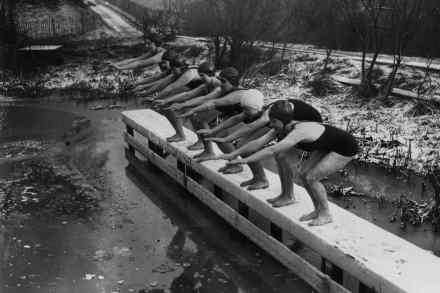
‘We’re surrounded by sociopaths,’ I whispered to my friend as I scanned the scene before me. We were sitting on a bench overlooking the meadow at Kenwood Ladies’ Pond on Hampstead Heath, and for the first time in my 20-odd years of visiting, I felt a sense of detachment: like I was an observer rather than a participant. A lot’s changed since the pandemic, but nowhere have I felt it more keenly than when I go for a swim at my beloved pond. This last, precious corner of paradise in our smog-filled city has been desecrated, and I am heartbroken. The ladies’ pond opened in 1925, and nearly 100 years on it’s still the sole women-only outdoor swimming amenity in the country. For most of that time it was a fun, free and flexible delight.
Portrait of the week: Hosepipe bans, England’s women win the Euros and a strike over dragons

From our UK edition

Home BP reported quarterly profits of £6.9 billion, its biggest for 14 years, after oil and gas prices rose steeply. Typical domestic energy bills were forecast by the consultancy Cornwall Insight to go above £3,600 a year in the coming winter. Under the family scheme for visas, 31,300 Ukrainians had arrived in the United Kingdom, and 72,700 under the sponsorship scheme. British Airways suspended new ticket sales for short-haul flights from Heathrow until at least 15 August, to meet the airport’s limit on the number of passengers departing each day of 100,000. On 1 August, 696 migrants crossed the Channel in small boats; in July the total was 3,683, and more than 17,000 so far in 2022.

China delayed its 2008 financial crisis until 2022

The year 2008 was consequential by many measures. The collapse of the US investment bank Lehman Brothers sparked a worldwide financial crisis. Yet China appeared to emerge out of it relatively unscratched after Beijing introduced a massive stimulus package in the world, about three times the size of the United States government's rescue program. Thanks to this expansionary fiscal policy and the easy credit that came with it, the Chinese economy quickly returned to its robust growth by growing 8.7 percent in 2009 and 10.4 percent in 2010. After 2008, the Chinese Communist Party leaders concluded that China "escaped" the financial crisis because of its outstanding leadership and the superiority of the Chinese political system over deeply flawed western democracies.

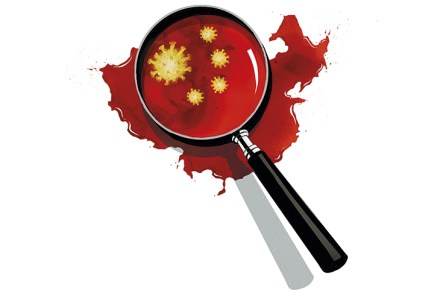
Has the lab leak theory really been disproved?

From our UK edition

The BBC carried a story this week with the headline ‘Covid origin studies say evidence points to Wuhan market’. Bizarrely the paper in Science they are referring to, by Michael Worobey and colleagues, says no such thing. It says: ‘the observation that the preponderance of early cases were linked to the Huanan market does not establish that the pandemic originated there’. All three of the scientists quoted in the BBC story have been highly dismissive about even discussing the possibility that the pandemic began as an accident in a Wuhan laboratory. Their vested interest is clear: they worry that the reputation of their field of virology would be threatened by such a discussion.

Trump’s pandemic failures will haunt his 2024 bid

In all likelihood, Donald Trump will soon announce his re-entry into the presidential stakes — a decision that, with the exception of Grover Cleveland and Teddy Roosevelt, is largely unique to American history. In so doing, he plans to build on the success he had in office, the Supreme Court's decisions on abortion and other matters, and the Biden administration's mistreatment of the economy, the border and the culture. But one thing that will absolutely prove to be problematic for Trump when it comes to a primary — which he will absolutely have, given the machinations of multiple politicians who take issue with his approach or who will seek to supplant him — is a defense of his own performance in the last year of his presidency, facing a global pandemic.

Why I won’t have a Covid booster

From our UK edition

In the news recently, we’ve heard from multiple Britons who’ve lost family members or sacrificed their own health to Covid’s not-really-vaccines. But anecdotes lack statistical heft. Sceptical viewers might too easily dismiss individual stories of the harms caused by the biggest inoculation rollout in history as freakish aberrations, mere coincidence (could relatives who happened to have been recently vaccinated really have died from something else?) or put it down to the cost of doing business at scale.

Requiem for the New York Karen

I saw the look on the Uber driver’s face as he dutifully started putting on his mask. “You don’t have to do that for me, buddy,” I let him know. “Thank God,” he smiled, and we were off. Sitting on the parking lot we New Yorkers ironically call the Brooklyn Queens Expressway I thought back to a hungover morning in the winter of 2020, when an email popped up amid my coffee and cigarette. It was from Lyft: there was a picture of me in it, maskless, and a stern warning not to do it again. What a difference two years makes. Today in Gotham, for all intents and purposes, Covid is over. To any sane person, this sounds like good news, but not to the New York Times: the Gray Lady is worried.

new york city karen

The decline and fall of eating out

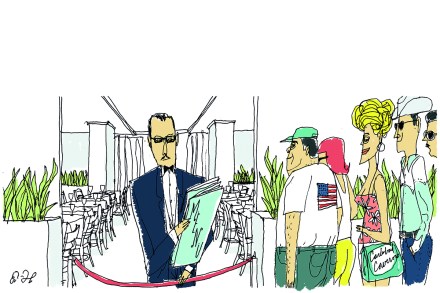
"Upgrade” is a term I associate with flying and getting a seat in the front cabin that you don’t pay for — except perhaps with “miles” and “points,” our version of Green Stamps. Upgrade’s predecessor from the era of rail travel was “step-up,” the term used by the Pullman Company when a passenger wished a better accommodation and space was available. You paid the conductor the step-up charge (in cash), and the porter dutifully toted your bags to your new compartment. Nowadays, it is no longer necessary to travel to upgrade. Just step out for lunch and add some “protein” to your salad. Upgrade! Marketing gibberish in the restaurant world is nothing new, but today it signifies the accelerating downgrade (sorry, no refund) of the whole business.

upgrade
warp covid origin pandemic

Why Operation Warp Speed worked

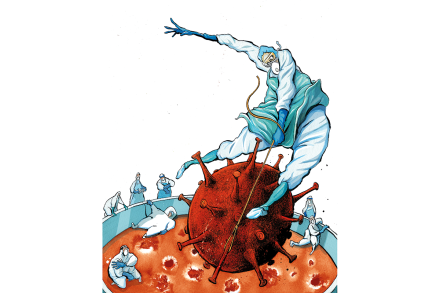
On Friday January 3, 2020, Dr. Robert Redfield, director of the US Centers for Disease Control and Prevention, phoned Alex Azar, secretary of the Department of Health and Human Services. With the words, “we have a problem in China,” Redfield broke to the secretary and those of us on his immediate staff news that was about to change the world. At the time, neither Redfield nor anyone else knew much about the characteristics of the virus that would become known formally as SARS-CoV-2, but he knew enough to sense that we needed to respond, and quickly. Thus began an odyssey of pandemic response actions, strategies and regulatory processes that would consume HHS, where I worked, along with much of the rest of the administration, until Inauguration Day 2021.

Portrait of the week: Scottish independence, striking lawyers and the end of Roe vs Wade

From our UK edition

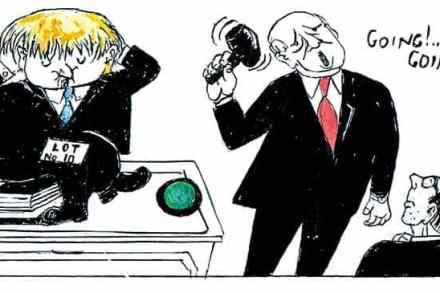
Home Ben Wallace, the Defence Secretary, said that military spending had to increase. Boris Johnson, the Prime Minister, reacted to the loss of two by-elections by saying ‘I’ve got to listen to what people are saying’, but did not resign. Oliver Dowden said ‘Somebody must take responsibility’, and resigned as a co-chairman of the Conservative party. Later Mr Johnson joked to reporters in Kigali, Rwanda, at the Commonwealth Heads of Government meeting: ‘I’m thinking actively about the third term.’ The Liberal Democrats won Tiverton and Honiton with a swing of 29.9 per cent from the Conservatives; the Conservative majority of 24,239 from the 2019 general election was the largest ever overturned in a by-election.

Stop trying to make the four-day workweek happen

Growing up in my little Pennsylvania hometown, most businesses would close early on Wednesdays around lunchtime. The idea was that they would re-open in the evening or on Saturday mornings to give people who couldn’t get away from their nine-to-five jobs the chance to shop, go to the bank, etc. To this day, a few places (the ones that are left) adhere to this tradition. They shut their doors at noon or so mid-week, everyone knows they do, and we plan our lives accordingly. It works in Philipsburg, a rural place with a few thousand loyal customers who have known for decades that Larry’s Saw Shop won’t be open Wednesday afternoon. So we get our chainsaws dropped off for service on Tuesday or first thing Thursday morning. That’s just the way it is. Life goes on.

Is there a new Covid wave – and do we need to worry?

From our UK edition

Is Covid back on the rise? The ONS survey shows increasing prevalence in England and Northern Ireland, with ‘uncertain’ results in Wales and Scotland. Scotland’s prevalence (2.4 per cent have the virus, according to the ONS) is almost double anywhere else. Hospitalisations are rising too: up 17 per cent since last week – though two-thirds are incidental (ie in hospital for other reasons). So is this a new Covid wave? ‘Early signs that Covid may be rising’, says the BBC. But to those following the data closely, the uptick has been expected for some time – as the natural side-effect of a new variant. It is not, in and of itself, cause for alarm. Omicron is still mutating: and now the sub-variants BA.4 and BA.5 have taken over.

Florida’s Covid numbers were obviously right all along

In the first year or so of the pandemic, the sane among us pointed to Florida as the best argument against strict lockdowns. Florida governor Ron DeSantis began the state’s first phase of reopening as early as April 2020 and declared all businesses open by September. Though critics declared him “DeathSantis” and media outlets flew drones over crowded beaches with ominous background music, Florida had some of the lowest Covid hospitalization and death rates in the entire country. Still, if you mentioned Florida's success, you would inevitably hear from some left-wing loudmouth that the numbers were cooked. It couldn't be possible to ignore the CDC, Dr. Anthony Fauci, New York governor Andrew Cuomo, Dr.

secession

The Harvard connection

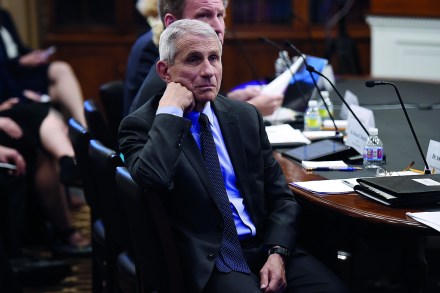
On the morning of Sunday February 2, 2020, Anthony Fauci, then in the middle of putting together America’s pandemic response, received an unusual email with a highly unusual request. The email, revealed as part of a tranche of FOIA documents requested by the Intercept, was from George Daley, the dean of Harvard Medical School. “Alan Garber, Harvard’s provost, and I met yesterday with a team led by Jack Xia, the CEO of China’s Evergrande Company, and Dr. Jack Liu, Evergrande’s chief health officer,” Daley wrote. Addressing the director of the National Institute of Allergy and Infectious Diseases as “Tony,” he asked for “whatever information you are willing to share on your current efforts to coordinate a response.

fauci
covid

Canceled for Covid

No one is getting canceled, we’re told. There’s no such thing as “cancel culture.” It’s just consequence culture. People say racist, sexist, mean things and so they deserve to be fired from their jobs, stripped of their standing in society, shunned by their friends. Should Hitler have been able to keep his job after publishing Mein Kampf, huh? If only life were that simple. But mob rule is, by definition, imprecise. The people who get canceled aren’t really Hitler, of course. And somehow, actual criminals find themselves forgiven far sooner than regular folk who say something out of step with the narrow set of guidelines proffered by the worst, wokest people in society. Still, there’s something different about the people canceled for their Covid views.

NPR memo: rat out your unmasked colleagues so we can fire them

Cockburn missed the office during the pandemic. After months cooped up, he was eager to return to the hustle and bustle, the gossip, the happy hours, the flirting with married secretaries, the subsequent HR meetings and informal warnings. Thank goodness, therefore, that Cockburn doesn’t work at NPR, the nationwide radio network headquartered right here in DC — as over there they seem much less keen for a return to normalcy. Cast an eye over this memo sent out to NPR employees regarding their in-office mask mandate: https://twitter.com/DylanByers/status/1527359877554704392 Station staff are reminded that: masking is still required, unless recording alone in a studio, working alone in an office with the door closed, or actively eating or drinking.

npr

From snowball fights to delivering birthday cards: Britain’s 136,000 lockdown penalty charges

From our UK edition

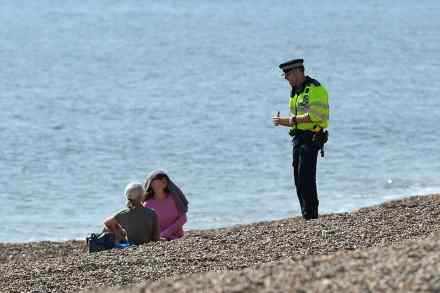
While Boris Johnson and Keir Starmer await the police’s judgment, there has been no end to the fines issued to others caught by their lockdown rules. At last count, some 136,000 fixed penalty notices had been issued in Britain. Durham police – a fairly easygoing force by Covid standards – have handed out just 1,090. Is it a bit mean to fine someone for having had a glass of wine or a beer at work? Perhaps. But no more so than the fines still being issued under the lockdown rules that Johnson and Starmer both voted through. A student in Leeds was fined £10,000 for organising a snowball fight. A beggar was fined £434 for having his cap out at King’s Cross station.

The truth about Britain’s Covid deaths

From our UK edition

There has been a considerable hoo-hah in the press about the recent World Health Organisation report estimating Covid-related deaths internationally during the pandemic. The measurement chosen has been ‘excess deaths’ – the difference between the number who died during the pandemic and the number who, on average, died in the same place before the pandemic struck. This has enabled us to compare the British figures with excess deaths across the rest of Europe per 100,000 of the population; and it appears we’re not, after all, at the top of the death-league, but near the middle. Though its methodology has attracted serious criticism, I was struck by the report.

Are China’s censors losing control of Shanghai?

From our UK edition

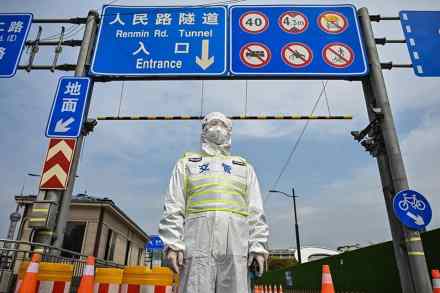
For weeks, Shanghai’s 25 million residents were assured that they would not be locked down. Then when the order came, the lockdown was supposed to last only seven days. It is now almost into its fourth week, and the government is struggling to suppress the chaos. Last week, 82-year-old Yu Wenming called his neighbourhood committee to say he had run out of medicine and food. Rather than reassure him, the local official despaired. ‘I am really helpless,’ he admitted. ‘I’m more sad than you are, because you are just one person. I see countless families…’ The elderly Mr Yu ended up comforting the worker. When a recording of their conversation was posted online, it was shared rapidly. By the time it was deleted, the damage was done.

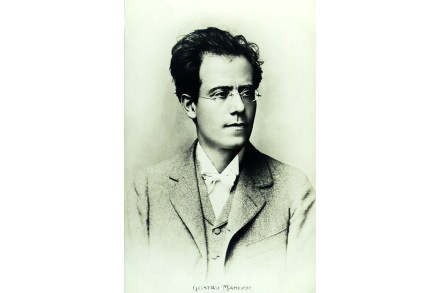
Of Mahler and mandates

On February 23, 1897 a slight Austrian eccentric walked into the parish church of St. Ansgar and St. Bernhard in Hamburg, affirmed his belief in the Holy Trinity, the one, holy, Catholic, and apostolic church, and received the sacrament of baptism. Some months later, Gustav Mahler was named principal director of the Viennese court opera — a post that would have been denied to him had he not converted from Judaism. One hundred and twenty-five years after his baptism, the Kennedy Center for the Performing Arts honored Mahler by performing his Second Symphony with legendary guest conductor Michael Tilson Thomas.

Mahler