Coronavirus

‘I think I’ve found a real paradise’: David Hockney interviewed

From our UK edition

David Hockney has died, aged 88. During lockdown in 2020, Martin Gayford, the author of ‘Conversations With Hockney’, spoke to him for the magazine. Spring has not been cancelled. Neither have the arts ceased to function. David Hockney’s marvellous exhibition at the National Portrait Gallery may be sadly shut, but the artist himself is firing on all cylinders. ‘I was just drawing on this thing I’m talking to you on,’ he announced when I spoke to him via FaceTime the other day. He was sitting in the sunshine outside his half-timbered farmhouse in Normandy. ‘We’re very busy here,’ Hockney explained, ‘because all the blossom is just coming out, and there’s a lot more to come. The big cherry tree looks glorious right now.

Is Xi Jinping’s time up?

From our UK edition

Stories about Xi Jinping’s father, Xi Zhongxun, are blowing up on social media. He died in 2002, so why the interest in him now? The weird fact is that Xi Zhongxun is being talked about in the West because he is not being talked about in China. Omission is the perverse way that one learns about what is really going on in the opaque world of Chinese Communist party (CCP) politics. China-watchers live on scraps. Xi Zhongxun was a big cheese in his own right. Born in the north-west’s Shaanxi province, he was an early member of the youth league of the CCP. After meeting Mao Zedong at the conclusion of the Long March, which ended up in his home province, he quickly rose through the party ranks.

The peril of playing with viruses

If a military team made a mistake during a nuclear war preparedness exercise and accidentally obliterated millions of people, you would not expect to find some of the very same people merrily admitting a couple of years later that they have carried out the very same kind of exercise with different live nukes and slightly fewer safeguards. Would you? That is roughly what I recently found out has apparently been going on in China. The Wuhan laboratory that conducted risky experiments on bat viruses at inadequate biosafety levels and almost certainly caused the pandemic has now revealed that it has done the same kind of risky experiments on another lot of horseshoe-bat viruses at low biosafety levels. Is accidentally killing millions not enough to give them pause?

The cultification of science

From our UK edition

My, how we all laughed. Thirty years ago the physicist Alan Sokal hoaxed a social science journal into publishing a paper ‘liberally salted with nonsense’ (in his own words) that ‘flattered the editors’ ideological preconceptions’. Its title alone gave away the joke: ‘Transgressing the Boundaries: Towards a Transformative Hermeneutics of Quantum Gravity.’ Little did we in the truth-seeking enterprise which is real science realise that verbose and vapid social deconstruction was coming for us too. In a new book, The War on Science, edited by the astrophysicist Lawrence Krauss, 31 scientists and scholars lament the corruption of their field by left-wing ideological nonsense.

Rand Paul needles fired CDC director Susan Monarez

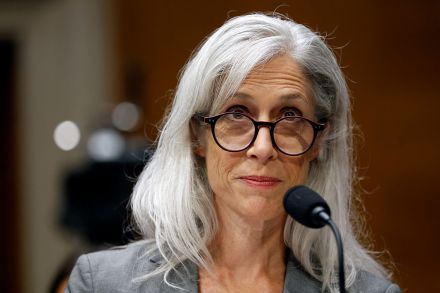
Kentucky Senator Rand Paul and recently-fired CDC director Susan Monarez exchanged “testy” words about vaccines in a Senate hearing today. That should come as little surprise. Paul has long been a vaccine skeptic, if not an outright opponent. The day started with Monarez telling Congress that RFK Jr. tried to get the White House to fire her because she refused to “rubber-stamp” approve a schedule of HHS vaccinations. “He just wanted blanket approval,” Monarez said. “If I could not commit to blanket approval to each of the recommendations I would need to resign.

Susan Monarez

Why America’s schools are failing

It seems that every few years America rediscovers that its children can’t read. In 2024, only 30-31 percent of eighth graders were deemed proficient in reading, and our numbers in history and math are even worse. Since 2020, no state has reported improvement across subject areas.It’s tempting to blame “the pandemic” for these declines, but in reality, Covid only accelerated trends that were already underway. For decades before 2020, US students were struggling to reach proficiency, and the truth is that the problem isn’t today’s culture-war skirmishes over pronouns, politics and school closures. It’s the more mundane question of how children are taught to read, to count and to remember.Let’s take phonics, for example.

Schools

Is RFK Jr. Trump’s Achilles’ heel?

Secretary of Health and Human Services Robert F. Kennedy Jr.’s quest to prove himself President Donald Trump’s most destructive Cabinet member continues apace.  On Wednesday, the Department of Health and Human Services abruptly announced that “Susan Monarez is no longer director of the Centers for Disease Control and Prevention.” She had been nominated to the key post in March, and actually served in it for less than a month. Shortly after that, Monarez’s lawyers issued a fiery statement asserting that she had neither been fired, nor resigned, and was being targeted by Kennedy for refusing to “rubber-stamp unscientific, reckless directives,” and help him weaponize “public health for political gain.

RFK Jr.

Can Trump end mail-in voting?

President Donald J. Trump, burned in 2020 at the height of Covid by some states’ shenanigans ranging from rule changes regarding absentee voting to registration requirements, is now on a quest to reform mail-in voting and traditional ballot tabulation machines. On August 18, the President posted the following missive on Truth Social: “I am going to lead a movement to get rid of MAIL-IN BALLOTS, and also, while we’re at it, Highly ‘Inaccurate,’ Very Expensive, and Seriously Controversial VOTING MACHINES, which cost Ten Times more than accurate and sophisticated Watermark Paper, which is faster, and leaves NO DOUBT, at the end of the evening, as to who WON, and who LOST, the Election.” Some of the voting practices the President has critiqued are unusual, to say the least.

Donald Trump

Jailed for embarrassing the Canadian government

At long last, the Ontario government’s drawn-out legal proceedings against the organizers of the Freedom Convoy is winding to a conclusion. In a move seen as surprisingly vindictive, the Crown is seeking minimum sentencing of seven and eight years of jail time respectively for leaders Tamara Lich and Chris Barber.As Conservative leader Pierre Poilievre posted on X, “Let's get this straight: while rampant violent offenders are released hours after their most recent charges and antisemitic rioters vandalize businesses, terrorize daycares and block traffic without consequences, the Crown wants seven years prison time for the charge of mischief for Lich and Barber. How is this justice?

Freedom convoy

The cult of safetyism harms us all

From our UK edition

Last month, the government announced that 16-year-olds would be able to vote at the next general election. If these new voters had wanted to inform themselves about political issues over the weekend, they would have found it strangely difficult. Take, for example, a recent speech about the rape gangs made by the Tory MP Katie Lam in parliament. It was blocked on X, alongside transcripts of the trials of the perpetrators. X users also discovered that they were unable to watch videos of protests against illegal immigration, unless they could prove they were over 18. Even if 16-year-olds are now wise enough to vote, the government believes there is information that they are too childish to know.

How Covid broke Britain

From our UK edition

It was at about this time, five years ago, that the workers at my (then) local farm shop began wearing plastic bags on their feet, over their trainers. This was because of a report somewhere that said the Covid virus hung about on the ground and then leapt, with great agility and cunning, on to people’s shoes, from whence it swiftly decamped to your bloodstream and killed you. We were still rubbing raw alcohol on to our hands wherever we went, if you recall, because whatever you touched harboured the virus. You couldn’t actually go in the farm shop but had to give your orders to the staff who manned a table out front, from which you were instructed to stand one metre back. People with short arms had difficulty reaching their groceries.

Forget AI, students are already cheating their way through exams

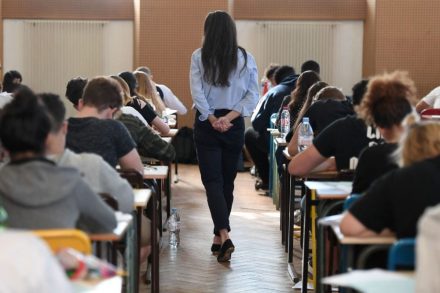
College professors like to fondly recall the days before ChatGPT. And, as you listen to them wax eloquent, you could be forgiven for thinking that AI has only just made cheating a widespread problem at American universities. But, ChatGPT hasn’t sparked a new surge of cheating – that began years ago, during the pandemic, when colleges moved their assignments online. Digital exams were born of necessity, but they have endured because of convenience. And so long as colleges rely on technology to administer exams, students will be one step ahead of their schools. I graduated college in 2021, after the pandemic, but before ChatGPT debuted. I knew a decent number of classmates who cheated, but that number ballooned over the course of my four years. And my peers across the country agree.

AI

Why won’t western scientists condemn Wuhan?

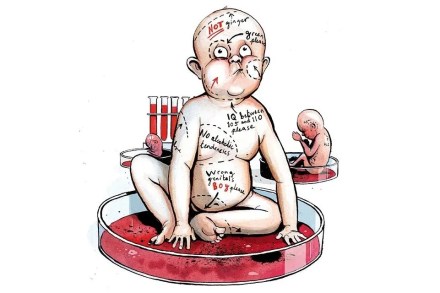
“I am officially launching my new company: Cathy Medicine. We will eradicate diseases in future generations through germline gene editing.” This is one of several strongly – and strangely – worded tweets sent in recent weeks from the X account of He Jiankui, a Chinese scientist who served a three-year prison sentence for gene-editing two human embryos. Those embryos are now people: seven-year old twin girls living under the pseudonyms Lulu and Nana. “Good morning bitches,” Dr. He wrote on April 16. “How many embryos have you gene edited today?” “Get in luddite, we’re going gene editing,” he added the next day. He also wrote: “I literally went to prison for this shit.” Is it the real Dr. He? The journalist Antonio Regalado, who first broke the story of Dr.

scientists

What the Singer Sewing Machine teaches us about student loan repayment

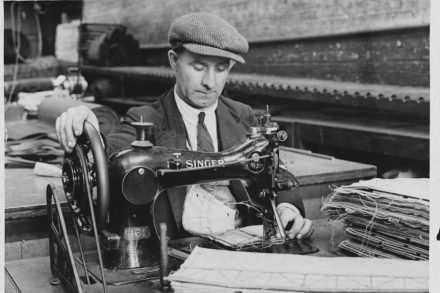
The Singer Sewing Machine Company is credited – that’s the right word – with popularizing the idea of the installment plan. Starting in 1856, a customer could buy a sewing machine for a very modest down payment and a rather lengthy commitment to further payments. Isaac Singer copied the idea from a piano company, but he turned it into a model of aggressive marketing to the average household. His “dollar down, dollar a week” slogan launched the era of consumer credit on a mass scale, and helped to marry mass production of durable goods to middle-class household economy. The idea spread quickly. By early in the 20th century, people could buy “washing machines, refrigerators, phonographs and radios” on the installment plan. The idea faced some resistance too.

singer sewing machine student loan

The Trump administration attempts to correct the record on Covid

Last Friday the White House launched, without warning (which is how they like to do things), what is essentially a truth and reconciliation inquiry into the origins of the Covid-19 pandemic. While this somewhat vanished into the fog of President Trump’s ongoing battles against the post-Cold War liberal order, it’s still a significant political event.  Dial your browser to covid.gov, and it takes you to a White House splash page, with the words LAB LEAK in all caps, and “The True Origins of COVID-19” below to the right. The letters “Covid-19” are in cursive, as though a baseball player had signed it as an autograph.

covid

We don’t live in an age of reason

When Tucker Carlson claimed to have been “physically mauled” by a demon in his sleep late last year, it was something of a bellwether: a sign that America’s cultural Right, now in the ascendancy, has persuaded itself to take a symbolic stand against the Enlightenment and the scientific worldview. Looking back on the 2010s and early 2020s, much of the American right now sees an era of secular hubris. The problems of the previous 15 years were put down to a naive faith in human reason; which was then confronted by dark and atavistic forces it couldn’t assimilate. The result had been all sorts of premodern terrors come again: plague, war, popular mania, social order overthrown.  The answer would have to be some sort of return of the spiritual.

reason

Were we right to lock down? Michael Gove vs Toby Young

From our UK edition

31 min listen

On 23 March 2020, then-Prime Minister Boris Johnson announced the unprecedented decision to put the UK into lockdown. To mark the 5th anniversary of that announcement this weekend, we have brought together our editor Michael Gove – then a cabinet minister under Boris – and our associate editor Toby Young – an ardent critic of the decision – to answer the question, was the government right to lockdown? Was the decision a necessary and reasonable health measure based on the available evidence at the time, or a significant and avoidable violation of civil liberties by a government that was meant to champion liberal freedoms? You decide. Produced and presented by Patrick Gibbons.

The New York Times finally comes clean about Covid

In June 2021, Jon Stewart appeared on The Late Show with Stephen Colbert and ridiculed people that dismissed the possibility of a lab leak origin for Covid. He quipped: “Oh my God! There’s been an outbreak of chocolatey goodness near Hershey, Pennsylvania. What do you think happened? ‘Oh, I don't know, maybe a steam shovel mated with a cocoa bean.’ Or it’s the fucking chocolate factory! Maybe that’s it.” At the time, former CBS News anchor Dan Rather called Stewart’s rhetoric “dangerous and short-sighted.” Washington Post columnist Paul Waldman fumed that “celebrities” shouldn’t be considered reliable sources of information and Forbes rounded up viewers uncomfortable with Stewart’s words.

lab leak covid

I was right – and Gove was wrong – on lockdown

From our UK edition

In an otherwise excellent article for the Sunday Telegraph last week about our government’s hopeless pandemic response, Dan Hannan made one comment I’d like to take issue with. He wrote: ‘For years to come, Britain will be poor, indebted and repressive because, in early March 2020, no one (with the exception of one brave Sunday Telegraph columnist, modesty forbids, etc) wanted to stand in the way of a stampede.’ In fact, he wasn’t the only one and, lacking Dan’s modesty, I’m happy to name myself as one of the first journalists to oppose the lockdown policy, along with Peter Hitchens, Allison Pearson, Ross Clark, Julia Hartley-Brewer and a handful of others. But Dan is right to emphasise how one-sided the debate was, with almost everyone falling in behind the government.

Will ‘The Seeker’ find the truth about the Covid lab leaks?

From our UK edition

At the Royal Calcutta Turf Club, where ghosts of British nabobs look out over the racecourse, my neuroscientist wife spoke to an audience of businessmen in support of Robin Sengupta, a pioneering Newcastle neurosurgeon. He has founded a world-leading Institute of Neurosciences in Kolkata where richer patients subsidise poorer ones. After a morning meeting doctors and patients, he showed us the land where an ambitious new medical school will soon emerge from the rice paddies and crayfish farms.