Cornwall

Two small boys in the sea

From our UK edition

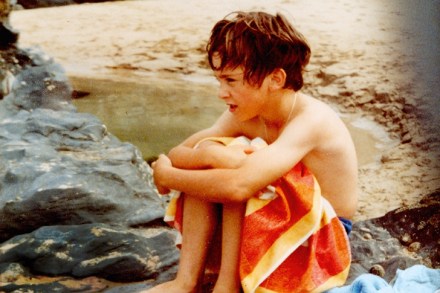
An estimated 400,000 people drown annually worldwide, 50 per cent of them children. Roughly 150 drownings occur in the UK. In the 1970s, the RNLI station at Port Isaac on the north Cornish coast responded to ‘about 30 shouts a year’, reckons the novelist Richard Beard. On 18 August 1978 at 2.30 p.m. a maroon rocket went up with a great whoosh 800 feet into the summer sky to summon the coastguard. In the language of the rescue services, there was a ‘swimmer in the water’. Ninety minutes earlier, Beard, then aged 11, was on a nearby beach with his brother Nicky, aged nine. On holiday from Swindon, the Beard family had had a picnic and had finished playing a game of beach cricket and were packing up to leave.
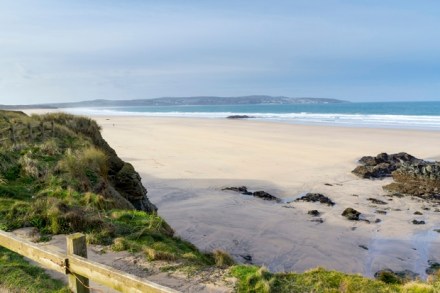
Hurrah for Cornish holidays!

From our UK edition

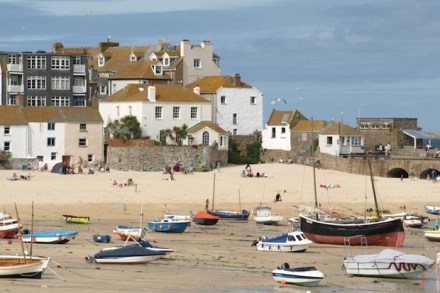
After the misery of going abroad for the summer holidays for the past few years, I’m now happily back in Cornwall. Caroline took some persuading. We used to come every year, but the combination of bad weather and cramped accommodation became too much for her. After a bad experience in a mobile home three years ago, she vowed ‘never again’ and we spent a week in Portugal in 2014 and then ten days in France last year. That was purgatory. The last straw was being un-able to order fresh fish at a seaside restaurant in the Languedoc. To get Caroline to reconsider, I had to splash out on a luxurious ‘chalet’ overlooking Gwithian Beach near St Ives.

Magic at St Michael’s Mount

From our UK edition

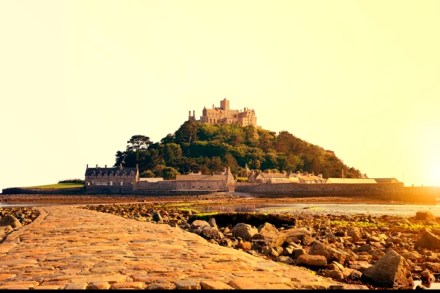
The Sail Loft is under a castle on a mountain on an island in the sea; for that, I could forgive it anything. It is on St Michael’s Mount in Marazion near Penzance, an island so charming and devoid of internet connection it almost strips me of words. If I lived here I would not write again; I would not need to. I would be happy, and who judges fish when they are happy and finds it not enough? It is accessible along a granite causeway for four hours each day — then the path goes back to the sea and one must take a boat; it is more ruthless than magic. I wish I lived here, and could drown my neighbours, who are customers at the betting shop in Camden. We do flood them, but only with the shower, and grouting does not have the malevolent possibilities of the Celtic Sea.

Europhiles shouldn’t be surprised that Cornwall supports Brexit

From our UK edition

As a proud Cornishman I was delighted earlier this month to be chatting to a young American fashion designer who excitedly told me about his growing label. 'We’ve just taken on two students from Foolmoof, that’s how you say it right?' I think he meant Falmouth whose university - specialising in creative industries - has been one of the recent success stories in Cornwall. I’ve also come across graphics designers for Pixar in the badlands west of Penzance. They have been using the superfast broadband network to pass their animations back and forth with LA. For all its Doc Martin appeal, Cornwall is not a parochial backwater, and thanks to European Union investment, stories like the ones above are becoming more commonplace.

In the soft Cornish air, with the pressure off, I caved in

From our UK edition

Just when I was beginning to think I’d had enough, I was offered a free week in a caravan. I took it like a shot, threw a few shirts in the boot of the car, and buggered off down to Cornwall. I arrived in darkness and couldn’t find the electricity switch. But I was so tired I simply climbed into a sleeping bag by the light of my phone and fell asleep. I was woken by sunshine and the cawing of rooks. At this caravan, there is no internet, no phone signal for miles, no telly, no radio. And the air I swear is soporific. It was like crawling out of my sleeping bag on a different, quieter continent.

Our holiday in a French Butlins

From our UK edition

I’m currently at a French campsite in the Languedoc, having been persuaded by my wife that it would be a good place to spend our summer holiday. She described the campsite as ‘a French Butlins’, which she knew would appeal to me. If I can’t afford to stay at the Hotel du Cap, which I can’t, I’d prefer to be at the bottom of the social pyramid rather than somewhere in the middle. But her main argument was that it would be incredibly cheap —cheaper, even, than renting a house in Cornwall. We’re paying about £100 a day for a ‘chalet’ that sleeps six. There was simply no way we could be disappointed. Well, yes and no. I’ll start with the positive. The staff are remarkably well-mannered.

Your problems solved | 13 August 2015

From our UK edition

Q. Is there a polite way of not letting someone hold your baby? I love giving mine to people to hold but I don’t like it when he gets handed back to me stinking of someone’s perfume. Is there a kind way of keeping him away from anyone I don’t like the smell of, ideally without giving my son a bad reputation? — Name and address withheld A. Everyone will agree that the smell of clean baby trumps any other and that such a smell should never be overwhelmed. But there is no way of politely preventing handling by the over-perfumed. You must put up with it. After all, babies are changed three times a day so you won’t have to suffer for long and it is a small price to pay for the joy you grant to the handler.

Something fishy

From our UK edition

Selfridges is skilled at making things that are not hideous (women) look hideous (women dressed as Bungle from Rainbow or a tree, after shopping at Selfridges). So I was not surprised to discover that it has summoned a ‘pop-up’ restaurant to its roof. It is called Vintage Salt and it is based on a Cornish fishing village. Not a real one, such as Newlyn, but a fake one, such as Padstow, which is based on Selfridges anyway. Selfridges shoppers do not want reality but a half-remembered contortion of something they read in Vogue while having their hair dyed banana yellow in St John’s Wood High Street in the company of a chihuahua smarter than they are. The portal is an express lift in Fragrance.

North Cornwall

From our UK edition

In a documentary filmed at the end of his life, Sir John Betjeman, who lived in the village of Trebetherick on the Camel estuary in north Cornwall, famously regretted not having had more sex. That problem doesn’t seem apply to today’s party crowd in the area. Nearby Rock and Polzeath are thronging with bingeing public-school teenagers, traffic jams of gleaming 4x4s, and new-build houses with plasma screens, wet rooms and all that hedge-funders require. David Cameron has body-boarded at Polzeath on recent holidays, his security detail bobbing like seals around him. For children of the 1960s, memories of frugal holidays in north Cornwall include pasties, fathers in baggy shorts, and limbs turning blue with cold.

Shape-shifter

From our UK edition

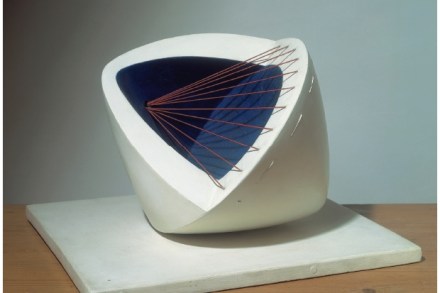
In the last two decades of her life, Barbara Hepworth was a big figure in the world of art. A 21-foot bronze of hers stands outside the UN headquarters in New York, emblematic of her friendship with secretary-general Dag Hammarskjöld — a Hepworth collector — and of her international fame. This was how a modern monument looked half a century ago: abstract but organic, romantic but starkly simplified. Since Hepworth’s death, however, her status has become less clear: was she a towering giant of modern sculpture or relatively minor, a slightly dreary relic of post-war Britain? Barbara Hepworth: Sculpture for a Modern World at Tate Britain does not quite supply the answer. But it does throw some revealing sidelights on her art and career.

Diary – 11 June 2015

From our UK edition

Down here in west Cornwall, the days are long and summer is on the wing. Like the Tories in Scotland, the tiny population of Cornish choughs continue to defy extinction, clinging on like crazy with their little red feet, simply refusing to die out. Six nests with chicks have been monitored this year, while the birds themselves enjoy a higher level of security and protection than a Russian mafioso. I am dying to see one, forever scanning the cliffs with my binoculars, trying and failing not to be a holiday cliché. Middle-aged woman in Breton top, bakes her own bread and stares at the sea for hours on end. Chough spotting! Wildflower pressing! What is happening to me? I have become the person I used to hate; someone who takes photograph of sunsets and obsesses about birds.

Funny things happen on the way to the Scillies

From our UK edition

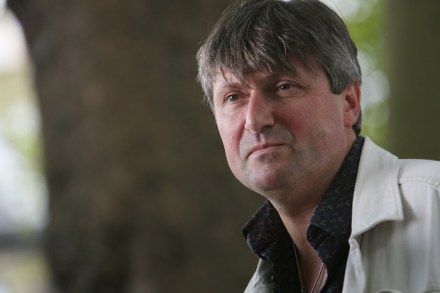
It’s a real skill, writing about a journey where nothing ever happens. We shouldn’t be surprised that Simon Armitage is so good at it: he’s a poet, and therefore used to reporting on nothing happening, or rather spotting the little things that are always happening but the rest of us are too busy to notice. His chosen route this time — the South West Coast Path through Somerset, Devon and Cornwall and on to the Scillies — is normally praised because it gets you away from everything. Yet while he’s there Armitage discovers … well, maybe not everything, but certainly a very entertaining book’s worth of stuff.

Poldark review: drama by committee

From our UK edition

By my calculations, the remake of Poldark (BBC1, Sunday) is the first time BBC drama has returned to Cornwall since that famously mumbling Jamaica Inn — which may explain why even the lowliest yokel here tends to project from the diaphragm. Leading both the cast and the diaphragm-projection is Aidan Turner as Ross Poldark, initially seen as a British Redcoat in a wood rather unconvincingly captioned ‘Virginia, America, 1781’. The short scene that followed efficiently established that he had a rackety past and some politically radical ideas, before the American rebels attacked, leaving several extras dead.

The hotels trying to turn Cornwall into Kensington

From our UK edition

Mousehole is a charming name; it is almost a charming place. It is a fishing village on Mount’s Bay, Cornwall, beyond the railway line, which stops at Penzance, in an improbable shed; I love that what begins at Paddington, the most grandiose and insane of London stations, ends in a shed. The Spanish invaded Mousehole in 1595 but Drake’s fleet came from Plymouth and chased them away; nothing so interesting has happened since; just fishing, tourism and decline. Now there are galleries and restaurants and what the Cornish call ‘incomers’ buying cottages, in which they place ornamental fishing nets after painting everything white. (For something more ‘authentic’, you can visit the Old Ship Inn on the harbour.

The bonkers (and not-so-bonkers) theories of what the pre-historic people of Cornwall believed

From our UK edition

Philip Marsden’s book is about place. He makes a distinction between place and space. In his mind ‘place’ is something resonant, evoking a connection with the land and its meaning. Marsden is obsessed with pre-history and the beliefs and practices of the earliest inhabitants of Cornwall. He cites with approval someone’s judgment that written history is a palimpsest and he is demonstrably eager to see what was written over. Although his area of special interest is Cornwall, he describes expeditions to other European countries in search of a kind of kinship of belief and practice among them.

When the Welsh go it alone, blame me

From our UK edition

Oh dear. I think I may have inadvertently contributed to the dissolution of Great Britain. I’m not claiming sole responsibility. In due course, when the blame game begins, I’ll play second fiddle to the party leaders, Gordon Brown, Eddie Izzard and successive generations of carpet-bagging aristocrats. Nevertheless, when the rise and fall of the British Isles is written, I’ll be deserving of a minor footnote. I’m talking, of course, about the imminent secession of Wales from the United Kingdom. I say ‘imminent’, but it’s contingent upon a ‘yes’ vote in next week’s Scottish referendum, which isn’t yet a foregone conclusion.

We need more opinionated English eccentrics making documentaries like, ahem, me…

From our UK edition

Is it just me or are almost all TV documentaries completely unwatchable these days? I remember when I first started this job I’d review one almost every fortnight. Always there’d be something worth watching: on the horrors of the Pacific or the Eastern Front, say; or castles; or Churchill; or medieval sword techniques. But now it’s all crap like The Hidden World of Georgian Needlecraft or In The Footsteps of Twelve Forgotten South American Civilisations Which All Look The Same or A Brooding, Long-Haired Scottish Geographer Shouts From Inside A Volcano Why Climate Change Is Worse Than Ever. The presenters have got more annoying too. I mean, I’m not saying some of the old ones weren’t infuriating with their hand-waving and tics and mannerisms and wheezings.

One day I was always going to have to eat quinoa. It might as well be now

From our UK edition

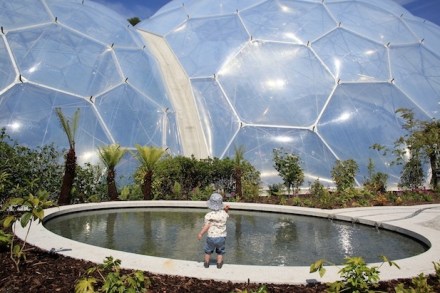
As a rule, I tend not to frequent places where there is a sign on the door saying ‘no sharps’. But I thought I would make an exception for the Eden Project. Surely, I thought, as we walked from the ‘Banana’ car park to the ticket office, they must mean sharps as in penknives, or something. The number of people in the queue wearing sandals made from reconstituted tyre rubber was a further warning sign but I chose to ignore it. As we stood amid the rainbow-striped cardigan-wearing clientele and their brightly dyed hairstyles, the builder had a look on his face that said: ‘I think we’ve wandered into the wrong sort of place for us.’ My parents insisted on buying the tickets.

Not quite romantic fiction, or literary fiction, or commercial fiction – but still quite good

From our UK edition

Elements of Raffaella Barker’s new novel, her eighth for adults, suggest commercial fiction: a narrative that oscillates between the aftermath of the second world war and the present day, and two failsafe locations, Cornwall and the Norfolk coast. But From a Distance is not commercial fiction. Barker’s narrative is sparingly studded with quotations, but this is not literary fiction either. There is a strong love interest, which does not blossom into romantic fiction. Barker’s novel is a hybrid, enjoyable, ultimately heart-warming. It lacks the freshness and charm of the earlier Hens Dancing, but recalls some of its vividness and forensically detailed scrutiny of family life. In 1946, Michael, a demobilised soldier, avoids returning to his prewar life.

Kirstie Allsopp’s diary: Why I’m terrified of Woman’s Hour

From our UK edition

If you haven’t scuffled you haven’t lived, and our local scuffle is the best of the best. A scuffle is a sort of off-road bumper cars in 4x4s, and it’s one of the highlights of the summer. Our car, The Scuffle Pig, was on her third outing this year. We thought she’d been dealt a fatal blow in 2011, when a foolish friend encouraged a fellow scuffler to get her out of a dip by ramming her. The back windscreen was smashed, and I had to leap out and strip my then 12-year-old stepson down to his underpants in front of numerous spectators in order to get rid of the glass. He was remarkably good about it, though. Happily the Pig rode again, sporting four new off-road tyres which cost more than she did.