Consumerism

My Memorial Day pilgrimage to a Pennsylvania Walmart

Here in the US, Memorial Day – which falls on the last Monday in May – is, officially, an occasion for mourning and honoring military personnel who have given their lives in service to this great country. Unofficially, it is an occasion for charred hot dogs, 24-packs of Bud Light and nationalistic merchandising usually confined to airport gift shops. In our household, however, Memorial Day marks something different entirely. It’s the day we make our annual pilgrimage into the heart of consumer capitalism: a Walmart in East Stroudsburg, Pennsylvania. By now you might know that I live in Manhattan. You might, therefore, be wondering why exactly we’ve adopted this strange ritual, necessarily involving a rental car and gridlocked traffic on the George Washington Bridge.


The stealth philanthropy of buying a Range Rover

From our UK edition

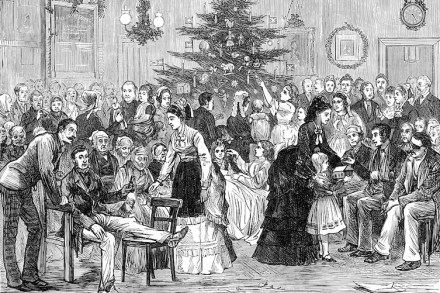
Even though Christmas is over, I’ve been thinking about the season just gone. There is a tradition of complaining about its commercialisation, portraying Christmas as a grotesque manifestation of consumer excess. But it’s strange to use our seasonal extravagance to attack consumer culture. That’s almost diametrically wrong. What Christmas really shows is that consumer capitalism is doing a cracking job: it’s the rest of the economy that’s a mess. Consider food. The median family today, even if they’d spent December shopping at Fortnum & Mason and Daylesford Organic, would have spent a lower proportion of their income on food than an equivalent family would spend just to survive in the 1970s. Most consumer durables have similarly plummeted in price.

Why religious societies succeed – with Rory Sutherland

From our UK edition

35 min listen

Advertising guru – and the Spectator's Wiki Man columnist – Rory Sutherland joins Damian Thompson for this episode of Holy Smoke. In a wide ranging discussion, from Sigmund Freud and Max Weber to Quakers and Mormons, they discuss how some religious communities seem to be predisposed to success by virtue of their beliefs. How do spiritual choices affect consumer choices? Between Android and Apple, which is more Protestant and which is more Catholic? And what can modern Churches learn from Capitalism? Produced by Patrick Gibbons.

Is China riding for a fall?

From our UK edition

The West gets China wrong. Spectator readers know the country as a vampire state feasting on foreign intellectual property and spewing out phony economic data in its thirst for wealth and power. It certainly is these things – but it also isn’t. It is more complex, and telling only half the story is ultimately self-defeating. While there is plenty to appal us about modern China, there is also much that we can learn from it. In Breakneck, Dan Wang reveals both sides of the ledger. ‘Too many outsiders see only the enrichment or the repression,’ he complains. His ‘big idea’ is that China is an engineering state, building at breakneck speed, whereas the United States is a ‘lawyerly society’ that has forgotten how to get stuff done.

Slow down, shop less and style more: lessons from Allison Bornstein

That Allison Bornstein’s family all operate in care is no surprise. True, Bornstein, thirty-five, a stylist and rising social media star based out of New York and Los Angeles, is the odd one out. Her father and brother are doctors, her grandfather is a psychoanalyst and her mother was once a therapist. But the services she offers are not so different from the shrink’s couch. Bornstein has created a dedicated following on TikTok and Instagram for her tips and scripted reels, in which she implores us all to craft self-love around our clothes. To slow down, shop less, and style more. And in the world of stylists and influencers, who make careers out of telling people to consume, consume, consume, Bornstein is quietly radical.

allison bornstein

Don’t make Super Bowl Monday a national holiday

Two Democratic lawmakers in Tennessee have introduced a bill that, if passed, would make the day after the Super Bowl a statewide holiday. The initial version of the bill also proposed removing Columbus Day as a holiday. With Republicans dominating the state legislature, two Democrats offering a popular, seemingly apolitical holiday in exchange for eliminating a more controversial, clearly politicized one was unlikely to fly. So it's unsurprising they've dropped that stipulation. The idea of a holiday the day after the Super Bowl has been a pipe dream for NFL fans for almost as long as the Super Bowl has existed, and the subject comes up just about every year around this time.

The artists ensnared by the capitalist system they affect to despise

From our UK edition

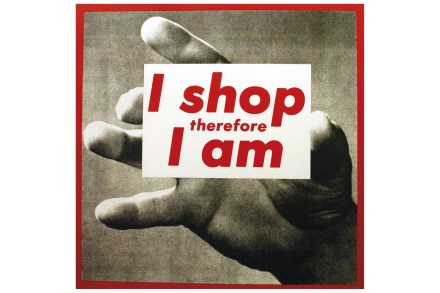
A few years ago, the American artist Barbara Kruger covered the façade of Frankfurt’s Kaufhof department store with a pair of huge eyes. It was as if Big Brother had come out of retirement. Above that unsparing gaze was the slogan, in Kruger’s signature Futura bold italic font: ‘You want it. You buy it. You forget it.’ It was a typical work of art by Kruger. She made her career from what’s called culture jamming, subverting media messages by transforming them into their own anti-messages and by indicting the business of capitalism.

Join the counter culture, continue Christmas

From our UK edition

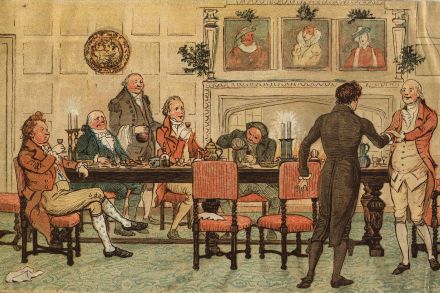
The great Joan Collins, this paper’s occasional diarist, was quick off the mark in putting up her Christmas decorations… around November, I recall. But the really sane and sensible thing to do is to go retro and be late taking them down. Today is, I need hardly say, the Twelfth Day of Christmas when the three wise men turned up at Bethlehem with their gold frankincense and myrrh. Happy Epiphany. But in happier days, viz, before Christmas was commercialised last century, and in even happier times before the Reformation, the season didn’t turn out like a light. It went into a kind of slow-burn right down to Candlemas on 2 February, forty days after Christmas — viz, the feast of the Purification of the Virgin.

Show off and tell: the sad death of inconspicuous consumption

O America, how do I love thee? Let me count the ways. As an Englishman, I loved the two years I lived in New York as a correspondent for the Daily Telegraph over a decade ago. But I’m afraid I never fell for the American cult of conspicuous consumption — even if at times I thoroughly indulged in its worst excesses. At a party at one of the New York Armories, a huge military building now given over to parties and exhibitions (I forget which one, due to overindulgence), I watched, goggle-eyed, as two brave young blondes frolicked in an ice-cold pool around a larger-than-lifesized ice sculpture of a pair of swans. At another party in SoHo, I made my way to the dance floor to find dozens of twentysomethings dancing around a Range Rover — the car company was sponsoring the event.

consumption

Black Friday is racist

Every year we are forced to endure a week long festival of capitalist peacocking, as the world’s largest multi-billion-dollar corporations invade our high streets and inboxes. Like a sex-worker gyrating her hips in the window of an Amsterdam brothel, these brazen online stores spare no shame in their attempts to woo me into their banner-bedecked bordellos with ‘tempting offers’ and ‘unmissable deals’. Not that I’m saying sex work is shameful, you understand, it’s an admirable and empowering trade for anyone who has the proficiency for it. But when it comes to spending my wad, the last thing I want is Amazon dot com twerking like a cheap whore in my inbox.

black friday