Conservatives

The failure of the right

From our UK edition

Sometimes things that don’t happen are as important as those that do. In the Sherlock Holmes story Silver Blaze, about the theft of a racehorse, the failure of a dog to bark is the central fact that allows the crime to be solved. Holmes mentions this 'curious incident of the dog in the night-time' to a Scotland Yard detective who is puzzled and tells him: 'The dog did nothing in the night-time.' Holmes replies: 'That was the curious incident.' There is a strong case for regarding the failure of a dog to bark as the central fact of British political life today.

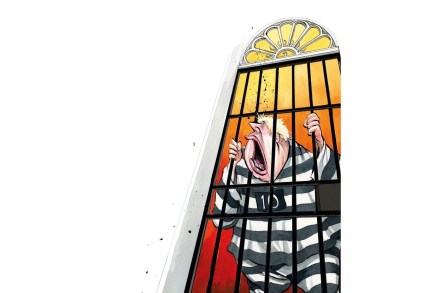
The rise of the unwhippable Tories

From our UK edition

When the government announced a Commons vote on its decision to cut the foreign aid budget from 0.7 per cent of GNI to 0.5, the expectation was that the vote would be tight. In the end, the government won comfortably: it had a majority of 35. But despite their success, the whips would be wrong to be feeling triumphalist about this, I write in the magazine this week The usual whips’ line — if you keep your nose clean preferment might come your way — is ineffective Twenty-four Tories voted against the government, 14 of which were former ministers. The overwhelming majority of these are either uninterested in returning to ministerial office or are only interested in doing so on their terms.

The callousness of the Conservative foreign aid cut

From our UK edition

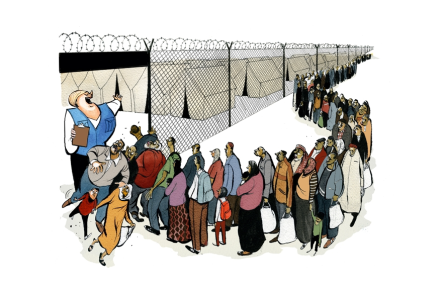
A billionaire who reduces his or her charity is a billionaire asking to be judged and found wanting. When they do so, not on the basis that their charity is squandered but because they fancy keeping more of their wealth for their own purposes, they demand to be judged and found wanting all over again. This morning, the United Kingdom and its government is that billionaire. The government has won its campaign to reduce Britain’s foreign aid contributions. As so often, a much-vaunted Tory rebellion delivered rather less than it promised. As a consequence, money will be withheld from some of the world’s poorest peoples and kept instead by some of its wealthiest. Of course voters — from across the political spectrum — hate foreign aid. But what of it?

The Tories should ignore the Amersham by-election

From our UK edition

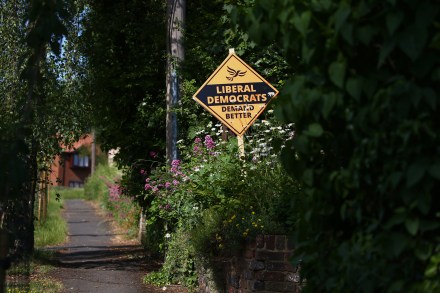
Chesham and Amersham has fallen. The once uber-Tory Chilterns citadel has been snatched by the Lib Dems, with local campaigners citing planning reform and HS2 as the main drivers for their success. After the ginormous swing — from a 16,000 majority to an 8,000-vote deficit — fears are growing that the Tories' planning reforms might become a victim to demographic subsidence. Many of the government’s backbenchers are keen to undermine the party's house-building efforts. They fear Amersham-style retribution from similar voters, eager to punish them for devaluing their most-prized asset and adding congestion to their quaint country lanes.

Rishi Sunak: I’m a fiscal Conservative (unlike Boris)

From our UK edition

When Rishi Sunak told Andrew Neil this evening that he had his eyes on the future, he was ostensibly talking about the nation's finances. But it was difficult not to conclude from his interview on GB News that he wasn't also keeping at least one eye on his own future, too. A particularly striking exchange came when Neil asked him what kind of Conservative he is: Andrew Neil: 'Beyond the pandemic are you a One Nation conservative, are you a big Government Conservative like the Prime Minister or are you a small government, fiscal Conservative?

Could the Tories lose the South?

From our UK edition

The coming Batley and Spen by-election — triggered by the incumbent MP's election as the first mayor of West Yorkshire — is currently attracting a lot of attention. It is a northern constituency that Labour won at the last election with less than 50 per cent of the vote and that voted to Leave, which has led people to wonder if the Tories can repeat their by-election success there. (It is, though, worth noting that the 2019 Labour share of the vote in Batley and Spen was 43 per cent compared to 38 per cent in Hartlepool).  But there is a group of Tory MPs who’ll be watching the Chesham and Amersham by-election even more closely. On paper, the seat looks as safe as houses for the Tories.

The return of Tory sleaze?

From our UK edition

‘It’s the return of Tory sleaze’: so said Keir Starmer at Prime Minister’s Questions on Wednesday. His was an assertion immediately echoed by various leading Labour figures across social media. Former prime minister David Cameron’s questionable relationship with Greensill Capital is the immediate occasion for this potentially toxic claim. But Labour clearly hopes to drag Boris Johnson, Rishi Sunak and many other ministers into the mix. For, as Starmer went on, ‘sleaze’ is ‘at the heart of this Conservative government’. In contrast, Johnson is seeking to protect himself against the taint of 'sleaze' by announcing an inquiry into claims of impropriety. Perhaps it will protect him.

Gove hints at vaccine passport app

From our UK edition

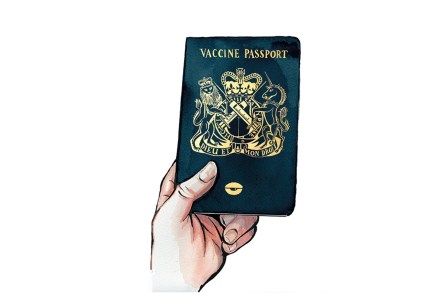
It wasn't so long ago that ministers were lining up on broadcast to insists vaccine passports were out of the question when it came to the UK. While they could be used for travel abroad, the UK was — as Matt Hancock put it — not a 'papers, please' country. Instead, the UK appears to be turning into an 'app, please' nation. On Monday, Michael Gove met with MPs across the House for a private 'listening exercise' on immunity IDs. Although the purpose of the session was supposedly to gather MPs' thoughts on the issue of vaccine passports, attendees were left with the distinct impression that they would be going ahead regardless of their views.

The delightful humiliation of David Cameron

From our UK edition

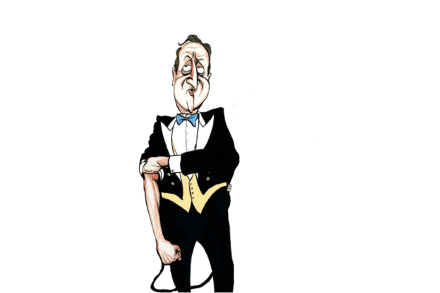
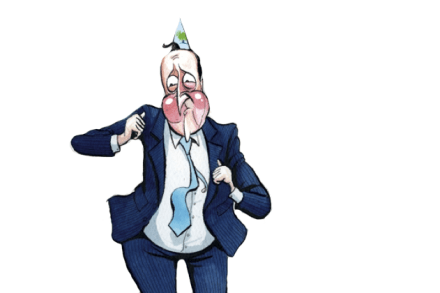
Say what you like about David Cameron, the man never stops trying to exceed expectations. I once thought that he’d never do anything sadder than giving his wife’s stylist an honour then running away from parliament like a child. Then he proved me wrong by publishing his memoirs. And now, demonstrating his unstinting commitment to the cause of his own humiliation, he has reinvented himself as a shoddy lobbyist. When he naffed off after making a horlicks of the referendum, Cameron warbled the usual shiny words about duty to the nation. It turns out he meant it: in these dark times, we all need a laugh, so we should thank him for cheering up a gloomy nation by means of his own embarrassment. Public service takes many forms.

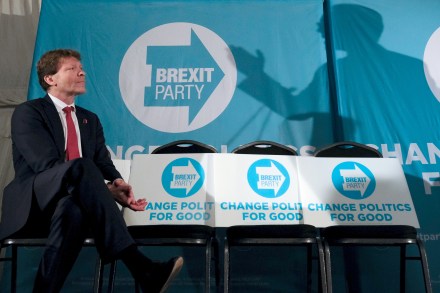
Could Richard Tice win Hartlepool for the Tories?

From our UK edition

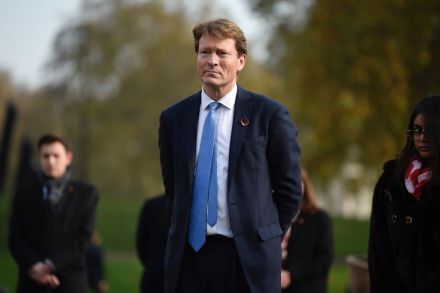
The Hartlepool by-election is a big moment in British politics. If Labour retains the seat, it will take a lot of heat off Keir Starmer, whose rocky patch as leader continues. If the Tories win, it would likely be politically fatal for the Labour leader. He would either continue on, wounded almost certainly beyond repair, or Labour would get rid of him and replace him with someone much worse. In terms of red wall dominance, the Tories taking Peter Mandelson’s old seat would be highly symbolic as well. Therefore, the prize at stake here for the Conservatives is huge. Capture Hartlepool and the next general election looks to be theirs for the taking.

In defence of Shaun Bailey

From our UK edition

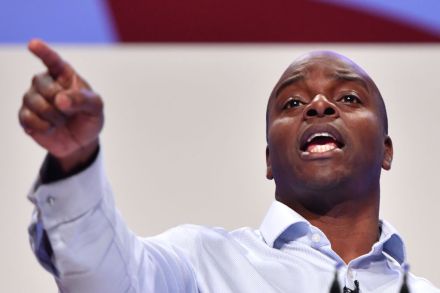
It’s possible I am alone in not minding about Shaun Bailey’s observations during the hunt for poor Sarah Everard. Before her body was found, he tweeted that ‘as a father and husband it breaks me to think that my wife and daughter have to live in fear in their own city. It doesn’t have to be this way. As Mayor, I‘ll ensure that we are working to deliver for the safety of women and girls in London.’ Was that wrong? We saw last night at that catastrophically mismanaged vigil at Clapham Common that women’s safety is a live issue. The subject of women living in fear was all anyone could talk about at the time, and ever since.

What’s the point of Nigel Farage?

From our UK edition

Nigel Farage is in some ways a victim of his own success. It was the political threat he posed during the coalition era that more than anything else caused David Cameron to pledge to hold an in-out referendum on EU membership if he won a majority. It is safe to say that without his persistence, we would never have left the European Union. Yet Farage is now politically redundant and what’s so strange about that is that he did it all to himself. When Farage declared that the Brexit 'war is over' after the government announced its trade deal with the EU on Christmas Eve, my first thought was that he must have decided to pack the whole Reform party project in.

The Tory split over universal credit

From our UK edition

Today's papers are splashed with good news on the pace of the vaccine rollout, with over-70s now being invited for a jab. However, the issue currently causing angst in the Tory party is universal credit. Last week, Labour attacked the government over free school meals, today they will put the government under pressure over the universal credit uplift. At the start of the pandemic in April last year, Rishi Sunak increased the payment by £20 a week.  The issue of whether that increase will continue will be discussed at opposition day debate this evening. Boris Johnson is being urged to extend the benefit increase beyond 31 March when it is currently set to come to an end. This is an idea that has won support with many Tory MPs.

My fellow Rejoiners are living a fantasy

From our UK edition

On New Year’s Eve at 11 p.m., the United Kingdom departed both the single market and the customs union, making the end to the country’s former membership of the EU complete. It was a moment to celebrate for Brexiteers; the commemoration of sadness for some Remainers. Or should I say 'Rejoiners' — there is no remaining now, Great Britain having departed the European Union. Many Rejoiners have set out their stalls already. ‘When they tell you to "move on" DO move on — to the long, strong, campaign to rejoin,’ tweeted Simon Schama, the historian and noted fan of the UK’s membership of the EU, ‘However hard the road, however long it takes; it starts now.

Starmer is about to make a big mistake in backing Boris’s deal

From our UK edition

Keir Starmer has announced he is whipping his Labour MPs to vote for Boris’s Brexit deal in the House of Commons today. There are two likely reasons behind this decision: firstly, to make himself seem like a Labour leader who is a grown up, after Corbyn’s teenaged politics; secondly, to demonstrate that Labour accepts Brexit in order that it may win back Leave voters in red wall seats at the next general election. But there is a big problem with this calculation. While all of Starmer’s Brexit options are difficult ones, he may be about to enact the worst of the lot. A no-deal situation would have allowed Keir Starmer to claim that as prime minister he would be able to get the Brexit deal from the EU that Boris evidently could not.

Will local tiers prevent another Tory rebellion?

From our UK edition

Tomorrow will see the next flashpoint in the row between Conservative MPs and the government over the tiered system, with the publication of new allocations today, following a review of the restrictions. Backbenchers have been led to believe by ministers that there will be a more localised approach to the tiers, which is something they called for in the recent rebellion on the vote reintroducing the system. In conversations with individual MPs, Health Secretary Matt Hancock has accepted that the decision this week to split parts of Essex and Hertfordshire in order to put the areas with high infection rates into Tier 3 set a precedent for the rest of the country.

Richard Tice, not Nigel Farage, should terrify the Tories

From our UK edition

The terms of the Covid debate have changed markedly since Nigel Farage decided to re-enter the political arena after Boris Johnson's second English lockdown. Even with multiple vaccines coming on stream, we can still not rule out a third lockdown — but we can be pretty darned sure there won’t be a fourth. It’s not the end of the beginning, but the beginning of the end. So Farage and his chief lieutenant Richard Tice can no longer depend on anti-lockdown fervour alone to give them a flying start, despite the rebellious mood of Tory MPs. Could they, therefore, decide that discretion is the better part of valour and call the whole thing off, especially if there is no Brexit deal and Britain ends up going for WTO rules as they have called for?

Boris’s U-turn defence

From our UK edition

Is Boris Johnson's government jumping from one crisis to the next or is No. 10's agenda progressing roughly as planned? It depends who you ask. After a difficult few weeks, there are plenty of Tory MPs who believe it's the former. Many of whom don't even feel the need to keep their grievances anonymous.  Charles Walker MP recently used an interview to complain that it was becoming 'increasingly difficult' for Tory MPs to defend government policy: 'too often it looks like this government licks its finger and sticks it in the air to see which way the wind is blowing'.

Can Boris build support for his planning reforms?

From our UK edition

The government always knew it would have to expend political capital to get its planning reforms through. Making it easier to build houses was never going to be popular with Tories in leafy areas. The benefit of an 80-seat majority was meant to be the ability to push through difficult but important changes. The problem is, as I say in the magazine this week, that the government has been expending political capital on rather a lot of other things recently. Tory MPs are in a fractious mood, irritated by the number of U-turns, and opposition to planning reform is beginning to build up. One normally mild-mannered former cabinet minister tells me: ‘If you think A-levels were bad, wait until people get their heads round these reforms.

Boris Johnson’s majority is not as big as it first appeared

From our UK edition

The last week has shown that Boris Johnson’s majority of 80 isn’t as big as it first appeared, I say in the Times on Saturday. Despite Boris Johnson throwing his full political weight behind Dominic Cummings, forty plus Tories still called for the PM’s senior adviser to go. The problem for No. 10 is that a majority of 80 ain’t what it used to be. It is, roughly, equivalent to a majority of 20-odd a generation ago, which is what John Major had in 1992. That the Tory majority is smaller than it first appeared has profound implications for how Boris Johnson governs. Every policy will now need to be tested against whether it can get through the House or not.