Conservative party

Theresa May’s relaunch speech: full transcript

From our UK edition

A year ago, I stood outside Downing Street for the first time as Prime Minister, and I set out the defining characteristics of the government I was determined to lead. A clear understanding that the EU referendum result was not just a vote to leave the European Union, but a deeper and more profound call for change across our country. A belief that at the heart of that change must lie a commitment to greater fairness in our country as we tackle the injustices and vested interests that threaten to hold us back, and make Britain a country that works for everyone, not just a privileged few.

The government should think again before scrapping its free schools plan

From our UK edition

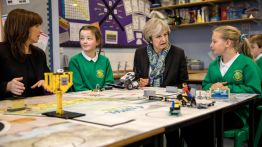
On the front page of today's Times it says ministers are thinking of scrapping the free schools policy in order to give more money to schools. I hope it’s not true. Not only would it constitute a terrible loss of self-confidence on the Government’s part and confirm the narrative that the Conservatives are enacting Labour’s manifesto rather than their own. It would also be a betrayal of the thousands of people who’ve set up free schools and are in the process of setting them up. We have taken on the educational establishment and put our necks on the line at the behest of successive Conservative Education Secretaries. Are they really going to abandon us now?

Self-employed workers don’t need rescuing

From our UK edition

'Workers,' says Matthew Taylor, whose report into modern practices is published this week, 'should be treated as human beings, not cogs in a machine'. How very grand – and how fatuous. His entire report, commissioned by Theresa May in one of her first acts after becoming Prime Minister last July, is pointless, based on the false premise that there are millions of Brits beavering away in Victorian conditions for little money in insecure self-employment. Actually, we’re quite happy, Matthew. The vast majority of us are self-employed because we like it that way. We are not looking for a job, nor extra hours.

Why do gay lefties hate Tories but ignore Corbyn’s ugly record?

From our UK edition

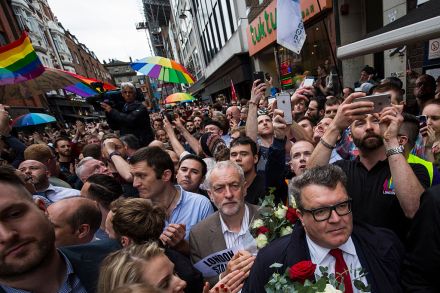
Gay lefties have hated gay Tories ever since learning of their existence. The concept baffles them, like pro-life women or alcohol-free wine. Those with long memories are aware of the Conservative Party's ugly record on gay equality. This is the party of Section 28, of differential consent laws, of fretting about children 'being taught that they have an inalienable right to be gay'. But gay Tories, having largely rehabilitated their party and with many of the major gay rights battles settled favourably, hoped the rainbow flag might finally have space for a stripe of blue.

Never mind the Tories, another British institution has the lost the young: the BBC

From our UK edition

A cherished British institution is facing its Waterloo because young people have come to see it as an irrelevance – not the Conservative party but the BBC.  Figures from Ofcom released yesterday show a dramatic fall in the amount of viewing of live television among 16 to 24 year olds who, collectively, are only watching two-thirds as much as they did in 2010.     Instead, they are getting increasing amounts of entertainment online, through Netflix, Amazon and other services. Why, with all that available on your phone, your iPad, your laptop, would you see the need to buy a television – especially when you are probably living a semi-nomadic lifestyle between insecure tenancies?

Corbyn can be beaten – here’s how

From our UK edition

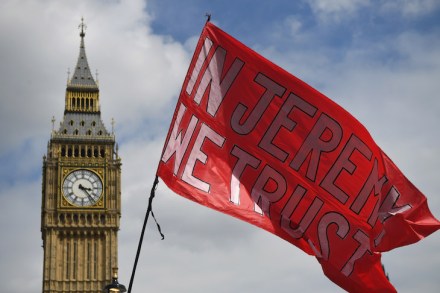
The Tory party is suffering from an intellectual crisis of confidence. Before 8 June, its collective view was that Jeremy Corbyn was simply too left-wing to be a serious candidate for the prime ministership in modern Britain. He hadn’t learnt the lessons of Labour’s defeats in the 1980s, and while he might excite a noisy 35 per cent of the electorate, thought the Tories, he’d never be able to put together a general election-winning coalition. Corbyn, however, came closer to victory than any Tory had expected. His Labour party got 40 per cent of the vote and took seats off the Tories. Not one of them had seen it coming and, a month on, they are still trying to come to terms with what happened.

Theresa May is slowly steadying the Tory ship

From our UK edition

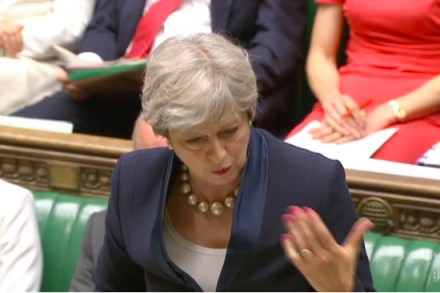
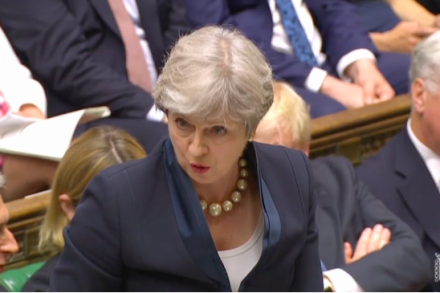
It was better from Theresa May today. She was combative, prickly and forceful at PMQs. The ship is moving on a steadier course. And two toxic enemies have returned to the fold. In the days following the election, both Anna Soubry and Nicky Morgan were ‘helpfully’ suggesting a possible timetable for Mrs May’s departure. Today they both asked supportive questions. And Mrs May read out the answers, tight-lipped. Only those within a yard of her could hear her molars grinding. The Labour leader got a rather glum cheer from his party. He suggested that the PM should fund a pay-rise for nurses because ‘she seems to have found a billion pounds to save her own job.’ As usual, he had a missive of woe to delight us with.

May turns back the clock to the Cameron and Osborne era at PMQs

From our UK edition

During the general election campaign, Theresa May was strikingly reluctant to defend the Tories’ economic record. But today at PMQs, Theresa May sounded like the man she sacked as Chancellor as soon as she became PM. She defended the Tories economic record with vigour, pointing out how much progress the party had made in reducing the deficit it inherited from Labour and even chucking in a reference to Greece for good measure. It was like going back to 2014. The Tory benches lapped up this return to the old religion. May was also helped by the fact that Jeremy Corbyn didn’t make as much of the money that the Tories have found for the DUP deal as he should have done.

What the papers say: It’s time for the Tories to stop panicking

From our UK edition

‘The unexpected appeal of Jeremy Corbyn’s manifesto has thrown the Tories into panic’, says the Sun. With Damian Green suggesting a ‘debate’ may be needed over tuition fees and other ministers ‘piling in every day with demands for more spending’, the Conservative party seems to be making the assumption that the best way to tackle the threat of Corbyn is to copy him. This is ‘suicidal’, says the Sun, which argues that not only would it be wrong to try and take on the ‘hard left’ on their own terms, it would also be dangerous for the economy.

To save the Tories and boost her own legacy, Theresa May must stay

From our UK edition

Sometimes crises end simply because all of the participants are exhausted. Essentially, this is what has happened with the post-election Tory leadership crisis. No one has the energy for a fight, so Theresa May carries on as Prime Minister. Conservative MPs say it is now almost certain that she will make it to the summer break and will still be in place at party conference. If the coronation of a new leader could be arranged, things would be very different. But it can’t be. From the great offices of state down, the Tories are simply too split – over both policy and personnel – for the succession to be resolved without a contest.

Iain Duncan Smith assesses the government’s welfare record

From our UK edition

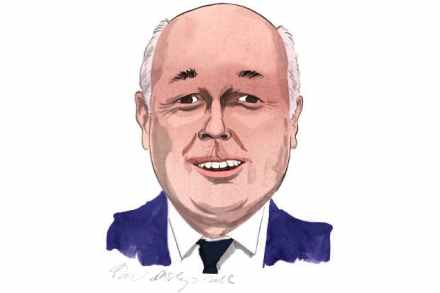
When the Conservatives returned to power in 2010, in coalition with the Lib Dems, lifting people out of poverty was one of their signature policies. It would be hard to say that now. Theresa May has shown more interest in devoting time and energy to the ‘just about managing’ classes further up the socio-economic spectrum. Iain Duncan Smith, who as work and pensions secretary set the poverty agenda, is no longer a minister – while Brexit has come to dominate the agenda of a weakened government. So what was achieved during what looks like a brief flirtation with social justice – and what, if anything, happens now?

The government’s fragility is good news for Parliament

From our UK edition

This first week back in Parliament has proved quite how fragile the government’s power is. It may be able to govern in a technical sense - announcing bills, occupying Downing Street, and so on - but it cannot guarantee that it will get what it wants in the Commons. Having to accept the Stella Creasy amendment on free abortions for women from Northern Ireland shows that, but this is just the start of a legislative free-for-all in which MPs from all parties are able to propose changes to any bill ministers put forward, and know that they stand an unusual chance of success. It just takes a handful of Tory MPs to sympathise with these changes, and then the government must either accept the amendment or face humiliation and defeat in a successful rebellion.

Portrait of the week | 29 June 2017

From our UK edition

Home In preparation for the vote on the Queen’s Speech, the Government, after weeks of negotiations, bought the support of the Democratic Unionist Party in the House of Commons by promising to spend a billion or two pounds in Northern Ireland on broadband and other good things. In reply to expostulations from the Opposition, Nigel Dodds, the parliamentary leader of the DUP, told the Commons: ‘We might publish all the correspondence and conversations we had in 2010 with Labour front-benchers, and in 2015 with Labour front-benchers, and indeed also the Scottish National party, because some of the faux outrage we have heard is hypocrisy.

What the papers say: Is it time for a tax hike?

From our UK edition

The 48 per cent have spoken - and they want higher taxes, according to the British Social Attitudes survey. In the wake of a general election in which Labour won support based on a manifesto of free spending, is it time for a rethink on tax? And should we wave goodbye to the era of austerity? Here’s what today’s newspapers make of the case for a tax hike: We are ‘at a fiscal crossroads’, says the Daily Telegraph. During their dismal election campaign, the Tories 'failed to make the case for living within our means’ and the ‘public appetite for prudence’ appears to be waning.

Why May must stay

From our UK edition

Sometimes crises end simply because all of the participants are exhausted. Essentially, this is what has happened with the post-election Tory leadership crisis. No one has the energy for a fight, so Theresa May carries on as Prime Minister. Conservative MPs say it is now almost certain that she will make it to the summer break and will still be in place at party conference. If the coronation of a new leader could be arranged, things would be very different. But it can’t be. From the great offices of state down, the Tories are simply too split – over both policy and personnel – for the succession to be resolved without a contest.

A toast to the new Scottish dawn

From our UK edition

‘Stands Scotland where it did?’ As the bottles circulated, we were able to answer Macduff’s question in much more optimistic terms than would have seemed possible even a month earlier, thanks to Ruth Davidson, the Malcolm Canmore of our age. It is extraordinary. Scottish Tories spent almost 20 years on the fringes of politics, marginalised and derided. During that black period, it was clear no other force in Scotland could be relied on to defend the Union. After the Nats’ triumph in 2015, an unpleasant version of Rousseau’s general will seem to have triumphed with it. If you did not support the SNP, you were not a proper Scot. If you were actually a Tory, you were a disgrace to Scotland. This was the darkest hour, with no apparent prospect of dawn.

Theresa May will be feeling the heat at today’s PMQs

From our UK edition

What a very different atmosphere the House of Commons Chamber will have today for its first PMQs since the election. In the week before Parliament dissolved, Tory MPs were in a most obsequious mood, reciting the ‘strong and stable’ slogan that Theresa May started her campaign with, and even telling the Prime Minister that ‘I am confident that the country will be safe after the election under strong and stable leadership’ (sadly Peter Lilley, who made this prediction, stood down at the election and so is not in Parliament to offer his insight into how he feels about the state of the country now). It will be interesting to see if anyone bothers to praise May at all in this session.

Give the DUP a chance

From our UK edition

A political party barely known outside Northern Ireland now holds the balance of power in Parliament. Nobody saw it coming, but then that’s the new catchphrase in politics. So who are the DUP? And do they deserve the pillorying that has been coming their way since the general election catapulted them into the spotlight? I have been watching the party up close for decades. Yet while the DUP isn't always a pretty sight to behold, the party is much more complicated than the hysterical stereotyping makes out. It's true that the DUP has its roots in uncompromising unionism and religion. And for many years it was little more than a one-man’s fan club: the political extension of Ian Paisley’s hardline Free Presbyterian Church.

Why some Tories are deeply worried about the DUP deal

From our UK edition

The Tory DUP deal has been signed in Downing Street this morning, the text of it is on the government website and there’ll be a statement in the Commons on it later. This is as formal as a confidence and supply deal can get. So, why were the Tories so keen on such a formal deal? Well, there were three reasons for it. The whips’ office wanted the certainty of a written agreement rather than having to survive hand to mouth; note that the deal was signed by the chief whip not the Prime Minister. The whips’ hope that this certainty will mean both that the government can get its business through and that there won’t be constant speculation about it collapsing.

Theresa May’s Government is safe – for now

From our UK edition

The Government’s deal with the DUP is done - but it has come at a price. The confidence and supply agreement - which falls short of a formal coalition but will be enough to keep Theresa May in power - will set the Government back £1bn. The deal spells out £200m for infrastructure, £75m for ultra-fast broadband, £100m over five years to tackle deprivation, £50m on health and education, £100m on health service reform and £50m on mental health funding in Northern Ireland. Despite the cost, though, there’ll be a big sigh of relief among the Conservatives that the deal (which you can read here) is now, finally, across the line.