Conservative party

Atkins’ confident start as a minister bodes well for tricky bill

From our UK edition

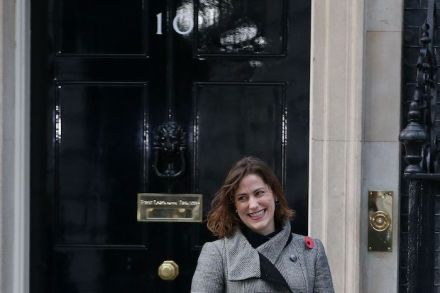
Vicky Atkins was the first MP from the 2015 intake to become a minister, and had been preparing assiduously for doing so. She asked loyal questions of the Prime Minister and beavered away on the Home Affairs Committee and the joint committee examining the Draft Investigatory Powers Bill. But it was obvious that this very capable backbencher wanted to join the government - and that she was very likely to do well as a minister. Today’s Home Office questions marked her first outing on the frontbench in the Commons - and therefore the first glimpse of what someone who has been auditioning to be a minister is going to be like now she’s got the part. Atkins was greeted with a huge cheer from her colleagues as she stood up to answer a question.

Wanted urgently: a Budget boost

From our UK edition

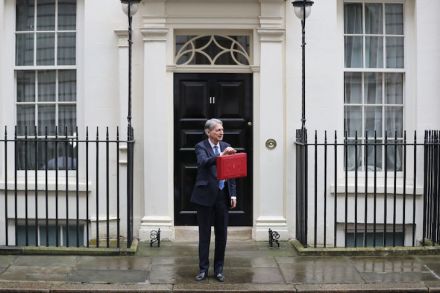
The Budget this Wednesday represents this government’s best, and perhaps its last, chance to regain the political initiative. Ever since the launch of the Tory election manifesto, Theresa May has been buffeted by the political weather. The past few weeks have been particularly bad. It hasn’t rained on her but poured, leaving her in urgent need of a Budget boost. Already this month, two cabinet ministers have had to resign. A third — who happens to be Theresa May’s most important ally — remains under Cabinet Office investigation. The Brexit optimism that followed her Florence speech is ebbing away.

Stop the rot

From our UK edition

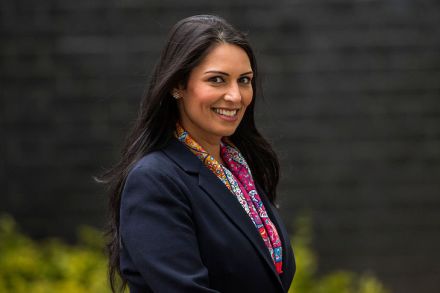
Dealing with a hung parliament was never going to be easy, but no one quite foresaw the decay which now seems to have set in to Theresa May’s government. The best that can be said for the Prime Minister is that the past week’s events have weakened her rivals within the Conservative party. No one is talking up Priti Patel as a potential rival any more and a challenge from Boris Johnson is now highly unlikely, following his loose words about a British woman incarcerated in Iran — which the Iranian regime may use as a pretext to increase her sentence. Like John Major, the Prime Minister benefits from the feuding in the Cabinet and is kept in place by the fear that a leadership challenge would see the party rip itself apart.

Portrait of the week | 9 November 2017

From our UK edition

Home An air of crisis hung over the government. Priti Patel, the International Development Secretary, was told to fly back immediately from Africa after a series of secret meetings with Israeli political figures was revealed. Sir Michael Fallon had already gone as Defence Secretary, to be replaced by someone called Gavin Williamson, an MP since 2010 and Chief Whip since last year. Sir Michael’s departure followed a complaint that Andrea Leadsom, the Leader of the House, was said to have made to the Prime Minister about a remark some years ago — when she had said she had cold hands, he said: ‘I know where you can put them to warm them up.

The Brown delusion

From our UK edition

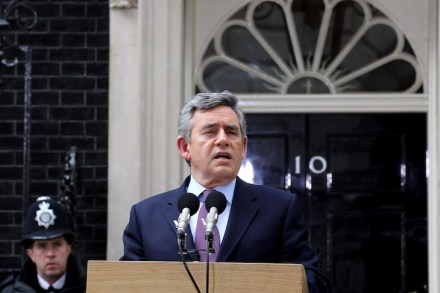
Gordon Brown has pitched his memoirs as the honest confessions of a decent man. He failed to win the one general election he fought, he asserts, due to a personality that was unsuited to an age of Twitter and emotional displays. His is the Walter Mondale response to failure — the former US vice president said of his defeat in the 1984 presidential election: ‘I think you know I’ve never really warmed up to television, and in fairness to television, it’s never really warmed up to me.’ Admitting to poor media skills is not genuine self-examination on the part of Brown, more an attempt to shift the blame for his failures on to something he considers trivial.

May has undermined her authority further by promoting Gavin Williamson

From our UK edition

To say that Gavin Williamson’s appointment as Defence Secretary has received a mixed reaction is to suggest, wrongly, that there is a balance of opinion on both sides. Most Conservative MPs I have spoken to today are just shocked that someone with no departmental experience is now in charge of the biggest department of all, with some of the biggest budgetary challenges. ‘I’m not sceptical, because that would suggest I hadn’t reached a conclusion,’ said one colleague. ‘I’m appalled. He’s smarmy. He uses bad language about other people. He is not to be trusted.

Gavin Williamson is a hard act to follow as Chief Whip

From our UK edition

Moving your chief whip when you’re in a minority government is pretty brave. In trying to work out who to replace Michael Fallon with at the Ministry of Defence, Theresa May was obviously going to have to consider who she trusted to be able to retain the job for as long as the previous occupant (Fallon was a few months short of becoming the longest-serving Conservative Defence Secretary in history), but trusting your chief whip when you don’t have the parliamentary numbers is important too.

Tory policy chief: party needs Beveridge-style commission to survive

From our UK edition

The Conservative Party appears rather burnt-out at the moment. At its conference - even before Theresa May’s disastrous speech - it seemed to be the Knackered Party rather than the Nasty Party that the Prime Minister herself had warned about so many years ago. But it is still in government, and desperately needs to find new ideas and reasons to exist while also negotiating Brexit and dealing with unexpected scandals, such as the allegations swirling around Westminster at the moment of impropriety from Cabinet ministers. When parties are knackered, they often find a period of opposition to be a comfort, a chance to have the sort of debate about policy that you just don’t have time for in government.

The Tories are playing a risky game with Jared O’Mara

From our UK edition

Why do politicians constantly bring plagues on their own houses? This week, the Tories have embraced the Jared O’Mara allegations with gusto, prompting Theresa May to speak about it at Prime Minister’s Questions, calling for emergency debates and writing letters about the matter. Some Labourites have been responding by pointing out that it’s highly unlikely the Tories will be entirely clear of sexists themselves. Of course, the Labour point is being deployed as whataboutery to distract from the party’s own nightmare with its Sheffield Hallam MP.

Tory whips in a quandary over Labour social care challenge

From our UK edition

If ministers are going to offer any concessions in the row over Universal Credit, they’ve decided to keep them back for a little while longer. This afternoon MPs have been holding an emergency debate on the reform, with Employment Minister Damian Hinds defending the reform and the roll-out, rather than suggesting that the government is going to accept the suggestions of Tory and Labour MPs on delayed payments. The emergency debate was called after Conservative MPs were whipped to abstain on Labour’s Opposition Day debate on the benefit reform last week.

The Tory party is becoming ‘Labour light’

From our UK edition

On the Andrew Marr show yesterday, the Communities Secretary Sajid Javid suggested that the government should 'sensibly borrow more money' and take advantage of the 'record low-levels' of interest rates in order to tackle the UK’s housing crisis. He added that the lack of affordable housing was the 'biggest barrier to social progress in our country today' and that such measures would go some way to re-balancing social inequality. https://www.youtube.com/watch?v=UMLiFO3CCI0&t=1s Javid’s remarks also highlighted another crisis: that of the identity of the Tory party. It is true that the UK currently faces a severe housing shortage with the number of homes being built falling far short of the 200,000 target which is generally recommended by housing experts.

Will Universal Credit conform to the normal pattern of policy disasters?

From our UK edition

How far is the government going to row back on Universal Credit? This afternoon an emergency debate has been granted on the matter in the Commons tomorrow. Two of the pilot councils in the roll-out of the new benefit have warned that the new system could be a catastrophe once implemented fully, predicting rent arrears in ‘many hundreds of millions of pounds’ and reporting a huge surge in referrals to food banks. Southwark and Croydon Councils warned of ‘major flaws’ in UC, and urged the government to fix the policy immediately. The pressure, which grew last week with Labour’s Opposition Day debate on the roll-out, hasn’t diminished since ministers said they would make the helpline for claimants a free number, rather than one that charged 55p a minute.

Tory MPs threaten to rebel and vote for government policy

From our UK edition

The talk of the Commons tearoom today is last night’s Opposition Day vote on Universal Credit. This is unusual: Opposition Day votes are non-binding and have recently been used largely for Labour to bang on about pet projects rather than hold the government’s feet to the fire. But the Opposition has sharpened up its act, and used growing Conservative concerns about the roll-out of the new benefit to good effect in yesterday’s debate.

The plots thicken

From our UK edition

‘Worst week ever’ is one of those phrases that journalists are, perhaps, too quick to use. Alastair Campbell once quipped that if you added up all Tony Blair’s worst weeks, you got a full year. The real worry for the Tories, however, is not that last week was Theresa May’s worst ever, but that it represented the new normal. Even inside Downing Street, there are those who worry that leadership plotting and the like will continue until Mrs May leaves the building. They worry that while they are strong enough to repel the plotters — as they did so effectively this time — she isn’t powerful enough to take back control. So the whole cycle will continue, with the rebels coming back for another crack every time the Prime Minister looks vulnerable.

Andrew Mitchell to speak at plotter Grant Shapps’ dinner tonight

From our UK edition

Grant Shapps isn’t the most popular man in the Tory party at the moment, but at least he has a friend to keep him company this evening. By sheer coincidence, Andrew Mitchell has long been booked to speak at the Welwyn Hatfield MP’s Conservative Association annual dinner tonight. But Mitchell is very keen not to appear to be a fellow plotter, having given a speech at the Cambridge Union last night in which he praised the Prime Minister’s ‘courage of high order’ for completing ‘what was an important and interesting speech in impossible circumstances, and I think all of us in politics should recognise that’.

Friends – or foes?

From our UK edition

As the breeze of popular opinion — popularis aura — blows sweetly over the much-loved Corbyn-McDonnell Old Labour tribute act, the Tory party is faced with a dilemma: how to counteract it. This dilemma seems to centre on Mrs May’s leadership, and if that is the case, those ambitious to displace her need to consider what leadership entails. The word for ambition in ancient Greek was philotimia, ‘love of high esteem in the eyes of others’. This was considered a virtue in a society in which competition was endemic and winning meant everything. The problem was the tension between the desire to win and the desire to be liked at the same time: vaulting ambition which o’erleapt itself could soon turn into naked aggression, which won no friends.

Portrait of the Week – 5 October 2017

From our UK edition

Home Theresa May, the Prime Minister, told her audience at the Conservative party conference that she wanted to continue, like them, to ‘do our duty by Britain’. She said the government planned to make it easier for local authorities to build council houses. On the eve of the conference, Boris Johnson, the Foreign Secretary, in an interview with the Sun sketched out four ‘red lines’ that he said should apply to Brexit. These included a transition period that must not last ‘a second more’ than two years. His stipulations went beyond anything agreed by the government, but Mrs May sidestepped questions about whether he was ‘unsackable’.

Diary – 5 October 2017

From our UK edition

The best reason for visiting party conferences is to sniff the air. It’s fragments of conversation drifting through a bar, expressions on faces, tones of voice, that tell you the most. What I picked up in Manchester is first, that Theresa May is really fighting to stay; second, that Boris Johnson is overplaying his hand; but third, that this is over a profound issue of policy and not just ‘blond ambition’ . I gave Mrs May a relatively tough interview and I think she was pretty cross. But my impressions were that the ‘burning injustices’ leader of the Downing Street steps is the real one; she’s frustrated she went off-message; and she now badly wants to get back to it. The trouble is, Brexit overshadows everything.

If only the Tories understood economics

From our UK edition

‘I don’t think I’m quite as Austrian as you are,’ a Tory minister said to me the other day. And I knew then that the party is doomed. It wasn’t what he said so much as the way that he said it: in the fond, amused, each-to-his-own tone you might use to dismiss a friend’s enthusiasm for Morris dancing or Napoleonic re-enactment or dogging… But personally, I think free market economics (of the Austrian or any other classical liberal school) is far too important to be left to wonks, think-tankers and out-there right-wing commentators. So did Margaret Thatcher. ‘Hayek’s powerful Road to Serfdom left a permanent mark on my own political character, making me a long-term optimist for free enterprise and liberty,’ she said.