Conservative party

The Tories should shine a light on Labour’s leadership machinations

From our UK edition

One striking aspect to this evening's brouhaha is how senior Labour figures are going out of their way not to endorse anyone as Gordon Brown's successor.  Brown himself has said that he won't back an "individual candidate," and Peter Mandelson and Alastair Campbell have made similar noises in television interviews. There are, I imagine, two main reasons for this.  First, it's all too soon: Labour won't want to engage in full internecine combat while there's still the chance of a deal with the Lib Dems.  And, second, they will want to create the impression that – contrary to Gordon Brown's ascension to power in 2007 – the next Labour leader has been chosen in an open and clean contest.

The Tories work to seize the moral high ground

From our UK edition

Well, well today just keeps getting more and more extraordinary. The Tories have responded to the Lib Dems beginning formal negotiations with Labour by offering the Lib Dems a referendum on AV in exchange for a full coalition with Lib Dems in the Cabinet. The Tories stress that this is their final offer to the Lib Dems. Having spoken to several members of the shadow Cabinet, it appears that the offer is designed to allow the Tory party to seize the moral high ground. They believe that if the Lib Dems were to join with Labour to ram through a change in the voting system—Labour are offering the Lib Dems AV without a referendum and then a referendum on STV—then they would be discredited.

Brown saves the worst till last

From our UK edition

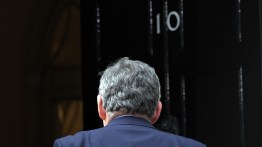
We have just witnessed Gordon Brown’s last and most audacious confidence trick. “Gordon Brown to resign” says the television newsflash: but the story was the very opposite. Gordon Brown is staying on, saying – pretty much – that it will take an SAS operation to get him out of No.10 before the autumn. He declared a "constitutional duty" to stay until a new administration is formed "with majority support in the House of Commons". Untrue. You just need a majority to pass laws. One can govern with a parliamentary minority (see Alex Salmond in Edinburgh, and Harold Wilson in 1974). Cameron won the right to govern, when he last week secured a greater share of the vote than Blair in 2005 and two million more votes than Brown.

Brown statement: now with added video

From our UK edition

And here's a transcript of the statement "We have a parliamentary and not presidential system in this country and as I said on Friday, with no party able to command a parliamentary majority arising from the general election, my constitutional duty as prime minister is to ensure that government continues while parties explore options for forming a new administration with majority support in the House of Commons. "The business of government has continued including concerted action in Europe today to avert the financial crisis in the Euro area. Alistair Darling the chancellor spent much of his time yesterday in the European finance ministers meeting in Brussels.

The return of David Davis

From our UK edition

The shadow Cabinet were gathering before their meeting at 2pm. One member told me ‘it is looking less like formal coalition now.’ But coalition remains the leadership’s preferred option. Talking to Tory MPs—old and new—this morning, there’s a sense that they would slightly prefer minority government. Though, no-one is planning to blow themselves up if the country does end up with a Tory-Lib Dem coalition. One other interesting development today is that there is a growing expectation that David Davis will be recalled to the colours. Certainly, his return would make Cameron’s top team more accurately reflect the ideological balance of the party.

Do the Lib-Lab talks alter the landscape?

From our UK edition

Isn't it all very cosy?  Turns out the Lib Dem negotiating team secretly met with a Labour delegation over the weekend: Ed Balls, Peter Mandelson, Ed Miliband and Andrew Adonis.  And it's thought that Nick Clegg has had more conversations with Gordon Brown, both on the phone and in person.  So the Tories aren't the only ones enjoying some quality LibTime. It doesn't really alter the cut of the situation, though.  Most folk around Westminster seem to expect a Lib-Con deal, of sorts, at some point today.  But Clegg and his team would weaken their hand if they didn't at least explore every option.  The Tory leadership will appreciate this – and, I'm sure, won't be all that perturbed by these latest developments.

Who’s using whom?

From our UK edition

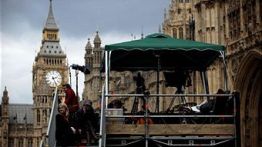
Another day of live political theatre, staged live at College Green. Given that Cameron last night negotiated a confidence-and-supply deal - ie, enough to keep him in a minority government like Alex Salmond has in Scotland - why is he negotiating further? What's more to discuss? This is what we find out today. David Steel told Radio Four this morning that Nick Clegg had told him, before the election, that he would put a time cap on any Con-Lib Pact - ie, a shelf life of one or two years. This suggests that the Lib Dems would not fall for the obvious Tory ruse: the offer of a referendum on PR due in 2012, but with the sneaky expectation of a new election in May 2011 at the latest. But Cameron has much more to offer - and things that suit him rather well.

The coalition nears

From our UK edition

‘A government by this evening’ is what several Tory MPs have told me they expect. Those who have spoken to David Cameron say that he has no appetite for a second election within 12 months and that he wants the stability of a coalition. David Cameron is in the House of Commons. When I passed him earlier, he was without the entourage that so often accompanies him and was saying hello to those he passed. This might not sound like much but it does suggest that Cameron is adjusting to the new circumstances, that he is taking greater care to be nice to his parliamentary party than he has previously. Shadow Cabinet meets at 4pm and then the parliamentary party at 6. In both meetings, Cameron will be on stronger ground if he has a deal to present.

Who should get what?

From our UK edition

In February I pontificated about the composition of Cameron-Clegg government - to general ridicule. The blogpost looks increasingly prescient now that David Cameron seems to be favouring a formal deal with the Lib Dems. Assuming that Lib Dem MPs will sit around the Cabinet table, what ministries should they get? The assumption is that the Lib Dems want six Cabinet post and will probably end with no more than four. The Conservatives cannot give up the Chancellorship, Education or the FCO - departments that are important for the leadership, its worldview and its reform agenda . Nor is it easy to see a Lib Dem in Defence or someone like Liam Fox passed over (even if it was for Paddy Ashdown).

So now we know how Boris feels about coalition government

From our UK edition

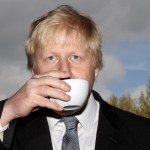
Aside from a few quips about Walls sausages and Meccano, Boris has kept his views relatively private since the events of last Thursday.  But you can always count on the Mayor of London to open up for his Daily Telegraph column, and, today, he does exactly that.  Here's his take on a Lib-Con coaltion – which, to my eyes, seems more than just a little bit dismissive: "The Lib-Con negotiations are still going on, in a foretaste of the Belgian orgies of tedium and paralysis that proportional representation will inflict on the country. Everyone is trying politely to work out exactly how many Cabinet seats to give a party that came a resounding third and did worse than in 2005.

Confession Time: I Voted Labour

From our UK edition

I left the Labour Party in 1994 and re-joined on May 6th 2010. There, I've said it. I had always intended to vote Liberal Democrat in this election, but changed my mind in the polling station. It seems I wasn't alone.  I couldn't ever quite buy in to the New Labour project, but I would like to be involved in whatever it is that happens next.  Unlike others on the left, I would not be horrified by a Conservative/Liberal Democrat government, although I would be happier with a grand coalition/government of national unity. I voted Labour with a heavy heart. My local MP, Lynne Featherstone is exemplary and the local Labour council's handling of the Baby Peter scandal was woeful.

A rolling Westminster drama

From our UK edition

Another extraordinary day in Westminster. A deal looks likely to be agreed by Clegg and Cameron tomorrow morning, put to backbench MPs in the afternoon and then Brown will advise the Queen to send for Cameron on Tuesday. (Brown may choke on those words, but if he says 'send for Ed Balls' I don't think she will fall for it.) This evening at 6pm, the handful of Tories MPs who are in London met Cameron at the Commons to discuss the coalition talks. Rumours still fly but as I understand it a deal has been reached where the LibDems will vote for Tory cuts - thereby fulfilling Vince Cable's pledge to be the guarantor of stability. "But they will want Cabinet seats," I am told by a LibDem source. "Why be tainted with cuts with nothing in return?

No Lib-Con deal for at least 24 hours

From our UK edition

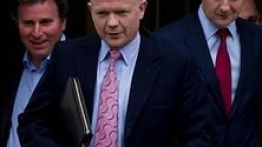
William Hague has just emerged from the Cabinet Office and spoken of the 'positive, constructive and substantive talks' between the Conservatives and the Liberal Democrats. Discussion has encompassed political reform, reducing the deficit, banking reform, regulation of small businesses, environmental issues and civil liberties. Hague says that a further meeting will take place at some stage in the next 24 hours. 'That meeting,' he added. 'Will concentrate on deficit reduction and economic stability'. The language of the statement suggests that an informal pact is more likely than a formal coalition.

Don’t forget the Party, David

From our UK edition

Days, perhaps only hours away from the expected announcement of a Con-Lib deal, the Tory party rank-and-file is getting increasingly restive. Many MPs and party activists do not feel that Team Cameron has been sufficiently attentive to them and their concerns. They look longingly at the Lib Dems, whose democratic set-up enables MPs and party members to make their views known to Nick Clegg and the leadership. In a Tory party that has always favoured single-minded leadership, the options for representing rank-and-file views are few, particularly as the chairmanship of the 1922 committee remains vacant. As a result, many senior MPs have been reduced to calling hacks to find out what is actually going on.

Cameron’s Clause 4 moment

From our UK edition

David Cameron never really had a Clause 4 moment. True, the Conservatives never believed anything so absurd as socialist economics. But the fact that he never had a genuine dust-up with his party made many voters think that he had rebranded but not reoriented them. In the end, it made many would-be supporters wary of voting Tory. Now, the Tory leader may have a Clause 4 moment thrust upon him by virtue of the Lib Dem talks. For if a Con-Lib pact is to be made, it will include a lot of things the party finds unpalatable. Like Tony Blair's experience with the Labour Party over the Clause 4 discussions, some in the Conservative party will try to hold out against a coalition agreement and any compromise on Tory policies.

Clegg laps it up

From our UK edition

Ooh, a touch of drama just now, as Nick Clegg addressed the 1,000 or so protestors calling for voting reform in Smith Square.  He said that the demonstration was "wonderful," and got big cheers for saying that PR is "in the national interest".  But there were no hints, either way, about how the Lib-Con talks are going, or whether PR was a dealbreaker – which may have left the people shouting "Don't sell out!" a little dissatisfied.  For all the banners and flags, this one will still come down to the decisions of men in suits, behind oak doors. UPDATE: The Beeb's Laura Kuenssberg tweets that the protestors are moving on to Tory HQ. Fun and games.

Time for a National Government? (Revisited)

From our UK edition

If there is one lesson to be drawn from the television debates, it is that people have grown tired of politicians slagging each other off. David Cameron promised an end to "yah-boo" politics, but the institution of parliament makes this near-impossible in practice. However, while parliament is out of action, there just might be the possibility of creating something genuinely ground-breaking: a government of national unity. I first suggested this idea in the New Statesman during the 2008 Labour Party conference: "If the financial crisis is as serious as many in the government suggest, then extraordinary times require bold solutions.

The need for speed

From our UK edition

The markets have spoken, and they’ve done so with menace. The FTSE 100 closed down 138 points, which, though not a complete disaster, is far from encouraging. You might argue that the multinationals that comprise the FTSE 100 are more affected by the fortunes of international markets and commerce. Whilst that’s true it must be conceded that there is little comfort in the FTSE 250, a figure that provides a closer expression of domestic economic confidence, which closed down by 410 points. At the time of writing, Sterling, another bellweather indicator, is mired. The Pound is worth $1.47, and at one point it was at its lowest level against the dollar for more than a year. The Pound is also at a 6 month low against the imploding euro.

A deal that would kill Gove’s agenda at birth

From our UK edition

While both the Conservatives and LibDems support the idea of Swedish schools, a Lib-Con deal could kill the agenda stone dead. David Laws is proposing to allow local authorities to have the power to veto new schools – which would, in effect, mean no rollout. As we all know, this could strangle the Gove school agenda at birth. Local authorities, whether Labour or Tory, will hate the idea of competition in the provision of education. The local authorities and teachers’ unions are incredibly powerful, and defeated Thatcher, Adonis and Blair. They have also nobbled the LibDems to the extent that, I understand, David Laws believes that he could not get rid of the local authority veto. His party, and the special interests it represents, would not let him.