Conservative party

Withdrawing child benefit at 16 would be the wrong call

From our UK edition

In the last few weeks, there has been much speculation that child benefit would be stopped when a child reaches 16. Today’s announcement suggests that this is not going to happen, although the Tories are refusing to rule it out. If there are to be changes to child benefit — and given the financial situation there need to be — then removing it from households with a higher rate taxpayer is a better move than stopping it at 16. Child benefit ending at 16 would send out a message that at 16 a child should start earning its way in the world. This would, for obvious reasons, have a negative impact on social mobility as it would likely lead to fewer children staying on at school post 16.

Is there an alternative to cutting child benefit?

From our UK edition

Beware a mother scorned. George Osborne’s copping some stick on Mumsnet, social forum for the Latte-drinking classes, and with good reason. 'Hard-working families’, many of them far from rich, will feel abandoned by the party that ought to be theirs. IDS, Cameron and Osborne have taken a huge a political gamble, as James noted earlier, and they have also taken an enormous social risk. It is telling that the Centre for Social Justice, IDS’ think tank, are lukewarm about the proposal, describing it as ‘probably appropriate’ but calling for an alternative.  Skipping through the comments on Mumsnet and you can see why.

Welfare dominates Osborne’s speech

From our UK edition

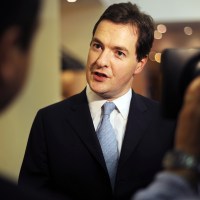
George Osborne delivered everything we expected, and then some. This was a confident and wide-ranging speech from a Chancellor who has suddenly discovered a central message: what's right about burning £120 million of taxpayers' cash in debt interest payments every day? Wouldn't it be better to get to grips with that waste as soon as possible? And that message percolated down through everything from his attack on Ed Miliband to his case for reforming our public services. "It's like a credit card," Osborne growled, "the longer you leave it, the worse it gets." But if that was the theme of Osborne's symphony, then the motif was certainly welfare.

Osborne can go even further on middle-class benefits

From our UK edition

George Osborne had been expected to subject child benefits to tax. Instead he is to abolish them entirely for higher-rate taxpayers. I've spent this morning talking to friends, whose judgment I respect, who are furious about Cameron hitting the squeezed middle. I cannot agree, and here's why. We are not talking about the "squeezed middle" here – of the 30.5 million income tax payers in Britain, just 3 million pay the top rate of tax (figures here). They're the best-paid 10 percent – and I have never worked out why the tax of the average worker (who's on £22k) should be higher to afford the payment to those on twice as much money. Osborne reckons he will save £1 billion by this measure. If there are to be cuts, this strikes me as a fair cut.

Osborne takes to the stage, armed with cuts

From our UK edition

Rewind the tape to last year's Tory conference, and David Cameron was assuring us that, "It will be a steep climb. But the view from the summit will be worth it." Today, it falls to George Osborne to tell us more about both the arduousness off the ascent and the beauty of that view – although I expect that there will be a heavy empasis on the former. Already, the main passages are spilling into the papers and, as you'd expect, it's mostly cuts and debt. On that front, the main argument seems to be similar to that made by Nick Clegg in Liverpool: that the longer it takes us to pay down our debts, the more money we waste thanks to interest payments and the like. Or as Osborne will put it, "Delay now means pay more later. Everyone knows it's the most basic rule of debt.

Don’t mention the Conservatives

From our UK edition

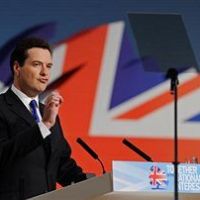
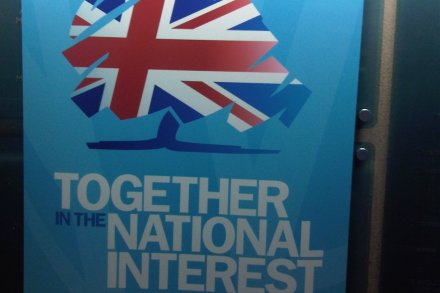
Has somebody stolen the Tory Party? A stranger walking around here would have no idea that its their conference. The word "Conservative" or "Tory" is nowhere to be seen. Just a slogan, "Together in the national interest" – a form of words that Cameron has repeatedly used to describe the coalition. As I say in my News of the World column today, Cameron will this week perform the impossible – to de-Tory the Tory conference and make them love it. There is plenty Tory red meat being served: welfare reform, school reform. It wouldn't susprise me if an announcement on keeping Trident is made this week. So the activists are happy. They also know that there is less than three weeks to the spending review and the battle that accompanies it, so they are in loyalty mode.

Ken Clarke in the firing line

From our UK edition

There’s an intriguing pre-conference story in the Mail on Sunday today. The paper reports that: “Ken Clarke faces a whispering campaign by allies of David Cameron and George Osborne to move him from Justice Minister because of his ‘disastrous’ views on law and order, it was claimed last night. Conservative MPs say Mr Cameron and Mr Osborne are ‘ frustrated’ by Mr Clarke’s refusal to take a tougher line on key issues such as prison sentencing.” Clarke’s liberal views on criminal justice certainly are infuriating his colleagues. Allies of Theresa May have been heard to complain that "Ken is going to send the crime rate soaring and we’re going to get the blame.

How Osborne and IDS reached agreement

From our UK edition

I have found out a little more about the Universal Credit – and how the arguments over the summer were resolved. First, the backdrop. Money was always going to be a problem. This policy is about saving lives, not money. Right now, we pave the road to welfare dependency, creating a vacuum in the labour market that sucks in workers from overseas. Under Brown, the Treasury accepted this: cheap workers pay tax too, and as do companies who profit from them. Result: tax receipts up, but never fewer than 5 million on out-of-work benefits throught the boom years. The IDS plan was not sprung on Osborne. As I blogged a while ago, it was Osborne who suggested bringing him back – to implement this very policy.

Cameron sets the mood for Birmingham

From our UK edition

It's that time of year again: Conservative Party conference. And with it comes wall-to-wall David Cameron. Our PM has a couple of interviews in the newspapers today and, to accompany them, he slotted in an appearance on the Marr show earlier. In all three, he hops neatly across the all same lily pads – spending cuts, IDS's historic benefit reforms and the defence budget – making the points and arguments you might expect. Yet two snippets stand out, and are worth pasting into the scrapbook. First, Cameron's claim on Marr that, "We have got to ask, are there some areas of universal benefits that are no longer affordable?

Society 3, The State 0

From our UK edition

Cameron and Osborne may just be about to pull off something incredible. This time last year, The Spectator ran a cover story about a new proposal which we could revolutionise welfare: the Universal Credit. It was an IDS idea: he’d sweep away all 50-odd benefits, and replace it with a system that ran on a simple principle – if someone did extra work, they’d get to keep most of the money they earned. It meant a bureaucratic overhaul, of a system that controls the lives of 5.9 million people. The resistance from HM Treasury, the architect of the tax credit system, was as fierce as it was predictable.

Lib Dems to the right of their Tory colleagues?

From our UK edition

I’ve re-read it several times now and I’m still not sure whether Francis Maude was joking or not when he told The Times that Danny Alexander ‘is obviously a bit to the right of me’. It is the kind of thing that the dry-witted Maude might say as a joke. But equally there’s no signal there that it is. But Mr Alexander occupies an odd place politically at the moment for a Liberal Democrat. He has become an ardent budget-balancer. Indeed, Nick Clegg has been heard to observe recently that his former chief of staff has had his brain captured by Treasury officials.

Cameron, more ideological than he appears

From our UK edition

The Tory conference in Birmingham is the last big political event before the cuts come. After the 20th, every time a senior Tory appears in public for the next few years they will be about why this or that is being cut. As the row over defence shows, these questions will come from right across the spectrum. For this reason, Simon Schama’s interview with Cameron in today’s FT is probably one of the last that will start with the assumption that Cameron is genial, non-ideological fellow. Once the cuts are happening, it will be harder to cast Cameron as a consensual figure. His edges will appear harder, more defined.  But when Schama asks Cameron what he wants his legacy to be we get a reminder of how non-ideological Cameron is.

Fox, Osborne and Cameron engaged in Whitehall’s oldest battle

From our UK edition

Tory on Tory is a brutal cock-fight when defence is concerned. After the leaking of Liam Fox’s now infamous letter and David Cameron’s measured retaliation, George Osborne has broken his silence. Making unspoken reference to the £38bn black hole in the MoD’s budget, Osborne tells this morning’s Telegraph that he was ‘not thrilled’ to learn of Fox’s ‘do we really want to cut defence this much letter’ and says that Labour left the MoD in ‘chaos’, signing Britain up to ‘expensive and pointless projects’. The press will run this as a conference Tory splits story.

IDS the victor?

From our UK edition

There are still conflicting reports, but Michael Crick and The Times intimate that a deal has been struck: IDS has beaten the recalcitrant Treasury over his £9bn universal benefit reform, with David Cameron’s express help. As Frank Field put it on Sky News, IDS’ plan is ‘good for the country, good for the taxpayer and good for those dependent on welfare.’ Field gave no clue as to the final outcome of this battle, but victory for IDS would be a crucial moment in public service reform. If Crick and the Times are right then this is obviously fantastic news ahead of the Tory conference, where I feel David Cameron should explain to the country beyond the hall what positives a Tory government offers besides sound accounting.

Why Cameron’s conference speech is vital

From our UK edition

Forget Ed Miliband’s promise of ‘optimism’ - a mantra that became so repetitive it had me reaching for the Scotch and revolver. Philip Collins has delivered a far more cutting verdict on David Cameron’s obsession with austerity. He writes (£): ‘Conservatives such David Cameron are not philosophers. The question to ask of Mr Cameron is not: what does he believe? It is: what problems does he inherit? Mr Cameron really does just want to fix the roof. The reason he wants to fix the roof is because it’s broken. The value he brings to this task is the insight that it is better to be dry than wet. He’s simple like that.

Many Lib Dems want to be part of the New Generation

From our UK edition

Politics tends to ruin an evening in the pub. On Wednesday, I came across a friend who had been a card-carrying Lib Dem prior to the coalition's formation. He confessed that he'd been impressed by Ed Miliband's speech and had joined the Labour party. Several other Lib Dem supporters attending agreed that Ed Miliband is a more attractive option than David Cameron and Nick Clegg. Everyone else in this small band (mostly unaffiliated voters with the odd furtive Tory) believed that Labour has probably elected the wrong Miliband, but were antagonistic to Labour in any case.

From the archives – Tories go to conference in government

From our UK edition

Strange though it seems in hindsight, the Tory party was not uniformly enamoured with Mrs Thatcher in 1979. The Tories were in government, but doubts over her ability to confront a resurgent Labour party, her shaky presentational skills and the direction of her policy pervaded the 1979 conference. David Cameron goes to Birmingham this week pursued by reservation’s persistent hum, and he does not have winner’s rights to rely on. Ferdinand Mount recorded that Mrs T’s wooden speech did not allay concern or win gratitude; will Cameron fare any better? But do they really love her? Ferdinand Mount – 20th October 1979 Hmm. Or rather perhaps, to put it more accurately, mmh. I quote from the Prime Minister’s speech at Blackpool, passim.