Conservative party

Cameron’s tangled web

From our UK edition

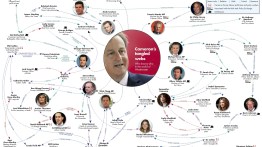
How do you get from David Cameron to Simon Cowell in two, easy steps? Answer: Andy Coulson. The former News of the World editor is, of course, Cameron's director of communications – but he also happens to be on friendly terms with the X-Factor impresario. We set out this, and all the other tangled relationships around the Prime Minister, in a spider graph for this week's magazine. From Nick Clegg to the designer Anya Hindmarch, from Steve Hilton to Baroness Ashton: it's not a map of the government, but rather of the people both in and around No.10 who form what we call the New Establishment. To see them in their entirety, all CoffeeHousers need do is click on the image above, or download a pdf .

A solution to the immigration cap puzzle

From our UK edition

The coalition’s immigration cap is, as several Conservative Cabinet ministers have pointed out privately, flawed. It threatens to cap the kind of immigration that bothers almost nobody, high skilled foreign workers coming to this country to do a specific job. As Ken Clarke has told colleagues, the problem is that Labour — albeit right at the end of their time in office — stopped non-EU low-skilled immigration. So all there was left to cap was high-skilled immigration.   But there is a potential solution that would enable the cap — a Conservative manifesto promise — to remain in place, but also deal with Vince Cable and businesses’ objections http://www.thisislondon.co.

Cameron would be advised to talk about people power

From our UK edition

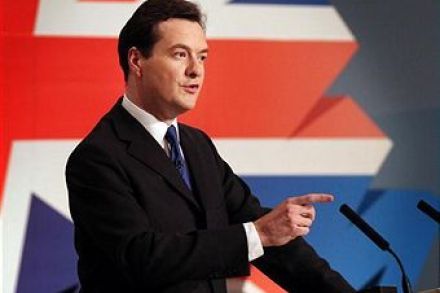
David Cameron was speaking in odd circumstances today. He was talking to a party that was back in power after more than a decade in opposition. But unlike Tony Blair in 1997 he couldn’t devote his speech to a celebration of that both because his party did not win a majority and because of the situation the country is in. To compound this, Cameron was speaking a fortnight before the spending review; further tying his hands in terms of what he could say.   Politically, the principal argument that Cameron wanted to make was about fairness. He was trying to move fairness from being purely about redistribution to one about reciprocity, about people deserving the help that they are given.

What to make of Cameron’s rejection of laissez faire?

From our UK edition

Pressure brings out the best in David Cameron and right now he’s coasting. He gave, as Pete and Fraser have said, a subdued speech. The content was there but his delivery was calm, except on two occasions when he spoke rather than read the autocue. He attempted to sell the Big Society (third time and no luckier). Then he said, with conviction, ‘I don’t believe in laissez faire.’ Those six words are pure Tory Reform Group, pure Iain Macleod, pure One Nation. He evoked that traditional form of Torysim with a firm description of how his government seeks to empower people as responsible groups not just free individuals.

Cameron resuscitates the Big Society

From our UK edition

This was the perhaps the lowest-octane speech David Cameron has ever given to the Tory conference. He didn't need to give the speech of his life, for once - so he didn't. He dutifully ran through all the various points of government policies, but there were too many of what Art Laffer calls MEGO figures (my eyes glaze over). It's odd, because Cameron can speak so well when he needs to. Compared to the speeches we heard yesterday - from Gove and IDS - it was oddly uninspiring. He spoke about his government's "beating, radical heart" with no real enthusiasm - as if he received the speech only recently, and didn’t rehearse too much. It was too long, was repetitious in places.

Cameron’s peculiar speech

From our UK edition

Ok, so that was a peculiar kind of speech from David Cameron – neither wholly successful, nor wholly unsuccessful. In terms of its general tone, it was much as we expected: a dose of bitter realism about the public finances, lacquered over with heavy optimism about what the country can be. But its content was more surprising, brave even. For this was the moment when the Big Society returned with a vengeance. In truth, we haven't heard much in recent months about the idea that framed the Tories' election campaign. Coalition seemed to have displaced it from the Cameroonian lexicon, if not their thinking. But it made an early appearance in one of the most unconventional sections of Cameron's speech.

The government’s strategy has kept the child benefit story running

From our UK edition

We have heard much since the coalition was formed about how Cabinet government has been restored. The child benefit flap reveals how limited this restoration is. There was no Cabinet approval of the decision and, as Andrew Grice confirms this morning, Iain Duncan-Smith was unaware of the change until the morning of the announcement. The other thing that strikes me, as someone who supports the idea and thinks it is potentially good politics, is the very odd approach to spinning this story.

Britain’s welfare families

From our UK edition

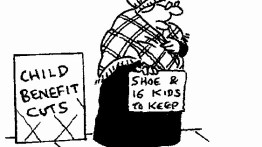
We have a new facts and figures column in the magazine, Barometer, and I thought CoffeeHousers might like a preview of one of the data series we have dug up for tomorrow’s edition. George Osborne has this week pledged that, from 2013, no family on benefits should receive more than the average family does through work. But how many will it affect? Those living in expensive areas, for example, but also those with large families. CoffeeHousers may remember Karen Matthews, who lived on benefits with seven children. She was demonised, understandably, but I was left thinking: we paid her to do that. The more kids she has, the more money she received – so shouldn’t the system take some of the blame?

Fox to the rescue

From our UK edition

The best form of defence is attack. Liam Fox distracted conference from the various rows that have afflcited it by castigating Labour’s abysmal record on defence. He was helped enormously by the terrorist outrage in Sanaa, the Yemen – a cowardly atrocity that reinforces his observation that ‘the country's finances are wrecked and the world is more dangerous than at any other time in recent memory.’ He recited the refrain that cuts are regrettable but necessary, before adding that, thanks to Labour, Britain has to fight on with less.

Cameron stumbles onto the stage

From our UK edition

Who'd have guessed that David Cameron would go into his conference speech on the backfoot? This was supposed to be a moment tinged, if anything, with jubilation: the first Tory PM for thirteen years addressing a party that seems to have fallen in love with him. But instead we've got the child benefit row, and with it apologies, rebuttals and hasty repositioning. It is to Cameron's credit that he can breath the two words that evade other, more culpable politicians: "I'm sorry". But on the eve of his big speech? Far from ideal. This exercise in damage limitation may have slightly eased Cameron's situation today – but it has put him in a more difficult long-term position.

Scottish Tories won’t oppose AV

From our UK edition

Annabel Goldie, leader of the Scottish Conservatives, made an odd admission at a fringe event last night. Asked how she would campaign against AV next May, she disclosed that there wouldn’t be a concerted campaign because ‘people have already made-up their minds’. I’m told that David Mundell, Parliamentary Under-Secretary of State for Scotland, sat in impassive agreement while the audience raised its collective eyebrow. Conservatism hasn’t scaled Hadrian’s Wall for twenty years. Representation is thin because residual loathing for Thatcher and Major runs deep. Loud partisanship against AV may incite the hostile populace to vote for it out of spite. Discretion looks the better part of valour.

IDS sets out his vision for combating poverty

From our UK edition

There was a quiet momentousness about Iain Duncan Smith's speech in Birmingham today – even before he started speaking. When IDS resigned the Tory leadership in 2003, he could barely have imagined that he would one day address his party as a leading member of the government. Even a few weeks ago, he couldn't have been sure that the coalition would implement the policy agenda that he developed during his time at the Centre for Social Justice. Yet here IDS was, receiving a standing ovation for his efforts. What a difference seven years make. And then to the speech itself. Much of it reverberated to the same reforming drumbeat that we've heard throughout this Tory conference.

Boris well ahead in the first Mayoral poll

From our UK edition

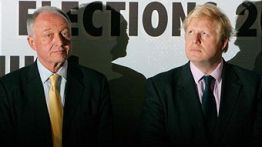
The first Boris vs Ken poll of the season carries an obvious health warning: there are other candidates to come, not to mention another one-and-half years of the current mayoral term. Yet Tories might still be pleased that their man is 9 points ahead of his predecessor and main rival at this stage. And that's even with Labour beating out the Tories, in the same poll, when it comes to London's general election voting intentions. Andrew Gilligan puts two and two together to create a striking parallel: Boris is more popular than the Tory party in London, whereas Ken is less popular than Labour. Stir in the fact that Livingstone is polling lower than he did in the 2008 election, and his enforced spell on the sidelines has clearly done little to bolster his reputation.

Cameron says “yes” to the Trident upgrade – but questions remain

From our UK edition

Courtesy of Ben Brogan, one of the most noteworthy passages from David Cameron's appearance on Today this morning: 'Jim Naughtie: Is the Trident upgrade untouchable? David Cameron: We do need an independent nuclear deterrent… JN: Is that a yes? DC: Yes. Basically I was going to give you a longer and fuller answer but the short answer is yes… To me and the Coalition government, yes, Britain’s independent nuclear deterrent is being replaced.' It is certainly the most assertive that Cameron has been on the subject since the advent of the coalition, but a couple of questions remain that prevent it from being utterly unequivocal. First, what timeframe is the PM operating along?

This is not a 10p tax moment

From our UK edition

Last night, one minister came up to me nervously and asked, ‘is this our 10p tax moment?’ He was talking, obviously, about the decision to take child benefit away from households with a higher rate taxpayer in them.   My answer was no. The comparisons with Brown’s removal of the 10p tax rate miss a crucial point: Brown tried to hide what he was doing. In his final Budget statement to the Commons, the abolition of the 10p rate wasn’t even mentioned. Instead Brown boasted about a 2p reduction in the basic rate, to huge cheers from the Labour benches.   By contrast, the Tories have been upfront about the fact that there are losers from this change.

Cameron tries to defuse the child benefit row

From our UK edition

Whether you agree with the plan to restrict child benefit or not – and, broadly speaking, I do – there's little doubting that it has met with some fiery resistance in the papers today. The Telegraph leads the attack, calling it "a hastily conceived about-turn bundled out on breakfast TV". The Daily Mail highlights the "blatant anomaly," currently riling up the Mumsnet crowd, that a single earner family on £44,100 a year might lose the benefit, while a dual earning family on £87,000 can keep it. And the Independent does likewise. It should be said, though, that the Sun, the Times and the Financial Times are considerably more generous about Osborne's proposal. The FT even calls on the Chancellor to go further.

Clarke ups the ante

From our UK edition

Perceptions count and the coalition are perceived to be vulnerable on crime. Its policy of reducing the number of prisoners on short-term sentences has been caricatured as a reduction in sentencing per se, a liberal assault on the consensus that prison works. I don’t agree with that analysis (which overlooks that excessive sentences in disorganised and overcrowded prison can create habitual criminals, who cost society in perpetuity thereafter) but readily concede that it’s easy to traduce the government as soft on crime, and I was surprised that Ed Miliband didn’t do so last week – as were plenty of Tories. In fact, opposition comes from within the Tory party, even from the government.

Taxing issues

From our UK edition

Today was a reminder of the tax change that would give Tory re-election chances a massive boost, raising the threshold at which the higher rate kicks in. Indeed, electorally dealing with this is far more important than the abolition of the 50p rate and has been made more so by the decision to link the withdrawal of child benefit to the higher rate. During Gordon Brown’s time at the Treasury, the number of people paying the higher rate almost doubled - principally because of fiscal drag, Brown didn’t link the threshold to earnings. This means there are a whole slew of people paying higher rate tax who are comfortably off but are not members of the super rich by a long stretch.