Conservative party

MP arrested

From our UK edition

The Metropolitan police are confirming that a 46 year old MP has been arrested on suspicion of sexual assault. The member concerned is a Tory.  UPDATE: The BBC is now naming Andrew Bridgen as the MP involved. There's been no statement as yet from CCHQ on the matter. In the last parliament, Andrew Pelling was suspended from the Consevrative party a week after being arrested on suspicion of assault. No charges were brought against Pelling.

Cameron: a leader in need of ‘a people’

From our UK edition

One of the odd things about David Cameron is that he wants to be a consensual radical. Unlike Margaret Thatcher he doesn’t want to have ‘a people’, a section of the electorate that is loyal to him personally. Rather he wants to be seen as a unifying national figure. He is, to borrow a phrase from The Economist, a ‘one nation radical’ But Cameron’s persona doesn’t mean that the left aren’t going to fight him with everything they’ve got. The Archbishop of Canterbury’s assault on the coalition today in the New Statesman is a classic example of the kind of opposition he is going to face. (If you read the whole piece, it is clear that Rowan Williams identifies himself as being on the left).

Blair is still a believer

From our UK edition

To an extent, British politics is still determined by whether or not you agree with Tony Blair. For more than a year, the coalition and the opposition have been debating whether to continue Blair’s public service reforms; this is a testament to his failure as Prime Minister as much as it to his success. Today, has given an interview to the Times (£), coinciding with the release of his memoirs in paperback. He uses it to question the Labour party’s current journey back into “nostalgia”. He says: “The attraction of a concept like Blue Labour is it allows you to say that there’s a group of voters out there we can’t reach at the moment, so what we should do is really empathise with their plight.

Cameron stamps on Clarke

From our UK edition

Ken Clarke was summoned to Downing Street yesterday, the BBC reports. He spoke to David Cameron for half an hour, after which the controversial sentencing review was dropped: there will not be a per cent fifty discount in plea bargaining and Clarke will have to find £130m of savings from elsewhere in his department. Clarke has paid for last month’s rape victim fiasco, which so incensed the party leadership. The government is adamant that this is not a u-turn; rather, it argues, it has consulted on extending plea bargaining from the current level of 30 per cent and decided against such a move.

Cameron on a charm defensive

From our UK edition

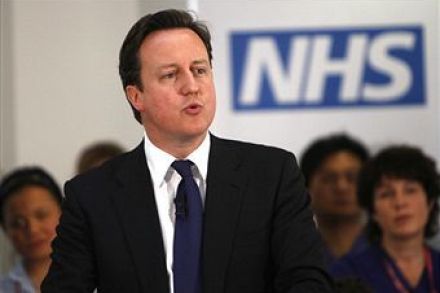
David Cameron is at his best when his back is to the wall. His speech on the NHS was largely as expected – a charm offensive designed to appease his warring coalition and reassure a fevered public. I’ll wager that he has succeeded; but reservations and pitfalls remain. Cameron recognises that competition is the stiking point for most Liberal Democrats, while the Tories insist on it. Competition will stay. He said, “New providers, more choice and competition raises standards and delivers value for money.” However, competition will not be unbridled. Cameron reassured doubters, “But let me clear, no: we will not be selling off the NHS, we will not be moving towards an insurance scheme.

Miliband offers with one hand and stabs with the other

From our UK edition

Ed Miliband delivered a speech at the Festival Hall this morning. A couple of strategic issues emerged from it. The first is that Labour has decided that the IMF is wrong: “This Government is going too far and fast, hitting families and making it harder to reduce the deficit.” This is not altogether surprising. Ed Balls’ recent article in the News of the World suggested that Labour will attack on the cost of living and youth unemployment, both of which may serve to slow the rate at which the deficit is reduced. As Fraser noted yesterday, Labour is aided by rising inflation, which is deepening the effect of cuts. However, Labour is still yet to admit to its role in the crisis or reveal how it would cut the deficit.

Accentuate the differences

From our UK edition

This is an age of ideas, not of ideology. That is the thesis of Amol Rajan’s enthralling overview of the intellectual trends in contemporary British politics, published in today’s Independent. As part of the piece, Rajan has interviewed Maurice Glasman, who gives a far clearer account of 'Blue Labour' than he did during his recent comments to the Italian press. Communities must be organised to resist the caprices of capital and the dead-hand of the state. Resist is probably the wrong word because the aim appears to be, in Philip Blond’s celebrated phrase, the ‘recapitalisation of the poor’, which implies some form of empowerment. Rajan notes that Glasman holds a lot in common with Philip Blond’s Red Toryism and the Big Society.

Cameron’s health worries

From our UK edition

David Cameron has made the NHS his political mission. “I can do it (explain his priorities) in three letters: NHS,” he once said. It was a reassurance that the NHS was safe in his hands. His conviction doubled as a vital tactical stance to prove that the Tories were 'nasty' no more. So, the news that he is re-affirming his faith with an NHS pledge card is telling – a response to the fact that the public do not trust the Conservatives with the health service. It's back to square one. According to Benedict Brogan, the pledges simply reiterate that the Tories can be trusted with the NHS. There is no attempt to explain how reform will unfold, nor indeed whether it will unfold at all.

The return of the signature parade

From our UK edition

Oh dear, we're back to letter-writing again. 52 academic sorts — including the Labour advisor Richard Grayson and Blue Labour proponent Stuart White — have a letter in today's Observer urging George Osborne towards a 'Plan B' for the economy. They even sketch out, in less than 150 words, what that Plan B might look like. And, strangely enough, it has more than a tinge of Ed Miliband about it, including — and I quote — a green new deal; a focus on targeted industrial policy; the empowerment of workers; "unsqueezing" the incomes of the majority, and so on. I say we're back to letter-writing again, because it's all so reminiscent of one of the most unedifying episodes in the fiscal debate so far, from before last year's election.

Charles Moore warns that the Downing Street machine isn’t working

From our UK edition

Charles Moore, Margaret Thatcher’s biographer, is one of the columnists most sympathetic to and best informed about what David Cameron is trying to do. So when Charles warns that the current set-up of Downing Street isn’t working for the Prime Minister, Number 10 should take notice. Charles’ worry is that the new Downing Street set up is insufficiently political, that policy and politics are being kept too far apart. I think Charles is right about this. The Number 10 policy unit is now made up mostly of civil servants or former management consultants who, by their very nature, aren’t intellectually or ideologically committed to the Cameron public service reform agenda.

Cameron’s European opportunity

From our UK edition

Jean-Claude Trichet’s speech yesterday proposing a ministry of finance for the eurozone (£) can be taken as setting out how the European Central Bank wants to resolve the eurozone’s problems. It is yet another example of how the European elite use crises to advance integration.   But just as important from a British point of view is Trichet’s admission that the overall package of changes he is talking about “naturally demand a change of the [EU] treaty". This, as Fraser has written previously, presents David Cameron with a glorious opportunity to take advantage of this moment to redefine Britain’s relationship with the European Union.

Not just a wily Fox, but a watchful hawk with time on his side

From our UK edition

Liam Fox is fond of reminding us that he didn’t come into politics to cut the armed forces. A wistful look falls across his face when he says it – an indication of frustration as much as sincerity, a sense deepened by his letter of concern about the government spending so much more on international development. Opponents of Fox might characterise this as hypocrisy: he would reduce the size of the state without touching the armed forces, they say. His enemies in the Conservative party say that it’s typical of this “clever fool’s” intellectual indiscipline. Fox the military and fiscal hawk wants to “have it both ways”.

Where we are in Afghanistan

From our UK edition

I wrote back in November that as we approached the July deadline when President Obama promised to start drawing down troops from Afghanistan, the tensions between politicians and military would re-emerge, as “the military ask for more time to get it right, and Obama tries to hold them to the deal he thought he made in late 2009”. This is now coming to pass, in London as well as Washington. I also argued that having some sort of public timetable for the troop drawdown was a reasonable solution, perhaps the only solution, to the politicians’ problem of balancing conflicting messages to different audiences in Afghanistan and at home.

Building a yellow-beating strategy

From our UK edition

If the Tories are to win an overall majority at the next election, they are almost certainly going to have to take some seats off the Liberal Democrats. Given that the Tories have problems in Scotland and the urban north, the party needs to win seats like Somerton and Frome.  This fact is why Tory MPs are paying such attention to a piece by Rob Hayward on Conservative Home. Hayward, a former Tory MP who has advised the party on the coming boundary review, points out that where the Lib Dems had an MP, their vote in the local elections pretty much held up.  This implies that removing Lib Dem MPs at the next election will be harder work than many Tories think.

Lansley’s inflated sense of his own department’s spending

From our UK edition

The listening is over, now for the legislating. But if you're keen to find out how Andrew Lansley's health reforms will look in the end, then don't expect many clues in his article for the Telegraph today. Aside from some sustained hints about involving "town halls" and "nurses" in the process, this is really just another explanation of why the NHS needs to change — not how it will change. Lansley's central justification is one that he has deployed with greater frequency over the last few weeks: that, without change, the NHS will become too cumbersome and costly a beast.

The Tory euro-wars make a brief return

From our UK edition

The Europhilic ghost of Ted Heath is stalking the House of Lords, upsetting the passage of the European Union Bill, the bill containing the coalition’s EU referendum lock. Lord Armstrong of Illminster, who was PPS to Edward Heath between 1970 and 1975, is trying to introduce a ‘sunset clause’ to ensure that the bill lapses at the end of this parliament. (He is working with Labour whip Lord Liddle, although Labour insists that this is not party policy.) Another amendment has been tabled to guarantee that referenda are binding only if turnout exceeds 40 per cent. This could mean that Britain succumbs to legislative creep from Brussels because only major issues (such as joining the Euro) are likely to attract sufficient turnout.

Clarke’s crimes

From our UK edition

One of the Conservative leadership’s worries at the moment is that the party is losing its reputation for being tough on crime. So it won’t welcome today’s Daily Mail splash about how a prisoner was granted permission by Ken Clarke to father a child by artificial insemination.   Now, we don’t know the precise details of the case, meaning that it is hard to come to a firm judgement. But I understand that when he was justice secretary Jack Straw rejected these kind of applications. He was, one familiar with the issue tells me, of the view that prisoners should not be allowed to benefit from non-medically necessary NHS services.   One intriguing thing to watch is how Ken Clarke responds to this story.

More ermine troubles for Nick Clegg

From our UK edition

Tory backbenchers have been whispering to the Times (£), and their words will not hearten Nick Clegg. If the coalition pushes for Lords reform, one says, then about 50 of them will rebel. "If you were listing priorities for the Tories, I'm not sure you would put this at the top," another adds, "[it might be] bumped down by other priorities that come along." Much hinges on how eager David Cameron is to confront this resistance, and hasten a policy that was more or less writ into his party's manifesto. In the weeks following the AV referendum, the Tory leader has been happy for Clegg to act alone as the scourge of an unelected Lords. But, without support, Clegg could just look like the fall guy, there to take the heat for yet another Lib Dem disappointment.

Less listening, more talking

From our UK edition

There was an exchange on Question Time last night that may go some way to explaining why the government’s health plans are so mired. One panellist, media lawyer Charlotte Harris, said that she was very worried by the substantial cuts being made to the NHS’ budget. Large sections of audience greeted this with rapture. (From 44 mins.) Immediately, Tory Louise Bagshawe and Lib Dem Jeremy Browne tried to grab David Dimbleby’s attention. It fell to Bagshawe to correct Harris, pointing out that the government has increased spending on the NHS when Labour would cut. The audience responded with boos – more in disbelief than disagreement, incredulous that the Tories would do anything other than cut the NHS.

Tory MPs launch NHS reform counter-offensive

From our UK edition

Nick Clegg’s speech on the NHS today has fanned the flames of the Tory backbench rebellion on the issue. Tory MPs’ tribal instincts have kicked in and even those who were worried about the Lansley plan are now swinging behind it. As Nick Watt revealed earlier today, there’s currently a letter from Nick de Bois urging Tory MPs to set out their red lines on health service reform. One thing that Tory MPs keep repeating to me is that they are not prepared to see the Lib Dems ‘take the NHS backwards’. This is their most fundamental red line and it translates to a determination not to have the level of competition and private sector involvement in the health service reduced.