Conservative party

The Tory divide over European bail-outs

From our UK edition

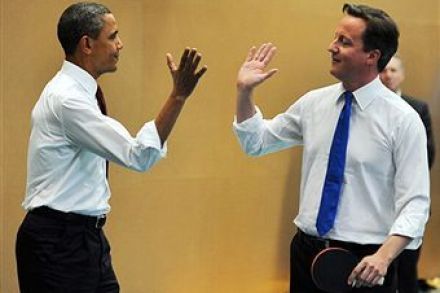
As Obama and Cameron played table tennis yesterday, a considerably more furious game was being waged between the government and Tory backbenchers. It related to a Parliamentary motion tabled by Mark Reckless – and described here – that sought to stem UK involvement in any future bailouts for eurozone countries. All well and good, you'd think, until a rival amendment percolated down from on high to dilute Reckless's proposals. This new amendment would only go so far as to "urge the Government to raise the issue of the [bailout mechanism] at the next meeting of the Council of Ministers of the European Council". The green benches were set for a violent back-and-forth 'tween one side and the other. The outcome of all this was revealed yesterday evening.
A good time to go

From our UK edition

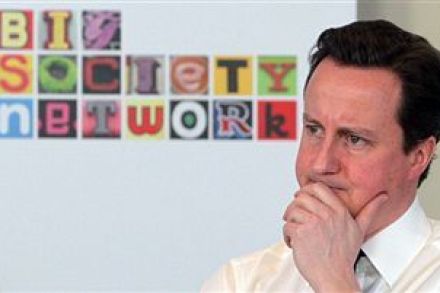
Today is, as the saying has it, a good day to bury bad news. With President Obama on the ground and an ash cloud in the air, not much else is going to get a look in on the news’ bulletins. But it is worth noting that Nat Wei, the government’s big society advisor, has quit his role today having scaled back his involvement in February. Wei has been pretty detached from Downing Street for the last few months, his role rather usurped by Cameron’s big society ambassadors, Shaun Bailey and Charlotte Leslie. So his departure won’t make much difference to the government. But it is still rather embarrassing as it gives the press another chance to dredge up all the political problems with the whole Big Society agenda.

A coup for the Tories?

From our UK edition

The Tories are cock-a-hoop about the defection of UKIP MEP David Campbell Bannerman – positively crowing, in fact. “There’s nothing more satisfying,” said one CCHQer, “than UKIP suffering.” Activists and MPs alike reckon that the Conservatives could have won a majority last May if it weren’t for UKIP in the south-west. Vengeance is sweet, but is it of lasting importance? Campbell Bannerman has used a blog post to justify his action: David Cameron is an inspiring leader and an avowed eurosceptic. Perhaps it will become a salve for the right, increasingly seen as Cameron’s blind spot. Equally, the answers Campbell Bannerman gave to Total Politics’ Amber Elliott could be used in the tussle for wavering eurosceptics.

Stop Gordon Brown

From our UK edition

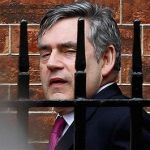
Gordon Brown's friends have launched a shameless effort to compel the government into nominating him for the IMF post. The government would be mad if they did. Mad. This is not about petty score-settling, as yesterday's Evening Standard would have it. This is about qualifications to lead, and the former Prime Minister, despite his intellect, does not have those skills. He led the country to ruin and remains in denial about it: he saved the world, don't cha know. The UK should be smarter about using talent from across the House, but there are limits. And it is a bit rich for the ex-PM's friends to argue that David Cameron should back him. This is the man who gave lukewarm support to Paddy Ashdown's candidacy to run the UN in Kabul back in 2008.

Cutting through the BS

From our UK edition

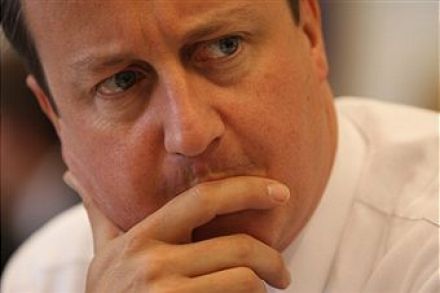
If the Big Society were a horse, it would be shot. The wounds are too deep, the contamination too great, its legs are broken. And, worse, the Big Society is giving a good idea a bad name. David Cameron tried manfully today, but we only ever hear about the BS (as most Tory MPs call it) when he’s trying to relaunch it. No agenda can be sustained with such thin support. It has become hopelessly confused as an issue. Myths have crept in that volunteering relies on heavy state spending, so Cameron is talking out of his hat. It ain’t so — Jonathan Jones did the digging — but people still believe it. Cameron gives multiple definitions of the BS, confusing the issue further. Does it mean families? Diversity of public service providers? More volunteering?

Conservative support to collapse at 6pm

From our UK edition

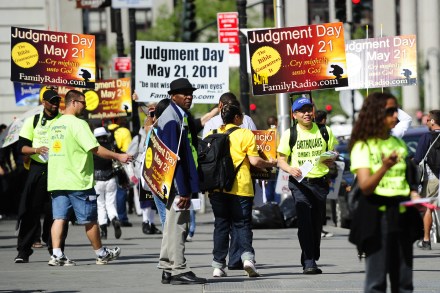
This evening, an event will occur that will make all the controversies and scandals of the last week seem somewhat irrelevant — at least according to American evangelical Harold Camping. He says that 6pm today is the time of the Rapture, as foretold in Thessalonians 4:17: all those "true believers" who accept Jesus Christ as their one true saviour will be taken up to heaven. For those of us left, we might wonder who will lead us through the "chaos and awful suffering" following both the loss of 40 per cent of the UK population and the earthquakes that will accompany it. Our Prime Minister — with his "sort of fairly classic Church of England faith" — would be gone.

Cable’s latest warnings and provocations

From our UK edition

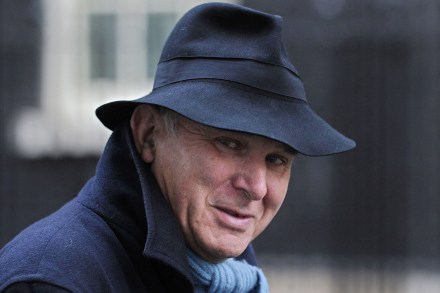
My favourite part of the Guardian's interview with Vince Cable today? When the business secretary says that his sermonic prescriptions from during the crash are of "enduring relevance" now. But there's more to the article than self-aggrandisement, not least Cable's gloomy overview of the British economy. It's not quite the same as Alastair Darling's Guardian interview in August 2008, but there is a touch of that here. "I think it is not understood that the British economy has declined by 6 or 7 per cent — it is now 10 per cent below trend," says Cable, "Britain is no longer one of the world's price setters. It is painful.

Will Britain leave the EU in 2025?

From our UK edition

Britain is going to stay in the EU for the next ten years at least. Of that I'm sure. But after that, when David Cameron's retired, William Hague has taken to writing books, George Osborne's had his chance and the 2010 intake run the party, the Tories are going to be more openly hostile to the EU. Labour will too; it has a larger reservoir of pro-EU sentiment among its ranks, but one that is shallower than it was. Focusing on the Tories, it is worth noting that nearly all of the names being bandied about as future Tory leaders have a visceral dislike of the EU. By and large they will, by then reflect popular opinion (if they don't already): as veteran EU watcher Charles Grant notes, there is a limit to how long an elite can cross the population.

Miliband tries to explain himself

From our UK edition

As the weekend drifts closer, there is a case that Ed Miliband has just enjoyed his best week as Labour leader. Not really from anything he has done — although his PMQs performance had more vigour than usual — but thanks to the backwash from the Ken Clarke calamity. MiliE's spinners could barely have dreamed, even a few days ago, that their man would gain the the fiery approval of The Sun on matters of law and order. But that is effectively what they gained yesterday. "Labour is now tougher on crime," bellowed the paper's leader column, "than our Tory-led government." Even today their editorial laments, "so much for David Cameron's pledge to provide a young, modern government in tune with 2011 Britain.

Tory backbenchers oppose cuts to the World Service

From our UK edition

There is a debate in the Commons this afternoon, urging the government to spare the BBC World Service from cuts. The resistance is being led by Richard Ottaway, chairman of the Foreign Affairs Select Committee and author of a report condemning the Foreign Secretary’s decision to cut funding for the service.   Ottaway is likely to be well supported, as the Tory right is exercised by the effect that cuts are having on Britain’s standing in the world. John Whittingdale is on side, and there were plenty of backbenchers (among them, David T.C.

Clarke for the high-jump

From our UK edition

Dominic Grieve’s fate as shadow Home Secretary was sealed by a lunch at News International headquarters in Wapping. Grieve went to lunch with various Sun executives and rather than talking tough on crime he laid into the paper for how it covered the issue, claiming that it stoked fear of crime. The word then came back to Tory high command, via Andy Coulson, that the paper would not endorse the Tories as long as Grieve remained in that job. He was duly replaced by Chris Grayling in the 'pub-ready reshuffle' of January 2009 after less than a year in the job. So one can only imagine how Downing Street feels about this morning’s edition of The Sun. It starts with the front page headline: ‘Clarke’s a danger to women…He must go’.

Clegg adheres to the script on deficit reduction

From our UK edition

What a curious speech by Nick Clegg to the CBI last night. Curious, not because it was bad — but because, in straining to give a uniquely "liberal" justification for deficit reduction and the spending cuts, the Deputy Prime Minister actually crafted an address that most Tory ministers should, and would, deliver themselves. Take his "liberal analysis" of the last decade: "On a liberal analysis, the last decade represented the worst of all worlds. On the one hand: unchecked private debt; an unsustainable housing market; an overleveraged banking sector; overreliance on City-based financial services while other regions and sectors suffered neglect.

Cameroons livid with Ken

From our UK edition

It is hard to overstate the fury with Ken Clarke in the Cameroon circle today. One well-informed Tory source just told me, ‘they [Cameron and Osborne] just can’t wait to see the back of him’ before pondering whether Clarke was now just too old for frontline politics. Another bemoaned that Clarke had managed both to deepen the party’s problems with women and further undermine its reputation as the party of law and order. While one more couldn’t believe how on a day when unemployment fell, two men were charged with the murder of Stephen Lawrence and the Queen and PM were marking a new era in Anglo-Irish relations, the coalition had managed to get a series of bad news stories to top the bulletins.

PMQs live blog | 18 May 2011

From our UK edition

VERDICT: That was probably the most straightforward PMQs that Ed Miliband will ever experience. Thanks to Ken Clarke, the Labour leader had several shots into an open goal — and most were excuted efficiently, if not skilfully. Cameron was left in an unforgiving position, and he just about hung in there, eventually mustering some sort of defence and then turning it around to Labour's mismanagement of the criminal justice system. It was an intriguing exchange, not least because it presaged what could become a major problem for the Tories — their crime and justice policy — and how Labour might exploit it. And it was all supplemented by a set of backbench questions that ran the gamut from blistering to blithering. For once, a PMQs to really remember.

Cameron must defeat Clegg and break the NHS’ monopoly

From our UK edition

'NHS good, private health bad'. 'State good, market bad'. 'Four legs good, two legs bad'. Whenever political leaders get into a tight corner they have to find allies fast. There is no time for reasoning to work its gentle magic. Basic sentiments need to be stirred and the popular favourite is usually hate. Yesterday Mr Clegg used this classic strategy to rebuild his support base. The cold-hearted Tories were at it again, dismantling that icon of compassion the NHS. In public they were declaring their undying love for it but out of sight they were promising fat profits for ‘health care corporations’ once the new law was passed. Mr Clegg even resorted to another child-like contrast.

Coalition’s NHS battle turns personal

From our UK edition

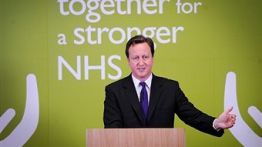
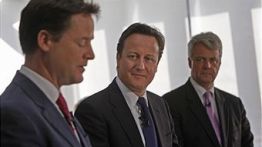
David Cameron’s ‘love for the NHS’ is a critical part of his political persona. It is, his advisers believe, what proves that he is a different kind of Tory. So it is remarkable that Nick Clegg is questioning it in semi-public. In a speech to Lib Dem MPs and peers last night — that Clegg would have known was bound to leak, he criticised politicians — eg, the Prime Minister — who express their love for the NHS but take advice from people who see NHS reform as a chance for private companies to make big profits. What makes this intervention all the more remarkable is that Downing Street has been on a full court press to deny the Observer’s piece which set this story running.

Clegg’s great rejuvenator falls a little flat

From our UK edition

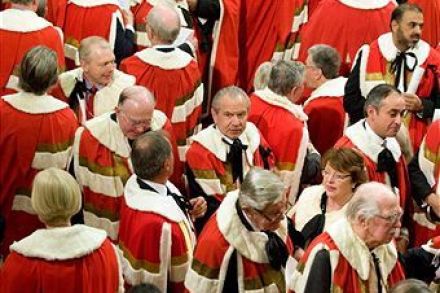
‘Constitutional reform is a waste of time, pure and simple. It never actually achieves its avowed end of reconnecting the voters with democratic institutions,’ wrote John McTernan, the former advisor to Tony Blair, recently. There are signs that the current government agrees.   Nick Clegg has unveiled the next stage of his constitutional reforms today by revealing draft plans to reform the House of Lords. The coalition speaks in unison in public: the Cabinet discussed reform last and apparently there was “very strong support for the proposals around the table”. But dissenting voices must have sounded in private.   The inestimable Rachel Sylvester reveals (£) that Clegg’s draft is very rough.

Cameron’s personnel issues

From our UK edition

The past fortnight has been instructive in just how little control David Cameron has over the make-up of his Cabinet. Every choice he makes, it seems, has to be weighed against the fragile balance of the coalition, as well as against the internal divides of the two coalition parties themselves. I mean, Vince Cable calls the Tories "ruthless, calculating and thoroughly tribal" — only the latest of a series of provocations — and his position doesn't look precarious in the slightest. Chris Huhne is mired in a scandal that may still terminate his political career, and yet there is little indication that the scythes of Downing Street are moving to cut him down.

Labour’s apparent shift on free schools

From our UK edition

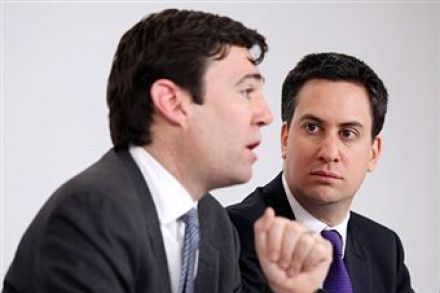
As I wrote on Friday, there is a sense that some on Labour's benches want to soften the party's education policy. It seems that the first subtle shift may have come over the weekend. Total Politics' Amber Elliott reports on a Fabian Society meeting where Andy Burnham apparently dropped his blanket opposition to free schools. Amber writes: 'Speaking at the Fabian Society conference at the weekend, Burnham signalled that he is not against free schools such as the one former-No10-strategist-turned-teacher Peter Hyman is setting up. Labour blogger Anthony Painter tweeted from the conference: "@andyburnhammp supports Peter Hyman's free school as a Labour alternative to the Tory concept. But also says whole system matters #Fabians.

Lansley stands up for his reforms

From our UK edition

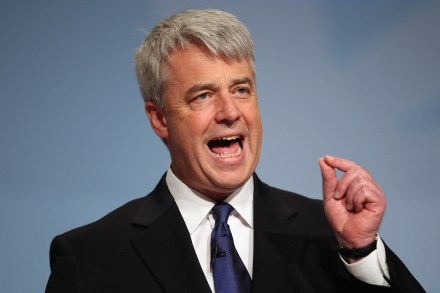
If there's anything that stands out from Andrew Lansley's interview with the Sunday Times (£) it is his air of quiet defiance. Of course, the Health Secretary sounds some of the conciliatory notes that have crept in to the government's rhetoric since they decided to pause, listen and engage on NHS reform. But he also stands up for the original reforms as he conceived them. "From my point of view," he says, "the White Paper was setting out what sensible, intelligent people inside the NHS were saying." For him, the concerns that remain are not with the general thrust of his reforms, but with "implementation, the nuts and bolts of how it will work." Lansley also makes sure to bind Cameron into the White Paper.