Conservative party

Cameron mustn’t let the police top brass bully him into silence

From our UK edition

The police have been busy defending themselves this weekend against any criticism of their performance. They aim to stop elected politicians from making any comment on their performance. But David Cameron should not—and must not—back down from both his criticism of police tactics and his conviction that the force urgently needs reforming. The truth is that the initial police response to the riots was hopelessly inadequate. If senior police officers really do think that the Met’s performance on Saturday, Sunday and Monday was adequate, then that in and of itself makes the case for reform. Losing control of the streets in sections of the capital is a failure.

Boris’ long-game strategy

From our UK edition

Has the sheen come off BoJo? The question is echoing around some virtual corridors in Westminster this weekend. The Mayor of London was caught off guard by the recent riots and his initial decision to remain en vacances made him look aloof and remote, a sense that grew during his disastrous walkabout in Clapham. Then he joined Labour in calls for cuts in the police budget to be reversed, a decision that reeked on opportunism, superficially at least. The FT’s Jim Pickard has an excellent post on these matters and he reveals that Boris Johnson has been voicing these concerns in private for months and that he has a brace of Cabinet allies: Liam Fox and Michael Gove.

Time for action

From our UK edition

The facts of life are Conservative, as the old phrase has it. The events of the past few days have shown the urgent need for Tory social policies. The case for reforms to the police, welfare and education has been amply demonstrated.  Some in the government appear to get this. But there is also an odd hesitancy about getting on the front foot. As Tim Montgomerie said yesterday, why wasn’t a minister put up for Question Time last night? They could have used the programme to push Cameron’s reform agenda.

Cameron has the opportunity to lead the nation

From our UK edition

The recall of parliament today offers David Cameron the chance to take command of the current situation. The police might have horribly mishandled the situation on the first few nights of the riots and Cameron’s government might have been caught flat-footed by them. But he now has the opportunity to build on the successful policing of the last two nights and his strong statement yesterday and lead the national response to this crisis. The mechanics of a parliamentary statement allow Cameron to set the terms of debate. He also has the huge advantage of simply being the Prime Minister. The nature of his office affords him the opportunity to speak for the country.

Coalition united in restoring law, order and property

From our UK edition

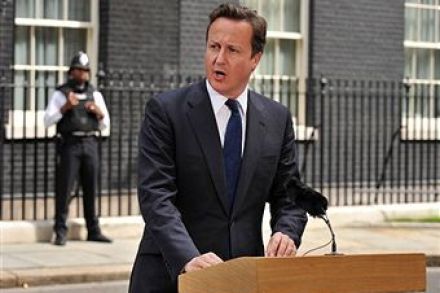
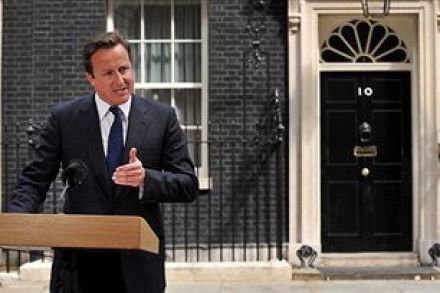
David Cameron’s convictions are best expressed in anger. Cameron exuded an air of the patrician yesterday with his righteous moral certainty. This may have made some observers squirm, but others would have seen this seething performance as the essence of leadership in crisis. Cameron is likely to sustain this tone in parliament today. He will say that there is a “sickness” in our society and set out his plan for curing the malaise. The political class has already offered the government a panoply of options to pursue, but the coalition is expected to stand by its current course of education and welfare reform; if anything, these riots confirm their necessity.

Gove versus Harman

From our UK edition

The Guardian's Nick Watt already has a detailed and insightful post on last night's Newsnight bout between Michael Gove and Harriet Harman.

Cameron gets forceful

From our UK edition

So far as words matter, David Cameron has just delivered one of the most forceful statements of his political career. It contained all the anger of his address yesterday, but went much further in its diagnosis. "There are pockets of our society that are not only broken, but frankly sick," he said, adding that, "the one word I would use to sum it up is irresponsibility." His most memorable line was that, "It is as much a moral problem as it is a political problem." This was the campaigning Cameron that we have glimpsed only briefly, most notably during his conference speech in 2009. Tim Montgomerie is saying that Cameron has found his mission — but I'd disagree.

The politics of our discontent

From our UK edition

Even by the normal standards of Monday mornings, this one reeks. Just sniff around you. That burning smell, it's either coming from the global stock markets as they strain against the US downgrade, or from those places in London where the rioting spread last night. Although the destruction in Brixton, Enfield, Walthamstow and Waltham Forest didn't match up to that on Saturday in Tottenham, it still involved fires, missiles and clashes between rioters and the police. Reading the reports and watching the footage online, looting appears to have been one of the most popular sports of the evening. In terms of the short-term politics — as opposed to the slightly more medium-term politics of what can be done to properly fix these problems — two issues stand out.

Department of Bad Ideas: Polly Toynbee Writes About American Politics

From our UK edition

Surprise! Polly Toynbee's column on the Tea Party today is a mess. You wouldn't expect La Doyenne to agree with the Tea Party's thirst for deficit reduction, nor with its willingness to take the United States to the edge of a technical default. That's fine. Equally, there's certainly a strain of conservative thinking immune to logic or reason. But much the same could be said of certain classes of Guardian readers too. This, however, is dreadful or, at best, simply lazy: The founding fathers built a constitution of checks and balances believing reasonable men would agree; how could they foresee Sarah Palin, Michele Bachmann or Glenn Beck? To the British eye, America was always dangerously prone to waves of populism and McCarthyite panics.

Alexander rallies behind the 50p rate

From our UK edition

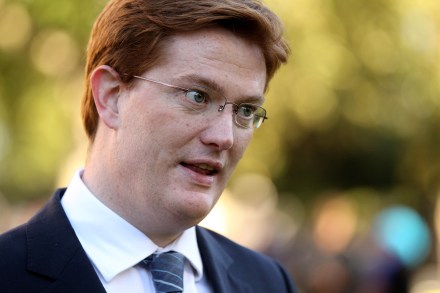
Danny Alexander is usually the very model of collective responsibility: sober, unfussy and diligent, he sets about the coalition's work without ever causing a scene. Which is what makes his televised comments about the 50p tax rate earlier all the more striking. When pressed on the subject by interviewer Sophie Rayworth, the Chief Secretary to the Treasury was forceful in response. The government doesn't necessarily want to cut the rate, he suggested, and those who thought it would are inhabitants of "cloud cuckoo land". He went on: "We set out in the Coalition agreement, and it's something that we as Liberal Democrats pushed very hard for, that the Government's first priority in tax reductions would be tax cuts for people on low and middle incomes.

‘Fessing up to drug use, the Mensch way

From our UK edition

Just the thing to liven up a slow news day: a response from the Tory backbencher Louise Mensch to a series of insinuating points put to her by "David Jones Investigative Journalists". The points were all about her time working at the record company EMI in the 90s; about her drug use, night-clubbing habits, that sort of thing. And she has answered them in marvellously unapologetic fashion. You can — and should — read the whole exchange here, although Mensch's response to the question of whether she "took drugs with Nigel Kennedy at Ronnie Scott's in Birmingham, including dancing on a dance floor, whilst drunk, with Mr Kennedy, in front of journalists," is worth pulling out: "Although I do not remember the specific incident, this sounds highly probable.

The romance isn’t dead on Downing Street

From our UK edition

Westminster, today, is all a-titter about an anecdote contained within this FT article about Steve Hilton. It is, it must be said, a good 'un: "Mr Hilton’s crusade against employment legislation also saw him suggest that Mr Cameron just ignore European labour regulations on temporary workers, prompting an exasperated exchange with Jeremy Heywood, Downing Street’s permanent secretary. 'Steve asked why the PM had to obey the law,' said one Whitehall insider of a meeting in March to discuss the government’s growth strategy. 'Jeremy had to explain that if David Cameron breaks the law he could be put in prison.

The scramble away from cosiness

From our UK edition

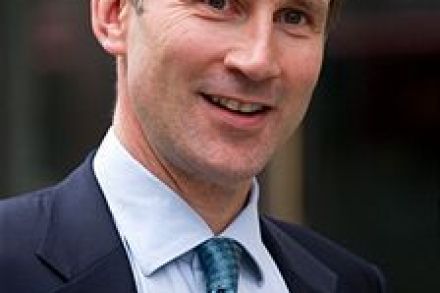
Aside from Boris's exhortations to George Osborne, one of the most ear-catching lines of the day has been uttered by Jeremy Hunt. "I think the relationships between politicians and the media got too cosy," said the culture secretary on Radio 5 this morning. He's certainly not the first to make the point, but he is one of the most prominent Conservatives to do so. The words, I suspect, were chosen to cool the heat rising from yesterday's lists of meetings between ministers and media organisations. Hunt himself, it was revealed, has met seven times with News Corp types since the general election. Hunt's admission also opens the prospect of a fevered struggle between the Tories and the Lib Dems to appear less cosy with the media establishment.

Boris to the fore

From our UK edition

Politics has a big, blond hair-do today, with Boris wiff-waffing all across the airwaves. The Mayor of London has already, this morning, called on George Osborne to do more to cut taxes, specifically the 50p rate and national insurance. And he will be leading a series of events, throughout the day, to mark the fact that the Olympic Games are exactly one year away. The Aquatic Centre will be baptised, the medal designs revealed, and general celebration staged across the city. It's difficult not to see all this as part of Boris's re-election bid, and perhaps as a marker for his wider ambitions. Although London's Olympics have not been an unambiguous positive so far, they still give him a bigger and friendlier platform than most politicians will enjoy over the coming year.

Lansley’s letter pours fuel on Labour’s bonfire

From our UK edition

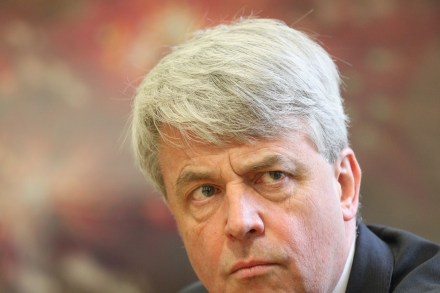
Just when everyone is all afroth about the murky connections between the political class and the media, a letter by Andrew Lansley to Danny Alexander has mysteriously leaked to the Telegraph. It was sent two months ago, and it concerns the government's public sector pension proposals. For five pages, Lansley riffs on about why the reforms may not be such a good idea, particularly when it comes to NHS workers. "We face a real risk, if we push too hard," he says, "of industrial action involving staff groups delivering key public services." He suggests that lower and higher paid staff may just opt-out of the pensions scheme altogether, leaving the Exchequer with "reduced receipts in the short term while still having to pay for past pension promises.

Llewellyn is more than a friend to Cameron

From our UK edition

Edward Llewellyn has been making headlines and there was speculation about his future. Many a right-wing MP rubbed their hands with glee, seeing Llewellyn as a ‘wet’ impediment to a tougher European policy. But, Number 10 came out strongly in support of the PM’s aide. Some people huffed, whispering that loyalty to friends like Llewellyn means more to Cameron than the health of the party. But this is a blinkered reading. First of all, John Yates himself said he thought Llewellyn had acted properly.

Loyal Clegg’s slippery tongue

From our UK edition

Oddly, David Cameron’s most voluble supporter throughout the phone-hacking psychodrama has been Nick Clegg. The deputy prime minister took to the airwaves when no Tory dared or wanted to. Earlier today, Clegg gave a speech-cum-press conference and he defended the prime minister again, saying that he had very little to add to Cameron’s statement yesterday. He also defended Cameron over unanswered questions about Rupert Murdoch’s purchase of BskyB; Clegg said that Cameron had “nothing to do” with the deal, although he added that Vince Cable’s reservations had been vindicated. Clegg then elaborated on media regulation. Unsurprisingly, he insisted that the status quo must change.

The turning point?

From our UK edition

There’s a feeling in Conservative circles that they have finally turned the corner on phone hacking today after David Cameron’s marathon performance at the despatch box today. At the 1922 Committee this evening, Cameron entered and exited to the banging of desks. But, tellingly, there were no questions on phone hacking and Andy Coulson. Instead, the crisis in the eurozone was the main subject of discussion. Cameron did, though, refer to the matter. At the end, he recalled how Peter Tapsell, the veteran Tory MP, had said of him that ‘he had never known a Prime Minister more adept at getting out of scrapes. But he had also never known a Prime Minister who got into so many scrapes.

The (non-)effect of Hackgate

From our UK edition

No Labour bounce, no drop in approval for Cameron or his government. That's the impact that two weeks of front pages dominated by the phone hacking scandal on the opinion polls:  Ed Miliband's numbers have improved, which will come as some relief to the Labour leader who suffered a terrible month of polls in June. But despite a 13 point jump in the last fortnight, his net approval rating has only recovered to where it was six weeks ago, and that was hardly a rosy position. Certainly, Ed's response to the scandal seems to have reflected well on him. 49 per cent of the public think he's handled the affair well, compared to 36 and 33 for Cameron and Clegg respectively. Perhaps most strikingly, even Tory supporters think he's done well, by 44 per cent to 35.

A real crisis?

From our UK edition

David Cameron is under pressure now that the phone hacking scandal has slithered its way closer to his door. The news that Neil Wallis informally advised Andy Coulson in the run up to last year’s election will spark questions about Cameron’s judgement and the competence of his leadership, as will the revelations about his chief of staff, Ed Llewellyn. Criticism is likely to come from both sides of the House: Tories I’ve spoken to are none too pleased about yesterday’s events. Cameron rebuffed his critics at last week’s PMQs by rising above politics to strike a calm and prime ministerial tone, for the most part. He will have to do so again.