Conservative party

PMQs live | 13 July 2011

From our UK edition

A change from the Coffee House norm for this last PMQs before the summer recess. Instead of the usual live-blog, we'll be live-tweeting the session, and our tweets will appear in the special window below (you may be familiar with it from Guido's PMQs coverage). Tweets from other political types may also appear. And you can add your own remarks to the live-stream not in the comments section, but in the space below the window. Anyway, it should all be fairly self-explanatory. It might work, it might not. In either case, do let us know what you think.
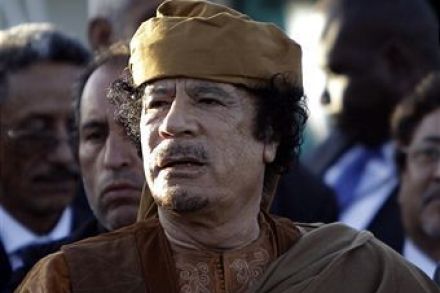
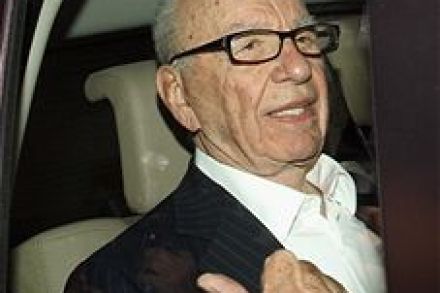
Might Gaddafi shunt Murdoch from the front pages?

From our UK edition

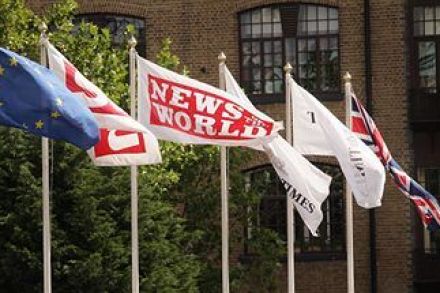
Loyal Tories and government types are hoping that the media will soon move on from Murdoch. And the unusually heavy briefings emanating from George Osborne’s office last night were perhaps an attempt to shift the spotlight. But it will take a very gripping story to displace the phone hacking saga, especially if yet more has-been politicians shuffle back into public life to settle old scores with Murdoch. With the British press immersed in this tempestuous revenge drama and the whirl of hypocrisy that surrounds it, you wouldn’t guess that the euro has embarked on a 72 hour ordeal that may decide its future.   But, Rupert Murdoch’s mugshots could yet be superseded by those of Colonel Gaddafi.

The government urges Murdoch to drop the bid

From our UK edition

The news that the government is to support Labour’s motion tomorrow calling on Rupert Murdoch and News Corporation to withdraw their bid for BSkyB is a victory for Ed Miliband — and a sign of how all political parties are rushing to distance themselves from Murdoch. George Osborne likes to say that the ‘first thing you have to do in politics is learn to count’ and the truth was that the government didn’t have the votes to block this motion even if it wanted to. Tory MPs had no desire to be seen to be voting for Murdoch in the present climate. But it is still remarkable that the Tories will join in urging Murdoch to withdraw his company’s bid to takeover BSkyB.

Attention turns to the police

From our UK edition

Today, the spotlight in the phone hacking scandal is shifting onto the police — who have an awful lot of questions to answer. Indeed, I suspect at the end of this the reputation of the police will have been hugely damaged. The evidence from senior Met officials — some retired, some serving — has not convinced the Home Affairs committee today. It is a sign of how poor relations are between the police and MPs that a Tory MP has asked the current and former assistant commissioners of the Met if he they have ever taken a bribe from a journalist. Both John Yates and Andy Hayman reacted indignantly to the question but the committee members clearly thought the question was reasonable.

Livingstone’s double standard over Murdoch

From our UK edition

As soon as the recent phone hacking scandals broke, Ken Livingstone lost no time in castigating Boris Johnson’s ‘dire judgement’ in dismissing the original claims as ‘codswallop cooked up by Labour’. Livingstone also said that Boris ‘had at least two meals with Rebekah Brooks, one dinner and one lunch with James Murdoch, and one dinner with Rupert Murdoch [when he was] trying to keep the lid on this story.’ Livingstone was at it again on the Today programme this morning, saying the ‘scandal goes right to the heart of the establishment’. Certainly, it was rash to describe the claims as ‘codswallop’, but is dinner such a crime?

What didn’t make it into today’s reform paper?

From our UK edition

"It's like Blair and Brown — but without the acrimony." So sayeth one Cabinet Office source, describing the prolonged build-up to today's public services White Paper to me a couple of months ago. His point was that, although the yellow and blue halves of the Downing Street operation are genuinely chummy with one another, their differences can still put a block on reform. In his story, the Tories are like Blair, striving to go further, faster, stronger. Whereas the Lib Dems can occasionally stand in the way. So what has been blocked from the White Paper? Listening to David Cameron today, you wouldn't guess that anything has been. "Let me assure you of this," he said in his speech this afternoon, "we are as committed to modernising our public services as we have ever been.

Hunt flounders in very choppy water

From our UK edition

Jeremy Hunt’s statement today confirmed that News Corps’ takeover bid for BSkyB was being referred to the Competition Commission. But the questions afterwards were dominated by Labour questions about Andy Coulson’s appointment. Hunt could not answer whether or not Coulson had been positively vetted. Nor, could he say when Cameron and Coulson last spoke. Indeed, Hunt initially claimed Cameron had not spoken to his former director of communications since Coulson stepped down, before quickly correcting himself. The Culture Secretary did do a decent job of sounding reasonable and bemoaning Labour’s tone. But without a proper line on Coulson, he was left floundering. There were two other things worth noting from the session.

The wheels come off the BSkyB deal

From our UK edition

The BBC reports that Jeremy Hunt has written to Ofcom and the Office of Fair Trading about Rupert Murdoch’s proposed takeover of BskyB. Hunt asks the regulators if they now have any ‘additional concerns in respect of plurality over and above those raised in your initial report to me on this matter received on 31 December 2010.’ Hunt concentrates on Murdoch’s provisions about maintaining the independence of Sky News. His concern with plurality is ironic given that the British media has become much more plural following the demise of the News of the World. This favours Murdoch’s takeover bid, on the face of it at least. Hunt also touches on the ‘fit and proper persons tests’ with regard to the deal.

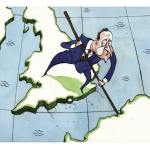
Major proposals on the future of Scotland

From our UK edition

There have long been suspicions in Westminster that David Cameron uses John Major as an out rider, the last Tory Prime Minister advances an idea that allows the current one to gauge opinion on it. Certainly, Major and Cameron are close. Remember how Major was used by Cameron in the days following the indecisive general election result. So there’ll be suspicions that Major is out riding for Cameron with his speech, covered in the Sunday Telegraph, arguing that the Scottish Parliament and Executive should be handed powers over everything apart from foreign, defence and economic policy. In exchange for this, the Scots would accept a reduction in the number of Scottish seats at Westminster.

Roadblocked to death?

From our UK edition

You may doubt that Downing Street is doing much politics beyond the phone hacking saga at the moment — but it is. The coming week will see the launch of the long-awaited, much-delayed public services White Paper, which is intended to set the framework for more or less every service we receive from the state. You may remember that Cameron heralded it with an article for the Telegraph back in February. Then, he suggested that private and charitable providers would be as privileged as state ones, writing both that, "we will create a new presumption that public services should be open to a range of providers competing to offer a better service," and that, "the state will have to justify why it should ever operate a monopoly.

The story sticks to No.10

From our UK edition

Big and bold, the contraction "No.10" appears on most of this morning's front pages. Or, failing that, the words "former Cameron aide". After the arrest of Andy Coulson yesterday, it was ever going to be thus. But it's still a sign of how closely Downing Street is being bound into the phone hacking scandal. Cameron's call, yesterday, for a judge-led inquiry into the whole, stinking affair — which was, you suspect, intended to deflect some of the heat away from his prime ministerial pulpit — is treated almost as a footnote. It's all Cameron, Coulson, Cameron, Brooks. There's more emphasis on Downing Street inside the papers, too.

Clegg: don’t let’s be beastly to the eurozone

From our UK edition

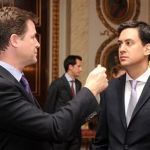
If you strain your ears, and listen very carefully above the din of the phone hacking scandal, then you may just hear Nick Clegg's voice wafting across the Channel from Paris. Our Deputy Prime Minister is on the Continent today, delivering a speech that, in other circumstances, might have made more of a splash. This is, after all, a speech in which he stands up for the eurozone, and chastises those eurospectics — some of them within the coalition parties — who are eagerly anticipating its collapse. Or as he puts it himself: "A successful eurozone is essential for a prosperous UK. So there is no room for Schadenfreude here, no place for wagging fingers.

Boris or Dave?

From our UK edition

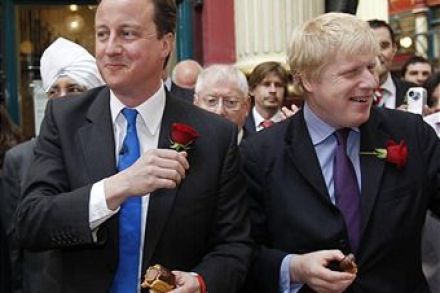
Schoolboy rivalries never quite go away - just look at the ongoing competition between Boris Johnson and David Cameron. Even though it was Cameron who held up Johnson’s arm in a symbolic victory gesture after Boris became Mayor of London in 2008, you wonder if Cameron had his doubts. After all, Cameron never actually approached Johnson about the post, initially choosing Nicholas Boles as the Conservative candidate. Furthermore, Boris Johnson refused to rule out a future bid to become Prime Minister. With the increasing unpopularity of the coalition government and its leaders, the Spectator decided to conduct a(n admittedly unscientific) poll of 75 people: would Johnson, the ‘cycling mayor’, make a better Prime Minister than Cameron?

The phone hacking scandal tests the ties that bind the coalition

From our UK edition

Gosh, this phone hacking scandal is moving at a pace. Fresh from the wire comes news that even the government is reviewing its advertising contracts with the News of the World; signs that Jeremy Hunt won't budge on the BSkyB deal; as well as further interventions by everyone from Ed Miliband to Boris Johnson. Overarching all that, though, are the hardening differences of opinion between the Tories and the Lib Dems. The yellow half of the coalition is going further and further in pushing for both an enforced pause to the BSkyB deal and a judge-led inquiry into the whole mess. Both Lord Oakeshott and Simon Hughes have called for the former. Nick Clegg's email to party members last night called for the latter, as did Chris Huhne on the Today Programme earlier.

Web exclusive: Extended interview with David Cameron

From our UK edition

We interview David Cameron for today's issue of The Spectator. Here's an extended version of that interview for CoffeeHousers: The most striking thing about David Cameron is how well rested he looks. You wouldn’t guess that he was the father of a ten-month-old baby, let alone Prime Minister. He has no bags under his eyes — unlike his staff. He also seems relaxed. He jovially beckons us in to his Downing Street office and then flops down into one of the two high-backed chairs and urges one of us to take the other: ‘the Chancellor’s chair’, he calls it, with a chuckle. The last time we interviewed him, during the general election campaign, he was a different man, tired and tetchy.

Cameron’s Coulson problems may be getting bigger

From our UK edition

The Guardian’s story that News International believes that Rebekah Brooks was on holiday when Milly Dowler’s phone was allegedly hacked will place further pressure on Andy Coulson, who was her deputy editor at the time. This is the second piece of trouble for Coulson in the past 24 hours following last night’s revelations. Some in News International are unapologetic about how Coulson is being treated. They say that if Coulson had not gone into Downing Street then the whole phone hacking saga would not have got a second wind and there wouldn’t be all this trouble. Indeed, they allege that Coulson had assured a senior figure at News International that he would not go into Downing Street if the Tories won the election.

PMQs live blog | 6 July 2011

From our UK edition

VERDICT: A crescendo of a PMQs, which started in sombre fashion but soon swelled into a vicious confrontation between the two leaders. It is strangely difficult to say who won, not least because both men had their moments. Ed Miliband's persistent anger — including over Rupert Murdoch's takeover of BSkyB — will have chimed with public sentiment. But Cameron went further than expected by backing a public inquiry into the phone hacking affair, and without much equivocation either. In the end, though, I'd say Miliband probably came out on top, for seeming less on the side of News International. 1242: No surprises from Cameron's statement on Afghanistan.

The parties take their positions as the phone hacking story deepens

From our UK edition

The political plates on phone hacking are shifting rapidly. The story has now ‘gone mainstream’ following the accusations about how the phones of Milly Dowler and the parents of the Soham victims may have been hacked.  Politicians are racing to catch up. Ed Miliband is rapidly moving into a more robust position. The Labour leadership doesn’t want to appear vindictive, to turn this into Labour v. Murdoch.

Labour make a public inquiry their cause

From our UK edition

I briefly mentioned Ed Miliband's assertive remarks about the News of the World earlier. But it is worth returning to the video, above, to highlight one of his specific demands. "A police inquiry needs to take place without fear of favour," said the Labour leader, "and then we need a much wider inquiry to restore the reputation of British journalism." Harriet Harman has since echoed this sentiment in Deputy Prime Minister's Questions, urging the government to "act" and establish a public inquiry into the newspaper trade. So, only hours after Tom Watson berated his party leadership for their timidity on this front, a public inquiry appears to have become official Labour policy.

Remembering Ronald Wilson Reagan

From our UK edition

The beatification of Ronald Wilson Reagan by American conservatives is itself a grisly affair but at least he was their President. The tendency of some on the British right to elevate Reagan to saintly status is just embarrassing. This does not mean he was not a fine President - in many ways he was - merely that all these years later it still seems impossible to achieve a balanced appreciation of Reagan's record in office. For many years, at home and abroad, he was under-rated, patronised by a complacent oppposition bamboozled by Reagan's style into thinking there was no "there" there; now the pendulum has swung too far in the opposite direction and we're asked by some to believe that Reagan was the greatest President in the history of the United States of America. This won't do either.