Conservative party

Why energy bills will be one of the big issues of the autumn

One of the big political issues of the autumn is going to be energy bills. Among Tory MPs, there’s mounting concern that the coalition’s green policies are driving up the price of energy rather than helping to bring it down. They fear that this is both acting as a drag on the economy and adding to the squeeze on family budgets. So, today’s story in The Times about how a carbon trading scheme—started under the last government—has led to households being charged, on average, £120 more than they should have been in utility bills is going to turn up the political heat on this subject. The paper alleges that: “Energy

Willetts’ musings

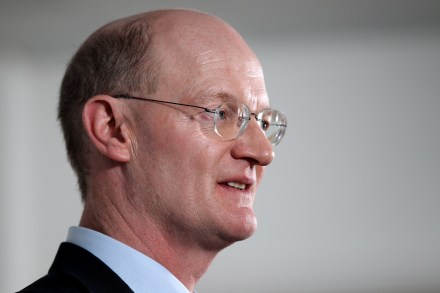
Coffee House has already touched on David Willetts’ interview with the Times (£), highlighting his view that the 50p tax rate is important to prove that “we’re all in this together”. Willetts does not limit his words to the top rate of tax. In addition to his universities brief, he discusses equal pay issues, social reform and the recent riots. Willetts confesses to being a “muser”, never happier than when applying his renowned brain to the broad sweep of government policy. “I wouldn’t be able to function properly as a politician unless I was able to range across some of these wider issues. It just wouldn’t be worth it,” he says.

Clegg at odds with many Lib Dems over 50p rate

The future of the 50 per cent tax rate is growing issue within the coalition. Unlike most government wrangles, this one doesn’t split on partisan lines, with the yellows on one hand and the blues on the other. The debate is largely being forged by personalities. George Osborne is well entrenched; Eric Pickles weighed-in for the race last weekend, saying that he wanted people “to keep more money in their pockets”, indicating that he hopes the rate is temporary. (He went take a swipe at Vince Cable’s mansions tax, which he described as a “big mistake”.)   It’s David Willetts’ turn this weekend. The Times reports (£) that Willetts believes

Clegg paints the world yellow

Nick Clegg laughed-off the dousing of blue paint he received in Glasgow yesterday, like one of Noel Edmonds’ unwitting victims. Today, Clegg has turned into the grinning douser: drenching his coalition partners in yellow paint by saying that the European Convention on Human Rights will not be watered down. Writing in the Guardian, Clegg says that the Conservatives are right to seek operational reform of the European Court of Human Rights, but the common ground ends there. He says that “the Human Rights Act and the European convention on human rights have been instrumental” in preventing injustices from council snooping to the misuse of DNA records and that the incorporation

Cameron’s immigration problem

Poor David Cameron. He pledged to reduce annual net migration from the current 240,000 to the “tens of thousands” and what happens? Net migration in 2010 was up by 21 per cent from 2009. In a way, he deserves the flak he’ll get because this was a daft target that could only have been set by someone poorly-advised about the nature of immigration. And the target allows success to be presented as failure. The inflow to Britain has stayed steady (see graph below), but the number emigrating from Britain has fallen. This is a compliment to Cameron: the most sincere vote people can make is with their feet. And in

The schools revolution in action

Harris Academies, one of the best-known new chains of state secondaries, have today posted an  extraordinary set of results. It’s worth studying because it shows how a change of management can transform education for pupils in deprived areas. Pour in money if you like, but the way a school is run is the key determinant. This is the idea behind City Academies, perhaps Labour’s single best (and most rapidly-vindicated) policy. The notion is rejected by teaching unions, who loathe the idea that some teachers are better than others. Bad schools are kept bad by the idea that their performance is due to deeply-ingrained social problems, etc. Harris has produced a table showing

New immigration figures

The Conservative wing of this government is on a quest to reduce net migration to, in the words of David Cameron, the “tens of thousands from the hundreds of thousands”. Liberal Democrat ministers may have dragged their feet on the issue, but there are serious doubts about whether Cameron’s policies will have any real effect. As Fraser revealed last week, the coalition is struggling to secure a substantial reduction in immigration, with foreign born workers continuing to fill many jobs in Britain. This poses a threat to IDS’ welfare reform plans, as well as an electoral quandary for the Tories.  New migration figures for the period from 2009 to the present have been published today. Coffee House is examining them at the moment

Treasury agrees Swiss bank tax

First came the Germans and then came the Brits. The UK Treasury has secured an agreement with authorities in Zurich to tax the assets of UK citizens held in Swiss banks to reduce on tax avoidance and stamp out evasion. The deal will follow the lines of that which Switzerland made with Germany last month. The FT has details: ‘Taxes on future income will be withheld at a rate of 48 per cent, corresponding to the top 50 per cent rate that now applies to Britain’s highest earners. A one-off levy of between 19 and 34 per cent will be applied to all Swiss accounts held by UK residents, with the

Cameron needs to take this opportunity

Libya has elbowed the riots off the front page. But, in the medium-term, how Cameron responds to them remains one of the big tests of his premiership. In the Evening Standard today, Tim Montgomerie vents the frustrations of those Tories who fear that Cameron is missing his chance. Tim’s complaint is that Cameron has actually done — as opposed to said — very little and that the chance to use this moment to push through a whole bunch of big, necessary changes is being missed. With every day that passes, action on — say — the Human Rights Act becomes less likely as the Liberal Democrats become more dug in.

Mandelson and the Lib Dems’ dilemma

The Prince of Darkness has made a rare foray into the light of public life. He uses an article in today’s Times (£) to do a little waspish mischief about the coalition and the Liberal Democrats. He writes: ‘The Lib Dems are beginning to behave like an internal opposition. Staking out positions in the media, drawing public lines in the sand and making threatening noises when something is not to their liking is not the way to address their political problems of the past year. These led to their trouncing in the May elections and the AV referendum. The public formed the view that the Lib Dems were in too deep

The riots, Whitehall and universality

Away from the excitement of Libya and Colonel Gaddafi’s singular definition of ‘tactical retreat’, the post-riots debate continues. The government has announced that unemployed offenders will have to work a minimum 28 hours in their communities for four days per week and spend a fifth day looking for a job. This is part of the plan to bolster the Community Payback Scheme, signalled by Nick Clegg last week. Crispin Blunt, the prisons minister, has described the riots as a “one-off” and said it was vital that community sentences were sufficiently firm and constructive to “break the cycle of crime and encourage a law-abiding life.” Tim Montgomerie argues that the Tories are trying to reassert their credentials

BBC alleges that Coulson received hundreds of thousands of pounds from News Int while working for the Tories

Tonight, the main news is—obviously—the situation in Libya. But Robert Peston’s claim that Andy Coulson carried on receiving payments from News International, as part of his severance package, while working for the Tories is worthy of note. If true, this piece of news is a further embarrassment for the Tories and David Cameron. Even if the money was simply part of a severance deal, it does not look seemly for a political party to have a communications director who is in the pay of a media group (Though, it should be noted that these payments stopped at the end of 2007 once Coulson had been paid the amount he was

070, licensed to rebel

It’s no surprise that 70 Tory MPs have formed a Eurosceptic group, as the Sunday Telegraph reveals today. They are the modernisers now. The new Tory intake are strikingly robust on all this: by and large, their idea of political balance is a picture of Thatcher on the wall and Jacques Delors on the dartboard. The impending boundary review and thinner-than-they-expected majorities mean they worry more about their constituency (and constituency associations) than the whips. But I’m told today that this rebellion isn’t quite as fierce as it may seem. One Tory backbencher tells me the Tory whips have actually encouraged this group to call for renegotiation of the UK

Pickles rebuffs calls for new taxes

Anyone looking for a good blast of common sense on a Saturday morning should read Eric Pickles’ interview in the Telegraph. In it, he responds to much of the kite-flying by the Liberal Democrat left in recent weeks. In an exchange that will have many of his Cabinet colleagues nodding along in agreement, Pickles criticises judicial activism and the chilling effect it is having on ministers: “You are constantly looking over your shoulder for judicial review … the electorate is being frustrated,” he says. “I could kind of expect to be reviewed on procedural matters, but to be reviewed on policy?” But, should judges not have some oversight of policy? “No,” he

EXCLUSIVE: IDS on British jobs

Last week, George Osborne boasted that Britain has the second-fastest job creation in the G7. In tomorrow’s Spectator, we disclose official figures showing that 154 per cent of the employment increase can be accounted for by foreign-born workers. We on Coffee House have often questioned Labour’s record: 99.9 per cent of the rise in employment was accounted for by foreign-born workers. The graphs for the Labour years and the coalition year are below:     The idea of 154 per cent is strange, so I will reproduce the raw figures below:     Now, no one outside Westminster expects the UK labour market to change the day a new government is elected,

Riot sentencing row brews

David Cameron promised that looters would feel the full force of the law. Courts have been sitting round the clock holding defendants on remand and issuing stern sentences. This is causing disquiet in some circles. Lib Dem MPs complain that the government has overacted, incapable of resisting the temptation to take draconian decisions without adequate scrutiny. Tessa Munt told the Guardian that the government’s approach “smacks of headline grabbing by Conservatives, not calm, rational policy-making.” Lady Hamwee also told the paper that it would be a “great pity if what [the justice secretary] Ken Clarke has been doing – finding a better way of sentencing – was to be undone.” Much

With an eye on 2015, Osborne is ramping up the growth agenda

30,000 new jobs by 2015: that is the glittering prediction made by the government as it announces the creation of more enterprise zones this morning. 11 zones* have been identified in total, tailored to foster the expansion of hi-tech manufacturing industries away from London and the M4 corridor. Enterprise zones certainly have their critics – notably the Work Foundation’s Andrew Sissons, who told the Today programme that they were merely an “expensive way of moving jobs around the country.” But the coalition is adamant that it has learnt from past mistakes, insisting that the policy will rebalance the economy and rejuvenate regions that have been “left behind”. There has been

“Zero tolerance”

The law and order debate has come full circle: the coalition is going to be tough on crime and tough on the causes of crime. David Cameron’s promise that crime and anti-social behaviour will receive “zero-tolerance” recalls the rhetoric and politics of the Major and Blair years, an indication that, despite the annual celebration at lower crime rates and higher prison numbers, progress has been merely statistical. As James has noted, the success of the Cameron premiership now rests on delivering “zero tolerance”. Cameron is fortunate that the policies required are already in place, for the most part. Planned police reform will be essential, as will the radical plans for

Cameron mustn’t let the police top brass bully him into silence

The police have been busy defending themselves this weekend against any criticism of their performance. They aim to stop elected politicians from making any comment on their performance. But David Cameron should not—and must not—back down from both his criticism of police tactics and his conviction that the force urgently needs reforming. The truth is that the initial police response to the riots was hopelessly inadequate. If senior police officers really do think that the Met’s performance on Saturday, Sunday and Monday was adequate, then that in and of itself makes the case for reform. Losing control of the streets in sections of the capital is a failure. As one

Boris’ long-game strategy

Has the sheen come off BoJo? The question is echoing around some virtual corridors in Westminster this weekend. The Mayor of London was caught off guard by the recent riots and his initial decision to remain en vacances made him look aloof and remote, a sense that grew during his disastrous walkabout in Clapham. Then he joined Labour in calls for cuts in the police budget to be reversed, a decision that reeked on opportunism, superficially at least. The FT’s Jim Pickard has an excellent post on these matters and he reveals that Boris Johnson has been voicing these concerns in private for months and that he has a brace