Conservative party

Vickers provides the best of both worlds for George and Vince

It’s the moment of the truth for Britain’s banking sector: the publication of the Vickers report. The headline is as expected: the Commission recommends the imposition of a ringfence on banks’ ‘core operations’ (such as consumer deposits and small business lending) from the riskier elements of their business. According to the FT (£), the banks will have discretion over where the ringfence will fall, giving lenders and users a degree of flexibility, which suggests that Vickers is not recommending the full separation of retail and investment banking, as some had hoped. Vickers also proposes that banks reserve 10 per cent of the capital in their ringfenced operations to guard against future crises, which is expected to

SNP stretch lead over woeful opposition

How long will Alex Salmond’s honeymoon with the voters of Scotland continue? Given that his next mission is to hold and win an independence referendum, much depends on his popularity and that of his party. Today, a third opinion poll puts support for the Scottish National Party at just under half of the national electorate. Angus Reid, polling for the Sunday Express, puts support for the SNP has now hit a remarkable 49 per cent. Given that the Nationalists only won 45 per cent of the votes in May’s election – enough to sweep all the unionist parties into the background – this new high just shy of 50 per

Huhne ramps up the rhetoric on 50p

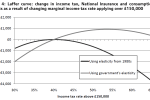
Chris Huhne’s comments to Prospect magazine about the 50p tax rate are typically provocative. The millionaire, former City boy accuses the Tories of wanting to abolish the 50p tax rate to help ‘their friends in the City to put their feet up’. He even suggests that the Lib Dems would not vote through any Budget that contained its abolition. Huhne’s intervention comes at a time when George Osborne is trying to build support for abolishing—or, at least cutting—the 50p rate. Tellingly, the letter from economists opposing the 50p rate was drawn up with the help of one of the Chancellor’s closest lieutenants. But, as with so much Lib Dem rhetoric

Pickles to take charge of dealing with Britain’s 120,000 “problem families”

I understand that following a meeting in Downing Street this morning, Eric Pickles, the Communities and Local Government Secretary, has been put in charge of dealing with Britain’s 120,000 “problem families”. In the aftermath of the riots, David Cameron promised to put all of these families through some a family-intervention programme by the time of the next election. This policy, though, was bogged down in the bureaucracy as it cut across so many different departments. Pickles’ department will now have sole responsibility for this commitment. It will receive extra budget, with the money coming from education and work and pensions, and staff to deal with this. As I revealed in

How will Westminster respond to Vickers?

The Vickers’ report into banks will land on the Prime Minister’s desk tomorrow. It goes to the banks very early on Monday morning before being published later that day. The thing to watch for is how politicians react to it. We know that the report will propose some kind of ring fence. But what we do not know is how strict the ring fence will be and how quickly Vickers will want it implemented. As Robert Peston says the impact of the ring fence on the banks’ creditworthiness will be felt long before the actual ring fence comes into effect. Intriguingly, Ed Miliband is giving a speech to the TUC

Willetts plays snakes and ladders

Social mobility has become something of a hot topic for the coalition. February’s Social Mobility White Paper made it the government’s number one social policy goal. Yet arguments over tuition fees have rather drowned out much of what they have to say on the topic, particularly when it comes to education and skills. So it was interesting to hear Higher Education Minister David Willetts restate the government’s case with a speech at the Resolution Foundation yesterday. Willetts, who has been called the poster boy of the think tank community, was as thoughtful as ever – and he didn’t mince his words. In a dig at much of the research on

The conference season blues

Few things irritate the Prime Minister’s circle more than the insinuation that David Cameron is lazy. So Ben Brogan’s column this morning with its slightly barbed observations about the number of box-sets that Cameron finds time to watch will have been read through gritted teeth in Downing Street. Ben argues that Cameron will have to use his conference speech to show the country what he stands for and what he wants. This is, as Ben acknowledges, said about most leaders before nearly every party conference. But I understand that preparations for this year’s Tory conference are particularly chaotic. While the work on Cameron’s own speech is proceeding apace, the rest

Cameron faces the eurosceptics

If Tony Blair thought that a meeting with Gordon Brown was like dental surgery without anaesthetic, one wonders how David Cameron would describe being questioned on Europe by Bill Cash and Bernard Jenkin. At the liaison committee, the two veteran eurosceptics pushed Cameron on why he was supporting far greater fiscal integration in the Eurozone. Cameron’s answer was, basically, that this was the only way the Eurozone could be made to work. But one can’t help but feel that greater fiscal integration is simply storing up problems for the medium term given that it will do nothing about the divergence in competitiveness between Eurozone members. The rest of the session

Public reject Dorries’ abortion proposal

Tomorrow, MPs will debate whether to prevent abortion providers from counselling women seeking an abortion. The motion – put forward by Tory backbencher Nadine Dorries as an amendment to the Health and Social Care bill – is being opposed by the government, and pro-choice groups are backing a rival amendment, which reinforces the status quo. The amendement’s author, Lib Dem MP Julian Huppert says: “The present system which allows women access to evidence-based guidance works, therefore I cannot see why we need to change it. I do not want to see us opening the door to anti choice organisations which could prevent women making their own decision on such a

The reformist case for Clegg

One ally of the deputy Prime Minister suggested to me yesterday that the press was missing the most significant aspect of Clegg’s speech on education: Clegg acknowledging that free schools would now be a permanent part of the educational landscape. This ally argued that this was a big deal given that a year ago Lib Dem conference had voted to boycott these schools. The Lib Dem leader is considerably more liberal than his party. This means that he sometimes needs, so the argument goes, to sweeten the reformist pill with some Lib Dem rhetoric. Hence the emphasis on free schools being fair schools in yesterday’s speech. But this internal Lib

Osborne and Pickles defiant on planning reform

George Osborne and Eric Pickles’ joint op-ed in the Financial Times on planning reform is meant to send the message that the coalition won’t back down on the issue. They warn that “No one should underestimate our determination to win this battle”. Allies of Pickles are pointing out that these planning proposals are different from the NHS reforms or forestry, both issues on which the government did u-turn, because they are crucial to the coalition’s growth strategy and fully supported by Numbers 10 and 11 Downing Street. One other thing that separates planning from the issues on which the government has u-turned is the confidence Numbers 10 and 11 have

Frontrunner for leadership wants to disband the Scottish Tory Party

It has to be one of the most astonishing – not to mention bold and risky – moves ever attempted by a politician, of any colour. This morning Murdo Fraser, the Deputy Leader of the Scottish Conservative Party and clear frontrunner for the leadership of the Scottish Tories, announced plans to disband his own party if he wins the leadership contest. Under his plans, the Scottish Conservative and Unionist Party would cease to be. It would be an ex-party. The Conservatives would fight no more elections in Scotland after next year’s council elections. Instead, a new centre-right party would take its place, crucially free from the toxicity which still surrounds

Scottish Conservatives, 1965–2011

You read it here first – four years ago. The Conservative Party looks like it will finally enact its plans to split, and the Scottish Conservatives will dissolve – at least if Murdo Fraser wins the leadership. The Sunday Telegraph has the news tomorrow: “Murdo Fraser, who is favourite to become leader of the Scottish Conservative and Unionist Party, will announce that he plans to wind up the party if he wins a ballot of members next month. He would follow disbanding the party by launching a new Right-of-centre party that would contest all Scottish elections — council, Scottish Parliament and Westminster. Mr Fraser, a member of the Scottish Parliament, believes the

There’ll be no u-turn on planning

This government has developed rather a reputation for u-turning. But I would be extremely surprised if it did one over its planning reforms. When you talk to ministers and advisers one is struck by how up for this fight they are. They’re convinced that it is only by taking on these vested interests that they’ll get their message across to the public. And unlike on forests or the NHS, Number 10 and the Treasury are fully on board. There are those who claim that these reforms are profoundly un-conservative. But, in fact, the opposite is the case as Charles Moore argues with his typical eloquence in today’s Telegraph. As Charles

More banking worries

George Osborne wrote a strident article for the Observer last weekend, in which he called rich tax evaders “leeches”. As James Forsyth reveals in the cover story of this week’s magazine, Osborne is not alone among Tories in hounding the ‘undeserving rich’ at present. James goes on to argue that the Tories are ‘becoming particularly worried’ about the callous rich because the Vickers commission is poised to bring the emotive issue of banks back to the ‘political frontline’. The Vickers report has already irritated the coalition’s sore points, with disagreement allegedly rife between George Osborne and Vince Cable. Today’s FT offers a fresh angle. Osborne and Cable are in fact remarkably close

Cameron: I’m a common sense Conservative

David Cameron weathered an awkward interview on the Today programme earlier this morning, in which the Strategic Defence Review was savaged and the recent riots were compared to the Bullingdon Club, of which Cameron was once a member. He stood by the defence review, with reference to the successful British contribution to the Libyan intervention, and he blithely ignored the Bullingdon Club question. He reiterated his belief that parts of society have undergone ‘a slow motion moral collapse’.  His gruff tone might have surprised some listeners. The interviewer, Evan Davis, offered Cameron the chance to retreat from the firm, almost draconian line he took at the height of the riots. But Cameron refused, comfortable to risk appearing ‘morally

Cameron and Osborne wary of Vickers’ banking reforms

Banking reform has always been one of those issues that was going to test the unity of the coalition. Indeed, it was the subject of the very first inter-coalition wrangle when back in May 2010 George Osborne and Vince Cable tussled over who would chair the Cabinet committee on banking reform.   To date, these differences have been held in check by the fact that the coalition is waiting for the recommendations of the John Vickers-led Independent Commission on Banking. But with the final draft of the Vickers Report being published on 12 September, these splits are starting to open up again.   Cable and the Liberal Democrats would like,

Coalition prepares for bank bust-up

There’s a big coalition split coming down the road. Next month the Vickers’ review into banking reform, which is going to suggest a ring-fencing of the investment and retail arms of banks, will come out. The Liberal Democrats — led by Vince Cable — will push for the instant implementation of the report’s recommendations. The Treasury will argue that banks need to be given time to introduce these new rules. The result will be, as one senior Lib Dem source tells this morning’s FT, ‘a big fight’.   The tricky question for Cameron and Osborne is how do they win this argument when there’s a visceral desire for tough measures

The Lib Dem conference advantage

Traditionally the fact that the Liberal Democrats hold their conference first and still vote on party policy at it has been regarded as a disadvantage. But this year, I suspect that these two things will be in their favour. By going first, they will get to set the terms of debate for conference season. They’ll be able to spike their coalition partners’ guns on a whole variety of post-riots issues. They can make clear that they won’t accept any changes to the human rights act or any government push to encourage marriage. Even better, they can pass motions to this effect. They also will have first crack at setting out

Labour’s new attack strategy: Cameron’s a right-winger

The Observer has a cracking scoop: a brief document detailing a new Labour plan to attack Cameron. The memo has been written by Shaun Woodward, the former Tory MP and Labour cabinet minister who now heads Labour’s anti-Tory unit. He will report to the shadow cabinet in the next few weeks. He says: ‘At the last election we faced a Conservative party (and a Conservative leader in David Cameron) whose strategic goal was to decontaminate their brand, intending to present themselves as reformed, modern, centrist and pragmatic. Cameron was effective in promoting a perception [that] his party had changed. But here is the paradox: whilst the Tories made changes before