Conservative party

Cameron’s quotas: a policy or a threat?

From our UK edition

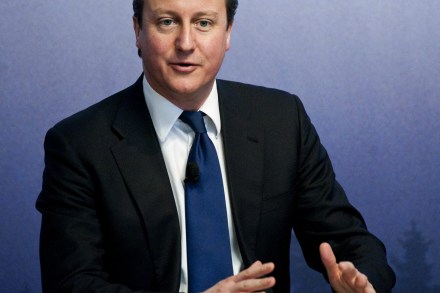
We've heard enough about David Cameron's woman troubles to regard anything he says about the fairer sex as a naked pitch for votes. But I reckon his comments today, about getting more women into boardrooms, are just as much motivated by concerns about the economy. ‘The drive for more women in business is not simply about equal opportunity, it's about effectiveness,’ is how he put it earlier, ‘It's about quality, not just equality.’ It's a claim that reflects both the thinking of Masters of Nothing — a book by two highly-regarded members of the 2010 intake, Matthew Hancock and Nadhim Zahawi — and its continuing influence in Cameroonian circles.

The BIS select committee makes its presence felt

From our UK edition

We will soon find out whether the coalition meant what it said about empowering parliament. The BIS select committee has rejected the government’s preferred candidate for the post of the head of the Office of Fair Access. The committee concluded that it was ‘unable to endorse the appointment of Professor Ebdon as the Director of OFFA and we recommend that the Department conduct a new recruitment exercise.’ But Vince Cable, the business secretary, is said to be keen to override the committee’s verdict. Number 10, which has never been keen on Ebdon, is opposed. As I said on Sunday, the circumstances behind Ebdon’s name going forward are straight from The Thick Of It.

In PMQs, Cameron plays for a draw on the NHS

From our UK edition

How much does it cost to change a light bulb? Three hundred quid, said David Cameron at PMQs today. Ed Miliband came to the House eager to pile more pressure on the PM and his unloved NHS restructuring plan. Cameron fought back by citing the health bungles Labour presided over while in office. Billions wasted on kaput computers. Hundreds of millions blown on phantom operations. And dead light bulbs that cost more to replace than a week’s holiday in Spain. Cameron’s tactics were better than in previous weeks. Rather than citing some lone wolf medic who supports his reforms he gave us a surprise announcement, albeit unsourced.

Miliband gets the better of Cameron on the NHS

From our UK edition

As expected, Ed Miliband went on the NHS and it helped deliver him a points victory. Whenever Miliband raises the issue at PMQs, David Cameron’s rather overly macho body language gives away that he knows he is playing on a sticky wicket. The exchanges today were not particularly enlightening but Miliband had the better of them. There was, though, one effective counter-attack from Cameron where he compared what is happening to the NHS in England to what is happening in Wales where the devolved administration is sticking with the status quo. There’s mileage in this argument if the coalition has the patience to develop it. But part of the problem is that the coalition is so clearly unenthusiastic about its own reforms.

No-one emerges from the health reform smash-up with any credit

From our UK edition

Andrew Lansley should be grateful for small mercies. Rachel Sylvester's column (£) today may quote a Downing Street source to the effect that ‘Lansley should be taken out and shot’, but there is yet no sign that a hundred Conservative MPs will write to the Prime Minister to say that the Health Secretary's reforms have to stop. We've had such a letter for wind farms and for Europe, but on the NHS it's not very likely. Most Tory MPs find the NHS a difficult rallying point at the best of times. And these are the worst: they are acutely embarrassed by the car-crash that has been the Health and Social Care Bill, and dearly want the whole thing just to go away. Besides, you try finding a hundred of them who actually know what these health reforms are about.

Where has the pro-EU camp gone?

From our UK edition

Did you see that amazing article by a group of pro-EU businesspeople? What about that clever ad paid for by ‘Better To Be In’, the new pro-EU lobby group? Nope, me neither. The reason we haven't seen anything like that is because the pro-European camp in Britain is in total disarray. Like a beaten army, it is withdrawing in a state of confusion, while some diehards stage energetic but un-strategic counterattacks against the advancing Eurosceptic forces. A letter from pro-EU businessmen was, frankly, unimpressive: the signatories were hardly a who's who of Britain's business community, and even included some former officials. Hardly a show of strength.

Cameron’s coming battle over the ECHR

From our UK edition

The coming release of Abu Qatada on bail is going to put bellows under the whole debate about the European Court of Human Rights. In his recent speech to the Council of Europe, David Cameron rightly protested about a situation with terror suspects in which ‘you cannot try them, you cannot detain them and you cannot deport them.’ We will now find out how quickly Cameron is prepared to act on this issue. If Cameron wants to makes changes to the Courts and the Convention, then he is going to have to get agreement from every member of the Council of Europe. There’s no guarantee that he’ll be able to get this and it will take an awfully long time.

An important intervention on energy policies, but will the Lib Dems pay attention?

From our UK edition

The economist Dieter Helm is one of the few policy thinkers respected on both sides of the coalition. Oliver Letwin is a long-standing friend of his and Clegg’s office views him as one of the best economic brains in the country. All of which makes Helm’s attack on Chris Huhne’s energy policies in The Times today as interesting as the anti-wind farm letter signed by a 101 Tory MPs. Helm argues that the policy of huge subsidies for renewables is a mistake and that shale gas is a game-changer. Helm writes that, while renewables have a role to play, ‘Coal burning is not going to go away because of wind. Gas is one transition option, a bridge to decarbonisation.

The government will have to fight for Lords reform

From our UK edition

House of Lords reform is one of those subjects that make most people’s eyes glaze over. But it is going to dominate the next parliamentary session. The Queen’s Speech will include a bill for elections in 2015 for 20 per cent of the seats in the Lords using a ‘Proportional Representation’ voting system. This bill will take an age to get through the Commons, where it has to start if the coalition is to use the Parliament Act to push it through, let alone the Lords. One of the things that’ll be fascinating to watch is how large a Conservative rebellion there is on the issue. There are already Tory MPs mobilising to block the kind of Lords reform that Clegg wants.

Don’t expect repatriation in this Parliament

From our UK edition

When David Cameron wielded his veto at the European Council in December many Tories thought this was the beginning of a process of repatriation of powers from the EU. Myself, I thought it would be the high water mark of the government’s Euro-scepticism — and so it has proven. But things are about to get even worse for the Bill Cashes of this Parliament. In the short-term, at least.   Why so? Well, the government appears to be concluding that it will not get a receptive ear from its European partners on any repatriation bid. The other European leaders are simply too busy fixing the euro to even read any UK proposals. And what's clear already is that they will remain too busy not just for another few months, but for another year or more.

The politics hovering over the Falklands

From our UK edition

With HMS Dauntless and now Prince William gliding across the Atlantic to reinforce Britain's claim on the Falklands, there's no denying that tensions with Argentina have been raised. But let's not get carried away. As Admiral Sir John Woodward reminded us last week, the latest round of defence cuts rules out, or at least undermines, a British counter-invasion. The deployment of our shiniest boat is, in reality, the sum total of what Britain can do to scare off any invasion. And there could be another barrier to the government's hawks, other than resources: namely, the Lib Dems. Nick Clegg did try to rally support for our cause on a trade mission to Brazil eight months ago, but it’s unlikely Cameron's partners are enthusiastic for this sabre-rattling over the Islands.

Miliband finds his niche, and leaves Cameron looking boorish

From our UK edition

Miliband is getting the measure of PMQs. Not with respect to Cameron. With respect to himself. He’s learned that his strongest register — sanctimony — will always ring hollow unless it’s attached to a powerful cause. And his gags don’t work. So he’s ditched his team of funny men and wise-crackers and turned to his political instincts instead. Miliband’s gut worked today. He began with a question which he knew Cameron couldn’t answer. Why hasn’t the government activated the laws requiring banks to name all employees earning over a million year? The PM answered by not answering. He performed a transparent switcheroo from the particular question to the general topic.

Tories push benefit cap in PMQs, Miliband ignores it

From our UK edition

As expected, the Tories did everything they could to make the benefit cap the subject of PMQs. One Tory MP managed to slip in a question on it just before Miliband got up, allowing Cameron to press the Labour leader on the issue even before he had started speaking. Tory MPs kept coming back to the benefit cap — there were five questions on it in all — allowing Cameron to repeatedly mock the Labour front bench for not saying what its position is. ‘Just nod — are you with us or against us?’ was one of the lines Cameron tried to goad them with. But in the main clashes between the two leaders, which were on top pay and the NHS, Miliband actually did pretty well.

The battle for ‘fairness’ continues

From our UK edition

Today’s PMQs will be another skirmish in the battle for fairness. All three parties know that there is no more potent word in British politics at the moment than fairness and they all want to be its champion. But what will make PMQs interesting today is that Cameron and Miliband each have a powerful weapon in the fairness debate, but also a vulnerability. Miliband’s weapon is bankers’ bonuses – the government’s inaction over Stephen Hester’s bonus has given him plenty of material. But he’s acutely vulnerable over the benefits cap. Cameron will be desperate to move the debate onto this territory.

Cameron cheered by the Lib Dems, spared by the Tories, mocked by Labour

From our UK edition

If you wanted proof that Cameron has softened his stance towards Europe since the hard chill of December, then just look to the Lib Dems. Nick Clegg, unlike then, was sat next to the Prime Minister as he gave his statement to the Commons this afternoon. And the questions that followed from the likes of Menzies Campbell and Simon Hughes were generally warm and approving. Campbell started by, in his words, ‘praising the pragmatism of the PM’. Hughes celebrated a ‘more successful and satisfactory summit than the one in December’. That praise, while friendly enough, creates obvious problems for Cameron — and it was those problems that Ed Miliband sought to exploit in his questions to the PM.

The Tories are extending their lead on the economy

From our UK edition

It looks like Dave’s still made of Teflon. Even after the economy shrank by 0.2 per cent and the unemployment rate rose to its highest point since 1995, the public still think his party is better at handling the economy than Labour. And the Tories’ lead on what is by far the most important issue to voters hasn’t just survived all this bad economic news — it’s actually grown. Before Christmas, 31 per cent said the Tories would best handle the economy, against 27 per cent for Labour.

Miliband the eurosceptic? Not yet

From our UK edition

Ed Miliband is not naturally a eurospectic, but he certainly sounded like one during his appearance on ITV's Daybreak show earlier. ‘I'm very concerned about what David Cameron has done,’ he said in reference to the PM's equivocation over Europe yesterday. ‘He's sold us down the river.’ Whether this is Miliband committing towards the sort of euroscepticism that is being urged on him by some of his colleagues, it's too early to say. It's only words, after all. But my guess is that — just as when Miliband attacked Cameron for not signing up to the latest treaty, but couldn't say whether he'd have signed it himself — this is more him trying to have his cake and eat it.

Modernisation 2.0

From our UK edition

One of the flaws of Tory modernisation was that it was never interested enough in pounds and pence. Social issues, the environment and public service reform were what the modernisers specialised in, not economics. But tonight’s Macmillan lecture by Nick Boles, one of the most intellectually influential modernisers, is devoted to the subject of how Britain’s global competiveness in the global economy can be improved. His argument is that: ‘What really threatens the general wellbeing of the British people is the stalling of productivity growth and the certainty that the next 20 years will expose them to competition that is vastly more intense than anything we have ever seen.