Conservative party

So much for taking the politics out of the NHS

From our UK edition

So here we are again. At least Lord Justice Leveson had the humanity to give us a couple of weeks off whining celebrities, shifty ex-journalists and declaiming newspaper editors. From the Health and Social Care Bill there is no respite. The Bill is back in the House of Lords and Liberal Democrat guerrillas are wound up for a fresh assault on the lumbering mule train as it passes through. Does anyone care any more which bit of this battered and bleeding legislation has been chosen for further victimisation in this week’s shenanigans?

Gove: ‘I’d never run for leader’

From our UK edition

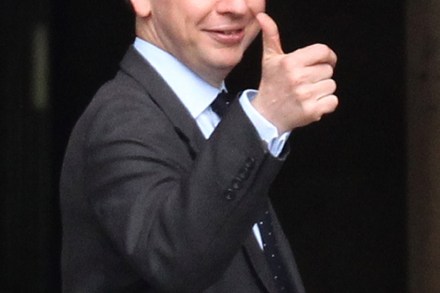
Michael Gove for leader? There have been several suggestions to this effect recently — not least from Toby Young in his debut column for the Sun on Sunday. But Tim Montgomerie today quotes one of Gove's advisors on ConservativeHome, saying that the education secretary has ruled himself out on the grounds that he doesn’t have the character for the job. This certainly squares with what Gove told me in September 2008. The interview was published here, but I’ve looked up my notes and can reprint his answer in a little more detail.   I put to him a Westminster rumour that he promised Sarah Vine, his wife, that he’d never run for leader. He threw his head back and laughed loudly.

Tories question Lib Dems’ commitment to post-election cuts

From our UK edition

The mood of this morning’s ‘Growth Forum’ hosted by the Free Enterprise Group of Tory MPs and the Institute for Economic Affairs was summed up by Kwasi Kwarteng’s introductory remark that to meet the OBR’s ‘ambitious growth targets’, the coalition ‘can’t just bumble along’. The headline news coming out of the event is Andrew Tyrie, the influential chair of the Treasury Select Committee, calling for it to be made clear that the government’s ambition is to get state spending down to 40 per cent of GDP. David Ruffley also caused a stir by saying that BIS and, possibly, DCMS should be abolished.

What’s going on over the Lords — and where to read about it

From our UK edition

Finally, Lords reform becomes interesting: it could be the issue that splits the coalition. Lord Oakeshott's admission of this yesterday has made the newspapers today — but it will come as no surprise to Spectator readers. James Forsyth drew out these battle lines for his cover story last week, and it's worth reprising his arguments as the rest of the press has yet to catch up.   Self-preservation is a powerful force in politics. Even if the Lib Dem vote recovers, it's likely to do so in different constituencies, meaning most Lib Dem MPs are likely to lose their seats. As Lembit Opik’s music career demonstrates, it's tough to find work out there. Making it to a revamped Lords is their best option.

Raise the tax threshhold and let youth prevail

From our UK edition

Youth unemployment is approaching crisis levels in Britain. For almost two decades, Britain’s more flexible labour market had favourable effects on youth employment. But the re-regulation of the British economy has narrowed the difference between our jobs market, and that of the continent. Meanwhile the British poverty trap has been strengthened by a dysfunctional welfare state: British workers can in some circumstances keep as little as 5p in every extra pound they earn if they find work. Who would break their back for less than 50p an hour? We’re paying people not to bother, so little wonder that most of the employment rise — in the last government, and under this one — is accounted for by a rise in foreign-born workers.

The coalition for a Boris victory

From our UK edition

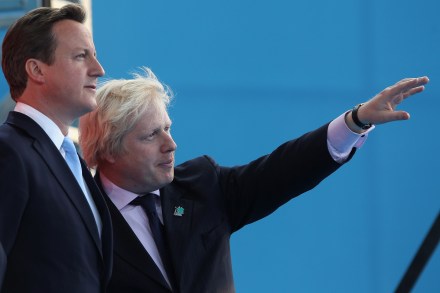
When David Cameron addressed Tory MPs on Friday, he told them that the London Mayoral elections were ‘the binary moment of 2012’. He argued that if Labour lost in London, one of their traditional strongholds, it would be a disaster for Ed Miliband. In the Cameron narrative, a Boris victory in May would mean that the Labour leader would remain under pressure and continue to be the subject of regular attacks in the press. Interestingly, there are Liberal Democrats close to Nick Clegg who share this analysis. Their worry is that a Livingstone victory combined with bad local election results for Lib Dem could turn the deputy Prime Minister back into the party leader under pressure.

The two types of Tory modernisation — and which one’s on the rise

From our UK edition

There have always been two types of Tory modernisers. Both wanted to talk about issues that the party had neglected — public services, the environment and the like. But the soft modernisers were more prepared to compromise ideologically, to go with the flow of the age. The hard modernisers’ interest, by contrast, was in applying Tory thinking to these areas. Michael Gove’s education reforms are, perhaps, the best example of hard modernisation in action. As Charles Moore puts it in the Telegraph today, ‘Mr Gove offers an attractive combination — complete loyalty to the Cameron modernisation, but a Thatcher-era conviction politics as well’.

The ruckus over Lords reform

From our UK edition

Both the Tory and Lib Dem manifestoes promised to reform the House of Lords, as did the Coalition Agreement, but the gulf in enthusiasm between the two parties is enormous. For many Lib Dems, this is of course — as Nick Clegg put it in December — ‘one boat that urgently needs rocking’. For many Tories, it is something to be ambivalent about, or to oppose. Which is why the politics around the ongoing Lords Reform Bill are likely to be so fraught. James has already written of how there are ‘more than 81 [Conservative] MPs prepared to vote against it.

Willetts tries to dampen the flames around Ebdon

From our UK edition

Siphoning the contents of two brains through one mouth and on to a single page will generally produce eclectic results. And that's certainly the case with David Willetts' interview with the Times (£) this morning. The universities minister manages to range across subjects that include Robert Falcon Scott, climate change, the Falklands and universities access. He even reheats one of his old theories about Feminism and social mobility in a way that (coupled with the interview's headline: ‘Moving on and up is very hard — and feminism is partly to blame’) makes it sound far more provocative than I think it's meant to be, and much weaker for it.

Tim Farron wants competition dropped from the Health Bill

From our UK edition

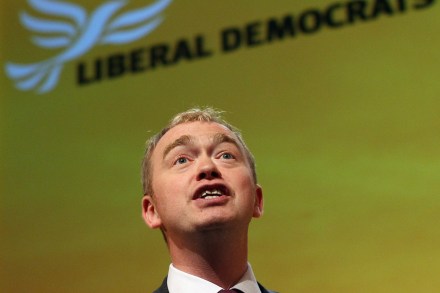
Will there be further changes to the Health and Social Care Bill? Liberal Democrat President Tim Farron certainly wants some, as he told ITV’s Party People last night: ‘If the new competition introduced through this Bill is removed, then I think it’s better on the books than it is off it… What I want is for the Lords to propose changes that will remove the new competition elements from the Bill and I would like the Government to give way on those things. It's all to play for.’ Farron’s echoing the call made by fellow Lib Dem Shirley Williams last week and by a group of activists who have submitted an emergency motion for their party conference in two weeks.

The tension’s rising inside the coalition

From our UK edition

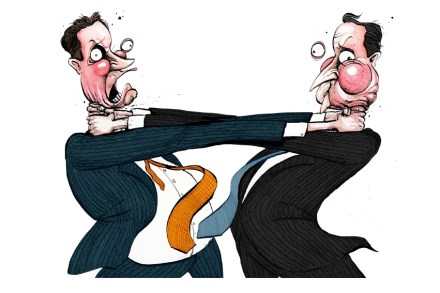
Talking to a Downing Street adviser earlier this week, I was struck when they observed that a ‘2014 election wouldn’t be too bad really. David would have done his best, Nick would have done his best. But they just couldn’t make it work anymore.’   The Tories have spent some time recently contemplating the possibility that the coalition might not run for the full length of the parliament. At a recent Chequers away day, the prospect of the Liberal Democrats walking out in 2014 was openly discussed.   That this possibility is even being talked about is revealing of the mood inside the coalition, which is the subject of my piece in the magazine this week. Things are becoming increasingly tense.

Why property tax rises aren’t the answer

From our UK edition

When Tim Montgomerie first started calling for new wealth taxes I was horrified. Sweden has only just abolished its wealth tax after seeing hundreds of billions of kroner leave the country in capital flight over a number of years. Other countries have found wealth taxes are associated with narrow bases, high costs of collection and often very unfair treatment for different classes of assets. We should not replicate that here. As his proposals have been refined though, it isn’t that bad. More bands would be a relatively reasonable way of making the Council Tax system more progressive.

Why George should listen to Danny

From our UK edition

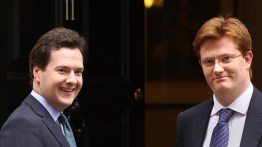
In the new Spectator, we back the Liberal Democrats’ plans to raise the tax threshold to £10,000 — provided that the money is found by cuts in state spending rather than the pensions raid they propose. It’s not top of my list of tax cuts, but we have to accept the realpolitik. It’s the only tax-cutting option that has advocates in the Treasury. There are plenty of proposals around to cut taxes and wake the British economy from its ‘lost decade’ slumber. The need to use tax cuts as a remedy to the deficit will be familiar to anyone who has followed the American presidential debate: every candidate, even Romney, has their own list of radical tax cuts.

Rumble in the Commons

From our UK edition

From the Sun: ‘A LABOUR MP was arrested late last night for assault after allegedly headbutting a Tory rival in a House of Commons bar. Witnesses allege Eric Joyce, 51, launched an unprovoked attack on Stuart Andrew, 40. It is claimed Joyce, MP for Falkirk, had to be held back by several Labour colleagues. A source said: “Stuart was given a Glasgow kiss.”’ Read the full report here. UPDATE: Joyce has been suspended by the Labour Party. The Standard's Joe Murphy has a particularly detailed account of it all here.

Miliband snipes, Cameron deflects, Bercow bobs

From our UK edition

Let’s be honest. I shouldn’t say this but I can’t help it. I’m fed up. The NHS reform process has been dragging on for months, and still there’s no end in sight. Ed Miliband brought it up at PMQs for the third week running. The position remains the same. Miliband loves it. Cameron lives with it. The PM claimed that 8,200 GP practices are now practising his reforms and the Labour leader replied with a list of professional bodies — nurses, doctors, midwives, radiologists — who oppose them. And that’s exactly the trouble, for me, at least. If the issue were a race-horse some crazy campaigner would plunge beneath its thundering hooves. But it’s not. It’s a set of abbreviations.

Miliband revels in his NHS attack

From our UK edition

Today’s PMQs was a reminder that whenever Ed Miliband goes on the NHS he is guaranteed a result. Indeed, I don’t think I’ve ever seen Miliband enjoying himself as much in the chamber as he was today. When Andrew Lansley leaned over to try and tell Cameron the answer to a question, Miliband mockingly remarked ‘Let me say to the Health Secretary, I don’t think the PM wants advice from you’. As Cameron’s assaults became more direct, Miliband did not — as he often does — go into his shell. As he sat down at the end of it all, the Labour leader had to push down on his knee to disguise the adrenalin shakes he was having.

A taxing problem for George Osborne

From our UK edition

Today’s FT reports that additional council tax bands are being considered as part of the Budget process. But there are several problems with introducing new council tax bands. First, this would require a wider revaluation, something that the coalition has ruled out explicitly and that would almost certainly drive up council tax for most people.   A revaluation, as a parliamentary question from George Osborne’s former chief of staff Matt Hancock established, would cost around £200 million. It would also take two to three years to complete, meaning revenues from any new band wouldn’t start accruing until either very close to, or even after, the next election.

Nick Clegg’s NHS squeeze continues

From our UK edition

As I said last week, Nick Clegg is in a tricky position when it comes to this Health Bill. Thanks to the concessions that he secured and welcomed last year, he can't now just slander it outright. But thanks to the concerns of his own party, he will also be reluctant to endorse it in full. The result is the sort of ambiguous performance that the Deputy Prime Minister put in on ITV's Daybreak show this morning. He did get stuck into Labour for their ‘outrageous’ misrepresentation of the reforms. But when it came to actually supporting the Bill, it seemed to me that he used generalisations — such as, ‘I am behind reforming the NHS to improve care for patients’ — that could permit a slight change of heart about the specifics in future.

The implications of today’s border security report

From our UK edition

Today brought closure of a kind to last year’s border fiasco (which I covered for Coffee House here and here), with the publication of the report by the Chief Inspector of the UK Border Agency, John Vine. On first reading, there is no ‘smoking gun’ which would trigger a ministerial resignation. The report does find that, in early 2011, the immigration minister Damian Green had authorised the relaxation of one of the checks at the centre of the controversy: ‘Secure ID’, which verifies the fingerprints of foreign travellers with visas. But the report also finds that Green’s authorisation should have been superseded by later instructions from the Home Secretary Theresa May.