Conservative party

The Tories desert Cable in the Commons

From our UK edition

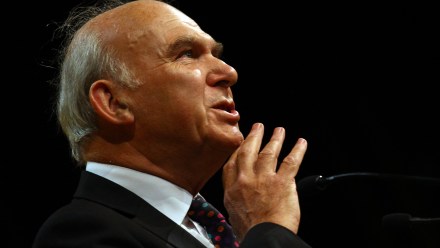
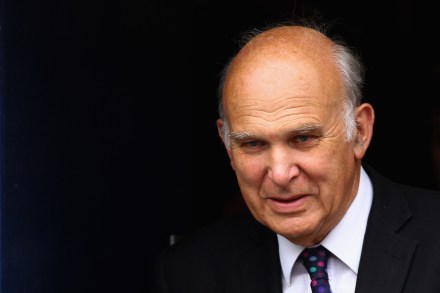
When a Secretary of State is in trouble, it is traditional that his governmental colleagues rally to his side. But as Vince Cable defended overruling the Business Select Committee’s objections to Les Ebdon, there was but one Tory Cabinet minister on the front bench. This despite Cable having rung round private offices in search of support, as Patrick Wintour reports. In total there were three Tories on the front bench for most of the statement, Cable’s junior minister Mark Prisk, the whip Mark Francois and the Leader of the House Sir George Young in his normal seat. The absence of Tory ministers combined with 13 hostile questions from Tory backbenchers shows just how uncomfortable the Tories are with this appointment. By contrast, the Lib Dems are delighted.

A question of trust for Andrew Lansley

From our UK edition

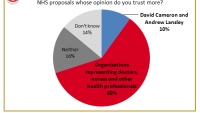
It's not too surprising that people trust ‘organisations representing doctors nurses and other health professionals,’ well above David Cameron and Andrew Lansley, when it comes to the NHS reforms. People are sceptical of politicians in a way that they aren't of the health service, its unions and its workers. 64 years of ‘national religion’ status for the NHS, and many more years of gross political let-down, have made sure of that. But today's YouGov findings still shine a fresh light on Cameron and Lansley's changing approach to the reforms.

If Cameron doesn’t talk about greater powers for England, Labour will

From our UK edition

Action over Scotland is certainly producing a reaction in England. It's not what you'd call an ‘equal and opposite reaction’ yet, but it's there — and it's crystallised by Tim Montgomerie's article for the Guardian this morning. I'd recommend that you read it in full, but Tim's basic point is that David Cameron could score a ‘triple crown of political victories’ by moving towards a more federal UK: ‘By offering to extend Scottish devolution he can be the Conservative leader who saves the union. By promising to balance Scottish devolution with a commitment to new arrangements for the government of England, he can radically improve his own party's electoral prospects.

The tax debate at the heart of the Budget

From our UK edition

The run-up to last year’s Budget was all about fuel duty. This year it’ll be all about direct taxes. The Lib Dems are determined to put their manifesto pledge of raising the income tax personal allowance to £10,000 front and centre. They already managed to turn this promise into government policy in the Coalition Agreement, and last year’s Budget announced that the threshold would rise to £8,105 in April this year. But Nick Clegg’s made clear that he wants to go ‘further and faster’ on this. The Conservative response at the Treasury – according to today’s Telegraph – is simple: ‘how are they going to pay for it?

Balls the tax-cutter?

From our UK edition

‘Balls urges tax cuts’, we’re told. Has he had a Damascene moment? Has the borrowed penny dropped? Nope, this is his longstanding and cynical campaign to cut VAT. Under the Labour years, when Balls was encouraging Brown to adopt a ‘scorched earth’ policy to the public finances, he urged against raising VAT to 20 per cent as Alistair Darling wanted. Not because he didn’t think it was necessary, but because he knew that if Darling didn’t do it, Osborne would. So VAT could be an election campaign tool, and then a stick with which to beat the wicked Tories (and the Lib Dems, who dropped the ‘VAT bombshell’ that they warned of). There is also politics: Tories prefer taxing consumption to taxing income.

Tory Ministers need to back the Health Bill

From our UK edition

Tomorrow’s Downing Street meeting on the implementation of the health reforms is meant to send the message that the bill is definitely going ahead. Number 10 is keen to shore up the bill ahead of Liberal Democrat Spring Conference following the uncertainty caused by Rachel Sylvester's column and Conservative Home’s call for the bill to be dropped. Indeed, I understand that at the Quad dinner on Monday night, Nick Clegg and Danny Alexander made the basic political point that the Liberal Democrats would feel absolved of the need to support the bill if any Tory minister came out publicly against it. But Tory ministers still need to muster more public enthusiasm for the bill.

The Lib Dems prepare their strategy for future coalitions

From our UK edition

Contain your excitement, CoffeeHousers: the Lib Dems are debating whether to change their ‘constitution’ so that their members have a greater say over future coalition negotiations. The amendment has been put forward Tim Farron and Norman Lamb, and proposes that, in the event of coalition talks, the party's ‘negotiating team’ should have to consult with a ‘reference group consisting of not more than nine people appointed equally by…’ blah, blah, blah. In fact, you can just read the whole thing on page 41 of this document. The Lib Dems will be voting on it at their Spring Conference next month.

At least it won’t go to penalties…

From our UK edition

Who's winning in the latest match between Vince Cable and the Conservatives? The Business Secretary did take an early lead, with the news that No.10 had grudgingly yielded to his demand to appoint Professor Les Ebdon to the role of ‘university admissions tsar’ — a man who has hardly been kind about the coalition's universities policy in the past, and whose appointment had been blocked by the business select committee. But, according to the Telegraph this morning, the Tory leadership appear to have scored a goal of their own: Cable's proposal for imposing penalties on graduates who pay off their student loans early is to be dropped. We can, and should, cheer the wheezing demise of that policy.

How to implement a minimum price for alcohol

From our UK edition

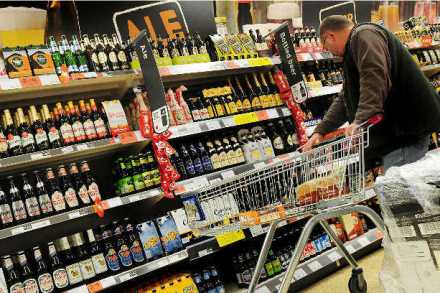
Pete posted earlier on the Prime Minister’s latest intervention on the issue of problem drinking. The new proposals — like a greater police presence in A&Es, and ‘drunk tanks’, special units where drunks are taken to sober up — are sensible enough, but seem small relative to the scale of the supposed problem, and focus on peripheral (though important) side-effects, rather than the core of the issue. The ‘big idea’ seems to be missing, even though the Conservatives have been flirting with it for some years, is a minimum unit price (MUP) for alcohol: far more controversial, but potentially far more effective. The last Labour government, in which I was an adviser, looked at this idea in some depth.

Why Baroness Warsi has it wrong

From our UK edition

For someone who has profited so well from her religion, it is particularly striking that Baroness Warsi should claim today that our societies are suffering because of ‘a militant secularisation’ which she claims is ‘taking hold.’ And worse, she says, that ‘one of the most worrying aspects about this militant secularisation is that at its core and in its instincts it is deeply intolerant. It demonstrates similar traits to totalitarian regimes.’ Not merely ‘militant’ and ‘worrying’, but ‘similar traits’ to those of ‘totalitarian regimes.’ Before addressing the numerous ways in which Warsi is wrong, I should note the one point on which I think she is right.

Inflation falls as the VAT rise drops out

From our UK edition

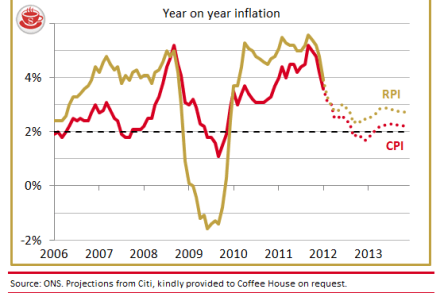
Late last year, the Tory party’s brains trust found that the inflation numbers corresponded directly to whether or not people thought that the economy was on the right track. When inflation was going up double-quick, the ‘wrong track’ numbers went up. But when the pace of inflation slowed, the ‘right track’ numbers increased. It is for this reason that the Tories are quietly confident that this year will see an uptick in economic confidence. They expect the inflation rate to fall steadily throughout the year as the VAT rise drops its way out of the calculation and the effects of the oil shock recede.

Nick Clegg’s NHS squeeze

From our UK edition

Andrew Lansley's career prospects were boosted yesterday — when Simon Hughes said that he should ‘move on’ after the NHS reforms have been implemented. Since then, Downing Street has redoubled its defence of the Health Secretary; with a spokesman explaining tersely this morning that, ‘Simon Hughes speaks for himself ’. And Nick Clegg himself has added that, ‘Andrew Lansley is the architect of the NHS bill. He cares passionately about the NHS. He's the right man for the job and he must see it through.’ Clegg's general support for the Bill — and Danny Alexander's — is worth noting because it's one of the factors helping David Cameron hang on to both it and his Health Secretary.

Warming up for the Budget

From our UK edition

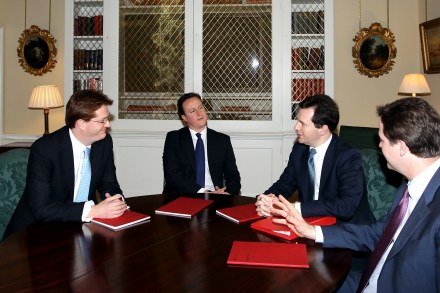
The Budget negotiations within government are now underway. The quad of Cameron, Clegg, Osborne and Alexander held a meeting last week to discuss their priorities for the Budget on March 21st. They’ll continue this conversation over a working dinner tomorrow night. Already, we know that the Liberal Democrats main priority will be to get the personal allowance as close to £10,000 as possible. As The Sunday Times reports, they’re suggesting paying for this by taking away various reliefs for higher-rate taxpayers and closing some of the loopholes in the tax system. I also understand from Liberal Democrats close to Clegg that they’re also interested in some new green taxes.

Lansley’s holding on — for now

From our UK edition

After originally deploying Sayeeda Warsi against ConservativeHome's anti-Health Bill sentiment, David Cameron is now doing his fighting for himself. He has an article in today's Sunday Times (£) that says, with no equivocation, ‘I am at one with Andrew Lansley, the reform programme and the legislation going through parliament’. And, aside from that, it's also an unusually spirited explanation of just what the government plans to achieve by these reforms. Much better than Cameron's wavering performance in PMQs on Wednesday. For all its spirit, though, this article doesn't come across as angry.

Lansley’s battle should’ve never been fought

From our UK edition

A small war has broken out over Lansley's NHS Bill — ConservativeHome has three Cabinet members attacking it. I find that shocking. At least a dozen want the Bill killed, and why ConHome found just three is beyond me. Politically, it's probably impossible for Cameron to drop it. But if it was torn up, I for one would shed no tears. For what it's worth, here's my take. It’s depressing to think that Alan Milburn’s NHS Plan of 2000 was both more radical and more sensible than what Andrew Lansley is serving up now. The whole debacle has shown politics at its most petty, partisan and pointless — a complete contrast to the coalition’s approach to school reform, which has been to fit rocket boosters to a very good Labour reform.

Cameron should leave this terrible ‘tax breaks for cleaners’ idea in Sweden

From our UK edition

There are times when you think, really, the Prime Minister should get out less. The good ideas he comes back with when he goes abroad are fine and dandy — of which, more later — but the bad ones are very bad indeed. One notion he is considering just now after attending a Nordic-Baltic summit is the Swedish/Finnish one of giving people who employ domestic help tax relief on half of the cost. On the plus side, you get more women in the workplace, by allowing them to subcontract the domestic drudgery, and you shift thousands of workers, mostly female, from the black economy to the respectable economy. For the downside, I hardly know where to start.

Lansley’s health problems are starting to look terminal

From our UK edition

The discontent with Andrew Lansley's health reforms has been rising since the New Year. But, one or two threatening quotations aside, most of this has come from the government's natural opponents: Labour and the unions. That changes today. Over at ConservativeHome, Tim Montgomerie has written a post calling for the Health Bill to be dropped. It is, Tim says, ‘not just a distraction... but potentially fatal to the Conservative Party's electoral prospects.’ And he finishes: ‘It must be stopped before it's too late.’ This would be striking enough by itself, but its impact is doubled by a single sentence: ‘Speaking to ConservativeHome, three Tory Cabinet ministers have now also rung the alarm bell.

One for the Tories’ manifesto in 2015

From our UK edition

David Cameron’s comments today that he finds a Swedish-scheme that offers tax breaks for employing domestic workers ‘very interesting’ and would ‘want to look at further’ are, predictably, being attacked by Labour. They are claiming that they are proof that he is ‘out of touch’. But it is, actually, a thoroughly sensible idea.   As I wrote back in October, the Cameroons have long been interested in the idea of trying to make childcare tax deductible. The appeal of this policy is that it would make it far more attractive for many highly-skilled — and high-earning — people to return to the workforce.

Ken’s gaffe and what it tells us about his campaign

From our UK edition

We now have the first major gaffe of the 2012 London Mayor race and to everyone's surprise it wasn't Boris. Ken Livingstone granted an extraordinary interview to the New Statesman, where his comments on the incumbent mayor, Margaret Thatcher and his work ethic have caused a decent stir. However, it is the thoughts on homosexuality in the Conservative Party - 'the Tory party was riddled with it like everywhere else is' - that have prompted outrage. He was claiming hypocrisy, but instead came off bitter and twisted. The pro-Boris politicos are delighted - Ken's true colours have been exposed, they say, and Labour should deselect him at once. But they shouldn't overstate the case. Ken has been supporting gay rights for years now, so probably deserves some benefit of the doubt.