Conservative party

What good would an annual National Strategy do?

From our UK edition

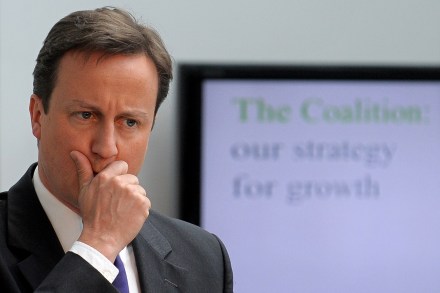
Another set of bad notices for Cameron & Co. this morning, chief among them the Public Administration Select Committee’s report into government strategy. It basically says that there is none: short-term fripperies are indulged at the expense of long-term objectives. Or as the report puts it in one of its most trenchant passages, ‘We have little confidence that policies are informed by a clear, coherent strategic approach, informed by an assessment of the public's aspirations and their perceptions of the national interest.’ This is a diagnosis that many will agree with, partially if not in full. Most governments could do with more long-term thinking, let alone one that is split between two parties.
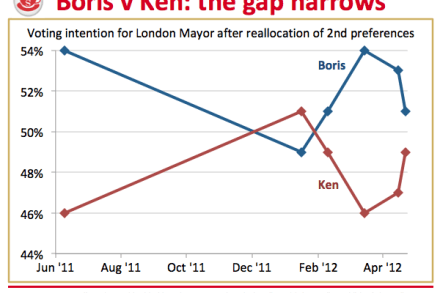
The race for London Mayor gets tighter

From our UK edition

It looks as though the London Mayoral election isn’t the foregone conclusion some thought it was. A new YouGov poll for the Evening Standard has the gap between Boris and Ken down to just two points — well within the margin of error. That contrasts with the eight-point lead that Boris had opened up last month: One interesting finding is that, despite all the controversy over his tax affairs, Labour supporters are not turning their backs on Ken. In fact, they seem to be rallying around him. Of those Labour general election voters who express a preference between Ken and Boris, Ken now has the support of 89 per cent.

Nadine Dorries: Cameron and Osborne ‘are two arrogant posh boys’

From our UK edition

Nadine Dorries has form when it comes to attacking her party's leadership, but this sets a new high water mark (from about 1:48 in): "playlist=http://playlists.bbc.co.uk/news/uk-politics-17813706A/playlist.sxml&config=http://www.bbc.co.uk/player/emp/2_0_39/config/default.xml&embedReferer=http://www.bbc.co.uk/news/politics/&domId=emp-17813706-76418&config_settings_showPopoutButton=false&mediatorHref=http://open.live.bbc.co.uk/mediaselector/5/select/version/2.0/mediaset/journalism-pc/vpid/&fmtjDocURI=/news/uk-politics-17813706&config_settings_showUpdatedInFooter=true&uxHighlightColour=0xff0000&config_plugin_fmtjLiveStats_pageType=eav1&config_settings_showShareButton=true&holdingImage=http://news.bbcimg.co.

Cameron needs results that match his words

From our UK edition

Further to James’s post on the Cameron interview, here’s what jumped out at me: 1. ‘Governments have difficult months. This government came together to dig this country out of the huge economic mess that it's in…’ This is the official No.10 explanation about the last few months; that it’s the problems of the austerity agenda. As James Forsyth says in his political column in the current magazine, there are strongly-held alternative explanations. 2. ‘We’re not just a bunch of accountants dealing with the deficit…’ Cameron kicks off with this, an interesting phrase as it has been used by those criticising his Chancellor’s economic message.

Cameron tries to return to the big picture

From our UK edition

David Cameron is out doing the media rounds today. He wants to, in his words, get back to the ‘big picture’, the argument over deficit reduction. Indeed, Danny Alexander’s speech today saying that departments have to indentify additional saving seems to have been timed to tee up this argument. Cameron’s Today Programme interview, though, was dominated by Abu Qatada, tax avoidance, Lords reforms and whether or not — in John Humphrys’ words — the PM is ‘a bit lazy.’ On Qatada, Cameron was insistent that the Home Office had ‘checked repeatedly’ with the European Court of Human Rights on the deadline. I expect that the Home Office will have to release details of these contacts today.

Mid-term blues or something more serious?

From our UK edition

The argument in the Cameron circle about what the government needs to do to get back on course has been the story of this week. As I say in the political column, there’s a divide between those who think that this month’s events have been little more than a bit of mid-term blues, and those who worry that they have revealed serious, structural problems that needs addressing if they are not to cripple the government. At a meeting of Conservative Cabinet ministers on Wednesday lunchtime, this divide came clearly into sight.

Gove’s historical conundrum

From our UK edition

Is it possible to set schools free while demanding a beefed up teaching of our nation's history? Both are topics close to the heart of the Education Secretary but eventually, he’s going to have to choose one over the other. Top-down orders on the History curriculum will undermine attempts to give schools and teachers more control over what they do. Tristram Hunt threw this curveball in this weeks magazine, where he states it is a example of the classic Tory struggle between liberalism and conservatism: 'The self-inflicted challenge comes with delivering this national narrative of Britishness. Because at the crux of Gove’s schools revolution is the dismantling of national provision.

Cameron remains adamant on Lords reform

From our UK edition

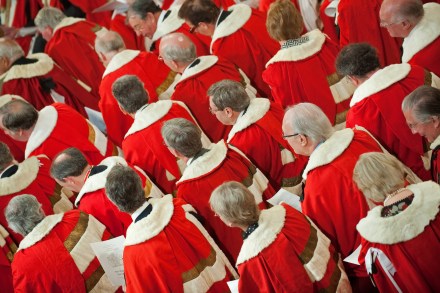
Despite last night’s threats, David Cameron remains personally committed to the cause of reforming the House of Lords. The coalition is also resisting calls for a referendum on the reforms, saying that it is ‘not persuaded of a case of having one’. Their view comes despite reports that the joint committee and banks of Tory and Labour MPs want a referendum. The pressure on David Cameron, of course, pulls both ways. On the one hand, his backbenchers are vowing to prepare ‘off the scale’ rebellions that are ‘worse than Maastricht’. On the other hand, are the Lib Dems. In a show of strength that bordered on hubris, Lord Oakeshott said earlier today that his party expects all coalition MPs to vote for the bill.

The coming schools crisis

From our UK edition

Michael Gove’s school reform is being overwhelmed by the surging demand for school places, I argue in my Telegraph column today. When the Education Secretary first draw up his ‘free school’ programme, he said in a Spectator interview that his aim — while radical — was simple.  ‘In your neighbourhood, there will be a new school going out of its way to persuade you to send your children there. It will market itself on being able to generate better results, and it won’t cost you an extra penny’ Choice is only possible when supply outstrips demand. But the latter is growing faster than anyone envisaged a few years ago.

The depth of Tory feeling over Lords reform

From our UK edition

What should worry David Cameron about tonight’s meeting of the 1922 Committee on Lords reform was that it was not just the usual suspects who spoke out against it. The two MPs presenting the case against were members who have never defied the whip: Jesse Norman and Nadhim Zahawi. Those present were particularly struck by some polling data that Zahawi, who used to run YouGov, presented. It showed that when asked what issues were a priority for them zero per cent of the electorate mentioned reform of the Lords. Even when prompted, this number only rose to six per cent. But Zahawi’s polling shows that if reform does go ahead, almost two thirds of the public want a referendum on it.

Cameron approaches Lib Dems’ chief tormenter

From our UK edition

News is breaking at the Telegraph that Matthew Elliott — head of the TaxPayers' Alliance — is being considered for an adviser role in Downing Street. It would be strategic move by Cameron, and a bold one given Elliot's effective work on the Alternative Vote referendum. That campaign, which focused on Nick Clegg's shortcomings, is the greatest sore between the Prime Minister and his deputy, raising the question of how Lib Dems react to the news that their prime taunter has been being brought into the love nest of No.10. Many Conservatives will be heartened by the news, especially at a time when there is a brain drain sweeping across the coalition (with Richard Reeves' departure last night).

Cameron and the civil service coup

From our UK edition

We thought CoffeeHousers might care to read James’s political column from this week's magazine (on sale today), so here it is: There is a split in the Cameron circle. The divide is between those who think that the problems of the past few weeks have been a blip, one that will end when Boris Johnson wins in London, and those — including some of the Prime Minister’s closest friends — who fear the problems are symptoms of a disease that could cripple the government. At stake in this debate is the future strategic direction, and the potential success, of the Cameron project. The Prime Minister, ever the optimist, is in the first camp. He is inclined to think that he is experiencing a normal bout of mid-term turbulence.

British jobs, British workers and this government

From our UK edition

Chris Grayling gave a speech today that mirrored his response to the recent work experience brouhaha: punchy, practical and broadly persuasive. Except there were some parts that might cause a few jitters, and which are certainly representative of jitters along Downing Street. First, this passage: ‘It's easy to hire someone from Eastern Europe with five years' experience and who has had the get-up-and-go to cross a continent in search for work. But those who look closer to home find gems too. Very often the surly young man in a hoodie who turns up looking unwilling to work can turn into an excited and motivated employee.’ And then this: ‘I personally think that anyone who offshores customer service is mad.

A taxing PMQs for Cameron

From our UK edition

And on it rumbles. Last month’s budget seems to have created more niche-losers than any tax settlement in history. Those who feel deprived are still squealing about it. At PMQs today Ed Miliband took a swipe at the Prime Minister on their behalf. Billionaires get bungs, grannies get mugged. That’s the headline Miliband was aiming for but didn’t quite find. He adopted his best silent-assassin mode and politely asked the PM to confirm whether or not a bonus of £40k was winging its way into the wallets of Britain’s top earners. Cameron couldn’t switch subject fast enough. The Budget, he claimed, was all about cutting taxes for 24 million workers and lowering corporation tax to make us more competitive.

After Abu Qatada

From our UK edition

It has been a mixed news day so far as Britain's relationship with the ECHR is concerned. There's been the good stuff: Abu Qatada has been arrested and is set to be deported, with the government now confident that he can be shipped to Jordan without provoking the ire of Europe's legal class. And then there has been the less than good stuff: according to the Times, which has a leaked document in its possession, Britain's official proposals for reforming the ECHR have been diluted ahead of the Council of Europe meeting in Brighton this week. This outcome, as I suggested back in February, is hardly surprising — but it could nonetheless make life a little bit more difficult for David Cameron.

No ‘poll shock’, but some interesting findings nonetheless

From our UK edition

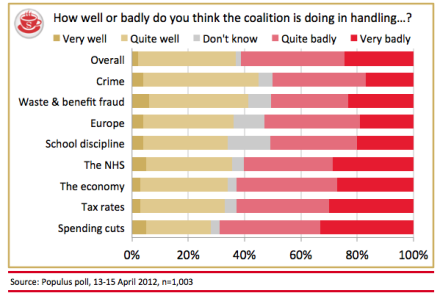
Despite the Times’s headline (‘Poll shock as new U-turn looms’), there’s nothing particularly surprising in the toplines of today’s Populus poll. It merely confirms the trends already exposed by other pollsters: a widening Labour lead (Populus has it at nine points, up from four last month) and increasing discontent with the coalition (Populus has the government’s net approval rating at minus 24, down from minus 3 in September). Beneath the toplines though, there are some interesting details.

The ‘22 equation

From our UK edition

Next month’s elections to the 1922 Committee of Tory backbenchers have taken on particular importance in the current circumstances. The fact that a couple of the officer positions are held by Cameron’s harshest critics, and that some MPs broadly supportive of the leadership have decided to take on the ‘wreckers’, means that the results will be seen as a sign of where backbench opinion in the party really is. As I write in the Mail On Sunday today, three of the 2010 intake — Charlie Elphicke, George Hollingbery and Priti Patel — have decided to endorse a joint candidate for secretary of the committee. This candidate will stand seeking a mandate to shift the focus of the committee more onto campaigning and policy-work.

How serious is Miliband?

From our UK edition

The Tories reckon that Ed Miliband’s proposed donation cap of £5,000 is a con that will hit their funding every year, while preserving Labour's funds except at election time thanks to the union levy being exempt. Housing minister and regular attack-dog Grant Shapps laid out the party's position on Andrew Neil’s BBC Sunday Politics show earlier today. Here is the transcript of their exchange: Shapps: Well I watched the interview and I thought this sounds big and important, so to a quick look afterwards and discovered that of the £10m Labour got from the unions last year, they still get 9.9 million of it, so this is a complete wheeze, one of the most disingenuous interviews I think I’ve seen all year.” Andrew Neil: Really?

The politics of taking big money out of politics

From our UK edition

Ed Miliband is nothing if not persistent. Party funding has been a running theme of his leadership, necessitated by his cosy relationship with the unions. He has returned to the subject today, with a blog post and an appearance on the Andrew Marr Show. The news is that Miliband wants to cap donations from individuals, organisations and companies at £5,000. That is £5,000 less than was recommended by Sir Christopher Kelly, and £45,000 less than the Conservatives propose. Miliband claimed that this would dramatically reduce Labour's funding from the trade unions, forcing his party to diversify its revenue sources. Obviously, it would also reduce the Tories' funding sources.