Conservative party

Gay marriage, the CofE and the Tories

From our UK edition

There was, as Freddy has said, something inevitable about the Church of England’s response to the imminent prospect of gay marriage. A convinced Anglican, who also has intimate knowledge of constitutional law and decoding legislation, recently told me in no uncertain terms that the government’s plan could force the church to schismatic ends because, for it, the division between religious and civil marriage is not clear. Marriage may be a sacrament before God, but it is most certainly a legal institution, defined and licensed by the State. This places the established church and its clerics in an exposed position should parliament chose to redefine marriage under English law. (See points 21 and 24 in the annex to today’s CofE document for further details.

The language of left and right

From our UK edition

Stephan Shakespeare has a fascinating article on Con Home today, comparing which words voters associate with the terms ‘right-wing’ or ‘left-wing’. The results aren’t too surprising: the language of the left is, generally, softer than the language of the right. Shakespeare’s article is entitled ‘Fairness versus selfish’, which gives you an idea of how voters perceive the dichotomy. The upshot is that many voters still believe that the right is intrinsically ‘nasty’; ergo, the modernisation project has not gone far enough. This research, and the conclusions drawn from it, reminds me of Jonathan Haidt’s book The Righteous Mind (indeed, Shakespeare references an article by Haidt).

Dissenters against Osborne

From our UK edition

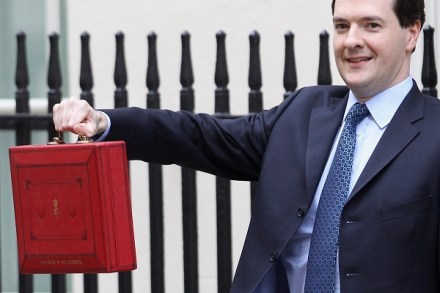
George Osborne has much to ponder this morning. First, there is the small matter of his evidence to the Leveson Inquiry later today (assuming that someone can check Gordon Brown's loquacity), which will prove diverting for those who remain gripped by those proceedings. Then there is the larger matter of the £80bn Spanish bank bailout. Osborne has welcomed the rescue, arguing that the Eurozone must survive and thrive if Britain is to prosper. His analysis is that the crisis on the continent is impeding domestic recovery. Fraser argued yesterday that this is a half-truth which verges on being a conceit. A number of Conservative backbenchers share Fraser’s scepticism and they have loosed-off volleys of criticism at the chancellor in today’s press.

No. 10’s response to its difficulties

From our UK edition

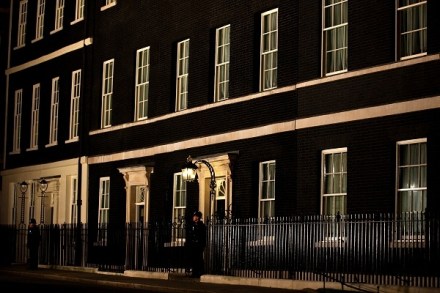
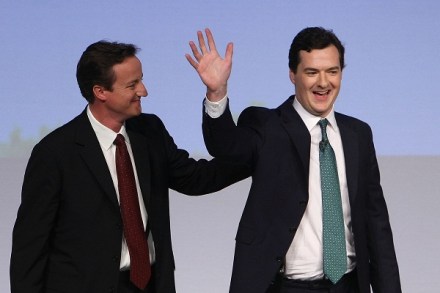
Two issues are dominating Number 10’s thinking at the moment: Europe and the cost of living. How to deal with Europe is the biggest strategic challenge facing David Cameron. Cameron has to work out how to use this moment to advance the British national interest. But he also knows that Europe is an issue that could split the coalition and the Tory party.   Inside Number 10, it seems that it is becoming a question of when to announce a referendum not whether to call one. As I say in the Mail on Sunday today, senior figures there are pushing for the Tory commitment to a future referendum on the EU to be brought forward from the manifesto to this year’s conference season.

Ed Miliband embraces Englishness, but still has to grasp the nettle on immigration

From our UK edition

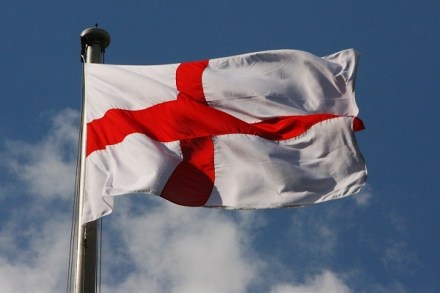
I hope that CoffeeHousers, regardless of political affiliation, will welcome a speech by a Labour leader that is explicitly patriotic, about England as well as the United Kingdom. As Ed Miliband said today, Labour has too often seemed either uninterested in Englishness or embarrassed by it, when there is nothing in its history and values that justifies this. Miliband was also right to emphasise the legitimacy and strength of ‘multiple identities’ — whether English and British, Scottish and British, Indian and British, or British and Muslim. And he was right to urge the English to ‘embrace a positive, outward looking version’ of national identity.

Cameron’s reshuffle dilemmas

From our UK edition

When David Cameron reshuffles his top team, one of the questions he’ll have to answer is what relationship he wants between the Conservative party and the coalition government. The Liberal Democrats have a deputy leader in Simon Hughes and a party president in Tim Farron who are quite often used by their leadership to try and put distance between them and the coalition. But there is no one who performs that role for the Conservatives.   Interestingly, Sayeeda Warsi has made clear that she would like to be freer to attack the Lib Dems. I also suspect that if she is moved in the reshuffle, whoever takes on the role will want more freedom to carve out a Conservative identity distinct from that of the coalition.

Cameron’s Warsi-related problems

From our UK edition

David Cameron finds himself in the same boat as Dr Frankenstein. Baroness Warsi, a political creation designed to bring Toryism to sceptical ethnic minorities in which Cameron has invested heavily, may have to be neutralised as she is engulfed by two inquiries. Paul Goodman writes of Cameron and Warsi’s awkward relationship in today’s Telegraph, and he makes three observations borne of his experience working with Warsi during the last parliament. They are: 1) That responsibility had been 'placed on the shoulders of a politician of no independent standing and with zero parliamentary experience.' 2) That Lady Warsi’s views on extremism aren’t Cameron’s.

Winning back lost ground

From our UK edition

In a bid to make Tory MPs feel more involved, Downing Street is inviting small groups of them to see Andrew Cooper, David Cameron’s director of political strategy, and Stephen Gilbert, the PM’s political secretary. Patrick Rock, who acts as the political liaison to the civil service run policy-unit, also attends. The first of these meetings took place recently, with a dozen MPs attending.   Those who were present describe the presentation as being frank about the government’s recent difficulties, it uses the term omnishambles, but also trying to offer reassurance. There was much talk about how Margaret Thatcher’s position at this stage in the political cycle post 1979 and ’83 was far worse than Cameron’s is now.

Watch out, Dave

From our UK edition

There is a cracking scoop in today’s Mail on Sunday. An anonymous Tory backbench MP has excoriated George Osborne’s performance as Chancellor. The MP repeats many of the arguments made by Fraser on Thursday, as the latest lines of the Budget were excised. Osborne is, apparently lazy, uninterested in economics and hubristic. The MP implies that Osborne’s mind is not sufficient to pull this off as chancellor. He writes: ''[Nigel] Lawson used to say that he had to work 18 hours a day and virtually gave up alcohol just to keep on top of things when he was Chancellor. And he had a formidable intellect to start with.

Right thinking

From our UK edition

David Frum has spoken for American conservatism for a generation – now he despairs of it David Frum has been a major force in American conservatism for more than 20 years. He was a speechwriter in President George W. Bush’s first administration and is said to have coined the phrase ‘axis of evil’. In the last few years, however, he has fallen out with the leading conservative magazine, National Review, the leading conservative think tank, the American Enterprise Institute, and the leading conservative TV network, Rupert Murdoch’s Fox News. He is an active political blogger at Newsweek and The Daily Beast, where he regularly deplores Republican intransigence and bloody-mindedness.

Another Downing Street exit

From our UK edition

Sean Worth was one of the buccaneers of the Downing Street policy unit. But as the civil service began to take a hold of it, Worth was sent over to the Department of Health to help Andrew Lansley see the NHS reforms through. It was also thought that Worth, an expert on social care, would be able to help craft the Tory response to the Dilnott report. But Worth is now leaving to go to the think-tank Policy Exchange. This suggests that any government action on social care is a long way-away. Worth is just the latest in a growing list of Tory aides who have quit the government. Partly, this is a product of just how demanding these jobs are in terms of time and intellectual effort.

Osborne’s gambles

From our UK edition

There is now a general acceptance that the Tories’ 2015 election manifesto will contain a pledge, dare one say a cast-iron guarantee, that voters will be offered a referendum on Britain’s relationship with the EU. James first revealed this in his magazine column a few weeks ago. The aim is to see off the surge from UKIP, prevent Labour from opportunistically seeking Eurosceptic ground, and to counter Boris Johnson’s popular adoption of the People’s Pledge. Since then it has been taken as read that George Osborne is responsible for this gambit, which is reasonable given that he is the Tories’ chief strategist, and a likely contender in a future leadership bid.

On the eve of Hunt’s Leveson appearance

From our UK edition

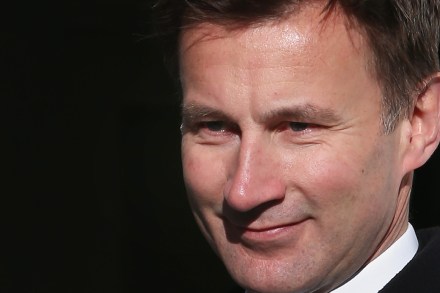
It has become the conventional wisdom in Westminster that Jeremy Hunt’s career will turn on his appearance before the Leveson Inquiry tomorrow. Friends of Hunt have today been arguing that the Inquiry’s focus should be on how he carried out the quasi-judicial role. They are saying that once appointed to it, Hunt behaved — unlike Vince Cable — properly. They concede that Hunt’s texts to Fred Michel were overly familiar. But they maintain that, unlike Adam Smith’s texts, they gave away nothing about the state of the bid process.

The guilty men

From our UK edition

There was a telling moment in Michael Gove’s testimony to Leveson yesterday, when he applauded Rupert Murdoch for The Sun’s campaign against the Euro: 'Gove: Other politicians recognised that the campaign which the Sun and others ran to keep us out of the single currency was right, and I think if we're reflecting on other newspaper campaigns, I think we can undoubtedly say that was a campaign in the public interest. Jay:  Well, some people might still disagree with that proposition, Mr Gove, but I'm not going to take you on it. Gove: I'm sure — well, a dwindling number may.' To me, the exchange was a reminder of how the whole bien pensant establishment was once in favour of Britain going into the euro.

Gove stands up for free speech

From our UK edition

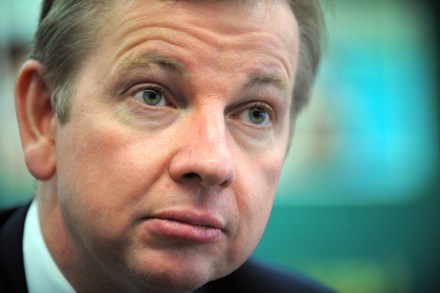
Michael Gove’s appearance at the Leveson Inquiry has set the heather alight in Tory and journalistic circles. There is, among those who fret about the dangers to free speech created by the current mood, relief that someone has set out the case for liberty so clearly and without apology. While among Tories there is a delight at seeing one of their ministers articulate a Conservative worldview so clearly. Gove was, in some ways, at an advantage going before the inquiry. His department has no responsibility for the press and so he knew that the focus would be on his work as a journalist and his attack on Leveson, saying that the atmosphere around the inquiry was having a chilling effect on free speech. But, even given that, his performance was an impressive one.

What to make of Gove’s remark about for-profit free schools?

From our UK edition

Garlands from all quarters for Michael Gove’s performance at the Leveson Inquiry this afternoon (well, not quite all quarters) — but the most significant thing that the Education Secretary said wasn’t actually related to the media, but to his ministerial brief. When asked about the prospect of profit-making free schools, he replied that they ‘could’ happen ‘when we come to that bridge’. It’s probably the clearest statement that Gove has made, on record, to demonstrate that he’s not averse to introducing the sort of profit arrangements that could give his agenda an almighty boost. The question is: when will he get to that bridge, then?

Clegg takes on the Establishment (and the Tories) again

From our UK edition

So Nick Clegg wants to present himself as anti-Establishment, does he? That’s hardly surprising. After all, the Deputy Prime Minister has ploughed this furrow before now, attacking the ‘vested interests’ that are the banks and the political class. And it’s generally a large part of the Lib Dems’ ‘differentiation strategy’ to come across as insurgents in suits. But Clegg’s comments today are still striking for how far they weaponise this theme and then turn it against the Tories. It’s not just the context of it: with Tory ministers — including Jeremy Hunt — appearing before Leveson this week, Clegg chooses to attack those who ‘bow and scrape in front of Rupert Murdoch’.

Spinner unspun

From our UK edition

UPDATE: The below video has now been taken down from YouTube, but Guido has another copy here. Guido was first to this video of Downing St’s Director of Communications, Craig Oliver, remonstrating with the political correspondent Norman Smith about the tone of a BBC report — but it’s worth posting again here.

Your guide to the Warsi allegations

From our UK edition

What is Baroness Warsi accused of? The main allegation in yesterday's Sunday Times is that, in early 2008, Warsi was 'claiming parliamentary expenses for overnight accommodation when she was staying rent-free in a friend’s house' in Acton. The house in question is owned by Dr Wafik Moustafa but Warsi stayed there as a guest of Naweed Khan — who was himself staying in the house rent-free. There was also a second allegation that the Baroness failed to declare on the Register of Lords' Interests income from a flat she owned and was renting out — although it did appear on the Register of Ministers' Interests. Warsi has admitted to this one, saying it was 'an oversight for which I take full responsibility'. So how much money are we talking about?

The coalition’s euro-differences start to boil over

From our UK edition

Nick Clegg did not show his Berlin speech on the Euro crisis to Number 10 or the Foreign Office before releasing it to the media. This is quite remarkable. Up to now, there has been a recognition that while the Liberal Democrats may try and differentiate themselves from the Prime Minister on various things, the government must speak with one voice on the deficit reduction strategy and foreign policy. No credible country can afford to send mixed messages to either the bond markets or foreign governments. Clegg’s freelancing on this issue is a reminder of how Europe remains the biggest ideological fault-line in the coalition. When David Cameron formed the government, he hoped that the whole Europe issue could be parked until he had a majority of his own.