Conservative party

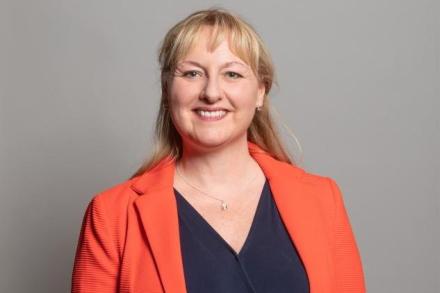
‘The zealots are turning people off’: Claire Coutinho on net zero and her bond with Rishi Sunak

From our UK edition

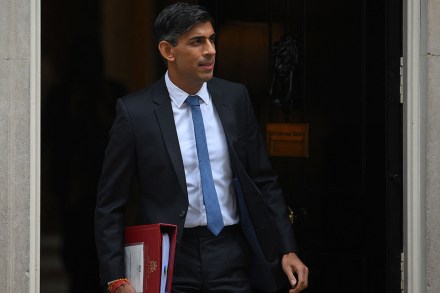
When Claire Coutinho picked her A-levels in 2002, she received a phone call from her grandmother in India. ‘She could see that I’d not picked medical subjects,’ Coutinho says: she’d gone for maths, history of art and English – a glitch in the matrix for a family that tends to choose medical school. ‘She told me that she may not last very long and it was her final wish that I reconsider.’ Coutinho stuck to plan A; her grandmother lived for another ten years. Last month, at 38, she became one of the youngest secretaries of state in British history. We meet in her soon-to-be-vacated office with a rooftop view of Westminster Abbey and a whole floor of advisers and aides. Not so long ago, Coutinho was one of those advisers.

At least Britain isn’t that corrupt

From our UK edition

Long-time readers may recall that I take a special interest in the art of corruption. And this week America has thrown up a delicious example. Democrat Senator Robert Menendez was indicted last week on bribery charges. This follows a raid on the New Jersey Senator’s home in which federal agents found more than $480,000 hidden in clothing and piled up in his closets. The agents also found 13 gold bars. You have to go back to the 1990s for the last time that parliament was seriously accused of being ‘up for sale’ Menendez denies the charges and said on Monday that it has simply been his habit, for some years, to take thousands of dollars in cash from his personal savings account and store it around the house.

Sunak’s new strategy: hard truths

From our UK edition

The last time Tory activists and MPs gathered for their annual party conference, it didn’t end well. Liz Truss had barely checked in to her hotel before she faced a full-on attack from Michael Gove, who started a rebellion against her proposed tax cuts live on air. Truss U-turned on her mini-Budget and cabinet discipline quickly collapsed. ‘It was the worst four days of my life,’ recalls a former Truss aide. Sunak sees the conference as a potential moment of catharsis that could lead to a Tory recovery Rishi Sunak hopes to improve on this admittedly rather low mark. He sees the conference in Manchester as a potential moment of catharsis that could lead a Tory recovery.

Cindy Yu, Charlie Taylor and Petroc Trelawney

From our UK edition

17 min listen

Cindy Yu tells the story of how she got to know Westminster’s alleged Chinese agent and the astonishment of seeing herself pictured alongside him when the story broke (01.12), Charlie Taylor, His Majesty’s Chief Inspector of Prisons, talks breakouts, bureaucracy and stabbings, and wonders – where have all the inspirational leaders gone (06.45), and Petroc Trelawney shares his classical notebook and describes a feeling of sadness as the BBC Proms wraps up for another year (11.54). Produced and presented by Linden Kemkaran.

Broken Britain: what went wrong?

From our UK edition

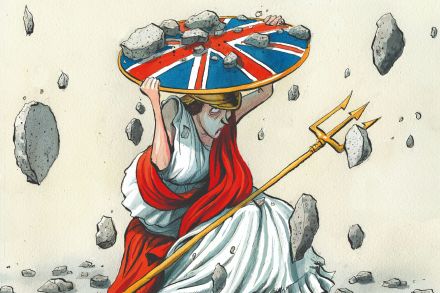
Did Gillian Keegan need to apologise? The Education Secretary thought her ITV interview had ended and she could speak frankly. She insisted the schools’ concrete crisis was down to ‘everyone else’ who had ‘sat on their arse’. It was a fair point, inelegantly expressed. It’s been almost 25 years since the order first went out from Whitehall to inspect schools and hospitals for crumbling reinforced autoclaved aerated concrete (Raac). When a roof eventually collapsed at the Singlewell Primary school in Kent in 2018, the government sent out surveys to inquire about building material – but that was largely it. Like lazy homeowners, or dodgy landlords, successive administrations assumed the problem would be dealt with by somebody else at a later date.

Portrait of the week: A concrete crisis, Labour reshuffle and Gabon coup 

From our UK edition

Home More than 100 schools were told to close buildings before the new term because they contained the wrong kind of concrete. The Health and Safety Executive said that reinforced autoclaved aerated concrete (Raac) ‘is liable to collapse with little or no notice’. In total, 156 schools are affected, of which 104 require urgent attention and 52 have already received repair works. But in Scotland, where 35 council-run schools had been found to contain Raac, none had to close.

Britain has an entitlement problem

From our UK edition

An Institute for Fiscal Studies paper, published at the end of last month, makes grim reading. Through the prism of the media reports it generated (‘One in 11 workers in England could be NHS staff by 2036,’ said the Guardian; ‘NHS staff will make up 49 per cent of the public sector workforce in 2036,’ said the Times), the most sensational finding was that our health service will be eating up an ever-increasing share of public spending. But, as so often, this particular cuckoo in the nest of public provision is only the most newsworthy of so many indications of Britain’s long, slow slide into insolvency. The gap grows between what we consider ourselves entitled to and what our governments can afford The paper is part of the Institute’s series Green Budget 2023.

The Tories need a shake-up – and Sunak knows it

From our UK edition

When prime ministers sense the end is near, they tend to follow a similar pattern. They change senior civil servants and appointees, as Boris Johnson and Gordon Brown did. They avoid consulting their cabinet and instead hide behind special advisers. They declare they don’t like polls, before saying that the only poll that matters is the election. But before all of this, they usually attempt a ‘reset’. It’s rarely a sign of rejuvenation, but rather the start of the embalming process. Rishi Sunak is aware of this, which is why there’s no use of the word in No. 10 as politics prepares to resume. He has so far resisted calls from backbenchers to change course, ditch his five priorities and articulate a grand new vision.

India’s century: Sunak’s plan for a new Indo-Pacific alliance

From our UK edition

When Rishi Sunak became Prime Minister, India’s press was thrilled. ‘From Age of Empire to Rishi Raj’ declared the Times of India: another headline hailed the ‘Browning Street’ phenomenon. ‘Indian son rises over Empire’, proclaimed the New Delhi TV channel, a play on the colonial-era adage that the sun never sets on Britain’s empire. When Sunak visits New Delhi for the G20 next week, it will be quite a moment. Two Hindu heads of government will meet – the old power and the new. Sunak’s agenda is to bind Britain closer to a growing Asian economic powerhouse – which last week completed its first successful moon landing – while containing China by bolstering its rivals.

Portrait of the week: Scottish drug deaths, more strikes and the Lucy Letby verdict

From our UK edition

Home The number of drug deaths in Scotland fell to 1,051 in 2022, the lowest since 2017, but still the worst record per head in Europe. Rishi Sunak, the Prime Minister, who in March had pledged ‘to stop the boats once and for all’, said that ‘there is not one simple solution and it can’t be solved overnight’. On a sunny Monday, 661 migrants landed in Britain in 16 small boats; one man, on making landfall, made the Albanian eagle gesture popular among football supporters. England was defeated 1-0 by Spain in the final of the women’s football World Cup; the Spanish Prime Minister said that Spanish FA president Luis Rubiales kissing the forward Jenni Hermoso on the lips afterwards was an ‘unacceptable gesture’.

Ulez expansion has gone ahead in defiance of evidence

From our UK edition

London’s Ulez scheme has been expanded. A new network of cameras filming the traffic movements of millions of Londoners is now switched on. Old cars and vans, often used by sole traders, will be charged £12.50 a day if they pull out of their driveways. Keir Starmer had asked the London Mayor Sadiq Khan to ‘reflect’ on the policy after Labour lost the Uxbridge and South Ruislip by-election. Khan duly did, and concluded that he would stick to plan A. With 4,000 Londoners dying of air pollution every year, he said he had no option. But if that figure is correct, why has air pollution been mentioned in only one death certificate in four years? Nationally, nitrogen dioxide (NO2) levels have fallen 75 per cent over the past three decades, thanks to cleaner car engines.

The problem with the Tories’ ‘local heroes’

From our UK edition

You know the Conservative party is in trouble when it does not dare use its name on leaflets. Instead, it took a two-pronged approach in the last two general elections: a presidential campaign for the national media and local politics for the doorstep. With the Tories now 20 points behind Labour, it seems the strategy for next year’s general election is to once again go easy on the Conservative brand and emphasise the local-hero credentials of the candidates. All they need is to find some local heroes. It’s not just that local candidates are seen as more attractive, the barriers to outsiders have been fortified ‘Voters want someone who is going to fight for them and that’s an easier conversation to have if they are a local resident,’ says one newly picked Tory candidate.

The covert campaign against field sports

From our UK edition

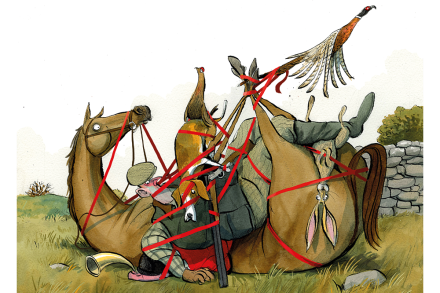
If a general election is held, as is rumoured, in November next year, Labour could return to power exactly 20 years after the Hunting Act was passed, and there is the very real possibility of field sports being finished off altogether. Then, the government’s assault on hunting was a long, bloody, open conflict. Today, the campaign against countryside pursuits is more covert – a gradual process of lawfare. Over the past two decades, more and more regulation has crept in. Field sports and the rural economy that surrounds them are suffering. The groups set up to protect rural England often now work against the interests of both gamekeepers and farmers, with the result that the countryside is being drained of the people who understand and can conserve it best.

My morning spin class with Rishi Sunak

From our UK edition

It was 7.31 a.m. and I was late for my Notting Hill spin class. That meant the lights weren’t on when I entered the studio and scrambled to find my bike. Bleary-eyed, I noticed a man waving at me as I approached Bike 49. It was Rishi Sunak, on the bike next to mine. ‘I promise I booked this one,’ I said, so he didn’t think I was stalking him. The instructor started to shout motivational phrases at us and blast out Britney Spears and Dua Lipa. For the next 45 minutes, Rishi and I sweated it out side-by-side. This week an LA TikToker had a similarly surreal experience when she rocked up at the Santa Barbara SoulCycle studio for an early morning Taylor Swift-themed ride, only to find it filled with security.

Letters: ‘supercops’ won’t save us from rising crime

From our UK edition

Crime stoppers Sir: If the Tories’ reputation on crime lies in the hands of these innovative supercops, then it will be sadly doomed, no matter how enterprising they may be (‘Rise of the supercops’, 5 August). Whether we like to believe it or dismiss it as woolly liberalism, the police and courts have a limited impact upon crime. The reality is that crime is driven by powerful social and economic forces, not the effectiveness of the local constabulary. In a liberal democracy, leaving the police to deal with any complex social problem, particularly one as diverse and intractable as crime, is fraught with danger. The police do have an important role to play but so do many others.

Supercops: the return of tough policing

From our UK edition

40 min listen

In this week’s cover article, The Spectator's political editor Katy Balls takes a look at the bottom-up reform that’s happening in some parts of the country, and asks whether tough policing is making a comeback. Katy joins the podcast together with Kate Green, Greater Manchester's Deputy Mayor of Crime and Policing. (00:50) Next, the war has finally gone to Moscow. Recently, a number of drone strikes have hit targets in the Russian capital. Though Ukraine hasn’t explicitly taken responsibility, in the magazine this week, Owen Matthews writes that it’s all a part of psychological warfare. Owen is the author of Overreach: The Inside Story of Putin and Russia’s War Against Ukraine and he joins the podcast.

Supercops: the return of tough policing

From our UK edition

In a few weeks’ time, police across the country will receive a new order: ‘Investigate every crime’. It may not sound like a novel concept, but over the past few years forces – including the Metropolitan Police – have largely given up on low-level crime. Austerity was seen as a reason to ignore burglaries, thefts and minor assaults if officers believed there was little chance of identifying a suspect. But now a new theory is about to be put into practice: that investigations will lead not just to more convictions, but to more deterrence.

Can the Tories come up with a tax offer in time?

From our UK edition

Last summer, all the Tory party could talk about was tax. It was at the heart of the leadership contest and the dividing line between Liz Truss and Rishi Sunak. The then foreign secretary promised to move fast and bring in deficit-financed tax cuts; the former chancellor said this would end in tears and instead pledged fully funded cuts over six years. Neither plan saw the light of day. All talk of tax cuts was suspended after Truss’s mini-Budget, when the premise of her borrow-and-spend agenda was tested to destruction. Since then, tax has become a difficult topic to bring up. Even within Tory circles, calls to cut tax are usually met with a pointed question: did you forget what happened last time?

I sledged Steve Smith for England

From our UK edition

In this summer of sporting dramas, every patriotic sports fan likes to think he’s done his bit to help. I went up to Manchester with my brother last Thursday and in the evening we found ourselves in an Indian restaurant with the England wicket-keeper Jonny Bairstow at the next table. I feel sure it was Edward’s and my manly cries of ‘Good luck, Jonny’ as he left that helped him bat so brilliantly for his 99 not out. Though I suppose it could have been the vindaloo that fired him up. My major influence on the Ashes series came a few days earlier, when I bumped into the Australian all-time-great batsman and scourge of England, Steve Smith. This was on the balcony of the All England Club at Wimbledon, where he was having a quiet chat with some friends.

Portrait of the Week: NatWest, fires in Greece and Twitter’s new look 

From our UK edition

Home Dame Alison Rose resigned as the chief executive of the NatWest group, which owns Coutts bank. She had been the source of a BBC report that Nigel Farage’s account at Coutts had been closed because it no longer met the bank’s financial requirements. Dame Alison also apologised to Mr Farage for ‘deeply inappropriate’ comments in a Coutts dossier on him which showed his account had been closed because of his political views. Her resignation came only after No. 10 had expressed ‘significant concerns’ about her remaining as the board wanted. The volume of goods sold by Unilever fell by 2.5 per cent in the first half of the year, but sales measured by price grew by 9.4 per cent. A fire destroyed more than 40 businesses on an industrial estate at Baldock, Herts.