Conservative party

The Curse of Tutancameron’s Europe speech

From our UK edition

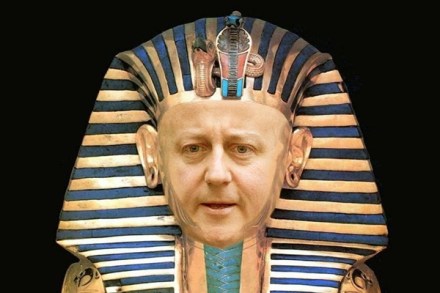
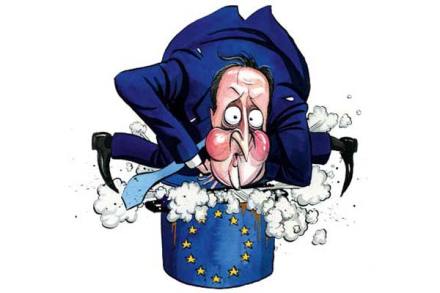
David Cameron's Europe speech already had a Tutankhamun-style curse on it before events forced him to postpone it, with the much longer delay from its original date of mid-autumn causing a feeding frenzy in the media, in his own party, his coalition partners, and in the opposition. By the end of last week, it was difficult to find an opposition MP or columnist who hadn't written a whimsical piece imagining they were Cameron giving the speech (or indeed twisting readers into an even greater willing suspension of disbelief by imagining they were John Major talking to Cameron about the as-yet undelivered speech as David Miliband managed to do).

Andrew Mitchell and Morgen Schmorgen

From our UK edition

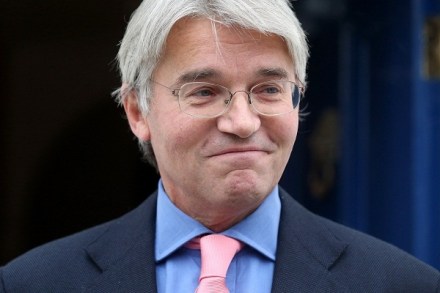
Another week, another former Tory cabinet minister working a room. Last week I brought you news of Liam Fox entertaining the great and good of the Tory party. Now I hear that Andrew Mitchell has been making an extra special effort to be nice to absolutely everyone. The former chief whip was being very friendly to the commentariat at a drinks party at a recently opened hotel in Westminster. He shunned sceptical news journalists, but made determined passes at those with influential column inches. Whatever could he want them to say? George Osborne was at the same private party, pressing flesh like a coiffured madam in a brothel.

David Cameron’s delayed EU speech: extracts

From our UK edition

By the time the Prime Minister cancelled his Europe speech yesterday evening, extracts had already been briefed to journalists. A new date has yet to be announced, but here are the extracts that have been released: Britain should play an active part in Europe: 'I want to speak to you today with urgency and frankness about the European Union and how it must change – both to deliver prosperity and to retain the support of its peoples. 'I come here as British Prime Minister with a positive vision for the future of the European Union. A future in which Britain wants, and should want, to play a committed and active part.' Now is the time for change: 'Why raise fundamental questions about the future of Europe when Europe is already in the midst of a deep crisis?

Breaking: Cameron postpones Europe speech

From our UK edition

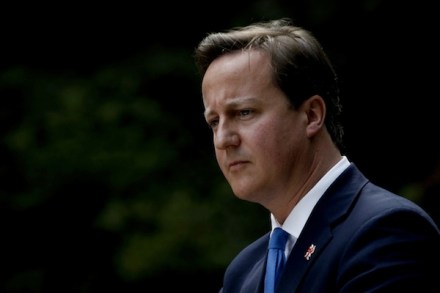
David Cameron has postponed his speech on the European Union because of the hostage situation in Algeria where a standoff has been taking place in a gas plant in the Sahara Desert. There are conflicting reports, but it seems about 300 Algerian and 40 international hostages were taken and several have been killed in a rescue attempt. The PM has suggested that worse news will follow saying:- 'We should be prepared for the possibility of further bad news in this very dangerous fluid situation.' No10 said earlier that Cameron had not been informed about the Algerian rescue attempt before it began and has told his Algerian counterpart that he wishes he had been "contacted in advance". The Japanese government has asked the Algerians to desist.

Exclusive: David Cameron meets eurosceptic backbenchers ahead of speech

From our UK edition

The Prime Minister met a group of Tory backbenchers in Downing Street this afternoon to discuss Friday's Europe speech. I have spoken to the group's ringleader, John Baron, who has stressed the confidential manner of the discussion, but has given Coffee House readers some exclusive details of what went on. John Baron, Peter Bone, Edward Leigh, Mark Reckless, Philip Davies and Steve Baker attended the meeting. They were representing the 100 Conservative backbenchers who had signed the original letter in June calling for legislation in this Parliament for a referendum in the next. The meeting, which had a good atmosphere, lasted 20-25 minutes, and Baron and colleagues reiterated to the Prime Minister the letter's two demands.

Fresh Start’s EU powers threat could focus the mind

From our UK edition

It is always an understatement to say that David Cameron can't possibly satisfy his party with his Europe speech this week: the reason being that there is no one unified position on the EU within the Conservatives, with different groups calling for different responses to Europe. Today the Fresh Start Group of Tory MPs publishes its 'Manifesto for Change' which will propose a list of powers that Britain should repatriate from Europe. Cameron has already made clear that he will be seeking a new relationship with the EU, and so the Fresh Start MPs will be hoping that he will pick up some of their ideas. For them, it is the renegotiation that is the crucial element of Cameron's speech.

Tory MPs warn Cameron of ‘mañana moment’ for EU speech

From our UK edition

Number 10 has got quite the job to do over the next few days if it is to get backbenchers ready for David Cameron's EU speech on Friday. Tory MPs are now obviously in a high state of excitement, but their expectations will inevitably be disappointed to some degree. Some are already expressing fears about this, including the MP leading calls in parliament for a referendum. John Baron, who chairs the All-Party Parliamentary Group for an EU referendum, tells me that he is worried the 'mood music' in Europe isn't quite as positive about renegotiation as the Prime Minister might hope. He says: 'The chance of repatriating powers, I think they are slim: but I wish him well.

No 10 has intensive work ahead to prevent Tory criticism drowning out Cameron’s EU speech

From our UK edition

The date of David Cameron’s Europe speech has been moved yet again. But this time it has been pulled forward, to this Friday. Downing Street realised that they weren’t going to be able to talk about anything else until the speech was done. The mood in the party ahead of the speech is not good. There’s considerable irritation among Tory Cabinet Ministers that they haven’t been consulted about the speech. Another source of irritation for Eurosceptic ministers is that Ken Clarke has been allowed to — or, at least, not prevented from — joining up with Peter Mandelson and this new Centre for British Influence Through Europe.

The Britain in Europe crowd were wrong then, so why should they be right now?

From our UK edition

Ed Miliband’s speech to the Fabians is being rather over-shadowed today by Lord Heseltine’s attack on David Cameron’s EU policy; the political media like nothing more than a 'Tories split on Europe' story. I suspect, though, that Labour won’t mind this too much. Heseltine’s criticisms make the Tories look divided and allow Labour to claim that even Cameron’s own growth adviser thinks his Europe policy is wrong. Of course, there is nothing surprising about Heseltine’s criticisms: he is an ideological pro-European. He wanted Britain to join the euro, something that would have been a total disaster for this country, and even now believes that we will join the euro one-day.

The Fox pulls in a crowd

From our UK edition

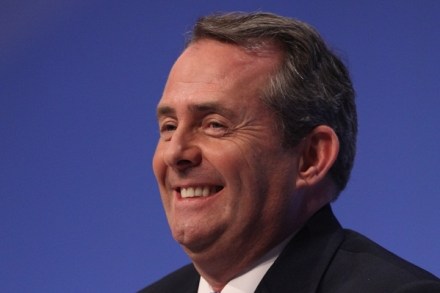
An impressive turnout in the Churchill Room of the Carlton Club last night for Liam Fox’s New Year drinks. My eyes in the room reports that a smiling Liam claimed he had ‘invited 180 people’ and 162 had turned up. Interestingly, the big beasts came out for the former Defence Secretary, who is said to be eyeing a political comeback. Chancellor George Osborne stopped by, as did Party Chairman Grant Shapps, and Chris Grayling joined the party together with ‘a smattering of Whips’. Though he was left high and dry by colleagues during the scandal that ended his frontbench career in October 2011, his friends were back for the free bar and mini fish and chips.

What David Cameron plans to say in his Europe speech

From our UK edition

David Cameron’s big Europe speech is now less than a fortnight away. It will be, I suspect, the most consequential speech of his premiership. When you look at the challenges involved, one can see why the speech has been delayed so many times. Cameron needs to say enough to reassure his party, which has never been more Eurosceptic than it is now. But he also needs to appeal to European leaders, whose consent he will need for any new deal. At the same time, he’s got to try and not create too much nervousness among business about where all this will end up. I understand that he intends to argue that Britain needs to remain inside the single market. But he will commit to a renegotiation of Britain’s terms of membership, starting after the next election.

Could Jesse Norman be the next Tory leader?

From our UK edition

He might want to stay Prime Minister until 2020, but who will succeed David Cameron once he's gone? In this week's Spectator, Bruce Anderson offers his own tip for the next Conservative leader: David Cameron has announced that he would like to stay in No. 10 until at least 2020. That is excellent news for one Old Etonian candidate for the succession. Although he is at least as good as anyone else in the 2010 intake (an outstanding vintage), this fellow could not promoted in the last reshuffle, because he had played a splendid innings as the captain of the revolt over House of Lords reform. He earned the gratitude of anyone who respects the British constitution, but the whips, although a valuable recent adornment to that constitution, have a narrower perspective.

Nixon’s lessons for today’s Republicans

From our UK edition

If the past few weeks are any indication, conservative Republicans learned very little from the 2012 election. While the party’s establishment tries to claw its way back from defeat, tea partiers and neoconservatives have decided to double-down on obstructionism. Less than a week after nearly derailing the fiscal cliff negotiations, tea partiers threaten to drive the U.S. into default in the coming debt-ceiling showdown. Meanwhile, neoconservatives are sharpening their knives over foreign policy realist Chuck Hagel, whom President Obama nominated this week for Secretary of Defence. Mired in ideological infighting, how can the Republican Party rescue itself? The answer, surprisingly enough, is Richard Milhous Nixon.

Copper-bottoming the Coalition

From our UK edition

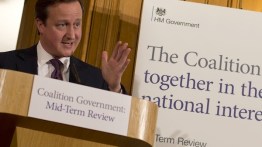
Number 10 officials have been working on the mid-term review since the autumn, with what the Prime Minister's spokesman described today as a 'long-term intention' to publish the awkward annex. But even though the review itself was delayed from the real mid-term point of the Coalition to this Monday, it doesn't seem to have given those working on it sufficient time to get the annex ready for publication at the same time. The PM's spokesman said: 'It has been a long standing intention to publish the annex. What we needed to do was to copper-bottom it.' The implication was that there was a great deal of copper to put on the bottom of this point-by-point analysis of the government's progress against the pledges in the Coalition agreement.

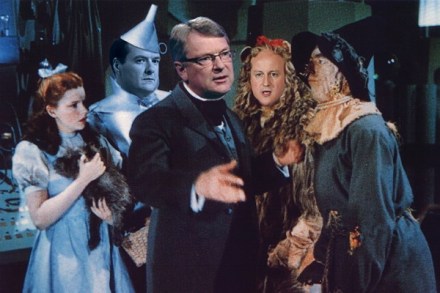
Follow Lynton’s yellow brick briefing

From our UK edition

The benefits debate in Westminster will rage on long after today’s vote in the Commons. It’s not just a straight row between the government and opposition over who is really on the side of hard working people, nor is it just a debate within the two governing parties. It seems that divisions are now opening in the higher echelons of the Tory machine over just how hard to push the rhetoric. More outspoken MPs — like Dr Sarah Wollaston — have taken to the airwaves to decry the term ‘scroungers’ and ‘skivers’, but most surprisingly even Lynton Crosby, who Labour are desperate to paint as a rather rash and extreme antipodean, is calling for things to be toned down. Or at least that’s what someone told the Fiancial Times.

Ed Balls reverses over his own progress on fiscal responsibility

From our UK edition

The battle-lines over the Welfare Benefits Up-rating Bill — which faces its second reading in the Commons this afternoon — have been drawn. Labour has tied its opposition to the Resolution Foundation's analysis showing that the bulk of the policy will hit working families. As Ed Balls put it last week, 'Two-thirds of people who will be hit by David Cameron and George Osborne’s real terms cuts to tax credits and benefits are in work.' They've labelled the move a 'strivers' tax', a continuation of the divisive rhetoric from both them and the Conservatives that seeks to pit 'hardworking families' against 'people who won't work' (as a recent Tory ad put it).

Tories make hay with Labour’s welfare stance

From our UK edition

The Welfare Uprating Bill won't fall into difficulty when it has its second reading in the Commons today, but with around five Lib Dem MPs expected to vote against or abstain on the 1 per cent rise in benefit payments, it's going to be a lively debate. The Conservatives are focused on making the debate less about Sarah Teather and other angry colleagues in her party and more about Labour's welfare stance. Grant Shapps has a new, bald poster campaign today on six sites in London. Shapps' new posters simply read: 'Today Labour are voting to increase benefits by more than workers' wages. Conservatives: standing up for hardworking people.' Iain Duncan Smith has taken the same line on his morning tour of the television and radio studios.

Cameron readies childcare package

From our UK edition

David Cameron and Nick Clegg will launch the coalition’s mid-term review tomorrow. There will be some announcements in it. But I understand that some of the most interesting, new coalition policies are being held out from it. The government wants to keep some of its powder back for later. There are also some final details to be worked out in certain areas. I’m informed that there’ll be a Quad on childcare this week. The coalition is close to agreement on a package which, as I say in the Mail on Sunday, would see working mothers receive thousands of pounds of help with childcare costs for the under fives. This will follow on from moves to liberalise the sector which will be announced in the next week or so.

Realism and optimism: David Cameron’s New Year message

From our UK edition

David Cameron's New Year message is a rather sober one, but it's not downbeat. The theme is 'realism and optimism' and the Tory leader's aim is to demonstrate to voters that his policies are putting the country on the right track, and to that end he makes some strong points on deficit reduction, unemployment, education, welfare, tax and pensions. Encouraging optimism about Britain's trajectory is important because 2013 is going to be a difficult year, not just for the Conservative party internally on issues such as Europe and gay marriage, but for the Coalition, as new cuts come in and critics call on the government to change tack. Ed Miliband's Dickensian pre-Christmas PMQs offered a little taster of that.

Will ‘plod-gate’ make voters more sceptical of class-based political attacks?

From our UK edition

The Andrew Mitchell story has always been about class. If all Mitchell was alleged to have said was ‘you supposed to f’ing help us’ there would have been some clucking and some mockery but no serious calls for his resignation. But the word ‘pleb’ and the phrase ‘know your place’ made the charge toxic. This was also what made some in Number 10 so queasy about any kind of robust defence of Mitchell; the Cameroons believe that whenever the conservation is about class the Tories are losing. This class angle is also what enabled the Labour Party to make political hay out of the issue.