Conservative party

Matt Hancock vows to fight low pay, but fails to emphasise the importance of low inflation

From our UK edition

Matt Hancock, the business and skills minister, addressed the Resolution Foundation’s low pay debate this morning, an indication of how seriously the Tories are taking the rising cost of living. He delivered a resounding defence of the minimum wage. He said that the evidence was overwhelming: the minimum wage did not harm employment levels: and declared that the Conservatives should ‘strengthen’ the minimum wage. He said that the minimum wage should be enforced, and hinted that the Low Pay Commission might be reinforced. He said that working more hours was not necessarily the right answer, contrary to those who hold that Britain needs to harder and longer.

Theresa May’s abolition of UKBA shows how the immigration consensus favours the Tories, and her

From our UK edition

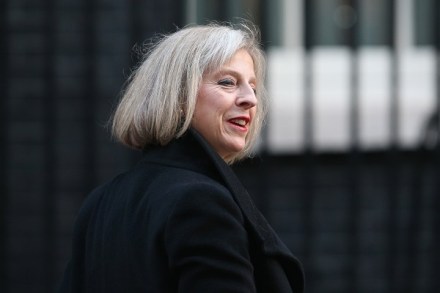
Theresa May has announced that the UK Border Agency is to be abolished.  In an unscheduled statement to the House of Commons, she described UKBA as ‘a troubled organisation’ with a ‘closed, secretive and defensive culture’. She said that the agency’s size, lack of transparency, IT systems, policy remit and legal framework ensured that its ‘performance was not good enough’. May declared that the agency will be split in two. One arm will deal with immigration and visa services, while the other tackles enforcement. May will also bring both arms back directly under the control of ministers, reversing the arms-length policy established by Labour in 2008.

The life and opinions of Boris Johnson

From our UK edition

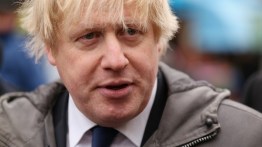
It was inevitable, after the Mair interview and the Cockerell profile, that Boris would dominate the news this morning. Steve Richards and Hugo Rifkind (£) have written about him in their columns, and there are numerous reviews of Cockerell’s programme to read – Paul Goodman at ConHome will make for a thoughtful and entertaining lunchtime break. I don’t think that Cockerell’s programme told eagle-eyed political observers anything new; but that was not its intention, at least from Boris’ perspective. Eddie Mair wondered if Boris is nasty piece of work; most viewers of Cockerell’s programme would have emerged with the view that Boris is at worst a naughty piece of work.

Tories who say that Cameron is making ‘no difference’ underline the coalition’s communications failure

From our UK edition

You should take note when Benedict Brogan, an influential and widely sourced journalist who has been very close to the Cameron and Osborne operation over the years, writes of the fire-sale of Cameron shares. He says in today’s Telegraph that Cameron’s party view him as a ‘lame duck’ who makes ‘no difference’. This is an extraordinary claim for disaffected Tories to make. True: the economy is mired and the government has tied itself to only one course of action. There have also been disasters at the department of health; and energy policy ought to be giving Number 10 an enormous headache. But Cameron’s coalition is changing the landscape of education and welfare, both of which are enormous undertakings.

Cameron sticks to the script at the ’22

From our UK edition

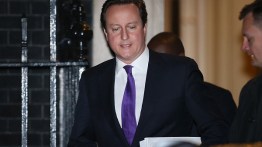
David Cameron has just delivered his end of term address to the 1922 Committee of Conservative backbenchers. The Prime Minister made little news apart from going out of his way to praise Maria Hutchings, making clear he had no truck with efforts to blame her for the party’s poor performance in the Eastleigh by-election. He stuck to the same messages that he had when addressing the parliamentary party the other week, one backbencher left complaining ‘we’ve heard it all before.’ But what should cause some concern Number 10 is how few MPs turned up to hear the Prime Minister. The audience was estimated at between 80 and 100, less than a third of the parliamentary party.

It’ll take more than Eddie Mair to stop Boris

From our UK edition

I’ve just watched the Boris interview with Eddie Mair and I have to say, these dogs won’t hunt. Mair threw three accusations at Johnson and I think all three of them are dealable with. The first was an allegation that Boris had made up a quote, something that he lost his job at The Times for. Now, I suspect that anything in which Boris can claim the defence that he had only moved something from ‘before Piers Gaveston’s death’ to after it isn’t going to end a political career. Also considering that Boris rose to journalistic prominence after this incident, it is hard to claim that it is disqualifying. The second was about his affair with Petronella Wyatt. Again, I don’t think this is career ending stuff.

Migrants debate looms as PM prepares immigration speech

From our UK edition

It's not just Nick Clegg who is having a good long think about immigration at the moment: David Cameron is as well. He's got a big immigration speech on Monday, which shows how spooked the parties are by UKIP that they feel they need to at least address the topic, even if they insist that they're not adopting Nigel Farage's terms of debate. As he writes his speech, Cameron will probably have in mind the looming problem of how many Romanian and Bulgarian migrants are coming to this country when transitional controls lift at the end of 2013. If he doesn't, he should, because that backbench debate from Mark Pritchard on this issue now has a date: 22 April.

Why Scary Graphs help the Tory plotters

From our UK edition

Without wanting to dwell too much on those Scary Graphs from the IFS yesterday, there's one political point that's worth mulling about the ones that charted the future of departmental spending. George Osborne knows that his 'pain tomorrow' approach means the years after 2015 are going to see even more cuts to public spending. He's not the only one: it's something that those Tory MPs who love a good plot believe is a key selling point for backbenchers who aren't involved in the Coalition in any way, such as Adam Afriyie.

The Budget puts petrol in the Tories’ political tank

From our UK edition

For the opening half of George Osborne’s Budget speech, the Labour front bench was busy waving around copies of the Evening Standard’s front page. This was visibly putting Osborne off; he wouldn’t be human if the fear that another of his Budgets was going to be dashed on the media rocks hadn’t crossed his mind. But by the time he sat down, the storm over the Standard front had died down thanks to a quick and dignified apology from the paper itself. Osborne will also have been pleased by the cheers of his own side as he returned to his seat. For all the speculation got up by the irreconcilables, most Tory backbenchers seemed as pleased as could be expected with a Budget that was delivered against such a grim fiscal backdrop.

Press regulation: Tory backbenchers worried by proposals

From our UK edition

MPs are continuing to debate the cross-party deal on press regulation in the Commons at the moment. The debate has been divided between congratulations for the party leaders and their colleagues who hammered out the deal, and wariness from some Tory backbenchers about what the proposals actually mean. David Cameron insisted during the debate that this wasn't statutory underpinning, but Nick Clegg said 'of course' when asked whether it actually was. Some Tory MPs agree with Nick: they believe this does include statutory underpinning.

Why the Tories don’t think the Leveson deal is statutory underpinning

From our UK edition

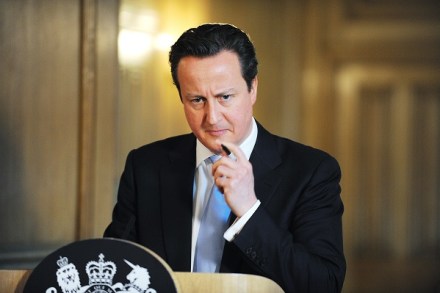
David Cameron has just met Tory MPs to explain the deal he's struck on Leveson. One of the things many of them were anxious to learn was whether the result does really mean the government has accepted the need for statutory underpinning. Hopefully the PM employed a better turn of phrase than his spokesman,  who told hacks this morning that this 'enshrines a non-legislative approach'. The Tories in Number 10 are insisting that this really is the case, that it's not statute at all and that the PM's feet aren't wet from any crossing of the Rubicon. Their argument is firstly that the amendment to the Enterprise and Regulatory Reform Bill is aimed at all Royal Charters, and protects them from further interference.

Which Tories will be Hacked Off’s useful idiots?

From our UK edition

Reading the Hacked Off memo on how to lobby Tory MPs is to be inducted into a wholly cynical world view. It declares, ‘These people are likely to be people you instinctively distrust, dislike and despair of. If they are what we need to win, however, we must understand their value and not confuse our values with their intentions’. The memo, leaked to the Mail on Sunday, reveals that Hacked Off think that the Tory MPs who support them are likely to be ‘social authoritarians’, those ‘who have suffered at the hands of the press themselves’ or those who ‘simply want to bring David Cameron down’. This memo is also explicit that Hacked Off’s aim is ‘an independent statutory regulator with punitive powers’.

Afriyie fails the interview test

From our UK edition

The Adam Afriyie leadership speculation has now got to the point where he’s been interviewed by Andrew Neil on the Sunday Politics. His first big broadcast interview as a potential leadership candidate was always going to be a big test for Afriyie and he failed to impress today. Afriyie, who looked like he’d been heavily coached for the encounter, failed to properly answer the questions put to him or to make a case for any alternative vision. He was even unprepared to say whether or not he supported means-testing pensioner benefits. On the whole question of his own ambitions, Afriyie was hugely unconvincing. Moments after declaring ‘I have no ambition to lead my party’ he referred to ‘my team around me’.

Jeremy Hunt continues his quest to make the Tories the party of the NHS

From our UK edition

Jeremy Hunt used his address to the Conservative Spring Forum this afternoon as the next step in his quest to make the Conservatives the party of the NHS, not Labour. His speech was in some ways quite formulaic: it started with good news about health care in this country, then praise for the 'extraordinary' staff working in the NHS. But then it moved on to his duty 'to be honest about the failures' of the health service too. He said: 'If you care about something you don’t try to sweep problems under the carpet – you expose them, sort them out and make things better. And by criticising us when we do that, Labour show extraordinary complacency about the treatment suffered by some of the most vulnerable people in our society.

David Cameron tells Tory Spring conference: Our battle is with “socialist” Labour

From our UK edition

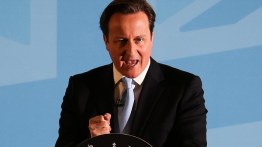
The Tories know that if the next election is a referendum on the current government, it’ll be very difficult for them to win. But if it is a choice between them and a Labour government, then they are in with a good chance. David Cameron’s speech to his party’s Spring Forum today ends with a list of what a Labour government would do in its first 100 days in office. It shows how keen the Tories are to frame the next election as a choice, not a referendum, that Cameron is prepared to publicly contemplate defeat to do this. Interestingly, there's no mnetion of the Liberal Democrats or the coalition in the speech.

20 Tories could rebel on Royal Charter plan

From our UK edition

Conservative MPs who have previously supported statutory underpinning of press regulation are meeting on Monday morning to discuss how they will vote. There is a list of 75 Tories who have backed the idea, but I understand that if an agreement isn't reached on Monday between the main parties, there are around 20 MPs who would be minded to vote against the Conservative three-line whip and support Labour's amendments. The Conservative part of the government has just published its Royal Charter, and Labour and the Lib Dems are also tabling more amendments today. Once all the information is available, pro-statute Tory MPs will make up their mind on whether to back their own party, or the others.

Liam Fox, Theresa May and the meaning of conservatism

From our UK edition

Speeches by Theresa May and Liam Fox have produced a surge of interest in what Conservatives stand for. Politics in recent years has become an endeavour by a political class, divided by only superficially different beliefs, to use mass advertising techniques to manipulate public opinion. The emphasis on ‘modernisation’ and detoxification grew out of this narrow, calculating spirit, but it has led the Conservatives away from the ideals that have made this country worthy of allegiance. And yet, readily to hand, there are guiding principles that could stir the heart of many a potential Conservative voter. Many conservatives see themselves as champions of liberty. But what does such a claim imply for the role of government today?

No, it is not a good idea for the Tories to raise the minimum wage

From our UK edition

There’s so much to disagree with in Rupert Myers' piece arguing that the Tories should raise the minimum wage that it’s difficult to know where to begin. Raising the minimum wage will be bad for the most vulnerable in the workforce and will lead to less employment. The question of whether it would win support for the Conservative party is another matter. This is really basic economics. Raising the price of labour by dictat will reduce the demand for it, other things given. Or as Paul Krugman put it back in 1998:  'The higher wage reduces the quantity of labor demanded, and hence leads to unemployment.'  It might not necessarily lead to a fall in the actual number of people employed, because firms also have the option of cutting back the hours of workers as well.

Exclusive: Nick Boles to get roasting from No 10 over ‘rotten campaign’ comments

From our UK edition

Nick Boles is getting a roasting in Number 10 tonight for his comments in The Times about the Eastleigh by-election, I understand. There was considerable disquiet about the interview, in which the Planning Minister said his party had run a 'truly rotten campaign' and failed to convey the modernisation message. "Where was the hope? It was as if modernisation had never happened. We screwed it up. We didn't even screw up in a new way. We screwed it up in an old way that we have been doing for a decade. It's so frustrating." This was apparently Boles doing his own thing rather than a decision from the top that someone needed to go out to the media and be clear that no-one blamed Maria Hutchings for the Conservatives coming third in the by-election.

PMQs: David Cameron flails as Tory backbench stays glum

From our UK edition

Today's Prime Minister's Questions was not a good one for David Cameron, but it could have been a great deal worse. With a U-turn on minimum pricing on the cards and open dissent in the Cabinet and on the backbenches, the PM arrived knowing he'd have his back up against the wall, even though Ed Miliband has struggled to make effective attacks on big issues in the last few weeks. The Labour leader had some good jokes, too. His opening line - 'in the light of his U-turn on alcohol pricing, can the PM tell us, is there anything he could organise in a brewery?' - was particularly good, and set the tone for the rest of the exchanges.