Conservative party

Margaret Thatcher in quotes

From our UK edition

"I don't think there will be a woman Prime Minister in my lifetime." - 1975 'To those waiting with bated breath for that favourite media catchphrase, the U-turn, I have only one thing to say. You turn if you want to. The lady's not for turning.' 'I always cheer up immensely if an attack is particularly wounding because I think, well, if they attack one personally, it means they have not a single political argument left.' 'If you want something said, ask a man. If you want something done, ask a woman.' 'I am extraordinarily patient, provided I get my own way in the end.' 'To cure the British disease with socialism was like trying to cure leukaemia with leeches.

How Margaret Thatcher transformed politics and this country

From our UK edition

Margaret Thatcher is the most significant British political figure of the past 50 years. In her time in office, she transformed the British economy, promoted the vigorous virtues and offered strength and support to the dissidents of Eastern Europe and. On top of all this, she was — of course — Britain’s first female Prime Minister. In future, people will find it hard to believe just how nationalised Britain’s economy was before the Thatcher revolution. As she said in her 1982 conference speech, ‘How absurd it will seem in a few years' time that the State ran Pickford's removals and Gleneagles Hotel.’ With the benefit of hindsight, it is easy to underestimate the state of crisis that this country was in before Margaret Thatcher’s election in 1979.

Archive: Margaret Thatcher: clear choice for the Tories

From our UK edition

The Spectator was the only national publication to fully support Margaret Thatcher in the first ballot of the Tory leadership contest. Patrick Cosgrave explain why in this political column from 23 January 1975: If I start with a reference to the sorry condition of the Tory Party, I hope readers will not immediately turn to another page, on the grounds that this record has been played too often. For I want to add that, if only the Tories can take a fairly cool look at themselves, it will quickly be apparent that the condition is not as serious as all that; and that it is certainly capable of repair. Housman's ancient "three minutes of thought" will suffice to show that there is only one direction in which the Tories can go.

Tories go on tax offensive

From our UK edition

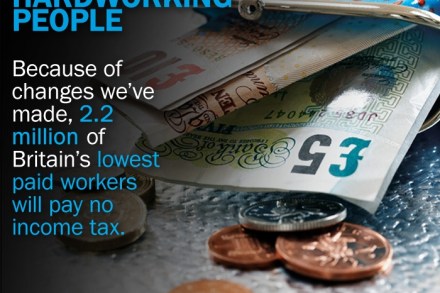
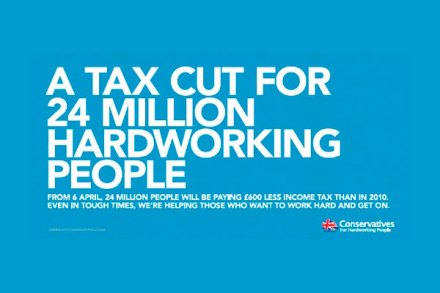
It's 45p day in Westminster, and Ed Balls is trying to make the most of the end of a 50p rate his own party only imposed for a month or so before it left government. The story hasn't made it to the front pages, aside from the Mirror getting cross about Nick Clegg going on holiday with millionaires in a ski resort, and the Tories are also out on the attack over other changes which affect many more taxpayers than that totemic top tax rate. They've produced this series of posters reminding voters of the good tax bits of the Budget. This is important: one of the biggest gripes of even loyal Tory backbenchers and ministers is that the government is achieving radical reforms, but isn't all that good at selling them.

Why don’t Labour talk about welfare reform?

From our UK edition

Philip Collins is shackled by the epithet 'Tony Blair’s former speechwriter'; shackled because his columns prove him to be his own man. His latest (£) is a carefully argued critique of the Labour Party’s total lack of a welfare policy, titled 'Labour Can't Win If It's On Mick Philpott's side' . The most arresting section is: ‘There is no better illustration of the self-harm of Labour’s position than that it is driving me into the arms of the Tory backbencher Bernard Jenkin. I usually regard Mr Jenkin as the prime specimen of perspective-free hyperbole on Europe and tax cuts. But Mr Jenkin was one of a number of Tories who suggested that child benefit be limited to the first two children; this would save £3.

The Tories steal the Lib Dems’ best clothes with new poster

From our UK edition

This poster will, I am sure, have the Lib Dems hopping about with fury. The Tories have hi-jacked a key Liberal Democrat policy: raising the personal allowance. Perhaps this is what lies in wait for the Lib Dems as 2015 approaches: the Tories steal all of their good ideas. If that happens, perhaps a merger of the two parties (or at least elements of the Lib Dems) will become more likely. Who knows? Anyway, the blurb that accompanies the poster shows that an attempt is being made to fashion the Conservative Party into the party of work. The poster reflects that positive aim; a dramatic improvement on the divisive and crude rhetoric of ‘strivers’ and ‘shirkers’, which the Spectator’s latest leading column denigrates.

The Philpotts – what happened to Labour’s view that we should be tough on the causes of crime?

From our UK edition

Several Labour MPs have expressed their disapproval of George Osborne’s comments about the taxpayer funding Mick Philpott's lifestyle. For example, Andy McDonald, MP for Middlesbrough, said that welfare is a ‘completely separate discussion, it should not be had in the context of the most appalling crime of a father killing his six children. It just demonstrates how out of touch George Osborne is. He may as well make adverse comments about the entire population of a town or a religion, it’s absolute nonsense.’ The obvious problem with this is that Osborne acknowledged that they were separate issues.

The Tories try to win friends in the north

From our UK edition

A new group designed to increase the Tory party’s appeal to urban northern voters will be launched this June. It already has the support of a considerable number of MPs and, I understand, senior figures in Number 10 are offering support to the project. David Skelton, who moved the Tories from third to second in Durham North at the last election, is stepping down as the deputy director of Policy Exchange to run it. This new group is right that it will be very hard for the Tories to win a workable majority without winning some seats in the urban and suburban north. This is going to require susbtanitally increasing the party's support among ethnic minority and working class voters. But the test for this group will be whether it has the patience to stick at it.

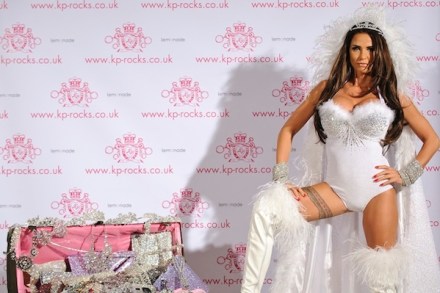
Surely Katie Price demeans marriage more than gay marriage ever could?

From our UK edition

The right of gays to have a civil marriage in a non-religious service is once again an issue. There have been large and slightly violent protests in Paris as well as on-going judicial contortions in the US. I know my support for gay marriage appears to put me in a minority among conservatives. But perhaps I could ask a question of my opponents? One of the things that opponents of gay civil marriage always say is that gay marriage would ‘undermine’, ‘distort’ or otherwise ‘demean’ existing marriage. Many people – continuing to mix up civil and religious marriage – claim that the ‘sanctity’ of religious heterosexual marriage will be undermined by a civil, non-religious, homosexual marriage.

Key David Cameron aide to quit Downing Street

From our UK edition

Sky News has revealed tonight that Rohan Silva, one of the Prime Minister’s key advisers, is leaving Downing Street. Silva might not be a household name but he has been a hugely influential figure there these past few years. In opposition, he worked for George Osborne before moving to work for David Cameron in government. He has been the driving force behind spending transparency, Tech City and crime maps. There have been few more pro-enterprise and pro-reform voices in this government. His departure is a big blow to Tory radicalism. One of the things that marked Silva out was a thirst for new ideas that is all too rare in British politics.

Over 100 Tory MPs demand EU referendum bill: exclusive details

From our UK edition

Tory backbenchers have written again to the Prime Minister demanding legislation guaranteeing a referendum in the next Parliament. Conservative MP John Baron delivered the letter, which bears more than 100 backbench signatures, to Downing Street this morning. While its existence was reported in the Sunday papers, Baron has now spoken exclusively to Coffee House about the letter's contents. I understand that though Baron and his colleagues working on the plan approached only backbenchers (and those include former ministers who left the government in September's reshuffle), a number of ministers and PPSs have also approached them to express sympathy with the idea, and there are several individual letters from PPSs going to David Cameron as well.

Is Boris really ready to lead the Tory party?

From our UK edition

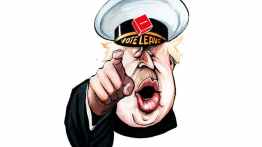
Boris needs to pay attention. As James Allen said, 'Circumstances do not make the man, they reveal him.' Given his colourful character, discussion so far about Boris’s leadership potential has focused on the man himself; but politics is about being in the right place at the right time, as Churchill would attest. Unprecedented levels of national debt, a stagnant economy, a healthcare system that isn’t delivering, a Eurozone that may yet collapse into meltdown, a chronic housing shortage, endemic low productivity and a state that has stretched its tentacles into so many areas of people’s lives it is proving extremely difficult to disentangle – these are just a taste of some of the challenges Britain is facing and it’s not clear how Boris would handle them.
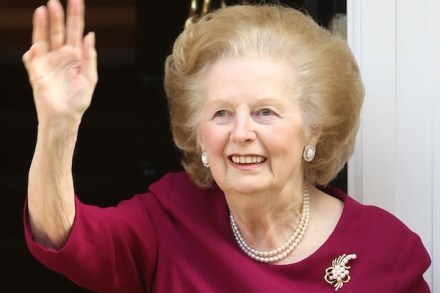
George Osborne launches welfare counter-attack

From our UK edition

The petition to get Iain Duncan Smith to live on £53/week has amassed more than 122,000 signatures. And counting, quickly. The petition was inspired by IDS remarking, on yesterday’s Today programme, that he could live on such a welfare settlement. The secretary of state could not have said anything else; yet these incidents always create media firestorms. The IDS blaze still burns this morning; but that may not unnerve the government: from its perspective, news bulletins devoted to IDS’ gait are preferable to those devoted to the vulnerable. After a gruelling, though not unsuccessful, 24 hours warring over welfare cuts, the government is mounting a flanking counter-attack.

George Osborne won’t be moved

From our UK edition

Today’s Sunday Telegraph front page has sparked off a flutter of speculation about whether George Osborne might be moved as Chancellor. I suspect that the short answer to this question is no. Osborne and Cameron are inextricably linked and to move him would be akin to the Prime Minister declaring that both his political and economic strategies have been wrong. He would not long survive such an admission. I also sense that Osborne’s stock in the parliamentary party is recovering from the battering it took with last year’s Budget. The fact that this year’s Budget was doorstep-ready, has survived the Labour and media onslaught and gone down relatively well with the voters has helped him with MPs.

What Tory MPs want and what the Tory party needs

From our UK edition

Matthew Parris’s column in The Times today is a good counter-blast to the idea that all Tory backbenchers are craving more policies that are bolder. As Parris points out, many of those defending seats against Laboour don’t want that. Indeed, if you had left it to these MPs I very much doubt that the government would have cut the 50p tax rate. He is also right that the desire to remove David Cameron—as opposed to grumble about him—is extremely limited. It is, though, as one senior MP pointed out to me earlier, worth noting that most Tory members of the Cabinet are in extremely safe seats. It is hard to imagine Witney going Labour, while Neil Hamilton had to be caught up in cash for questions before Tatton left the Tory fold.

William Hague works on the government’s women problem

From our UK edition

It beat the baseball cap. William Hague’s trip to the DRC and Rwanda created several wonderful photo opportunities with no less a figure than Angelina Jolie. It would be wrong to say that Hague’s interest in the victims of rape in Africa is mere PR: Hague is convinced that action must be taken to eradicate these crimes; and, at next month's G8 summit, he will use Britain’s diplomatic clout on human rights to encourage international authorities to pursue and prosecute men who contravene the Geneva Convention and the Statute of the International Criminal Court by using rape as a weapon in conflict. Yet it would also be naive to say that there is no direct political benefit to his public concerns.

Poll: Boris could save 50 Tory MPs

From our UK edition

YouGov have once again tested how a Boris-led Tory party would compare to a Cameron-led one in the polls. When they last did so in October, they found that Boris was worth a seven-point bump: with Cameron as leader, the Tories were nine points behind Labour; Boris narrowed the gap to just two. The results this time — reported by Joe Murphy in the Evening Standard — are very similar: the Tories do six points better under Boris than under Cameron. That's enough to eliminate Labour's lead entirely. With Cameron, it's Labour 37, Tories 31. With Boris, it's 37 all. As I said last time, switching to Boris probably would not be enough to give the Tories a majority.

David Cameron mini-shuffle done to move John Hayes from DECC

From our UK edition

Downing Street’s mini-shuffle announced this morning to coincide with a joint Cameron Fallon visit to a green car plant is intriguing. Having made some inquiries, it seems that the aim was to move John Hayes out of DECC, where he was still clashing spectacularly with the Secretary of State Ed Davey and alarming some in the industry, and Michael Fallon in. Everything else followed from that. Fallon’s additional responsibilities are yet another sign of the high regard Number 10 holds him in. Fallon might be culturally, and politically, quite different from most of those in Number 10 but they have come to see him as their safest pair of hands. I’d be surprised if he isn’t elevated to the Cabinet before the next election.

Mini reshuffle shows Cameron trying to get a grip

From our UK edition

The mini reshuffle earlier this morning is significant. David Cameron has moved Tory ‘greybeards’ to address problem areas. Cameron’s twitter feed has announced: ‘Delighted John Hayes joining me as a Senior Parliamentary adviser - and Michael Fallon adding a key energy role to his brief.’ Benedict Brogan and Tim Montgomerie have good analyses of what this means. In summary it appears that Hayes, a self-confessed ‘blue collar’ Tory and popular MP, is going briefless to the Cabinet Office to help the PM communicate government policy to the backbenches and the working classes. Hayes speaks in plain language. He has been pushing the energy bill through parliament, and has clashed openly with Ed Davey, the Lib Dem energy secretary.

Quietly, Cameron is preparing for his next big fight: the battle for Portsmouth

From our UK edition

From tomorrow's Spectator. Downing Street aides nervously run through the symptoms: a flat economy, poor press, leadership mutterings. Then they say, ‘It’s just mid-term blues, isn’t it?’ A second later, they add nervously, ‘It’s nothing more serious than that, is it?’ The truth is, nobody can be certain. There’s no reliable way of distinguishing mid-term blues from something politically fatal. Part of the problem is that few Tories have anything to compare their current mood with. After 13 years in opposition, only a handful of them have been in government before, let alone in the mid-term doldrums. When I put this argument to one veteran of the Thatcher years, he delighted in pointing out that there was at least one person in No.