Conservatism

The Javid manifesto

From our UK edition

There’s an old joke that the most dangerous position in the Tory party is the favourite for the leadership. The frontrunner always ends up with a target on his back, which is why Sajid Javid should be feeling a little nervous right now. Theresa May survived a confidence vote but only after saying that she would resign before too long - so the hunt for a successor is on. He is Home Secretary, his fourth cabinet post. A poll of 700 Conservative councillors found they'd rather have him as leader than anyone else. He is also a former financier who made his name handling economic crises and is someone to whom MPs might conceivably turn if talks with Brussels fail and Britain looks set to crash out of the European Union.


The first manifesto of the next neoconservatism

Liberal commentators on American foreign policy used to say that Islamist terrorism was motivated less by ideology than by gender. The thinking went that young men with no prospects will inevitably become violent and anti-social. Liberals may still believe that about Middle Eastern societies, but the consensus on the left in America today is that young men can be safely denied positions of undeserved authority and, moreover, given no meaningful alternative but to atone quietly for the sins of their fathers. Journalist and critic Wesley Yang’s first book, The Souls of Yellow Folk, is about the possibility that this consensus is mistaken.

wesley yang

Tory table talk

From our UK edition

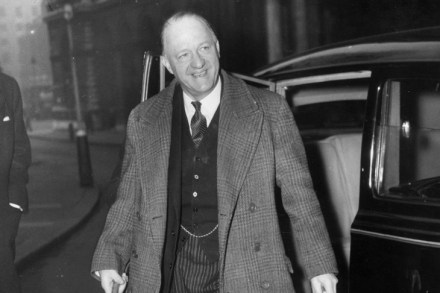
I bet that you are at best dimly aware of the Progress Trust, and that is what the members of this now-defunct fixture would have wanted. It was a misleadingly named group of comfortably off, often landed backbench Tory MPs, and its weekly discussions very rarely leaked. An unnamed member once explained why. ‘We have no shits,’ he said. The Trust, which would number Alec Douglas-Home and David Cameron, briefly, among its members, was secretive from the outset. It was established in 1943 to resume a more partisan style of politics, at a time when both main parties were still in theory committed to a ceasefire that the Conservatives felt Labour was breaking.

The conservative judicial revolution

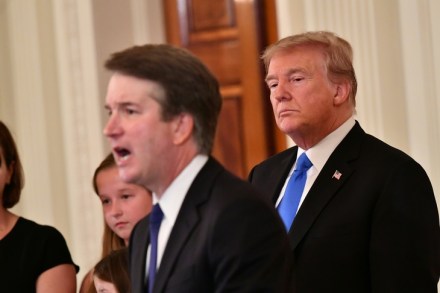
It seems like ancient history now, but the week before the ill-fated summit in Helsinki President Trump nominated Brett Kavanaugh to the Supreme Court. It was Trump’s second nomination to America’s highest court in as many years and conservatives overwhelmingly cheered his choice. “I’ve often heard that, other than matters of war and peace, this is the most important decision a President will make,” Trump said in the East Room of the White House. “The Supreme Court is entrusted with the safeguarding of the crown jewel of our Republic, the Constitution of the United States.” Kavanaugh was picked to replace retiring Justice Anthony Kennedy, a Republican appointee who was nevertheless a swing vote on the Supreme Court.

What is social media’s problem with black conservatives?

Last week Dave Rubin (of The Rubin Report) sat down for a rare interview with Thomas Sowell.  For three quarters of an hour they roamed over an amazing array of issues – social, political and economic. YouTube (where The Rubin Report is posted) demonetised the video immediately.  This is a favourite trick of the platform – to signal YouTube’s disapproval of the content, making sure that the no one (other than YouTube, of course) and certainly not the content’s creator can make any money out of it.  For YouTube it would seem that nothing is scarier than a black economist talking brilliantly about the issues of the age. Then on Saturday something strange happened in the universe.

The right stuff | 1 February 2018

From our UK edition

Geoff Norcott is lean, talkative, lightly bearded and intense. Britain’s first ‘openly Conservative’ comedian has benefited enormously from the Brexit vote and he’s popular with television producers who need a right-wing voice to balance out the left-leaning bias of most TV output. ‘It’s funny meeting TV types,’ he tells me. ‘They say, “We really want to hear alternative viewpoints.” And I’m thinking, “By alternative you mean majority,”’ Norcott, 41, was raised on a south London estate. ‘Both my parents were quite political. My dad was a trade unionist who got quite high up in the NEC [Labour’s national executive committee] and my mum ran as a Lib Dem councillor.

Ambition deficit

From our UK edition

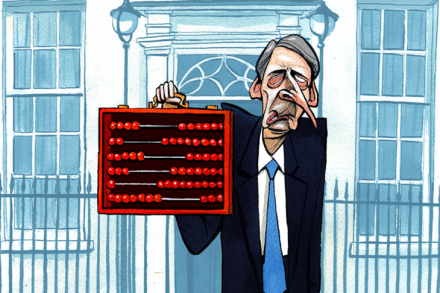
Some Budgets are historic, most are boring and a small number can be remembered as a disaster. After just a few months, Philip Hammond has managed a budget - his first - that can be placed in this last category. Economically, it made very little difference. Politically, it is shaping up to be a disaster. His Budget was supposed to have been conducted under the pledge, issued no fewer than four times in the 2015 Conservative manifesto, that his party not raise taxes. ‘Instead, we will ease the burden of taxation,’ the Tories promised. It seems plausible enough, and the Conservatives were returned with an absolute majority.

Brains for Trump

From our UK edition

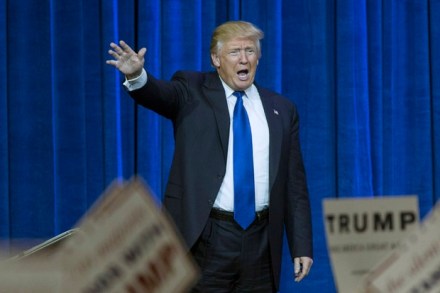
Last week more than 130 right-wing thinkers put their names to a defiant document — a list of ‘Scholars and Writers for America’ in support of Donald Trump. It includes the editors of five of the country’s leading conservative journals of ideas: R.R. Reno of the Christian conservative First Things; Roger Kimball of the New Criterion, the right’s leading journal of the arts; Charles Kesler of the Claremont Review of Books; the American Spectator’s R. Emmett Tyrrell; and me, the editor of the American Conservative. (Notably lacking are names from America’s oldest conservative magazine, National Review, which has been as hostile to Trump as the columnists of the New York Times and Washington Post.

Cooking the books | 15 September 2016

From our UK edition

Cooking really shouldn’t make good radio. On television, it’s already frustrating that you can’t taste what you’re seeing, but on radio you can’t even see it. ‘I’m just cracking an egg,’ they tell you. ‘And now I’ll crack another egg.’ The sounds — violent thuds, hissing gas, moist chewing — are more ominous than appetising and the commentary (‘I’m just mixing those eggs together now’) can’t help but be comically sedate (‘OK — they’re mixed’). So it’s a miracle that The Food Programme (Radio 4), after three decades of this sort of experiment, is as good as it often is, and Cooking for Poldark, this week’s ingenious episode, was really very good indeed.

Brexit’s bitter harvest

From our UK edition

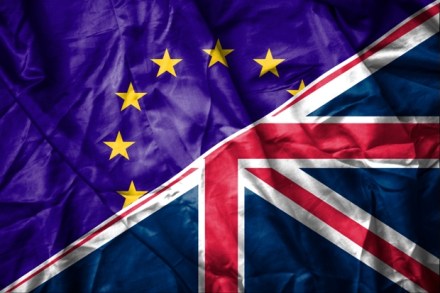
Nick Cohen and Fraser Nelson discuss The Spectator's decision to back Brexit: We British flatter ourselves that common sense is a national personality trait. Giddy Europeans may follow the abstract notions of dangerous leaders, but we could not be more different. We are a practical, moderate breed — if we do say so ourselves — who act according to the evidence, not fantastical theories. Let me see how this dear delusion is bearing up. It feels as if the Leave campaign will win the EU referendum. But even if Leave loses, it seems certain that it will perform so well as to produce an existential crisis in both our main parties. Our fabled common sense should also tell us that the British economy could have a crisis of its own.

A right mess | 28 April 2016

From our UK edition

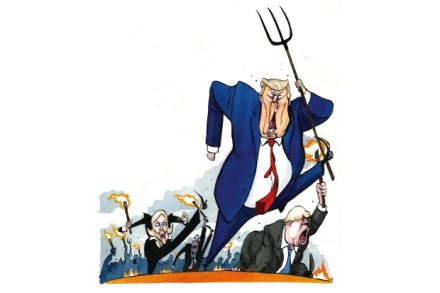
[audioplayer src="http://feeds.soundcloud.com/stream/261189280-the-spectator-podcast-the-wrong-right.mp3" title="Freddy Gray and Tom Slater discuss the state of the right" startat=22] Listen [/audioplayer] Is Boris Johnson turning into the thinking man’s Donald Trump? Just like the Donald, he’s got funny hair, charisma, and an appetite for women. He may not be as rich as Trump — although we were all impressed by his latest contribution to the Exchequer — but he makes up for that by having a much bigger vocabulary. He’s also able to get away with saying outrageous things because people think he’s entertaining.

High life | 3 March 2016

From our UK edition

The rich are under attack nowadays, never more so than in America, where The Donald continues to trump his critics, amaze and surprise his fans, and drive his haters to paroxysms of sexual fantasy, with Trump as the main actor. National Review, where I got my start 40 years or so ago, devoted a whole issue to rubbishing Donald Trump. There were contributions from great conservatives, such as Thomas Sowell, and great clowns, like John Podhoretz. It was an issue that inadvertently looked in opposite directions while hating The Donald. William Kristol’s bit was in there — the one where he calls Trump vulgar. That he may be, but coming from a true vulgarian like Kristol, it’s a bit rich.

A conservative case for staying in

From our UK edition

I open a dusty binder and look at my yellowing Spectator articles from Poland, Germany and Russia in the dramatic 1980s. And here’s one from Brussels in 1986, suggesting that Britain was edging towards finding its role in the European Community. Ho ho. Back then, Charles Moore was the editor and I was the foreign editor of this magazine. He shared my passion for the liberation of eastern Europe, while becoming increasingly dissatisfied with the western European Community, but he let me make the case for it. Now, 30 years on, Charles and I stand on different sides of a historic national argument. This makes for a curious role reversal. I am a lifelong liberal (small ‘l’) but my argument for staying in the EU is fundamentally conservative (small ‘c’).

Here’s what’s wrong with the ‘public sector ethos’

From our UK edition

An infuriating benefit of readers’ online comments beneath the efforts of a columnist like me is that as you read the responses an understanding dawns of the column you ought to have written. Some readers are stupid, unpleasant or obsessive; but most are not. As you learn their reactions you see where your argument was not clear, where you were short of information, and where you were simply wrong. But more than that, you sometimes tumble for the first time to where the nub of a problem that perhaps you danced around may lie. Last Saturday I wrote for the Times about the self-righteousness of spokesmen for public services threatened by government cuts; about veiled threats by the police to stop policing, and by barristers enraged by cuts to legal aid.

Free markets and dumb luck

From our UK edition

The greatest mistake made by conservatism was its overly close relationship with neo-classical economics. This was a marriage of convenience: finding themselves Johnny-no-mates in the academic world, the conservative establishment hastily bunked up with the only group of social scientists who were prepared to talk to them. This cohabitation was not only unhealthy but boring. Economics is obsessed with a very narrow definition of efficiency, beyond which it can see no other virtues. It hence turns political rhetoric into a slightly Aspergic narrative about efficiency and growth — as though Churchill had urged us to fight the second world war ‘to regain access to key export markets’.

Flashmob rule

From our UK edition

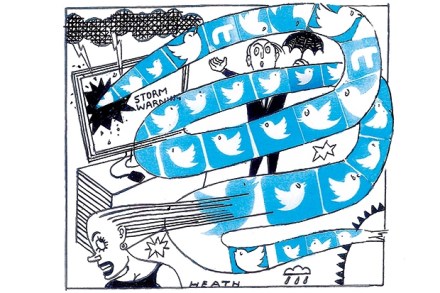
What should be the response of politicians to mass emailings and Twitter storms? The question is an urgent one, especially for Conservative MPs, given the general truth that mass petitions, in which complex issues are simplified to ‘for or against’ and emotion given a head start over reasoned argument, tend to come from the left. I was astonished to learn that a Tory MP decided his vote on the proposed Hunting Bill would depend on opinion polls in his local newspaper. In the event the Bill was withdrawn, largely, if Nicola Sturgeon is to be believed, as a result of online petitioning. Progressive causes such as the campaign against hunting have a familiar profile: the powerless against the powerful, victims against oppressors, the clean utopia against the murky reality.

Blue is the collar

From our UK edition

Blue collars are all the rage in the Tory party these days, which makes Stephen Crabb a very fashionable cabinet minister. He was brought up in a Welsh council house by his mother, a single parent. His political views were shaped by seeing the way in which Thatcher’s reforms transformed his neighbourhood. He still believes Conservative values give the best hope for working-class and Welsh voters. As George Osborne leads an ever-deeper raid on Labour territory, we can expect to see and hear a lot more from people like Stephen Crabb. For the last year this confident 42-year-old has been Secretary of State for his native Wales, and his approach has been to champion full-blooded — rather than semi-apologetic — conservatism.

Claret and blues

From our UK edition

There is a dive near St James’s which could claim to be the epicentre of international reaction. It is also a temple of pseudo--anti-intellectuality: the only club in London where chaps pretend not to have read books. Always a cheerful place, that is especially true at the moment. Its members still find it hard to believe that they survived 13 years of Labour government and had no wish to push their luck with another instalment. The late Frank Johnson once said that although the Labour party had given up on nationalising the economy, it was still determined to nationalise people. Once inside this delightful refuge from the 20th century, let alone the 21st, you are surrounded by prime candidates for nationalisation.

Cameron’s new mission

From our UK edition

As David Cameron lined up beside Nick Clegg and Ed Miliband at the Cenotaph on the day after the general election, he said that he had thought he would be the one writing a resignation statement that day. He may also have imagined how history would have judged him: as a so-so Tory leader who didn’t quite manage to win an election against the reviled Gordon Brown and was booted out after one term. A leader who was good at balancing a coalition but who didn’t stand for (or achieve) very much himself. It would have been a miserable legacy. Luckily he now has the chance to reshape it. The political landscape he surveys has changed utterly. Of all the political parties, only the Conservatives and Scottish Nationalists are intact. The Labour party is settling down for a long civil war.

Elizabeth I, queen of the waiting game

From our UK edition

Women are ‘foolish, wanton flibbergibs, in every way doltified with the dregs of the devil’s dunghill’. So a cleric reminded Queen Elizabeth I. His sermon reassured her that her personal qualities made her exceptional. But Elizabeth was not merely an ‘exceptional woman’, snorts Lisa Hilton. She was also ‘an exceptional ruler’ — one who refashioned her kingdom as ‘a modern monarch, a Renaissance prince’. Elizabeth’s accession in 1558 coincided with the publication of John Knox’s notorious blast against the ‘monstrous regiment’ or ‘rule’ of women. Happily such views were ‘based more on hostility to Catholicism than to female rule per se’, we are told.