Conquistadores

North and South America have always been interdependent

From our UK edition

In 1797, following a written plea for troops to counter an incursion by an American Revolutionary War veteran into Louisiana, Manuel Godoy, minister to the Spanish crown, made a note in the margin: No es posible poner puertas al campo (‘It is not possible to put up doors in a field’). Both literally and metaphorically, Spain could no longer defend the indefensible. In 2017, the 45th president of the United States signed an executive order to build a wall along the country’s Mexican border. Its construction, for which he perversely wanted Mexico to pay, was a practical and symbolic one. The United States was turning its back on Latin America.
A fatal clash of civilizations

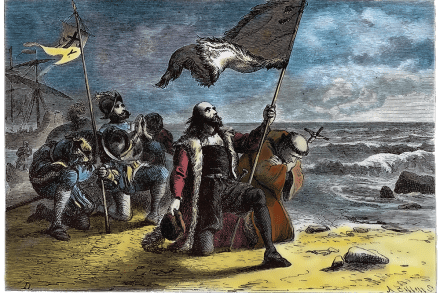
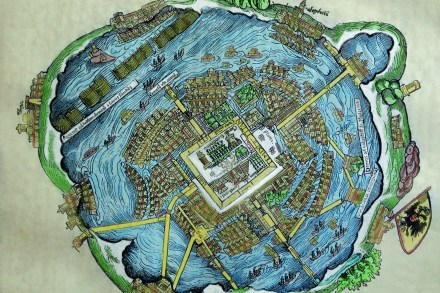
Many books claim to describe junctures that changed the world, but few examine ones as consequential as Conquistadores. Hailed by the Romantics as courageous explorers, the Spanish conquerors are increasingly seen as violent and rapacious exploiters. That, says Fernando Cervantes, oversimplifies the complexities of the early modern period. Cervantes, a Mexican historian, places the conquest of the Americas in Spain’s political context. In 1492, at great cost to the royal purse, Spain recovered Andalucía from the Moors. So when a charismatic Genoese navigator proposed to sail southwest in search of a new trade route to Asia, Ferdinand and Isabella approved. Columbus’s voyage was the first step to transforming a young nation into the greatest imperial power on Earth.

Conquistadores