Connecticut

The Final Four that wasn’t supposed to happen

March Madness markets itself on the chaos, the unpredictability, and the Cinderella stories that make the NCAA basketball tournament one of the most beloved sporting events in America. Most years, the really shocking upsets are usually out of the way by the end of the first weekend. By the time the tournament reaches its most critical rounds, fans are fortunate if there is a single Cinderella still dancing. Over the last thirty tournaments — I would say years but the 2020 tourney was canceled due to Covid — only two national champions have started the tournament as lower than a three seed. In that same span, only two Final Fours did not feature a one seed, while thirteen Final Fours over the past three decades have contained multiple one seeded teams.

Final Four

How teachers’ unions could unwittingly usher in school choice

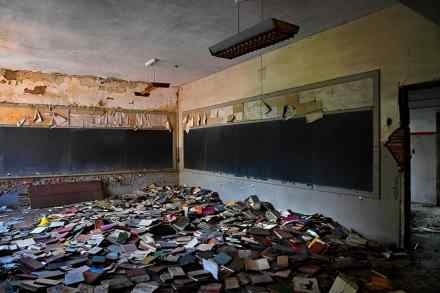
In a surprise development, teachers' unions in eight states recently announced drives to pass legislation that would establish so-called “wealth taxes.” Working with progressive legislators in California, Connecticut, Hawaii, Illinois, Maryland, Minnesota, New York, and Washington, the unions have devised what they believe are the best ways to tap, not just the incomes, but the assets of the most successful earners. Under the bill proposed in California, for example, residents with both financial and illiquid assets would be required to file yearly reports on their holdings, obligating those worth more than a certain amount to pay 1 to 1.5 percent of the total to Sacramento, even if they move out.

A nation of lone wolves

Ten years ago today, Adam Lanza murdered twenty-seven people in Sandy Hook, Connecticut: his mother, six educators, twenty first-graders. Then he shot himself. Speculating about what might have motivated Lanza to commit an atrocity of this scale was difficult in 2012. What information was available about Lanza was sparse; what we did have was difficult to make sense of. A bug-eyed photo of him. A single mother who loved guns. A crazy, isolated kid — maybe it was the medication? There was very little to weave a story out of. It was haunting; it was horrifying; but it made no sense. There was no ready-made narrative for a twenty-year-old who could step into a first-grade classroom and open fire. There was nothing we could compare it to. Mental health, probably. Guns, probably.

adam lanza sandy hook

Colony Grill’s culture remains

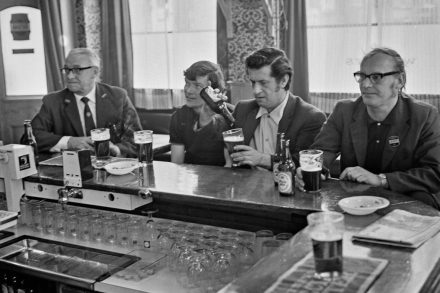
Nothing has done more damage to the watering hole than Bar Rescue. In each episode, the show’s protagonist swoops into some troubled landmark Toledo bar, guts its history in the name of “open concept,” installs some LED lighting to cut costs, adds some overpriced microbrew, and yells at the backwoods staff — his anger a thin disguise for his McKinsey consultant personality. As a finishing touch, he’ll add a crabcake to the menu. Rescue complete. This reverse-Road House consultant is why every bar in America looks the same: bland, bloodless, stocked with minimalist Ikea furniture, cut off from the past. Don’t let the “unique” seasonal IPA or over-sized Jenga fool you. You are staring at conformity.

colony

Connecticut and the rise of blue-state MAGA Republicans

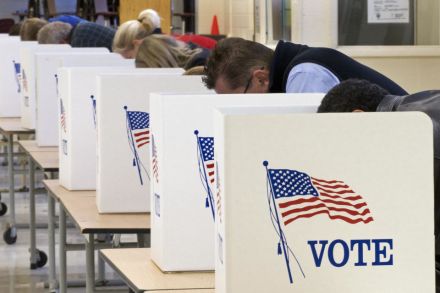
The year was 2006 and something unprecedented was happening: people were actually paying attention to the state of Connecticut. Senator Joe Lieberman, a long-serving moderate Democrat and Al Gore’s former running mate, had just lost his primary to a left-wing activist named Ned Lamont. Lieberman then jumped in as an independent and suddenly Connecticut had a real Senate race on its hands: two center-leftists plus a plucky yet overlooked Republican named Alan Schlesinger. Lieberman won in a rout. That the far-left Lamont is now governor of Connecticut should tell you everything you need to know about that state’s political drift.

Connecticut

A summer solstice on Long Island Sound

Where I live on Long Island Sound, something noteworthy is scheduled to happen today at about 12:30 post meridian. The sun will reach its northernmost point of the year, pause briefly, and then begin the (at first) slow movement to the south, bringing with it shorter days and (eventually) colder temperatures. Today, for the summer solstice (‘solstitium’, Latin for ‘sun-stopping’) in these parts, we’ll have 15 hours and five minutes of daylight. By the time the winter solstice rolls around near Christmas, we’ll be down to nine hours and eight or nine minutes. Brrr! And, turn on the light! We celebrated the solstice last night by attending a performance of A Midsummer Night’s Dream out of doors on the banks of Five Mile River right off the Sound.

solstice

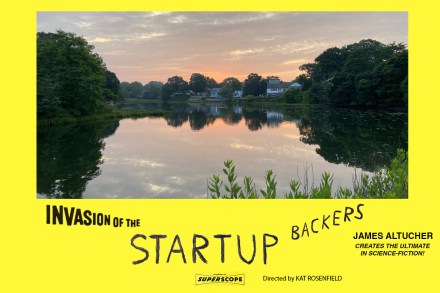
Invasion of the Startup Backers

Norwalk, ConnecticutUnprecedented times call for unprecedented archetypes, and 2020 has been full of ’em. There’s the Social Distance Warrior, shaming everyone who dares to leave their house for non-essential reasons. There's his antagonist, the Aggressively Maskless Shopper, who lets his naked face hang all the way out while he vehemently defends his freedom to cough all over the local Costco. There are Guilty Vacationers, Worried Parents and Karens of all shapes and sizes.But of all the exciting new species of human to emerge in our COVID summer, none captures the moment quite so perfectly as the urban expat, sitting at a keyboard in a Florida rental home, writing an all-caps LinkedIn polemic-cum-obituary for the city he no longer lives in.

invasion

Mass appeal: Stanford in Stamford

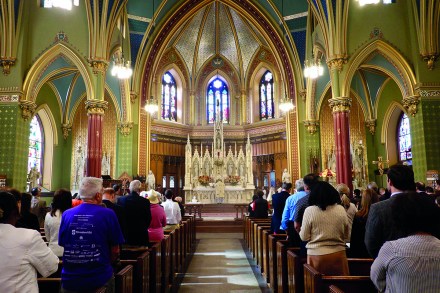
This article is in The Spectator’s March 2020 US edition. Subscribe here. The exterior of the basilica of St John the Evangelist in Stamford, Connecticut, looms large and gray. Built in 1875 by Irish immigrants who mined and hauled rocks from a nearby quarry, its interior bursts with greens, reds and golds. The saintly lives in its stained-glass windows are said to comprise one of the largest collections of its kind on the East Coast. I was one of 12 singers to perform here at the American premiere of the Mass in G Major by the Dublin-born composer Sir Charles Villiers Stanford (1852-1924). Stanford’s Mass was first performed at London’s Brompton Oratory in 1893, but, like The Spectator, it took its time coming to America.

stanford

Digby Dent on lawn darts in winter

New Haven, Connecticut Greetings friends. Old Digby Dent (BR ’89) here. I’ve been press-ganged by the good folks at The Spectator into sharing a few reflections on living well as the fiery splendor of autumn gives way to the dour cold of winter. The leaves are gone, the days grow short and it’s dark by four in the afternoon in Boston. Worse still, the obvious recreations of warmer days having given way to the inconstancy of the third season, we find ourselves waiting for enough snow to ski, cross-country or alpine. What is to be done in the unsteady interregnum from now until The Game? Sailing is no damned good if you can’t guess how cold it’ll be on the water.

lawn darts