Communism

The American descent into madness

Nations have often gone mad in a matter of months. The French abandoned their supposedly idealistic revolutionary project and turned it into a monstrous hell for a year between July 1793 and 1794. After the election of November 1860, in a matter of weeks, Americans went from thinking secession was taboo to visions of killing the greatest number of their fellow citizens on both sides of the Mason-Dixon line. Mao’s China went from a failed communist state to the ninth circle of Dante’s Inferno, when he unleashed the Cultural Revolution in 1966. In the last six months, we have seen absurdities never quite witnessed in modern America. Madness, not politics, defines it. There are three characteristics of all these upheavals. One, the events are unsustainable.

madness

Has Xi Jinping overplayed his hand?

The Chinese Communist party’s origin story, like so many of its official lines, appears to be an apocryphal tale. But a month-long patriotic extravaganza leading up to its centennial celebration has featured military parades, skyscrapers emblazoned with hammer-and-sickle decor and propaganda blitzes on TV. None of the agitprop raised eyebrows as much as the main speech delivered by the Chinese president and general secretary of the party, Xi Jinping, in which he marked the milestone and praised China’s ‘tremendous transformation’ and the historical inevitability of its ‘national rejuvenation’.

xi jinping

Is communism authoritarian capitalism?

On July 1, 1921, the founding congress of the Chinese Communist party was held in Shanghai, when 12 men gathered in a villa in the richest part of the city. Today, the party has over 90 million members. It has transformed not only China but the history of the entire world. The main stages in its development are well-known. In late 1920, Mao Zedong took over and reoriented the party from city workers to poor farmers. In the mid-1930s, the Long March, although a retreat, established a link between the party and the people across China. In 1949, revolution won. From 1958 till 1975, the Great Leap forward and the Cultural Revolution tried to enforce fast economic and social change.

china communism capitalism

Biden’s Brezhnev vibes

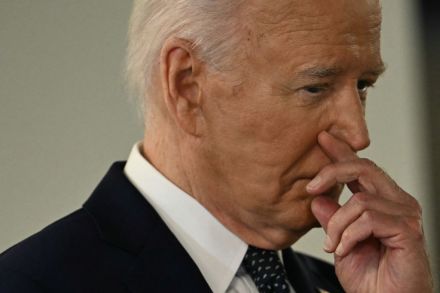
Like many other Americans who had the misfortune to live under socialism, I’ve been having lots of flashbacks lately. In particular, I find that the presumptive President-elect Joe Biden gives out serious Brezhnev vibes. The general secretary of the Soviet Union from 1964 to 1982, Leonid Brezhnev was not a healthy man. He was a chain-smoking workaholic who’d been appointed to a series of very stressful positions — you try to rise in ranks under Joseph Stalin. He served in World War Two, when he was wounded, and suffered a concussion. Brezhnev’s mind and body took a toll; his first, minor stroke happened in 1951, when he was still in his forties.

brezhnev

The bloody decade: think America’s divided now? Try the 1970s

Late on the afternoon of November 29, 1984, Susan Rosenberg and Timothy Blunk were loading boxes into a blue Oldsmobile Cutlass sedan and a U-Haul trailer parked at a self-storage facility in Cherry Hill, New Jersey, not far from Philadelphia. The boxes were heavy, so despite the autumn chill and the wind, Rosenberg and Blunk were working up a sweat. Both wore glasses as part of their disguises. Blunk had an ill-fitting wig that he barely managed to keep on his head. An FBI wanted poster called Rosenberg armed and extremely dangerous, and the Bureau wasn’t wrong. On the front seat of the Olds, purses held semiautomatic pistols — an Interarms Walther PPK .38 caliber and a Browning Hi-Power 9mm. They were both fully loaded.

susan rosenberg

The New Republic’s useful idiot tour

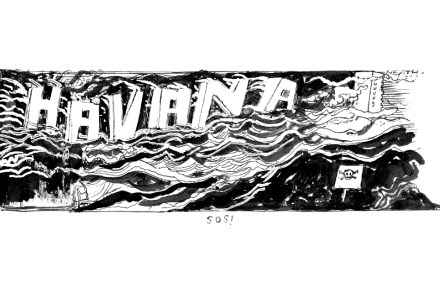
'To live in Havana', Graham Greene once wrote, 'was to live in a factory that turned out human beauty on a conveyor belt.' To work as Cockburn does, as an underfed Grub Street hack, is to work in an industry that turns out pointless emails on a conveyor belt. Every now and then though a real diamond rolls out of the coal chute. On Friday The New Republic invited its readers on a Caribbean jaunt – to Raúl Castro’s Cuba. Under the heading 'Discover Cuba and Support the Cuban People' the email read: 'While Trump petulantly restricts travel to Cuba, The New Republic invites you to discover the culture, society and politics of the island, and most of all bolster the people of Cuba when they need it most.

cuba the new republic

No apology is ever enough for the digital mob

Promoting physical fitness, the left has developed a bracing set of competitive callisthenics. Participants vie over who can complete a marathon crawl on the belly like a reptile, who can flop onto the floor in a pose of the greatest prostration, and who can bend over the farthest, pants down, while begging to have large pieces of furniture shoved up the backside. Athletic displays of public remorse also constitute an increasingly popular spectator sport. The young American poet Anders Carlson–Wee was excited at first about getting ‘How-To’ published in a July issue of the Nation, a storied New Statesman-style weekly.

Enduring life under Chairman Mao

Rao Pingru is 94, and a born storyteller. His gripping graphic narrative weaves in and out of the violent, disruptive upheavals that marked China’s transition in the 20th century from an immemorial, apparently immutable imperial past to its current uneasy truce with the technology, morals and politics of the Western world. He was born in Nancheng, a city virtually unchanged in seven centuries since the end of the great Song dynasty. The first painting in this book shows Pingru himself as a small boy kneeling to knock his head on the floor in a traditional kowtow, performed at the foot of the man who had come to teach him to write. In ancient China, calligraphy embodied continuity, discipline, the accumulated wisdom of civilisation itself.