Comedy

Heard the one about the MP who thought he was a comedian?

From our UK edition

There are so many ways to mangle brilliance. If you’re a present or former member of Take That, you’ll know what I mean when it comes to taking the sweet essence of the Bee Gees and turning their hits into something as bland and devoid of colour as an Ikea Billy bookcase. And if you’re James Cleverly, you may have learnt last week that members of parliament using comedy catchphrases invariably turns the gag from gold into something that floats at the top of a storm drain.  Referring to Housing Secretary Steve Reed, Cleverly asked in the Commons: ‘What was it about the Labour party’s collapse in the opinion polls that first attracted him to the cancellation of local elections?
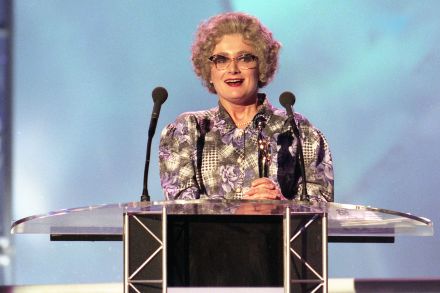
Oh, Mary!’s climax is an inspirational bit of comedy

From our UK edition

High Noon, directed by Thea Sharrock, is a perfectly decent version of a trusty western which celebrates its 74th birthday this year. An elderly sheriff, Will Kane, marries a priggish beauty, Amy, on the day of his retirement but his marital plans are overturned by news that a dangerous convict, Frank Miller, has been released from jail and hopes to shoot Will dead. Amy is a devout Quaker and she grumbles bitterly as Will cancels their honeymoon and heads back to town to deal with the evil Frank. But Frank is not the brightest criminal in New Mexico. News of his plans have spread and everyone knows that he’ll show up at midday aboard the express train.

David Walliams deserves to be cancelled

From our UK edition

A traditional British Christmas is not complete until we have all enjoyed the seasonal cancellation of a celebrity, under the mistletoe. Excitement mounts during Advent as to who the luckless sap might be this year and then, on cue, the little cardboard door is at last opened and we all gather around the tree for a joyous hatefest. I was fairly happy with this year’s choice, the comedian and children’s author David Walliams, as there is something about his manner and that weird shiny moonface which has always slightly irritated me.

Have Americans lost their sense of humor?

Humor has become serious business. A nation of anxious primates trapped in a silicon casino of likes, retweets and dopamine-soaked drudgery, America is suffering from what the comedian Norm Macdonald called a “crisis of clapter.” Terrified of saying the wrong thing, needing punchlines to be spoon-fed – what was once the funniest place on Earth has become a tight-lipped, tongue-twisted society where jokes are rewarded with polite applause instead of genuine laughter. It’s the old stink of a well-mannered aristocracy, and very un-American indeed. From his beginning, the ugly American – wild-eyed and rabble-rousing – rankled the Old World.

humor
louis ck

Louis C.K. fails to follow in Faulkner’s footsteps

The Great American Novel is a holy obsession – the Everest every writer dreams of summiting. For most, that dream begins and ends with William Faulkner, whose winding sentences and sunburned Southern landscapes birthed prose that seemed to breathe. His words marched; crookedly, yes, but always with purpose. Louis C.K., a would-be Faulkner disciple, trudges into the same swamp in Ingram, minus the map, the bearings and any sense of control. What was presumably intended to echo the Mississippian’s hypnotic disarray becomes instead a masterclass in incoherence. The story, told in long and sweaty first-person narration, follows a boy wandering through a Texan landscape of mud, hunger and half-formed memories. The intention is noble; the execution is catastrophic.

Drowning in the neon swamp of Tron: Ares

Sitting in the nearly empty movie theater at which I saw Tron: Ares, I found myself swamped by neon. Its hues are unappealing in real life – redolent of dive bars, arcades and other unsavory venues – but neon is downright unbearable when experienced in a movie theater, where you have no choice but to stare at the screen unless you want a perfectly good $21.51 to go to waste.

tron ares

Why was the 19th century so full of bigots and weirdos? 

From our UK edition

Da Vinci’s Laundry is based on an art world rumour. In 2017, Leonardo’s ‘Salvator Mundi’ sold at Christie’s for $450 million but some experts claimed that the attribution was inaccurate. Could the world’s costliest artwork be a fake? Writer, Keelan Kember, considers the provenance of a fictional Leonardo owned by a thuggish oligarch, Boris, who claims to have bought the masterpiece at a flea market. He invites two posh British experts, Christopher and Milly, to authenticate the painting and when Christopher questions its origins he earns Boris’s instant displeasure. Boris threatens to toss Christopher from the roof of his luxury mansion. Enter a brash American, named Tony, who wants to buy the Leonardo on behalf of a rich Saudi clan.

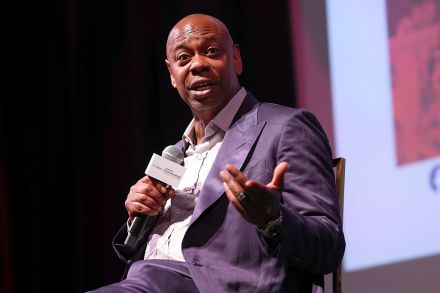
The joke’s on Dave Chappelle

The problem with Dave Chappelle taking his comedy to Saudi Arabia isn't the money they paid him. It's what they bought.We're all familiar with the reputation laundering that the Middle East has engaged in on a grand scale in recent years, spending big to get into sports, entertainment and now hosting more than fifty of the biggest names in standup comedy for a Riyadh Comedy Festival. Chappelle's performance was notable for its direct attack on the quality of free speech rights in America – and a claim that Saudi Arabia of all places is actually more free. "Right now in America, they say that if you talk about Charlie Kirk, that you’ll get canceled," he said according to the New York Times. "It’s easier to talk here than it is in America.

Dave Chappelle

‘From the folks that brought you 9/11’

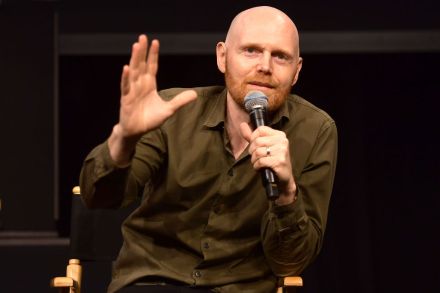
The American comedy world finds itself embroiled in a not-so-civil war of words over the Riyadh Comedy Festival, sponsored by the Saudi royal family. The Saudis have given enormous paychecks to big names like Kevin Hart, Dave Chappelle, Louis C.K., Aziz Ansari, and Bill Burr.  On one side, you have the people invited to perform at the festival, who mostly lean toward the anti-woke, sometimes-semi-canceled, will-do-anything-for-a-dollar camp. On the other, you have hyper-woke, mostly male Gen X comics whose routines these days involve delivering panicked podcast screeds about the end of democracy.

Riyadh

Every line in the new Alan Partridge is perfect

From our UK edition

By now, viewers of TV thrillers are no strangers to a baffling prologue – but this week brought a particularly extreme example. Nine Bodies in a Mexican Morgue opened with shots of a desert, a cactus, an animal skull nailed to a cross and a moustachioed man driving a battered pick-up truck with a Virgin Mary on the dashboard. So we were definitely in Mexico. For a while, however, that was about all that was clear, as the words ‘Day Nine’ flashed up and the truck’s unidentified female passenger spied on a dilapidated military base through binoculars.

Splitsville defends monogamy

The new comedy Splitsville amusingly diagnoses several urgent social ills. The film mocks those who treat marriage not as an expression of solemn vows but as a ticket to unfettered happiness to be discarded at the first sign of discontent; it also excoriates those who view the institution as so meaningless – just a piece of paper – as to persist in the midst of openly acknowledged affairs, romances and one-night stands. In its own coarse, fumbling way, Splitsville has an instinctive sense of how human beings long for monogamy and order even while they court freedom and licentiousness. Splitsville stars Kyle Marvin and Adria Arjona as Carey and Ashley, a young couple who, 14 months after getting hitched, find themselves with different notions about the success of their union.

The time Spike Milligan tried to kill me

From our UK edition

The theatre impresario Michael White rang me one day in 1964, and said he was presenting a play at the Lyric Hammersmith, where there was a small role he thought might suit me. The play was an adaptation of the novel Oblomov by Ivan Goncharov, where the eponymous hero spends most of his life in bed, unable to see the point of engaging with the world outside. It was being put on as a vehicle for Spike Milligan, who was said to be jealous of the success of his longtime partner in The Goon Show, Peter Sellers. Sellers had recently made a seamless transition from the world of anarchic comedy to film, where he proved himself to be an accomplished ‘straight’ actor.

Glorious: Good Night, Oscar, at the Barbican, reviewed

From our UK edition

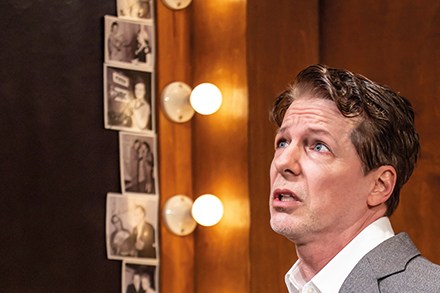
Good Night, Oscar is a biographical play about Oscar Levant, a famous pianist who was also a noted wit and raconteur. The script starts as a dead-safe comedy and it develops into a gripping battle between the forces of anarchy, represented by Oscar, and the controllers of NBC who want to censor his crazy humour. The backstory is complicated. Oscar has been secretly committed to a mental asylum and his wife gets him released for a few hours so he can do an interview on Jack Paar’s TV show. It takes two long scenes to explain this improbable set-up but it’s worth it because Oscar (Sean Hayes) is such a lovable character. He’s a total wreck, addicted to drugs, suffering from OCD, and afflicted by aural and visual hallucinations that leave him curled up on the floor like a baby.

Lives upended: TonyInterruptor, by Nicola Barker, reviewed

From our UK edition

‘Is it any good?’ a friend asked when he saw I was reading this book. ‘Yes,’ I said, ‘but it’s full of wankers.’ By that stage I was only up to page 24, but the remaining 184 pages did nothing to fundamentally alter my view. There is nothing intrinsically wrong with this. The works of, say, Geoffrey Chaucer and Jane Austen, not to mention thousands of others, would be considerably poorer if all the tiresome people were filtered out. But it does make it hard to read TonyInterruptor for more than 30 pages at a stretch. One has to pinch the bridge of the nose and go for a little walk.

The problem with psychiatrists? They’re all depressed

From our UK edition

Edinburgh seems underpopulated this year. The whisky bars are half full and the throngs of tourists who usually crowd the roadways haven’t materialised. There’s a sharp chill in the air too. Anoraks and hats are worn all day, and anyone eating outdoors in the evening is dressed for base camp. Perhaps tourists don’t want to travel because they’re too depressed. That’s the specialism of Dr Benji Waterhouse, an NHS shrink, who writes and performs comedy about his patients. Dr Benji is an attractive presence on stage with his crumpled Oxfam clothes and his dreamy, half-shaven look. He could be the guy who tunes up U2’s guitars. His act is very funny and it contains some amazing revelations.

Edinburgh Fringe’s war on comedy

From our UK edition

Every day my inbox fills with stories of panic, madness and despair. The Edinburgh Fringe is upon us and the publicists are firing off emails begging critics to cover their shows. If the festival is a national X-ray, this year’s image is shadowed by emotional frailty and a distinct sense of humour failure. The brochure is full of performers advertising their mental disorders (ADHD, OCD, PTSD, and so on), as if they were badges of achievement. The chair and chief executive of the Fringe say that the festival means ‘giving yourself over to the (safe) hands of our performers allowing yourself to be swept away by their creativity’. The word ‘safe’, in brackets, assures nervous visitors that their mental wellbeing won’t be jeopardised.

Be warned: the new Naked Gun is actually funny

From our UK edition

As the lights went down for The Naked Gun – the ‘legacy sequel’ to the spoof cop franchise – I found myself praying: ‘Please God, let it be deliciously and relentlessly stupid or I will be heartbroken.’ I was not hopeful. I never am when it comes to a ‘legacy sequel’. What they usually mean by ‘legacy sequel’ is: a ‘reboot’. But within the first few minutes I heard a strange noise and felt a peculiar sensation and realised I was laughing. It happened quite a few times more, in fact.  I was as surprised as anybody. Even though the third act drags a bit and Liam Neeson is no Leslie Nielsen (despite their pleasingly similar names), any film that has ‘Set Dressing’ listed in the end credits followed by ‘Ranch, Vinaigrette, Blue Cheese…’ gets my vote.

The demise of South Park

From our UK edition

President Trump has a very small willy. His boyfriend is Satan. He’s a con man who will sue you for billions on the flimsiest of pretexts but will probably settle for a few hundred million. If this is your idea of cutting-edge satire then you are going to love the new season of South Park, which includes a number of scenes of Trump stripping off in his White House bedroom and trying to interest the devil in his minuscule appendage. But if I were Paramount+ and I’d just signed a $1.5 billion deal for the exclusive five-year rights to South Park, I think I’d be feeling a bit shortchanged by the première of the show’s 27th season. Sure, you could argue that South Park was always this way: the first episode (in 1997) was, after all, titled ‘Cartman Gets An Anal Probe’.

The subversive genius of Tom Lehrer

From our UK edition

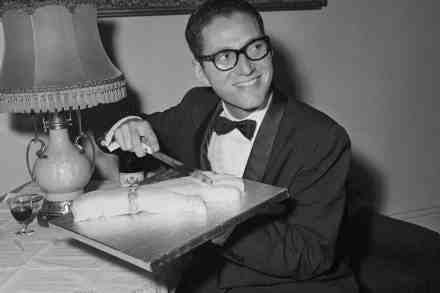
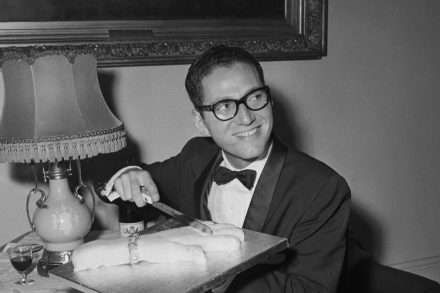
The greatest living American until this week has died at the age of 97. I refer to Tom Lehrer, the finest satirist of the 20th century. He’s the one who observed that satire became obsolete when Henry Kissinger was awarded the Nobel Peace Prize. He was the genius who put the entire periodic table of the elements to the tune of ‘I Am the Very Model of A Modern Major-General’ (Gilbert and Sullivan was his childhood obsession). He was a mathematician who could be as funny about maths and science as about poisoning pigeons in the park (yes he did) or contemporary pieties (‘National Brotherhood Week’).

RIP Tom Lehrer

The death on Saturday of the musician, humorist and mathematician Tom Lehrer at the impressive age of 97 brings a near-end to a great American tradition of edgy, sometimes almost-unsayable satire amongst a postwar generation of New York’s Jews. Only Mel Brooks and Woody Allen are still carrying the torch, and neither of them are young men. Still, for all of their impressive achievements, it is hard to equal Lehrer’s unfathomable genius at his peak. Equally stunning is the realization that this peak only spanned around a decade: he recorded two studio albums in 1953 and 1959, and three live albums between 1959 and 1965. Yet the songs that he wrote remain extraordinary, giddy delights, combining tuneful arrangements with “did-he-really-say-that?” lyrics.