Comedy

Dual control | 19 January 2017

From our UK edition

Revolting (Tuesdays) is the BBC2 comedy series that spawned the now-infamous sketch ‘Real Housewives of Isis’. It has been watched on the BBC’s Facebook page nearly 30 million times and rightly so because it is fearless, funny and near the knuckle. A pastiche of reality TV shows set in places like Beverly Hills, the sketch depicts three young British jihadi brides brightly discussing their domestic lives in some Raqqa-like hellhole. ‘Ali bought me a new chain,’ boasts one, ‘which is eight feet long. So I can almost get outside, which is great.’ Cue shot of black-hijabed housewife lurching towards the doorway of her bombed-out home, dragging the cooker to which she has been leashed.

Death rattle

From our UK edition

The Barbican website warns us that Ligeti’s opera Le grand macabre ‘contains very strong language and adult themes’. The strong language consists of the four-letter words that are known to everyone and used by most people, and the adult themes are sex/love and death, which this opera has in common with almost any non-comic opera you can think of, and without which the genre would certainly never have been conceived or added to over more than four centuries. But while love and sex have often also provided the stuff of comedy, death is another matter, and presumably it is Ligeti and Michael Meschke’s robust treatment of this (superbly translated into English by Geoffrey Skelton) that we might need to be warned about.

Drama queen

From our UK edition

God, what a dusty old chatterbox Schiller is. Like Bernard Shaw, he can’t put a character on stage without churning out endless screeds of cerebral rhetoric. But unlike Shaw, he has no sense of humour, nor any instinct for the quirks and grace notes that create a personality. Mary Stuart is a psychological drama with a single issue. How soon, and with what political consequences, can Elizabeth execute her treacherous cousin Mary? Schiller’s characters sound and feel identical: super-brainy, highly confident know-alls who treat each problem like a gang of Chancery briefs discussing a particularly knotty insolvency case. Director Robert Icke’s regimented production imposes high-street fashions on England in the 1560s.

Lin Cook, who died before Christmas, personified that odd breed: the celebrity widow

From our UK edition

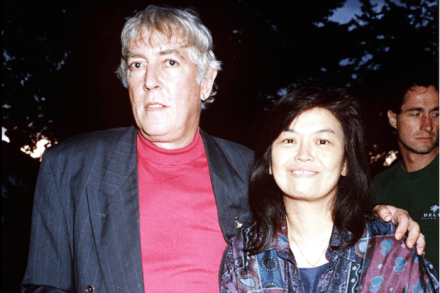
Amid the flurry of famous deaths during 2016, one particular passing has been more or less forgotten. Peter Cook’s third and final wife, Lin Cook, died on the eve of Advent, at the age of 71, shortly after the BBC broadcast Victor Lewis-Smith’s new documentary about Peter, for which Lin gave a rare interview. I got to know Lin in the Noughties, while compiling two biographical collections of her late husband’s work. It was an intriguing insight into the world of that strange showbiz phenomenon, the celebrity widow. Celebrity widows are a paradox – ostensibly public people, they’re actually intensely private. Lin personified this odd breed. Although I was in touch with her for over 15 years, when she died I realised I barely knew her at all.

Weird and wonderful | 29 December 2016

From our UK edition

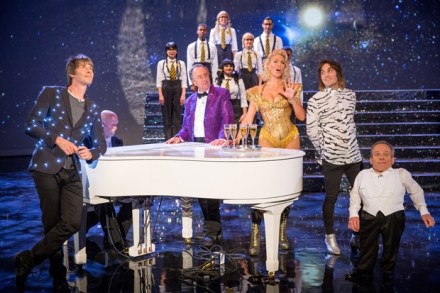
As you’ve probably noticed, TV critics spend a lot of their time trying to identify which other programmes the one they’re reviewing most resembles. Sadly, in the case of BBC2’s The Entire Universe, this noble quest proved futile. Written and emceed by Eric Idle, the show did contain plenty of familiar television elements: songs, dance troupes, Warwick Davis making jokes about how small he is, a lecture by Professor Brian Cox on the nature of the cosmos. Yet the way it mixed them together was so unprecedentedly odd that it may well have made the average Boxing Day viewer feel they must be drunker than they thought.

Joking apart | 24 November 2016

From our UK edition

A horse walks into a bar.… David Grossman takes the opening line of an old joke for his title, which could be a signal of comedy to come; and indeed he strews his novel’s pages with punchlines — good, bad-taste and groan-worthy. But this is gallows humour at its darkest: Grossman beckons us into a basement comedy club in an Israeli town, and uses the world of stand-up to explore not jokes but the nature of guilt. We stick with the comedian Dovaleh G from the moment he stumbles on to the stage till he exits two hours later. There are Israeli in-jokes — ‘How do paratroopers commit suicide? Jump off their ego onto their IQ’ — but long before the end, laughs have faded and applause has given way to hostility.

Old stamping ground

From our UK edition

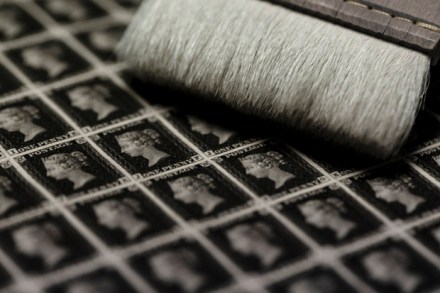
If I tell you that on Monday there was an hour-long documentary about the history of stamp-collecting, then you probably don’t need this column’s usual bit in brackets saying which channel it was on. Indeed, at times Timeshift: Penny Blacks and Twopenny Blues seemed determined to be the most BBC4-like programme in the history of BBC4: cheerfully niche, heroically indifferent to all notions of cool and so old-school in its production style that any mention of France was introduced with a blast of accordion music. Above all — and unlike so many other documentaries elsewhere — it was wholly confident that its viewers would be interested in interesting things without having to be shrilly reminded every few minutes of how interesting they are.

Space oddity

From our UK edition

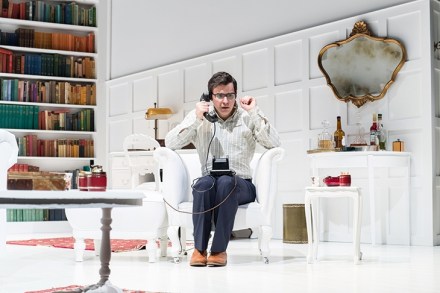
One of David Bowie’s last works, Lazarus, is a musical based on Walter Tevis’s novel The Man Who Fell to Earth. Enda Walsh has written the script. The lead character, Newton, is a derelict celebrity addicted to gin who occupies a big brown apartment full of bickering attendants. It’s unclear who or what Newton is. Human or alien? Something in between? His ontological status is a further puzzle. He may be alive, dead, half-dead, non-dead, half-undead or semi-not-quite-half-unalive. This is a problem, dramatically. A character who exists outside the mortal realm can’t make choices or perform actions that affect himself and others. He’s not a personality, therefore, just a puzzle wearing some clothes. Beige clothes in this case.

Angry bird

From our UK edition

Dynastic affairs and international relations were once a seamless continuum. Royal weddings accompanied peace treaties. An heirless realm was vulnerable to invasion. Botched successions led to war. This is the political context of King Lear but Deborah Warner sets the play in modern times, which muddles everything. Britain in the Dark Ages is represented by a scout hut or a therapy suite. Plain walls, bleached flooring, a semi-circle of blue plastic chairs. Enter the king’s court led by a crownless Glenda Jackson (Lear), sporting a black ensemble topped by a chic scarlet cardigan. Is this a brutal tyrant on the brink of a psychotic meltdown? Nope. It looks like Granny wearing ‘something special’ for her 80th at the care home.

Have our thin-skinned times killed off satire for good?

From our UK edition

Is satire dying? Zoe Williams asks in the Guardian whether the shrinking of permissible speech is killing comedy. To make her point, she wonders if the mid-1990s satire The Day Today would be tolerated in 2016 and whether 'its surrealism belongs to another age'. The spoof news show, which in some ways seems slightly prophetic 20 years later, was sometimes edgy, and often surreal, and Williams recalls one scene in which a presenter announces in a dead pan manner that the Bank of England had issued 'an emergency currency based on the Queen’s eggs, several thousand of which were removed from her ovaries in 1953 and held in reserve'.

Kids’ stuff | 6 October 2016

From our UK edition

When a new TV channel calls its flagship food show Fuck, That’s Delicious, we might surmise that the Reithian ideals are not foremost in its corporate philosophy. You probably haven’t heard of Viceland. You certainly haven’t watched it. It seeped on to the airwaves with little fanfare and few viewers. Viceland is the new 24-hour TV channel of Vice Media, the Canadian-American outfit that describes itself as the ‘world’s preeminent youth media company and content creation studio’. Vice began in 1994 as a magazine but now encompasses a news division, a record label, a film studio and myriad digital ventures.

Close encounters of the Eighties kind

From our UK edition

Stranger Things is the most delightful, gripping, charming, nostalgic, compulsive, edge-of-seat entertainment I’ve had in ages. Like a lot of the best TV these days, it’s on Netflix, which I highly recommend so long as you can cope with the technical complexities of getting it to appear on your screen in the first place. Yeah, I know, all you bastard millennial types sneering at Granddad for his inability to do stuff that’s like so totally easy and obvious.

Cautionary tale

From our UK edition

The closing credits of National Treasure (Channel 4, Tuesday) contain the usual disclaimer that any resemblance between its characters and real people is merely coincidental. Well, coincidental maybe, but also entirely inevitable — because this is a drama based on Operation Yewtree. With its choice of subject matter, a cast including Robbie Coltrane and Julie Walters and a script by Jack Thorne (author of the all-conquering Harry Potter and the Cursed Child), the series is clearly intended as an Important Piece of Television. Yet, partly for that reason, it’s so far proving a rather careful one. Nobody who watched the first episode could accuse it of sensationalism.

In a league of her own

From our UK edition

The Emperor seems like a worthy lesson in Ethiopian history. Haile Selassie’s final days are recounted by a retinue of devoted flunkies. He had valets, chauffeurs, zoo-keepers and door-openers to perform every conceivable chore. Each morning a butler proffered a silver dish loaded with meat from which the emperor fed his exotic pets. A clock-watcher, ‘the Cuckoo’, performed a coded bow during meetings to inform His Majesty that new suppliants awaited him. A royal bursar helped him hand envelopes of cash to petitioners who discovered, always too late, that the donation was barely a fraction of the sum expected. A cushion-handler ensured that his titchy legs were never seen to dangle in mid-air when he took his seat on one of his many thrones.

Pussy galore

From our UK edition

I think I might be turning into Alf Garnett. When I was growing up I saw him as an obnoxious, cantankerous, ranting old git that my grandparents’ generation seemed to find funny but who left me cold. Now I’m beginning to identify with him as an unfairly maligned and surprisingly youthful fount of wisdom whose tragedy is to be ignored by maddeningly unsympathetic womenfolk and infuriating kids. That was my thought, anyway, watching Till Death Us Do Part (Thursday, BBC Four) — a one-off remake of one of Johnny Speight’s original Sixties scripts, with The Fast Show’s Simon Day as Alf.

What performing stand-up in Ukip country taught me about racism

From our UK edition

Most people would say UKIP lends itself to comedy better than Denis Healey’s eyebrows lent themselves to tweezers – but not the people of Walton-on-the-Naze, as they live in the party’s only constituency. I’m a stand-up comic, and I was booked to play the town’s first comedy night this month. I don’t know if the lovely promoter realised I was Asian when he booked me; for my part, I didn’t realise Douglas Carswell was Walton’s MP, and only discovered while Googling the town on the way to the gig, when it was too late to turn back.

Business as usual | 18 August 2016

From our UK edition

I should probably nail my colours to the mast and state that The Office is possibly my favourite TV sitcom of all time (bar My Family, which surely goes without saying), but some comedies that have ended should simply stay ended, as no one has ever said, but should have. (Or maybe John Cleese has said it?) There are a few decent jokes here. Some of the bad songs are really good bad songs. But it’s a repetitive rehash rather than a worthwhile continuation of the character, and the comedy and pathos is in exactly the same place as it always was. That is, in the gap between the winner David Brent (Ricky Gervais) thinks he is, and the loser we know him to be. Fifteen years ago, that was revolutionary, and genius, and funny, and affecting, but now? Not so much. Quite tiresome, in fact.

Words of wisdom

From our UK edition

Dominic Frisby is an actor best known for voicing the booking.com adverts (‘Booking dot com, booking dot yeah’). Voiceover specialists can earn large fees for a morning’s work and they have endless time in which to ponder where their money ends up. Frisby is irked by the UK tax regime, whose code-book is four times longer than Chilcot. He argues persuasively that our sprawling system should be replaced with a land value tax. Set at the right level this would ensure the abolition of all other duties, and those of us who don’t own property would pay no council tax, no income tax, no VAT, and no duty on fuel, alcohol or inheritance. Ever again. An attractive scheme laid out in a funny, absorbing show full of historical insights.

Northern exposure | 11 August 2016

From our UK edition

As the festival grows, the good acts are harder to find and the prices keep rising to meet the throngs of showbiz refugees who surge north in the belief that the glory, this year, will be theirs. Arriving at my one-star hovel (no breakfast, no towels, shared bathroom), I was given a security key and a disc of see-through soap that I could have hidden beneath a tea-bag. The bill, payable in advance, was a third higher than last year. Glory in this city belongs to the landlord. Marcel Lucont’s Whine List is performed by a suave, self-adoring Frenchman who starts by asking if anyone in the crowd is new to his act. ‘Lucky bastards. What I would give to see myself for the first time.

Diary – 11 August 2016

From our UK edition

Walking along the Brighton seafront, I was struck by posters advertising endless tribute acts; among them Suspiciously Elvis, the Small Fakers and The Kinx. The Edinburgh Fringe is much the same. Shows this summer include Dirty Harry: The Ultimate Tribute to Blondie and Billie Holliday: Tribute to the Iconic Lady Day. Or how about Gary Bland’s Mr Romantic: A Tribute to Johnny Mathis — ‘an insight into Mathis’s career, and how Mathis’s music has been a big part of Gary’s life through love, heartache and laughter’. The theatre at Edinburgh, too, is full of remakes. Fancy Dan Choo-Park’s The Song of Beast (after Hamlet), where the Prince of Denmark is teleported to a South Korean slaughterhouse?