Comedy

Get your kit off

From our UK edition

After its new costume drama You Go, Girl! (Sundays) about how amazing, empowered and better-than-men women are, especially if they are lesbians, the BBC ran its first ever Nike ad. At least that’s what I thought initially: rap music, moody shots of athletes, very high production values. Then I saw they were all grim-faced women and the word ‘RISE’ in flames and I thought: ‘Big new drama series? About girls who’ve been sucked into this very strict Christian cult, a bit like the Handmaid’s Tale, maybe?’ Then I noticed they were all wearing football kit and kicking balls around, and went back to my original Nike idea. Finally came the big reveal. It said: ‘#CHANGE THE GAME. FIFA WOMEN’S WORLD CUP 2019.

All in the worst possible taste

From our UK edition

‘Unfunny, boring and utterly unrelenting,’ says the Guardian’s one-star review of Chris Lilley’s new sketch series Lunatics (Netflix). And if that’s not incentive enough, our woke critical chum goes on to declare the series ‘problematic’. That’s a weaselly way of saying ‘this triggered all my snowflake sensitivities’ but in such a way as to make it sound like a loftily objective judgment. In truth, Lunatics is only problematic if a) you have no sense of humour and b) you’d prefer all comedy to be politically correct, inoffensive and utterly devoid of satirical edge. Sometimes, Lunatics is so cruel that it’s almost too painful to watch.

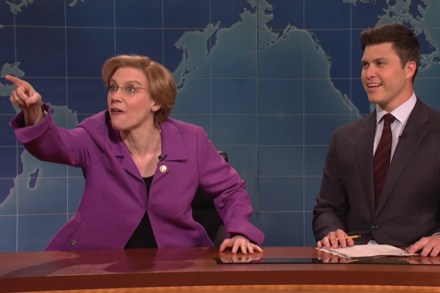
Has Saturday Night Live finally found its feet in the Trump era?

The trouble with Trumpworld is it’s so often beyond parody. How could a comedian ratchet up the president ordering Big Macs for a visiting championship football team to make the moment funnier than it already is? It’s a problem which has plunged late-night comedy writing into an identity crisis, one that has blighted America’s flagship sketch show Saturday Night Live. The Trump era has seen SNL bag Emmys and reach record audiences. But it’s achieved this through polarization: hitting the same tired Trump tropes each week and playing to their coastal-elite base. Its viewers have noticed: 39 percent of them surveyed by The Hollywood Reporter said the show had become too political.

elizabeth warren saturday night live

Off the Boyle

From our UK edition

‘I spend a lot of time helping teenagers who’ve been sexually abused…’ — beat — ‘…find their way out of my house.’ You’d scarcely imagine, listening to Frankie Boyle now, that this was the kind of joke he was telling on TV as recently as this decade. I wouldn’t believe it myself if I didn’t have written evidence of it, in the form of a 2011 TV review of his now-forgotten shocker of a Channel 4 show, Tramadol Nights. Boyle was great back then because he went to places few other comics dared to tread. He joked about everything from cancer (‘What is it about people with cancer thinking they’re suddenly going to run a marathon?

Planet propaganda

From our UK edition

If you liked Triumph of the Will, you’ll love this latest masterpiece of the genre: Our Planet. The Netflix nature series exploits the prestige, popularity and swansinging poignancy of Sir David Attenborough to promote an environmental message so relentlessly dishonest and alarmist it might have been scripted by the WWF. ‘Walruses committing suicide because of global warming.’ That was the nonsense from episode two repeated uncritically by all the newspapers, none of which seems to have been much interested in questioning the veracity of the claim. You’ll never guess what it was that really drove those walruses over the edge of the cliff...

The unbearable consequences of a joke

From our UK edition

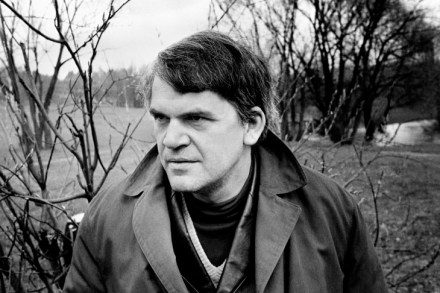
I was surprised to learn that the novelist Milan Kundera celebrated his 90th birthday on Monday. I had no idea he was still alive. He has taken up residence in that old people’s home that many former luminaries of western culture now occupy — the one with the sign above the door saying ‘Forgotten, but not gone’. In Kundera’s case, his decline into obscurity is probably connected to the fall of the Berlin Wall. The Czech émigré was all the rage in the mid-1980s when he was a critic of his country’s brutal regime. Now that the Soviet Union and its satellite states are a distant memory, he seems less relevant. I think the time is ripe for a Kundera revival, although not for the obvious reason, which is that communism is back in vogue.

Have I got talent?

From our UK edition

The contestants for the 13th series of Britain’s Got Talent, the variety show which starts on Saturday, certainly showed variety: next to me in the queue underneath the London Palladium are small children, a singer boasting about knowing Robbie Williams’s dad, and a Chelsea Pensioner in full Scarlets. A young researcher tries to put us at ease: ‘Have you come far?’ The Pensioner stares at her. ‘From Chelsea,’ he barks. Britain’s Got Talent is event television, the sort of show audiences still watch live and talk about, on Twitter or even while sitting together at home — it’s like Question Time for ITV on Saturday nights.

Secrets and lies | 14 March 2019

From our UK edition

Halfway through the first part of Channel 4’s extraordinary documentary Leaving Neverland (Thursdays), I flicked through the comments on social media in order to gauge the global reaction. Surely, I thought, Michael Jackson’s reputation will never recover from these bombshell revelations. If you sat, squirming, though Dan Reed’s excruciatingly prurient documentary you’ll know what I mean. Lots of those who didn’t have been justifying their decision to ignore it with excuses like ‘Yeah, but we knew this already. Michael Jackson was a paedo. It’s hardly news, is it?’ But this strikes me as glib and dishonest.

Comedy returns

From our UK edition

BBC2’s MotherFatherSon announced its status as a classy thriller in the traditional way: by ensuring that for quite a long time we had no idea what was going on. At first it looked as if the focus would be on a missing teenager whose phone we saw abandoned in the woods. But then we cut to an American called Max (Richard Gere, no less) arriving in London by private jet on an apparent mission to choose our next prime minister. Then to a younger man running fast and screaming. Then to a veteran female journalist being sacked — and not only because she’d just lit a cigarette at her desk. Then back to the young screamer, who by now had revealed himself as the newspaper’s coked-up editor. Then to a woman working in a homeless centre.

Accidental hero | 28 February 2019

From our UK edition

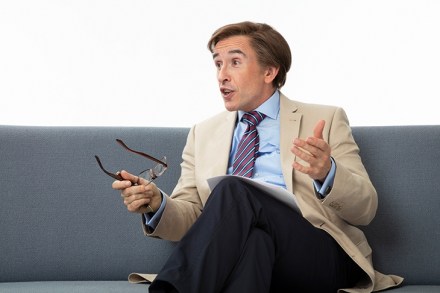
Steve Coogan is back as Alan Partridge but frankly who cares? Like Ali G, I’ve long thought, he’s one of those ‘classic’ 1990s comedy characters funnier in recollection than ever he was in reality. He should have been confined to brief sketches — like Paul Whitehouse and Harry Enfield mostly did with their cheesy has-been DJs Smashie and Nicey — not cruelly exposed in endless TV series where you’ve got the joke in the first five minutes and the rest is pure cringe. Actually, though, This Time with Alan Partridge (BBC1, Mondays) is genuinely funny, clever and enjoyable because finally he has scriptwriters who don’t hate him.

Why don’t you know about Lavell Crawford?

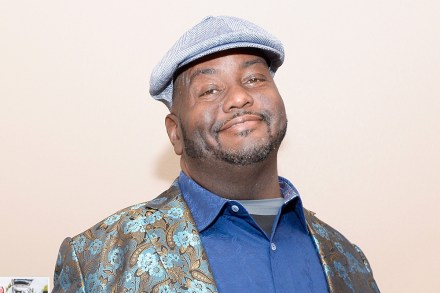
I bet you didn’t see Showtime’s one-hour special with comedian Lavell Crawford. Which is weird because the media is delirious with racial parity these days and they scarcely mentioned it. Crawford is a unique voice in American comedy and routinely sells out black audiences across the country. So where’s his New Yorker profile or New York Times essay? Why didn’t anyone hear about Crawford calling Trump our ‘first nigger president’ — back in 2017, no less? I discovered Crawford through an NSFW Breitbart comments thread, reading, as I like to, across the divide. The video, ‘Lavell Crawford — Trump Obama’, is an excerpt from Crawford’s Home for the Holidays tour, which Showtime premiered in late 2017.

lavell crawford

The end of the beginning | 17 January 2019

From our UK edition

One masterpiece, one dud, and one interesting rediscovery. That’s Pinter Five. Victoria Station is a hilarious sketch which might have been turned into TV gold by the Pythons or the Two Ronnies. A radio controller needs a cabbie to collect a fare from Victoria Station, but the only driver available is a charming lunatic whose car is idling near a ‘dark park’. The cabbie already has a passenger on board, who may be a murder victim, and although he claims not to know Victoria Station he insists that he’s the best man for the job. This dotty piece of verbal slapstick feels a bit dated because cab firms no longer rely on radios.

Why has comedy got so much worse in the Trump era?

‘At least we’ll have good comedy,’ liberals and leftists sighed to themselves when Donald Trump was elected. If anything, the opposite has been the case. Topical comedy has spiraled into a drain of irrelevance: soggy, flimsy, colorless, disposable. Hannah Gadsby’s self-consciously serious Netflix special Nanette was embraced by progressives and denounced by conservatives for explicitly spurning jokes in favor of moralism. Frankly, I was grateful that Ms Gadsby was honest. Comedians have long been flattering their audiences into believing they are good, wise people with good, wise opinions and at least Gadsby did not pretend Nanette was funny. Others sprinkle jokes on a big pan of half-baked propaganda.

alec baldwin donald trump comedy

Beat it

From our UK edition

Here’s a tricky quiz question for you. What word completes this sentence from a BBC4 documentary on Friday: ‘The world as we know it was created by the…’? The answer, bizarrely enough, is ‘backbeat’ — because the documentary in question was On Drums… Stewart Copeland!, in which the former Police percussionist took a fiercely drum-centric view of well, more or less everything. This was a programme, for example, that compared Elvin Jones’s stick work for John Coltrane to Moses’s parting of the Red Sea; that attributed the Beatles’ success largely to Ringo; and that put forward Dee Dee Chandler as one of the key figures of 20th-century global history.

Love match

From our UK edition

You mess with Laurel and Hardy at your peril. Their fan base is essentially the entire world. Samuel Beckett adored them: many think they inspired Waiting For Godot. Eric Morecambe’s reluctance to appear in bed with Ernie Wise melted when he was reminded that Stan and Ollie had used the same conceit. In Poland the duo are known as Flip i Flap, in Germany as Dick und Doof. I once attended a New Year’s Eve party at which the two dozen children present (toddlers to teenagers) were parked in front of a screen with a stack of Laurel and Hardy DVDs — not one of them left the room all evening. You have to ask yourself: could you honestly be friends with someone who didn’t love Laurel and Hardy? Which means that Stan & Ollie has got us nervous.

Let’s admit that comedy is problematic

‘Songs of joy and tears of laughter are all we need, to lift our hearts – Godfrey Elfwick’ I penned the above quote for an article in my university’s weekly student magazine ‘Wotz Woke?’ while trying to combat the negative effects of Trump and Brexit. Since then however, things have changed, and my outlook on ‘tears of laughter’ has altered drastically. When it comes to comedy these days, ‘tears of laughter’ has become merely tears. This week, a ‘stand up comedian’ by the name of Konstantin Kisin was handed a very reasonable contract by the School of African and Oriental Studies (SOAS) in London, organized by university society Unicef on Campus.

konstantin kisin

Nervous laughter

From our UK edition

At 8.45 p.m. I was back in the toilets again feeling pure terror. In front of me was a narrow window which I thought I might be able to squeeze out of if I dislocated both my shoulders. This seemed a more attractive proposition than the alternative: leaving the loo and stepping out on stage to deliver my maiden stand-up comedy performance. In theory, a few months ago, it sounded like a great idea. Everybody is anxious at the moment. I’m anxious, you’re anxious, everyone born after 1990 is anxious, or so the newspapers tell us. I stay up at night haunted by a sense of strange foreboding. I once went to a party and found four people crying in the bathroom.

On the double

From our UK edition

How very odd of Radio 4 not only to release The Ratline as a podcast before broadcasting it on the schedule in the conventional manner, but also to give its network listeners an edited-down version. It’s as if the podcast of Philippe Sands’s programme, which investigates war crimes by the Nazis, fuelled by his own family history and what he discovered while writing his book East West Street, has been given priority, and anyone who listens in the old-fashioned, switch-of-a-button way is somehow second-best and doesn’t deserve the full monty. The first episode of the ten-part series was six minutes longer online than on-air. What’s in those missing minutes, I wondered? Not much. A bit of filling. Some extraneous detail.

Literary therapy

From our UK edition

Is there anyone left who’d still be mortified to have it known that they’d purchased, or maybe even benefited from, a self-help book? In recent years, the genre’s gone mainstream: Jordan Peterson’s 12 Rules for Life bestrides the bestseller lists, alongside titles on the Danish, Finnish and Japanese secrets to health and happiness, and the life-changing magic of tidying up; Alain de Botton embraces the label, while most ‘big ideas’ books, from Malcolm Gladwell to Yuval Noah Harari, are at least partly self-help in disguise. This is all to the good: we shouldn’t mourn the era when the key signifier of a book’s merit was that it should be impossible to extract anything useful from it.

Dear Mary | 13 September 2018

From our UK edition

Q. Following a small dinner last night in a private house, I got home to find £300 missing from my handbag, which I’d left in the kitchen while we ate in a dining room. There were only eight guests, all of whom I’ve known for decades, and a loyal housekeeper who has worked for my friend for 20 years. My friend is a great offence-taker so I don’t feel I can tell her because she might impulsively sack the downtrodden housekeeper. On the other hand, if it was the housekeeper, she could one day clean out all my friend’s bank accounts so I do have a duty to mention it. But it could also just as easily have been one of the other guests who may have gone mad, or become a kleptomaniac. What should I do? — C.H., London SW3 A.