Comedy

What Catherine O’Hara gave cinema

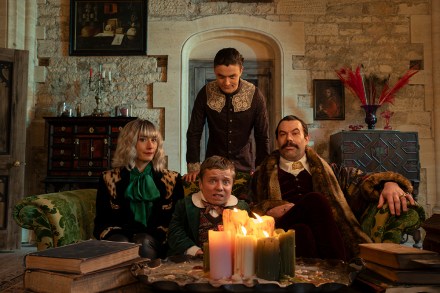
There are actors who dominate the movie screen, and actors who deepen it. There are stars who are "bankable" and have names above the titles, and there are artists who, almost invisibly, give a film its weight, its texture, its lasting emotional impact.  Catherine O’Hara, who has died at the age of 71, belongs emphatically to the second group. She was one of the rare performers whose presence elevated everything around her. She understood precisely how to serve the story, the tone and the ensemble. Over a career that spanned many decades, genres and registers, O’Hara enhanced every film she appeared in.  What made her exceptional was not merely that she was funny, though she was one of the great comic performers of her generation.

Have Americans lost their sense of humor?

Humor has become serious business. A nation of anxious primates trapped in a silicon casino of likes, retweets and dopamine-soaked drudgery, America is suffering from what the comedian Norm Macdonald called a “crisis of clapter.” Terrified of saying the wrong thing, needing punchlines to be spoon-fed – what was once the funniest place on Earth has become a tight-lipped, tongue-twisted society where jokes are rewarded with polite applause instead of genuine laughter. It’s the old stink of a well-mannered aristocracy, and very un-American indeed. From his beginning, the ugly American – wild-eyed and rabble-rousing – rankled the Old World.

humor
louis ck

Louis C.K. fails to follow in Faulkner’s footsteps

The Great American Novel is a holy obsession – the Everest every writer dreams of summiting. For most, that dream begins and ends with William Faulkner, whose winding sentences and sunburned Southern landscapes birthed prose that seemed to breathe. His words marched; crookedly, yes, but always with purpose. Louis C.K., a would-be Faulkner disciple, trudges into the same swamp in Ingram, minus the map, the bearings and any sense of control. What was presumably intended to echo the Mississippian’s hypnotic disarray becomes instead a masterclass in incoherence. The story, told in long and sweaty first-person narration, follows a boy wandering through a Texan landscape of mud, hunger and half-formed memories. The intention is noble; the execution is catastrophic.

Drowning in the neon swamp of Tron: Ares

Sitting in the nearly empty movie theater at which I saw Tron: Ares, I found myself swamped by neon. Its hues are unappealing in real life – redolent of dive bars, arcades and other unsavory venues – but neon is downright unbearable when experienced in a movie theater, where you have no choice but to stare at the screen unless you want a perfectly good $21.51 to go to waste.

tron ares

The joke’s on Dave Chappelle

The problem with Dave Chappelle taking his comedy to Saudi Arabia isn't the money they paid him. It's what they bought.We're all familiar with the reputation laundering that the Middle East has engaged in on a grand scale in recent years, spending big to get into sports, entertainment and now hosting more than fifty of the biggest names in standup comedy for a Riyadh Comedy Festival. Chappelle's performance was notable for its direct attack on the quality of free speech rights in America – and a claim that Saudi Arabia of all places is actually more free. "Right now in America, they say that if you talk about Charlie Kirk, that you’ll get canceled," he said according to the New York Times. "It’s easier to talk here than it is in America.

Dave Chappelle

‘From the folks that brought you 9/11’

The American comedy world finds itself embroiled in a not-so-civil war of words over the Riyadh Comedy Festival, sponsored by the Saudi royal family. The Saudis have given enormous paychecks to big names like Kevin Hart, Dave Chappelle, Louis C.K., Aziz Ansari, and Bill Burr.  On one side, you have the people invited to perform at the festival, who mostly lean toward the anti-woke, sometimes-semi-canceled, will-do-anything-for-a-dollar camp. On the other, you have hyper-woke, mostly male Gen X comics whose routines these days involve delivering panicked podcast screeds about the end of democracy.

Riyadh

Splitsville defends monogamy

The new comedy Splitsville amusingly diagnoses several urgent social ills. The film mocks those who treat marriage not as an expression of solemn vows but as a ticket to unfettered happiness to be discarded at the first sign of discontent; it also excoriates those who view the institution as so meaningless – just a piece of paper – as to persist in the midst of openly acknowledged affairs, romances and one-night stands. In its own coarse, fumbling way, Splitsville has an instinctive sense of how human beings long for monogamy and order even while they court freedom and licentiousness. Splitsville stars Kyle Marvin and Adria Arjona as Carey and Ashley, a young couple who, 14 months after getting hitched, find themselves with different notions about the success of their union.

RIP Tom Lehrer

The death on Saturday of the musician, humorist and mathematician Tom Lehrer at the impressive age of 97 brings a near-end to a great American tradition of edgy, sometimes almost-unsayable satire amongst a postwar generation of New York’s Jews. Only Mel Brooks and Woody Allen are still carrying the torch, and neither of them are young men. Still, for all of their impressive achievements, it is hard to equal Lehrer’s unfathomable genius at his peak. Equally stunning is the realization that this peak only spanned around a decade: he recorded two studio albums in 1953 and 1959, and three live albums between 1959 and 1965. Yet the songs that he wrote remain extraordinary, giddy delights, combining tuneful arrangements with “did-he-really-say-that?” lyrics.

Shane Gillis: MVP of the ESPYs

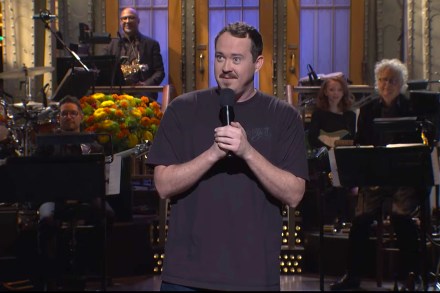
Okay, I’ll admit it: Shane Gillis made the ESPYs entertaining. Gillis was the only person worth talking about. If not for his name trending on social media, I would have had no clue the award ceremony was still televised in 2025. For an event once heralded for its altruism, prestige and celebrity, it’s remarkable that a former Saturday Night Live comedian is all that’s left of the withering carcass. Full disclosure: I worked for ESPN from 2014 to 2017. When I was there, colleagues clamored for a call from network brass to host sections of the event’s red carpet. As a more “serious” SportsCenter journalist, I never received the call to charge the company for an overpriced dress and fly to the Dolby Theater in Los Angeles.

Gillis

CNN can’t kill Tim Dillon

“I’ve been researching comedy,” CNN’s Elle Reeve announces grimly at the start of her hour-long interview with comedian Tim Dillon, released this week more than a month after it was recorded. What follows is an extended whine about the manner in which legacy broadcast media in America has ceded its status as the gatekeeper of the American cultural narrative to podcasters. Is it the most satisfying piece of television I've ever watched? Possibly, yes. The irony – and it’s almost too perfect to articulate – is that had Dillon not demanded, while appearing recently on the Joe Rogan Experience podcast, that CNN release the interview in full rather than packaged into a tightly edited segment to fit a specific narrative, it probably would never have seen the light of day.

Dillon

Bill Burr is going the way of the media armchair scolds

Bill Burr has built a successful stand-up comedy and film career on being the cranky scold next door – and his acts have always been tinged with the politics of the moment. He built his reputation as an expert on reading a room and knowing exactly how uncomfortable to make the people in said room while also making them laugh.Beginning some time last year, however, Burr’s act started to risk taking a backseat to his media armchair-political scolding, whether it’s Israel, Ben Shapiro or now Elon Musk. It’s one thing to work material about any of those topics into a stand-up routine, as Burr has done with Israel, when he spoke about “launching missiles at people using kids as human shields.

A biography of Lorne Michaels that strays into hagiography

The gilt fell off Saturday Night Live’s reputational gingerbread almost from the moment of its inception. Long before the arrival of Bob Woodward’s Wired: The Short Life and Fast Times of John Belushi (1984) — its antihero dead at the age of thirty-three — whatever luster the show had possessed had been well-nigh obliterated by a tide of scuttlebutt. The girls were (apparently) all bulimics and anorexics. The guys were coke fiends and egomaniacs. Misogyny (exemplified by Belushi’s dislike of sketches written by women) and back-stabbing were endemic; drug dealers sat in on the writing sessions.

Lorne

Why SNL 50 bombed in the ratings

On my favorite Hollywood-focused podcast The Town, host Matt Belloni and his producer and guests offer predictions all the time on television ratings, relying on the Nielsen numbers for reference for what's anticipated versus what it turns out to be. Predictions for Saturday Night Live's fiftieth anniversary had it tracking above 20 million viewers — a reasonable expectation given the year-long promotional campaign and the fact that it would be on NBC, streaming on Peacock and on E! Network at the same time. The conversation on The Town was mostly a debate about whether it would hit 25 million, putting it well above expectations for the Oscars. Instead, it came in far lower, not even getting to 15 million — below the Grammy Awards, for sake of comparison.

snl 50

Saturday Night Live is helping Trump

“Me and Vice President Harris are the same!” concluded Saturday Night Live veteran Dana Carvey, in character as Joe Biden, when he returned to NBC’s legendary sketch comedy show for the first episode of its fiftieth anniversary season. After Carvey, who left SNL’s regular ensemble in 1993, uttered those politically unhelpful words, former cast member Maya Rudolph, playing Kamala Harris, nervously gave him the bum rush off stage, only for him to wander back on to smell her hair — one of Biden’s stranger campaign trail moves — before the two delivered the show’s signature, “Live from New York, it’s Saturday night!” line to a cheering studio audience, millions of viewers at home and millions more who (like me) caught it later via social media streaming.

saturday night live

Conservatives who complain about Bill Maher are missing the point

Every time Bill Maher goes viral for being a "non-woke" liberal, the conservative pundit class is eager to remind readers that Maher is not one of them. It’s a pedantic and pointless exercise, because Maher has never claimed to be.  Case in point, earlier this month, National Review published another piece in a long trilogy of tired conservative columns bitching about Maher acting as some sort of “leftist agent” because he “has always made his bed with the mainstream.” “As entertainment,” wrote culture critic Armond White, “Real Time has a limited audience of HBO subscribers, yet its clips serve as a crutch for conservative TV programs — those outlets too feckless to generate their own talking points but that are always following the lead of left-wing media.

bill maher

Shane Gillis and the year cancel culture dies

The news that comedian Shane Gillis is walking back into 30 Rock to host Saturday Night Live this month isn’t just a great moment for comedy or a testament to how much America loves a comeback story. It’s also a definitive moment in the history of cancel culture — a live representation on national television of how much the media’s power to achieve personal destruction has diminished. Gillis was by no means a famous comedian when he was chosen for the SNL cast five years ago, but the media (aided by some jealous comics) did successfully make him infamous within the space of a week. The story is familiar to everyone by now, but rather than hang his head and walk away from comedy, Gillis battled back by being really, really outrageously funny.

shane gillis

The Toad’s Morale puts Sam Tallent’s filthy genius on display

The Toad's Morale, Sam Tallent's stand-up comedy special, gives you the answer to the question: what if a genius-level writer decided to devote himself thoroughly to writing jokes on the subjects of sex, death and bodily fluids? Distributed on comedian Shane Gillis's YouTube channel — another giant phenomenon and also in the top tier of best podcast guests who could also play offensive tackles — Tallent's special showcases his capability for timing and rhythm. His jokes have a tempo that seems natural and relaxed in the moment, but is clearly intentional, effortless on the surface but disguising the skill of the construction under a thick layer of blue.  https://youtu.be/0eIUA1jfEk0?

sam tallent

Cancel culture comes for two new victims

A couple of weeks ago my husband and I plopped on the couch for a quiet evening in and turned on the new Netflix comedy special Natural Selection by Matt Rife. We were both vaguely aware of Rife because he’s posted some videos of his crowd work that have gone viral on social media. Young women in particular seem to like him because he can be quite charming on stage and will openly flirt with female audience members (Gen Z would describe Rife’s charisma as “rizz,” I think). The set was fine but not super memorable, so I was caught by surprise when I recently saw an article on BuzzFeed explaining that Rife’s fans were furious with him over a joke he made regarding domestic violence.

Shane Gillis and the return of the dawgz

When the history of comedy’s resurgence in the early twenty-first century is written — when masses of people, silenced by the speech codes of the day, found solace and contrarian hope in the words of unsilenced comics — Shane Gillis will be a major turning point in that story.  It’s not just that he’s arguably the best stand-up under forty working today; it’s that his work won out over all the obstacles the world threw at him. He is now the comedy world’s embodiment of the Streisand Effect, where his attempted cancellation functioned instead as a rocket ship for his career based not on victimhood but on the stubborn nature of his skill. Gillis’s first special, Live in Austin, was a YouTube joint that has racked up 14 million views.

shane gillis

Have you missed them?

You may or may have not noticed, but there is currently a writers’ and actors’ strike happening across Hollywood. Major film productions have been shut down, as have regular television and streaming shows. No new content. Anywhere.  This also applies to all late-night talk shows. There hasn’t been a fresh new episode of Stephen Colbert’s Late Show, or The Tonight Show with Jimmy Fallon or Kimmel. All three network shows have downed tools in solidarity with the strikers. The question is: has anyone noticed, beyond their niche core audience of coastal liberals, for whom such programs have become little more than political group therapy sessions?

strike force five