Climate change

Huhne backs nuclear energy through gritted teeth

From our UK edition

You could almost hear the thumbscrews being tightened as Chris Huhne appeared on Today this morning to back nuclear power. The Energy Secretary has an, erm, patchy history when it comes to supporting nuclear – and that fact, coupled with his less than evangelical rhetoric on the matter in government, has got plenty of industry professionals worried. So there he was reassuring us that, actually, the first new nuclear power station is still on course for 2018. And he added, gritting his teeth no doubt, that "providing there is no public money involved, there will be a majority in the House of Commons favour of nuclear power stations.
Forging a cheaper green policy

From our UK edition

The debate over climate change is one of the most polarised in UK politics, between those advocating doing everything possible (no matter what the cost) and those who refuse to think about doing anything at all. If, like us, you take the view that the science tells us there are major risks from climate change – albeit with uncertainty around how bad, when and where the risks might bear out – but that costs matter, you are likely to find yourself simultaneously denounced by both sides as a ‘denialist’ and a ‘warmist’. Our new report, Greener, Cheaper explores how we can cut the costs of cutting carbon.

Green gold

From our UK edition

Most of Tim Yeo’s proselytising on climate change must be resisted. He calls for a dramatic reduction in carbon emissions in the short-term, which would paralyse Britain’s already geriatric economic competitiveness. He also endorses a policy that would push consumer energy prices to punitive levels in the hope that their behaviour is moderated. And he is adamant that David Cameron’s Husky photo-op was the last word in political positioning. But, his central point, one shared with John Redwood and Peter Lilley, is unanswerable: ‘Working towards a low carbon economy is not a “luxury”; it is essential to our future prosperity.

Why we shouldn’t worry about overpopulation

From our UK edition

Perhaps the most sinister side of the environmentalist movement is the idea of an “optimal population,” where human life is seen as a menace. The Optimal Population Trust has today said that there are 45 million too many people living in Britain – which, for a country of 60 million, is quite some statement. The peculiar thing is that this “problem” may well have a solution in the form of the human race failing to reproduce. The hands of the world population clock are slowing. The natural population replacement level, 2.1 kids per woman, is achieved by no European country (pdf here). England stands at a respectable 1.75, Scotland at 1.6 and Italy at a dismal 1.2.

Pacific islands defy apocalyptic climate change scenarios

From our UK edition

The President of the Maldives can sell his snorkel: he’ll be waving not drowning. The New Scientist carries a fascinating article, examining the research of Paul Kench of the University of Auckland and Arthur Webb of the South Pacific Applied Geoscience Commission. Using aerial photographs and high-resolution satellite images, Kench and Webb have found that 23 out of 27 low-lying Pacific islands, deemed to be vulnerable to rising sea levels, have grown by up to 10 percent in 40 years. Local sea levels have risen by 120 millimetres over the period. Coral is defying the apocalyptic flooding scenarios. Reef coral surrounding the islands is eroded and deposited to form atolls or coastal spurs.

Arise Lord Prescott

From our UK edition

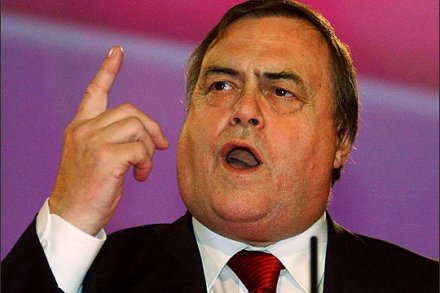
It’s John Prescott’s birthday – or Lord Prescott, as he will soon be. How odd of JP to don the ermine, given that he is on record saying that he hates titles, flunkery and ‘flooding’ the House of Lords with appointees - a practice in which he and Blair excelled as it happens.  He appeared on the Today programme this morning to defend his lordly person and was emphatically unintelligible. Listen to it; it’s a classic. You know Prescott’s the EU's environment ‘rapporteur’? Terrifying.   John Humphrys objected to Prescott’s hypocrisy, but if Prescott doesn’t want to retire from public life then he must sit in the Lords.

Climate kamikaze

From our UK edition

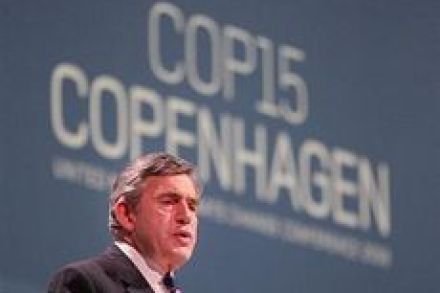
Several months ago, European leaders went to Copenhagen to save the planet. China, India and Brazil on the other hand went to the climate negotiations in Denmark to showcase the changed distribution of power in the world. Unsurprisingly, the Europeans came home empty-handed, shut out of the key negotiations and powerless despite what was meant to be a standard-setting promise of 20 percent cut in the EU's greenhouse gas emissions. The US and the rising powers struck a non-binding deal, the value of which is still being determined.

Goldsmith’s declaration of independence

From our UK edition

Make what you will of his political agenda, but I think this is quite a refreshing admission from Zac Goldsmith today: "There are various things I have said in this campaign with absolute certainty. I said there will be no Heathrow expansion under our Government, there will be no charges for parking in Richmond Park and Kingston Hospital will be safe. If any of those promises are broken I will trigger a by-election and allow people to penalise my party." It's bound to rile some of his Tory colleagues, of course – particularly this close to the election.  But one of the upshots of Parliament's recent spate of scandals is that they – and we – will have to come to accept more independent, and independent-minded, MPs.

A week to forget for Andrew Adonis

From our UK edition

The weekend cannot come quick enough for Andrew Adonis. What an awful week. The BA strike wrecked travel; the absurd Stephen Byers dragged him into the lobbying scandal; the RMT voted in favour of Bob Crow’s surreal steam-era fantasy; and today comes the coup de grace: the High Court decides that the third Heathrow runway is ‘untenable’. Transport is beginning to make Northern Ireland look like a soft brief, but Adonis hides his perturbation. He responded to this morning’s news by saying: "I welcome this court ruling. Heathrow is Britain's principal hub airport. It is vital not only to the national economy but also enables millions of citizens to keep in touch with their friends and family and to take a well-deserved holiday.

A cosmic comedy

From our UK edition

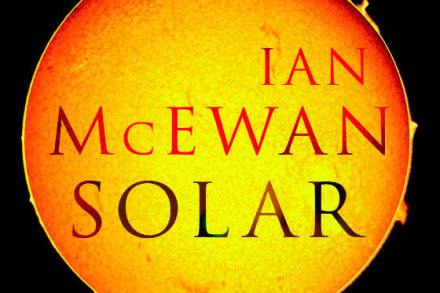
Not long ago I had an email from a friend, wondering if I’d yet read the new Ian McEwan. Not long ago I had an email from a friend, wondering if I’d yet read the new Ian McEwan. ‘Talk about a bolt from the blue,’ she said. ‘McEwan does slapstick. I never saw that coming.’ She added (unfairly, I thought) that you might class On Chesil Beach as slapstick of an unintentional sort, but her point holds. Here, in a book around a scientific theme of considerable seriousness — global warming and renewable energy — McEwan has written the closest thing he’s ever done to a farce. Told in three chunks, spaced at intervals between 2000 and 2009, Solar is the story of a Nobel-prize-winning physicist on a slow slide to disaster.

Rationalism enters the climate change debate

From our UK edition

I have been gripped by The Guardian’s climate change investigation and reporting these last few days. We do like to tease George Monbiot but he was one of the first to denounce spinning of the data and science by the University of East Anglia’s climate unit. It’s a mark of his professionalism and seriousness: global warming is a cause important to him, and he resents attempts to misrepresent things by his own side, or by his enemies. The Guardian seems to take the same view, and has sent David Leigh and others out on the investigation trail, and the final in the four-part series is printed today. It shows how the debate is changing – a topic brilliantly explored by Matt Ridley in his cover piece this week.

Oh no, the Tories are consulting Lord Stern

From our UK edition

According to Laura Kuenssberg, Lord Stern is not an official advisor but confirms that he is consulting with the Tories on their climate change policy. As Iain Martin notes, what bizarre timing. The UEA and IPCC scandals simmer and Ed Miliband recently declared war on reason – which has almost certainly reduced James Delingpole to tears of fear. Even more extraordinary, The Sunday Telegraph reported that findings in the Stern report, which defined climate change policy, were “severely edited” before publication. ‘But it can be revealed that when the report was printed by Cambridge University Press in January 2007, some of these predictions had been watered down because the scientific evidence on which they were based could not be verified.

It’s war!

From our UK edition

Politicians have to shout to be heard over the lurid tale of John Terry's bordello, but Ed Miliband’s fervour for climate change is sufficiently shrill. He has declared “war” on “sceptics”, who have been rather jaunty of late. As Fraser noted yesterday, the press’ climate change narrative is shifting – scepticism, in its proper sense, is replacing blind subscription. In this context, Miliband’s comments are extraordinary. His intellectual complacency is irritating, his sanctimony nauseating and his hypocrisy palpable. “It's right that there's rigour applied to all the reports about climate change, but I think it would be wrong that when a mistake is made it's somehow used to undermine the overwhelming picture that's there.

George Monbiot’s Alternative Universe

From our UK edition

George Monbiot isn't everyone's cup of char, not least in these parts. I don't write much about climate change because the subject* bores me and so I'm happy for Monbiot to promise that the end of the world is just around the corner and I don't spend too much time worrying about it. I suspect, for what little it's worth, that he's an anti-Cassandra: wrong but believed. Anyway, I do write about American politics so I feel confident in saying that Monbiot doesn't appear to know anything about the realities of life in Washington. In his Guardian column this week he complains that Copenhagen was a dud and that: The immediate reason for the failure of the talks can be summarised in two words: Barack Obama.

I blame Bono for the Copenhagen failure

From our UK edition

So who or what is to blame for the failure of the Copenhagen gathering to achieve what most people hoped for? Polly Toynbee says that the nature of politics is to blame. Personally I blame U2’s Bono. I don’t blame him for the failure of world leaders to agree a legally-binding agreement, of course. But I do blame him for the unrealistic expectations that were raised in the run-up to the meeting. Issue-based campaigning, of which the climate change movement is the latest example, came into its own with the debt-relief campaign of Jubilee 2000, which the Irish singer spearheaded.

The relevance of politics

From our UK edition

This morning's papers share a unifying theme: the failure of political leadership to secure a deal at Copenhagen. Now, I applaud politicians for not succombing to enormous pressure and making a series of pledges that would risk grinding the world's poor ever deeper into the dirt. For those who take a different view, it is not that politicians have failed, but that high politics is an irrelevance, a vanity. I know Coffee Housers loathe her opinions, but Polly Toynbee is at her polemical best today. She writes: 'Politics is being weighed in the balance and found wanting. The writing is on the wall. The leadership required within and between each nation is heavier lifting that the weak machinery of governmental power can manage.

The spectre at the climate change feast

From our UK edition

Today the TaxPayers' Alliance is releasing a new report which sets out the huge and excessive burden that green taxes impose on families and business across the UK. At the moment, 14 percent of domestic bill costs are the result of climate change policies.  Increasing the price of energy hits the poor and elderly hardest - which, in turn, increases poverty and benefit dependency.  At the same time, 21 percent of industrial electricity bills are the result of climate change policies.  If we want to make our economy less dependent on financial services, driving up a major part of many manufacturing firms' costs isn't the way to do it. Despite these costs, the current approach doesn't appear to be achieving the desired cuts in emissions.

Should Prince Charles be getting involved in the Copenhagen debate?

From our UK edition

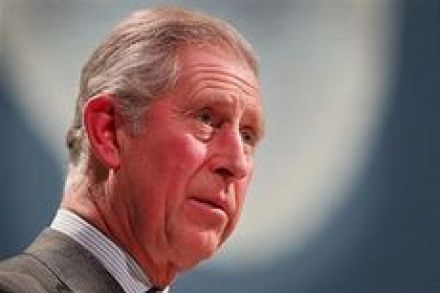
I’m of the view that climate change is happening and that the evidence suggests that man’s actions are playing a significant role in this. I’m even in favour of a carbon tax to deal with the problem. But I’ll admit that this is a political issue as well as a scientific, and one that will become more politicised in the years to come. All of which makes me wonder if it is wise for Prince Charles to have gone to Copenhagen to warn that there are “only seven years before we lose the levers of control”. In his speech, the Prince proposed a series of measures designed to combat global warming and threw his name and position behind the International Investor Statement on Climate Change.

My week as a climate change denier

From our UK edition

The Spectator’s Global Warming special is only in the shops for a couple more days.  If you’ve missed it – or if you still need convincing to buy it – here’s an extended version of the article by Amanda Baillieu from within its pages: When a work colleague sent a tweet to his 2000 followers comparing me to Nick Griffin I realised I was heading for my Jan Moir moment. A few days before, I had written an opinion piece with the rather attention seeking headline Is global warming hot air?  I’d wanted to see if my readers, who are mainly architects, agreed with the line now adopted by the Royal Institute of British Architects (RIBA) that ‘man made’ climate change is the greatest challenge facing the profession.

Copenhagen dispatch

From our UK edition

I make my second foray into the climate debate with trepidation. But visiting Denmark a few days before COP 15, it is impossible to escape the subject. Whether I speak to friends, family or strangers on the bus, everyone has a view and wants to share it. TV coverage of the forthcoming climate talks is relentless and there is even a separate passport queue for COP participants at Copenhagen’s stylish airport.   The latest “story” to emerge has pitted the new Climate Change Minister, the former commentator Lykke Friis against the Speaker of Parliament, Thor Pedersen. Though they are both from the same centre-right/liberal party, Mr.