Classical music

The best recordings of the Goldberg Variations

From our UK edition

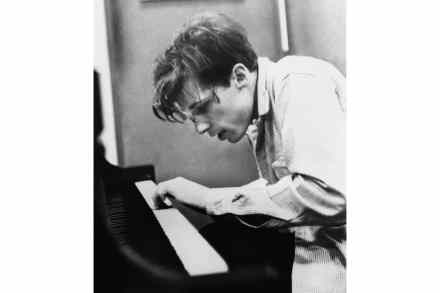
I sometimes think the classical record industry would collapse if it weren’t for the Goldberg Variations. Every month brings more recordings of Bach’s monumental, compact and rhapsodic keyboard masterpiece. And that’s impressive, given that nowhere else does the composer demand such sustained technical brilliance from the performer, who must execute dizzying scales and trills that wouldn’t sound out of place in one of Liszt’s fantasies. If the Goldberg Variations are an ordeal for harpsichordists, they’re a bloody nightmare for pianists, because they have to tackle music written for two manuals on just one. Their fingers tumble perilously over each other; it looks a bit like high-speed knitting.

A terrific night of opera: Zanetto/Orfeo ed Euridice, Arcola Theatre, reviewed

From our UK edition

For a one-hit composer, we hear rather a lot of Pietro Mascagni. His reputation rests on his 1890 debut Cavalleria Rusticana, the one-act Sicilian shocker that’s usually yoked (not always to its advantage) to Leoncavallo’s Pagliacci. But in recent years we’ve also seen the cod-medieval car crash of Isabeau, and a couple of outings for Iris, an opera that fuses orientalist opulence with tentacle porn, but not in a good way. In fairness, there have been winners too: Opera Holland Park revived L’amico Fritz in July, and this sun-kissed romcom about an Alsatian cherry farmer slipped down like a Negroni with audiences thirsty for a strong, sweet triple-shot of escapism, verismo-style.

Opera della Luna is a little miracle: Curtain Raisers at Wilton’s Music Hall reviewed

From our UK edition

Arthur Sullivan knew better than to mess with a winning formula. ‘Cox and Box, based on J. Maddison Morton’s farce Box and Cox’ reads the title page of his first comic opera, composed to a libretto by F.C. Burnand a good five years before he latched up with W.S. Gilbert. ‘Those boys hit on a brilliant idea,’ Billy Wilder is supposed to have said when he saw the musical that Andrew Lloyd Webber and Don Black had created from his movie Sunset Boulevard. ‘They didn’t change a thing.’ Gilbert’s comic beats are sharper and faster; and he’d doubtless have shortened it by about 15 minutes.

A short history of millionaire composers

From our UK edition

Let me tell you about the very rich. They are different from you and me, though if you’ve spent much time in the world of classical music, and you hadn’t realised just how different, you could do worse than attend an opening night at Grange Park Opera. True, Grange Park’s founder, Wasfi Kani, is famously adept at cultivating donors: you don’t build an opera house on the late Duchess of Roxburghe’s Surrey estate without a certain fundraising flair. It was when Joanna Lumley shimmered on stage in a midnight-blue ball gown and suggested that we might each like to leave the company at least £25,000 in our wills that I really choked on my prosecco.

Comedy genius: Garsington Opera’s Le Comte Ory reviewed

From our UK edition

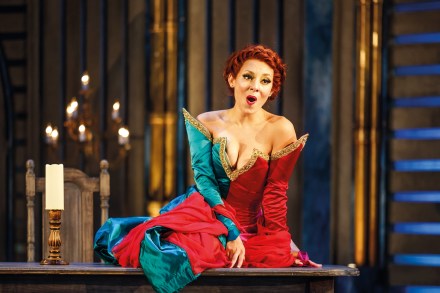
Melons. An absolutely cracking pair of melons, right there on a platter: the centrepiece of the banquet that the chaste, all-female inhabitants of the castle of Formoutiers have provided for their surprise guests, a band of nuns. Except these sisters all seem to be singing well below the stave, and judging from the way she adjusts her crotch, Mother Superior has something more than a chastity belt beneath her habit. We all know where this is going. You can’t get your melons out on stage unless, sooner or later, some great hairy bloke in a wimple is going to shove them down his front. It’s the law.

The legend of forgotten musical genius Mieczyslaw Weinberg

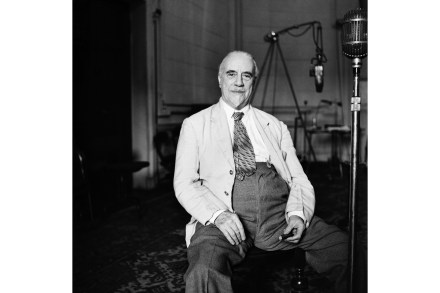
Imagine a John Le Carré thriller — one of the Cold War ones, not the tedious lefty morality tales — in which we meet Moisey Vainberg, a Polish Jewish composer who defected to Russia in 1943 while the rest of his family was wiped out in the Holocaust. He dresses like a mid-level bureaucrat and seems nervous about drawing attention to himself. That’s sensible, given that under Stalin he was thrown into jail for ‘Jewish bourgeois nationalism’. Then he’s rehabilitated, his music enjoys a brief vogue, he’s performed by Rostropovich, Shafran, Gilels, Kogan and the Borodins — but he never boasts or promotes himself. A few recordings reach the West, but the critics wrinkle their noses.

Weinberg

The promoter the critics love to hate: an interview with Raymond Gubbay

From our UK edition

When Raymond Gubbay left school, he was articled to an accountant’s firm. Fascinated by opera and depressed at the prospect of life as a Golders Green beancounter, he wriggled out of it in a matter of months, and into an assistant’s job at Pathé Newsreels. Sensing that newsreels had a looming expiry date, he asked Arnold Wesker (a family friend) to wangle him an interview with Victor Hochhauser, Britain’s leading promoter of mass-market classical concerts. Hochhauser sat behind a desk in his office above a fridge shop in Kensington and asked the 17-year-old Raymond three questions. Where did you go to school? Are you a Jewish boy? And can you start on Monday? Six decades later, even three questions feel unnecessary.

A new recording throws fresh light on Mahler’s puzzling Tenth Symphony

From our UK edition

There are many Symphonies No. 10 by Gustav Mahler, or none. The situation is rare, if not unique, in the history of music. Basic facts: Mahler finished the Ninth Symphony and Das Lied von der Erde in the summer of 1910. At the same time he discovered that his wife Alma was having an affair with Gropius, and that he had an incurable heart complaint and hadn’t long to live. One might have thought that these last two completed works are as movingly valedictory as anything ever written, but Mahler’s view was more complicated than that, and he immediately set about writing a Tenth Symphony. Over and among the notes, he scrawled messages to Alma, God and even the Devil, anguished pleas and expressions of despair.

Josquin changed musical history – why don’t we hear more of him?

From our UK edition

Stepping into the Sistine Chapel, the choir loft is probably the last thing you’d notice. ‘Loft’ is, frankly, a stretch for what amounts to a small alcove with a wooden bench, carved out of the chapel’s wall. But if you made your way up there and ran your hand over the stone you’d feel something unexpected. Etched into the wall in haphazard graffiti are hundreds of names. In most cases the carvings are all that remain of centuries of singers from the papal choir. But one is different: ‘JOSQUINJ’. Chances are it’s the only surviving signature of Josquin des Prez — a composer whose name and legacy are carved just as deeply into the history of music itself. This August marks the 500th anniversary of Josquin’s death.

Are Mozart’s forgotten contemporaries worth reviving?

From our UK edition

There are worse fates than posthumous obscurity. When Mozart visited Munich in October 1777, he was initially reluctant to visit his friend, the Bohemian composer Josef Myslivecek. Myslivecek was in hospital, undergoing treatment (as he told it) for a facial cancer brought on by a recent coach accident. But this being the 18th century, and Myslivecek having a reputation as a gallant, Mozart suspected venereal disease. When he finally appeared at Myslivecek’s bedside, he was appalled by what he saw: ‘The surgeon, that ass, has burned off his nose! Imagine the agony he must have suffered.’ Within four years, the luckless — and noseless — Myslivecek had died in poverty, aged 43. His music effectively died with him.

Where to start with the music of Ethel Smyth

From our UK edition

I’m reminded of an old Irish joke. A tourist approaches a local for directions to Dublin. The local, after much teeth-sucking and head-scratching, eventually replies: ‘Well, I wouldn’t start from here…’. The news that, 75 years after her death, English composer Ethel Smyth has won a Grammy Award for her last large-scale work The Prison is as excellent as it is unexpected. But it’s also frustrating because, well, if I were setting out into Smyth for the first time, I really wouldn’t start from there.

Community music-making is the jewel in the British crown

From our UK edition

Music is a universal language. The style that has enraptured me since childhood, classical music, has always had an international dimension, and has taken me around the world in the decades since. But even in those early boyhood encounters I became aware of music and musicians from many different lands and eras. Apart from the beauty and excitement of the music itself, the art form became an early gateway for me to languages, history, geography, philosophy, theology and much more. There were clearly a lot of Germans to grapple with (Bach, Beethoven, Brahms) — and some French (Debussy, Ravel) —as well as Italians (Vivaldi, Verdi) and lots of Russians too (Tchaikovsky, Stravinsky, Shostakovich). But where did my own country figure in all of this?

My favourite failed podcasts

From our UK edition

The promise of the internet was supposed to be thus: you could be your own bizarre, inappropriate self, and you would find a community of the likewise bizarre and inappropriate. You put yourself out there, and you will find what you consider unique or intolerable to be mundane and perfectly within the bounds of acceptable behaviour. But look, some of us went online, we said our things, and the internet responded: what the hell is your problem, truly why would you say something like that? There are a lot of reasons online projects fail, from lack of funds to real life intruding on your time to realising you just don’t care that much any more. But let’s not forget the power of realising you actually are a total weirdo in tracking the demise of creative endeavours.

Three new releases that show the classical recording industry is alive and well

From our UK edition

Rachmaninov’s First Symphony begins with a snarl, and gets angrier. A menacing skirl from the woodwinds, a triple-fortissimo blast from the brass, and then the full weight of the strings, hammering out one of those doomy Russian motto-melodies like lead boots dragging you to the bottom of the Neva. ‘Vengeance is mine; I shall repay’ glowers the epigraph that Rachmaninov inscribed at the top of the score, and you’d better believe it. The symphony’s première in 1897 was a disaster that stunned the 23-year-old composer into near-silence.

Astonishing, relentlessly pleasurable rediscovery – tantric opera: Luigi Rossi’s Il Palazzo incantato reviewed

From our UK edition

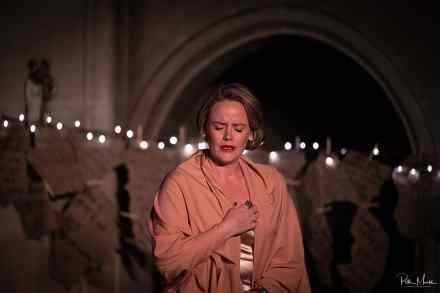
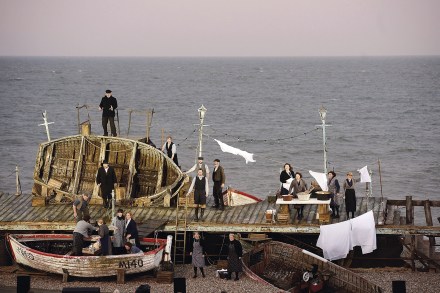
I don’t say this lightly, but after 20 years of opera-going, Luigi Rossi’s Il Palazzo incantato might just be the most baffling opera I’ve ever seen. And I’ve seen Stockhausen’s Licht. It starts with 27 named roles and originally featured no fewer than ten castrati among its cross-dressing, all-male cast. This operatic game of Twister was premièred in Rome in 1642, where it originally played out over seven scintillating hours and nearly 3,000 verses of poetry written, incidentally, by the man who would go on to become Pope Clement IX.

Perfect English songs in fresh new colours: Roderick Williams sings Butterworth

From our UK edition

Another week, another online concert; and since orchestral music seems likely to be confined to screens and stereos for a while longer, one might as well try and experience something new. But not too new — I’ve pretty much had it up to here with the present. The Hallé orchestra is currently streaming a collection of Shropshire Lad songs by George Butterworth, conducted by Sir Mark Elder and sung by the baritone Roderick Williams in orchestral versions of his own creation. That seems ideal: music by the most perfect of English classical songwriters, in fresh and unfamiliar new colours. And time spent with an artist as likeable and intelligent as Williams is never wasted.

The two composers who defined British cinema also wrote inspired operas

From our UK edition

It’s my new lockdown ritual. Switch on the telly, cue up the menu and scroll down to where the vintage movies gather — Film 4, or the excellent Talking Pictures TV. Then search through their early-hours offerings, and press ‘record’ more or less at random. Gainsborough costume flicks; Rattigan adaptations; anything with John Mills in a submarine — it’s all good. Then, next day, trawl through the catch to see what’s surfaced, and who wrote the music. On a good night you might get Vaughan Williams in 49th Parallel, Richard Rodney Bennett in Billy Liar or — bewilderingly — the fire-breathing serialist Elisabeth Lutyens, keeping herself in cigarettes and brandy with scores for The Skull or Dr Terror’s House of Horror.

From bad joke to 21st-century classic: the best recordings of Korngold’s Violin Concerto

From our UK edition

Erich Korngold was what you might call an early adopter. As a child prodigy in Habsburg Vienna, he’d astonished the world: a schoolboy composing orchestral scores that made Elektra sound tame. Jump ahead three decades, and Korngold, in his fashion, was still ahead of the curve. He was one of the first residents of Toluca Lake, North Hollywood, to buy a television. There wasn’t much to watch in 1947, but (according to Korngold’s biographer Brendan Carroll) Jascha Heifetz would drive over anyway from Beverly Hills, and the two exiles — the former protégé of Gustav Mahler, and the greatest violinist on earth — would sit there glued to the live wrestling.

The music we need right now: James MacMillan’s Christmas Oratorio reviewed

From our UK edition

The two most depressing words in contemporary classical music? That’s easy: holy minimalism. I know, I know. Lots of people love the stuff, and I wish them joy. But the notion that one simply jettisons the whole western tradition of struggle, of purpose, of wholehearted emotional argument — and that the greatest and most crucial of human questions can be answered by a mush of soothing stylistic mannerisms — well, I’ve tried and so far I just can’t do it. I can’t simply tune in and drop out amid a haze of Yankee Candle harmonies. I hear those static choral clusters and watery melismas, and it feels like being suffocated in velvet. Silently, the spirit begins to scream.

British opera companies and orchestras must start investing in native talent

From our UK edition

Early in 1946, two men boarded a train at Euston and went trawling for talent. Audition notices were posted at town halls up and down the land: singers wanted, no experience required. Two thousand applied. One town after another, they lined up for Karl Rankl, Covent Garden’s music director, and David Webster, its general manager. Those who sang in tune were hired, £8 a week for chorus, £40 for soloists. An organist in a Harrogate church was appointed chorusmaster. ‘At Carmen rehearsals,’ recalled Constance Shacklock, a farm girl from Nottinghamshire and future star, ‘none of us had ever seen a Carmen before, let alone sung one.’ By mid-year, Covent Garden had a credible opera company.