Classical music

Schoenberg owes his survival to crime drama

From our UK edition

George Gershwin once made a home movie of Arnold Schoenberg grinning in a suit on his tennis court in Beverly Hills but, sadly, never filmed one of their weekly matches. According to one observer, the composer of ‘I Got Rhythm’ played with languid strokes in a ‘nonchalant and chivalrous’ manner against the ‘choppy, over eager’ strokes of the creator of Erwartung. That figures. But how odd that the two men should be friends and passionate admirers of each other’s work. Gershwin paid for the first recording of Schoenberg’s gnarliest string quartet, the Fourth; when the younger man died, Schoenberg described him as ‘a great composer’ and expressed ‘the deepest grief for the deplorable loss to music’.

Heartfelt and thought-provoking: Eugene Onegin, at the Royal Opera, reviewed

From our UK edition

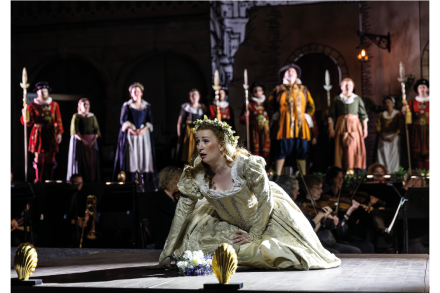
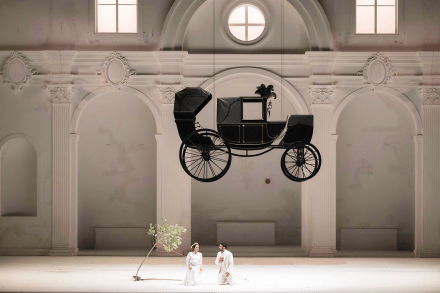
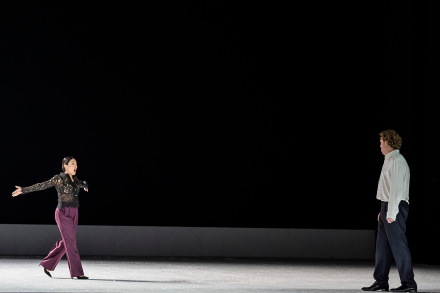
The curtain is already up at the start of Ted Huffman’s new production of Eugene Onegin. The auditorium is lit but the stage is in darkness and almost bare. Gradually, as Tchaikovsky’s prelude sighs and unfurls, the stage brightens and the theatre grows dim. But not before Onegin (Gordon Bintner) – tousle-headed and in a designer suit – has walked out, bowed to the house and retired to a chair at the back of the stage, to wait for the story to call him to life. Any competent maestro can whip up a big noise, but it’s a lot harder to make meaning out of silence Russophiles have grumbled for years about the way Tchaikovsky trimmed and tidied Pushkin’s raffish first-person narrative into seven self-contained ‘lyrical scenes’.

‘Some pianists make me shake with anger’: Vikingur Olafsson interviewed

From our UK edition

At the BBC Proms this year, an Icelandic pianist dressed like a Wall Street broker played a slow movement from a Bach organ sonata that had the audience first gasping and then stamping their feet. This was an encore to a performance of the Schumann Piano Concerto that neither milked the poetry nor romped thrillingly through the finale – and that, too, nearly had the Prommers throwing their underwear at the shy soloist. How do you explain the phenomenon of Vikingur Olafsson? At first glance, he fits the mould of the bespectacled scholar-pianist who recoils from vulgarity – a young Alfred Brendel or Richard Goode, say, whose Beethoven or Schubert cycles have the cognoscenti underlining felicities in the score. ‘The Goldbergs are the hardest piece.

A box set for those on the spectrum: Markus Poschner’s Bruckner Symphonies reviewed

From our UK edition

Grade: B+ Anton Bruckner wrote 11 symphonies – Numbers One to Nine plus a student exercise and the formidable rejected symphony endearingly known as ‘Number 0’, actually finished between the First and Second. So why does this 200th anniversary cycle conducted by Markus Poschner, divided between the Bruckner Orchester Linz and the Vienna Radio Symphony Orchestra, run to 18 CDs? The answer is that it gives us two versions of Numbers One, Two and Eight, and three of Numbers Three and Four. The composer, generally agreed to have been ‘on the spectrum’, was hypersensitive to criticism and compulsively rewrote his symphonies in an attempt to tighten them up and silence his mean critics.

Manacorda’s thrills and spills at Prom 72

From our UK edition

At a Hollywood party in the 1940s, the garrulous socialite Elsa Maxwell spotted Arnold Schoenberg, then teaching music at UCLA, looking miserable. So she pushed him towards the piano with the words: ‘Come on, Professor, give us a tune!’ I couldn’t help thinking of those words on Friday night, when we heard the first Proms performance of a symphony written in 1847 by a professor at the Paris Conservatoire. The Third Symphony of Louise Farrenc is full of well-crafted melodic lines, neatly configured to fit maddeningly predictable textbook chord progressions. It’s delicately orchestrated, but even the feathery flutes of the Orchestra of the Age of Enlightenment couldn’t disguise the professor’s failure to give us a single memorable tune. This is not a popular opinion.

A lively showcase for a great central European orchestra at the Proms

From our UK edition

As the Proms season enters the home straight, it’s moved up a gear, with a string of high profile European guest orchestras. First up was the Czech Philharmonic playing Suk’s Asrael Symphony under Jakub Hrusa before moving on to Janacek’s Glagolitic Mass the following night. These grand, glittering monuments of Czech music were garnished with a couple of relative rarities – Dvorak’s Piano Concerto, played by Mao Fujita, and the Military Sinfonietta, composed in 1937 by (the then 22-year-old) Vitezslava Kapralova, who died at the age of 25. It’s unmistakably the work of a young composer. Xylophone?

The unstoppable rise of stage amplification

From our UK edition

Recent acquisition of some insanely expensive hearing aids aimed at helping me out in cacophonous restaurants has set me thinking about the extent that modern life allows us to filter our intake of noise. This is big business. As sirens wail and Marvel blockbusters and rock concerts crash through legal decibel levels, controlling sound levels has become an increasingly sophisticated operation, abetted by everything from silicone pastilles and the volume-control knob to the wireless earbud.

The Stockhausen work that is worth braving

From our UK edition

Grade: A- One of the best one-liners attributed to Sir Thomas Beecham refers to the stridently avant-garde Karlheinz Stockhausen: ‘I’ve never conducted his music, but I once trod in some.’ It’s almost certainly apocryphal, but the implied verdict is widely shared. Stockhausen played up to the caricature of the self-obsessed ‘squeaky gate’ composer, though his capacity to create painful noises went way beyond squeaks: only he could have written a string quartet in which each player is recorded in a separate helicopter. So I’m sticking my neck out when I suggest that some of Stockhausen’s works are masterpieces that can be enjoyed even – or especially – if you steer clear of the thicket of mathematics, physics and astrology that surrounds them.

In defence of Gilbert & Sullivan’s The Grand Duke

From our UK edition

Artistic partnerships are elusive things. The best – where two creative personalities somehow inspire or goad each other to do better than their individual best – can seem so natural that they’re almost easier to identify by their absence. No one’s queuing up to revive Richard Rodgers’s Rex (lyrics by Sheldon Harnick). Pretending to rate Band on the Run above Revolver is a fun way to wind up boomers, but c’mon – honestly? With Gilbert and Sullivan, meanwhile, recordings have given us the chance to rediscover Grundy and Sullivan’s Haddon Hall and Gilbert and Cellier’s The Mountebanks: turkeys both.

Children have the Proms. Grown-ups head to Salzburg. Snob summer

From our UK edition

Salzburg Festival doesn’t mess about. The offerings this year include an adaptation of Thomas Mann’s Magic Mountain in Lithuanian, a Soviet-era operatic treatment of Dostoevsky’s The Idiot, and Igor Levit tackling one of the Himalayan peaks of the piano rep. Kiddies, meanwhile, could enjoy the children’s opera Die Kluge (brilliantly done), a Nazi-era allegory on the rise of Hitler by Carl Orff, a composer they love here but whose politics are shall we say, um, complicated. (Pleasingly, I’m not sure the festival understands the concept of cancellation.) People always think Salzburg is pretty and fun. It’s not. It’s dark and primal, with a festival that is far more uncompromising and exhilarating than a global-elite bun-fight in provincial Austria has any right to be.

Forget the Proms and Edinburgh – the Three Choirs Festival is where it’s at

From our UK edition

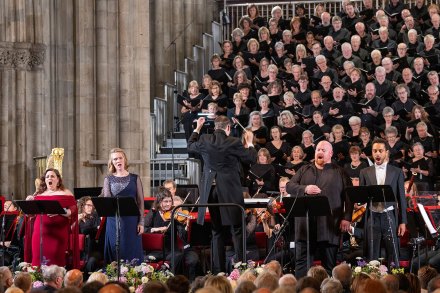
The Proms have started but there is a world elsewhere, and in Worcester Cathedral the 296th Three Choirs Festival set sail with a concert that couldn’t have happened anywhere else. A few years back I caused grave offence when I described the Three Choirs as a ‘home of lost causes’; as if, coming from The Spectator, that could ever be anything but a compliment. In truth, there’s still no classical music festival that provides such a sense of being plugged into a vital and ancient tradition – of being so close, as Elgar put it to ‘the living centre of music in Great Britain’.

The most exhilarating ‘authentic’ Mozart I’ve ever heard

From our UK edition

Grade: A+ Yet another double bill of Mozart’s Piano Concertos 20 and 23! There’s an online database of 185 recordings of the first of these, the brooding K466 in D minor, and the classically perfect K488 in A major isn’t far behind. Can there really be anything new to say about either of them? The answer is yes, and in virtually every bar. Olga Pashchenko, a Russian-born pianist based in the Netherlands, here directs the top-flight period ensemble Il Gardellino in her second album of Mozart concertos. She’s playing a fortepiano, but don’t let that put you off: it’s a sweet-toned instrument whose soft action helps Pashchenko deliver cheeky ornaments at lightning speed. And cheeky is definitely the word.

An ensemble achievement that dances and sparkles: Glyndebourne’s Giulio Cesare reviewed

From our UK edition

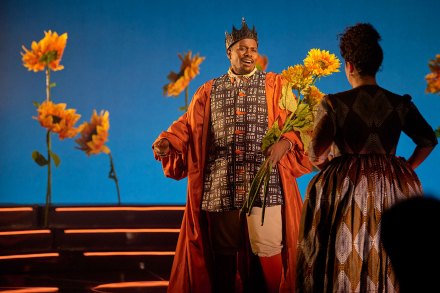
A classic opera production ages like wine. When David McVicar’s staging of Handel’s Giulio Cesare first opened at Glyndebourne in 2005, Michael Tanner – writing in these pages – loathed it. ‘A quite hateful betrayal’ was how he described a production that is now widely regarded as a classic. It would be easy to brandish those words now he’s gone – ha ha, no one ever erected a statue to a critic – ignoring the truth that any first night review can only ever be a snapshot, and that the big story back then was the hyperactive, neon-lit debut of Danielle de Niese as Cleopatra. Tanner did predict that de Niese would do well out of it, though no one guessed that she’d end up marrying the owner of the theatre.

Buy this for Beethoven’s beguiling arrangements of British folk songs

From our UK edition

Grade: B+ Beethoven was proud of his Triple Concerto for Violin, Cello, Piano, pointing out that no one else had attempted such an experiment. He was writing at the height of his youthful powers and the work is stuffed with earworms. Yet I can’t think of any later composers who copied that particular model, and you can’t blame them. This is essentially a concerto for piano trio and full orchestra – not an easy combination, because the soloists keep having to pass the baton to each other while bracing themselves for the next orchestral tutti. Nicola Benedetti, Sheku Kanneh-Mason and Benjamin Grosvenor make a really good job of it; Kanneh-Mason’s cello glows as memorably as it did in his Elgar Cello Concerto.

An exhilarating debut: Peltokoski’s Mozart Symphonies reviewed

From our UK edition

Grade: A- Here’s an oddly structured album of Mozart’s symphonies 35, 40 and 36 from the world’s most fashionable young Finnish conductor – and, no, it isn’t Klaus Makela, the 28-year-old maestro of the Oslo Philharmonic and Orchestre de Paris who’s taking over in Amsterdam and Chicago. It’s Tarmo Peltokoski, 24, who hasn’t yet had to cope with iffy reviews hinting that he’s been overpromoted. Peltokoski is cute, clever and scarily self-assured. He’s already music director of the Latvian National Symphony Orchestra and is about to hold the same position in Toulouse. He’s principal guest conductor of the Rotterdam Philharmonic and also the Deutsche Kammerphilharmonie Bremen, the Mercedes-Benz of chamber orchestras.

When Fauré played The Spectator

From our UK edition

Gabriel Fauré composed his song cycle La bonne chanson in 1894 for piano and voice. But he added string parts later and he premièred that version in April 1898 at the London home of his friend Frank Schuster: 22 Old Queen Street, the building currently occupied by this very magazine. I’m not sure how much Fauré gets played at Spectator HQ these days; his music certainly hasn’t been a feature of recent summer parties. Perhaps Fauré himself caressed the ivories where James Delingpole and Toby Young now prop up the bar. Imagine Verlaine’s poetry drifting out into the garden to mingle with Rod Liddle’s cigarette smoke on the moonlit air. L’heure exquise, indeed.

Bristol’s new concert hall is extremely fine

From our UK edition

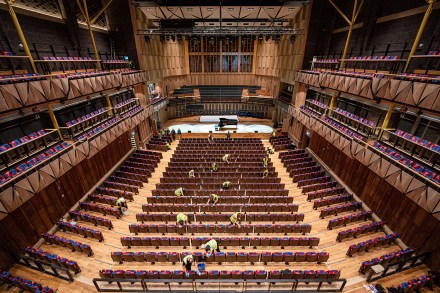
Bristol has a new concert hall, and it’s rather good. The transformation of the old Colston Hall into the Bristol Beacon has been reported as if it was simply a matter of upgrading and renaming. There were probably sound reasons for doing so, but in fact (and despite protests from the Twentieth Century Society) the postwar auditorium has been demolished outright and replaced with a wholly new orchestral hall designed on the best current principles: shoebox-shaped, with much use of wood and textured brick. Butterworth sears his melodies on to the eardrums. Isn’t it weird we still think of the Edwardians as inhibited? Acoustically, it’s extremely fine – not a glamorous sound, but a remarkably transparent one.

Meet the man who says improvisation is the key to Mozart

From our UK edition

In August 1993, the pianist Robert Levin sat down in Walthamstow Assembly Rooms with the conductor Christopher Hogwood and the Academy of Ancient Music (AAM) to record the complete piano concertos of Wolfgang Amadeus Mozart. Mozart was big – the bicentenary celebrations of 1991 had made a global impact. And Hogwood and the AAM were big too. After their groundbreaking period-instrument Mozart symphony cycle a decade earlier, the 27 piano concertos seemed like a wholly achievable ambition. What could go wrong? ‘For Mozart’s contemporaries, what surpassed even his virtuosity was his ability to improvise’ Only, as it turned out, the entire classical record industry. The project was meant to take a decade but in 2000 the record label, Decca, lost its nerve and pulled the plug.

Yunchan Lim’s Chopin isn’t as good as his Liszt or Rach

From our UK edition

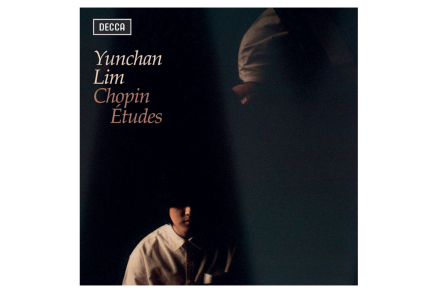
Grade: B- In 2022 the South Korean pianist Yunchan Lim became, at 18, the youngest winner of the Van Cliburn competition, displaying a virtuosity that stunned the judges. You could see conductor Marin Alsop’s astonishment as he bounded through the finale of Rach 3, combining accuracy and swirling fantasy at daredevil speed. It’s been viewed nearly 15 million times on YouTube. In truth, though, he’d have had to screw up badly not to win, because he’d already dispatched Liszt’s fiendish Transcendental Études with perfect articulation and mercurial wit; in places he out-dazzled even the current master of this repertoire, Daniil Trifonov. Decca snapped him up and here’s his first studio album: both sets of Chopin’s Études.

Across Britain punters are lapping up ultra-trad opera – the Arts Council will be disgusted

From our UK edition

Another week at the opera, another evening with an elitist and ethically dubious art form. I love it; you love it; but the authors of the Arts Council’s recent report on opera in England are less enamoured. One issue they identified was that ‘the stories which opera and music theatre tells are failing to connect fully with contemporary society’. Possibly the memo never reached the promoters of Ellen Kent’s spring tour, which since January has visited 40-odd venues not typically served by major opera companies, and has done so without public subsidy. You might imagine that the only commercial outfit to make live opera pay in Wolverhampton, Ipswich and Sunderland would have featured prominently in the Arts Council’s research, but they don’t appear to have been consulted.