Churches

Letters: What cycle helmets can tell us about face masks

From our UK edition

Masking the truth Sir: Matthew Parris is right to laud the importance of embracing the scientific method (‘Why should opinion matter more than science?’, 25 July) to determine the efficacy of face masks. However, his proposed experiment contains a significant oversight — the human factor. That is, how the very wearing of a mask (or a conscious decision not to) may itself result in behaviours that alter transmission risk. Multiple studies into the benefit of wearing a bicycle helmet provide a useful reference. Those forced to wear one by law may do so incorrectly simply to avoid a penalty. Meanwhile they may also indulge in ‘risk compensation’ — more dangerous cycling because they feel safer.
Why did we not ban Huawei earlier?

From our UK edition

‘Just rejoice’, as Mrs Thatcher once said about something else. The government’s decision to debug our national security by getting rid of Huawei is the right one (although seven years is much too long). The puzzle is why it did not happen earlier. At the end of January, I interviewed the US Secretary of State, Mike Pompeo, when he came over here. We knew by then everything we needed to know about the Chinese government’s control of Huawei and the lack of trust this must engender. The British government also heard clearly from Mr Pompeo — and from Australia — that its preference for Huawei 5G threatened the deep trust of the Five Eyes intelligence partnership. Yet it sent him away empty-handed.

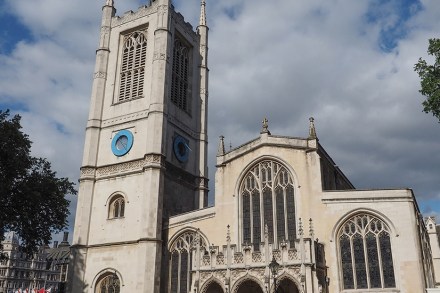
My fears for the future of my church have been realised

From our UK edition

The only memorable argument I have ever heard in that tedious debate about whether Shakespeare was a Catholic came from the poet Tom Paulin. I remember him claiming in a lecture that the ‘bare ruin’d choirs’ sonnet must have been written by someone who had seen the despoiled monasteries, desecrated churches and ravaged holy places of a faith of which they were a part. Famously, such an argument only gets you so far, for by this logic Shakespeare was also a king, empress, ex-king, sailor, magician and fool, among many hundreds of others. But part of the rationale stayed with me. Which is that the bitterest truth of all is that loving a thing does not mean you can protect it, and that even the things you consider most sacred can be trampled over.

Letters: Police must focus on deterring crime, not responding to it

From our UK edition

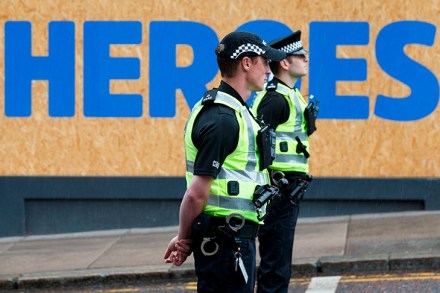
Deterring crime Sir: Rod Liddle is right to highlight the politicisation of the police as a source of their inadequacies, but I think he misses the crucial point (‘Defund the police’, 27 June). We simply do not have bobbies on the beat to even feel sympathy for, and this means that constructive relationships between a recognisable police officer and their community are a rarity. As Kevin Hurley describes, many black youths in our cities have nothing but hatred towards police officers, and this cannot be a surprise when the only interactions they have with them are being forced to empty their pockets after being suspected of criminal activity.

Michelangelo’s David must fall

From our UK edition

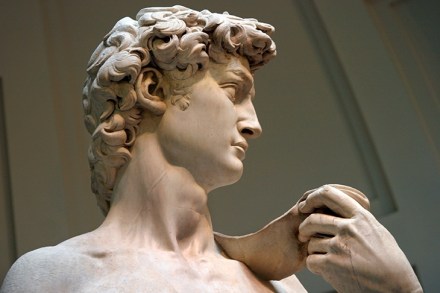
‘White Lives Matter Burnley’ said the plane’s banner as it circled the club’s stadium just after the teams had ‘taken the knee’ in support of Black Lives Matter. I must admit that my very first reaction on hearing the news was pleasure at the idea that the self-righteousness of Black Lives Matter was being guyed. My second, more considered response is that the banner was bad — and for precisely the same reason that BLM is bad. It takes a statement which any decent person would consider true and turns it into a weapon of race war. Of course black lives matter. Of course white lives matter. The question is: ‘Why are you saying it now?’ The answer, in both cases, is discreditable. It is to make one lot hate the other lot more.

Letters: Churches have risen to the challenge of lockdown

From our UK edition

Back to schools Sir: I share Lucy Kellaway’s enthusiasm for seeing school-life return and inequality gaps closed (‘A class apart’, 20 June). I was also glad that she debunked the myth that teachers have been on holiday during lockdown. It doesn’t feel like a holiday to me, as I sit contemplating a set of essays, the second set of predicted grades of the year and my annual Ucas references, not to mention daily work postings, live sessions on Microsoft Teams, Zoom staff meetings and a long list of emails. Where we depart is at Lucy’s call for a return to school at all costs, rather than the ‘blended learning’ approach she decries.

This could have been a great opportunity for the Church

From our UK edition

During these months of inertia, I confess to having on occasion made illicit trips to churches in the English countryside. Enjoying the frisson that surely accompanies all law-breaking, I have often gone so far as the church door, there to examine not only the locks and bolts but also the laminated notices which adorn so many buildings of the Church of England. The other week I visited a 12th-century church whose laminated instructions were an especially fine example of their kind. These signs informed the visitor that the church was closed due to the Covid crisis and that God can of course be worshipped anywhere, but (and this part was underlined) ‘not here’. A little harsh, that wording, I thought.

Will churches open their doors as lockdown eases?

From our UK edition

The grumbling of high church clergy should now lessen a bit. They were complaining, in some cases furiously, about the Chuch of England's decision to go further than the law required when it came to the lockdown, telling clergy not to open their churches at all, and not to broadcast services from them. Some were threatening to re-fight the Reformation over the issue, saying that low-church Welby would really rather preach from his own kitchen than admit that churches are a necessary site of authentic sacramental worship. The Church has now relaxed its rules, allowing vicars to pray in their churches and broadcast services from them. And the Church has started to think aloud about the really interesting question, of how churches should respond to the easing of lockdown.

Don’t close the churches because of coronavirus

From our UK edition

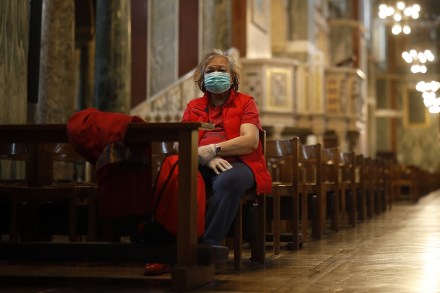
Last night, when the Prime Minister made his address to the nation he declared that places of worship would be closed – thereby putting churches on the same basis as outdoor gyms. Today a statement from the Ministry for Communities clarified that churches should stay open, for private prayer. All good, Catholics like me thought. We can sit at the back of the church, in the presence of the sacrament, and say a few prayers. Yesterday I dropped into my parish church and I found one other person there, a young man kneeling before the altar, as I’d found him the day before – an oddly moving sight. On Sunday there were all of three of us in there, sitting not so much at a social distance as an anti-social distance, at other ends of the church.

Burning Christianity

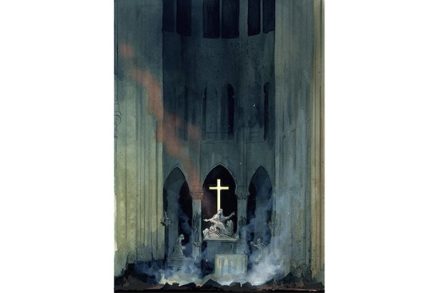
Conspiracy theories aren’t something I take seriously. But when flames engulfed Notre-Dame cathedral in Paris on the evening of April 15, 2019, my mind momentarily wandered down that path. After all, attempts to incinerate, vandalize and rob Christian churches and shrines have become so commonplace in France over the past three years that one could be forgiven for concluding that something even more sinister was afoot. In 2017 alone, according to France’s Interior Ministry, 878 acts of vandalism were committed against Christian places of worship, cemeteries and shrines. That’s an average of nearly two and a half sites being targeted every day. Government officials play down the problem.

christian