Church of england

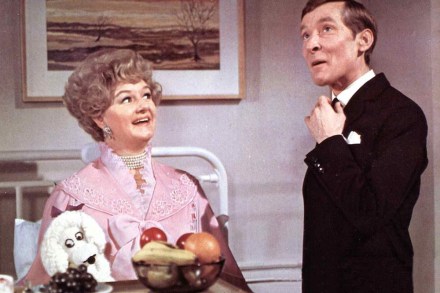
What would Kenneth Williams make of our age?

Sunday marks what would have been the 100th birthday of Kenneth Williams. It’s tempting to try to imagine what he would have been like had he lived longer, though the absurdity of our age might have been beyond even his acid observation. That’s perhaps the most interesting aspect of Williams: he can’t be imagined in the present day at all. As recent as his lifetime was, it was one so utterly bound by the 20th century as to feel distant. How so? Well, his critics would point to the Carry On films. A young and serious acting talent, coached in Shakespeare by Olivier no less, was wasted, so the argument

The stakeholder class needs blowing up

In February 1974, a frustrated Ted Heath, unable to achieve anything in government against constant opposition by the mighty trade unions, called an election. One basic question was front and centre of the campaign: ‘Who governs Britain?’ Soon the answer came back: ‘Not you, mate.’ In fact, it would take Margaret Thatcher’s victory to clip the power of the unions – but only after enormous political and economic risks were taken. With the collapse of public infrastructure, a lingering sense of decline, and Britain looking embarrassed (and embarrassing) on the world stage, comparisons to the 1970s abound today. Another similarity is the presence of an all-powerful caste. This time, however,

I decluttered a 1990s time capsule – and this is what I learnt

After my grandmother died a few years ago, we couldn’t bring ourselves to get rid of most of her possessions. What had started as a storage room at my parents’ house quickly morphed into a living, breathing pile. It gradually invaded the spare bedroom and was making encroachments into my mother’s study. Answering the call of nature at night became fraught with terror, lest the pile had become sentient and would drag me into its clutches in the small hours of the morning. It was like living in a cross between Storage Wars and a Stephen King novel. There was a whole box devoted to Diana and Charles plates and

‘Pray your boilers don’t fail’: the Church of England is in the grip of eco-zealots

It came to pass in 2020 that a decree went out from the General Synod that all the Church of England must be carbon net-zero by 2030. And this ruling was first made when Justin Welby was Archbishop of Canterbury. And all went to have a good hard look at their church heating systems, every one into his own vestry cupboard… How easy it is to issue a decree from on high; and how hard it is for the people on the ground to have to deal with its consequences. The miscreants now have to rip out the new gas boilers and replace them with an eco alternative One of

At 53, I’m training to be a priest

I have recently begun training for holy orders in the Church of England. I know, they’re getting desperate. My motivation for wanting to be a priest is selfish. I want more joy in my life. You might feel that joy is to be found in extreme sports, or pop concerts, or snorting coke from the midriffs of hookers. But I think you mean pleasure. Joy is deeper, linked to a sense of the goodness of existence. It seems to me that joy is to be found in doing cultural things. I don’t mean going to plays or art galleries; I mean cultural things that are very participatory and democratic. Things

Letters: Britain’s energy policy is unsustainable

Unsustainable energy Sir: Sir Richard Dearlove (‘Net cost’, 22 November) succinctly sums up the views of many of us who cannot understand the whole lemming-like net-zero policy. This leap into the abyss was precipitated by Boris Johnson and the torch is now carried by Ed Miliband, who seems to have carte blanche to make matters worse. The destruction of our automobile and energy industries in terms of GDP and Treasury receipts is mindless – more so in a country producing less than 1 per cent of the world’s CO2 emissions. Interestingly, Matt Ridley’s article in the same issue (‘Star power’) gives longer-term hope regarding fusion energy generation, but it will be

A satirical portrait of village life: Love Divine, by Ysenda Maxtone Graham, reviewed

Love Divine, the debut novella by Ysenda Maxtone Graham, is set in the leafy, fictional parish of Lamley Green and weaves together a tableau of stories about the community. The title comes from the hymn ‘Come Down, O Love Divine’; but beneath this bourgeois Church of England world of round-robins and milky tea is a satirical portrait of a parish with a dark underbelly. Maxtone Graham perfectly captures hypocritical English chit-chat, and the polyphony of perspectives works well. The central thread concerns Lucy Fanthorpe, 54, who is hit by the sudden death of her beloved husband Nick and the gradual realisation that he might have been having an affair. One

Georgia Toffolo: In defence of my husband James Watt

Rough justice Sir: The Church Commissioners’ plan to establish a £100 million (rising to £1 billion) fund for ‘reparative justice’ is indeed ‘the most egregious example of lanyard Anglicanism’ as your leading article says (‘Laud’s prayer’, 11 October). It is deeply flawed in conception, substance and process – and is especially ill-judged when parish clergy are atrociously paid and many parishes face an existential crisis. The critique made by the Policy Exchange paper ‘The Case Against Reparations’, written by Professor Lord Biggar, Dr Alka Sehgal Cuthbert and me, is reasonably well known. What is less appreciated is that since at least May last year, the Commissioners have known they have

Tim Shipman, Ian Williams, Theo Hobson, Lara Prendergast & Lisa Haseldine

34 min listen

On this week’s Spectator Out Loud: Tim Shipman says that the real war for the right is yet to come; Ian Williams examines the farce over the collapses China espionage case; Theo Hobson argues that the Church of England is muddled over sex and marriage; Lara Prendergast reads her letter from America; and, Lisa Haseldine goes on manoeuvres with the German army, the Bundeswehr. Produced and presented by Patrick Gibbons.

The Church of England’s muddle over sex and marriage

Whatever you think of the new Archbishop of Canterbury, Sarah Mullally, there can be no doubt about this: she firmly backs the Church of England’s current official teaching on sex and marriage. Indeed, as the bishop who was recently in charge of updating that teaching, it might be the case that she upholds it more completely and sincerely than anyone else. Perhaps some readers would like to be reminded what the Church’s current official teaching on sex and marriage actually is. It is this: marriage remains the preserve of heterosexuals. Homosexuals may have their unions blessed in church. Um… that’s it. That’s all that can be said for sure. What

What we need from our new Archbishop of Canterbury

There have been 106 Archbishops of Canterbury since Gregory the Great declared Augustine his ‘Apostle to the English’ in 597. Their number has included Catholics and Protestants, progressives and traditionalists, academics, politicians, even a tank commander. But none had ever been a woman. Sarah Mullally’s appointment is a historic moment for the Church but it comes at a moment of peril for Anglicanism. The Church of England seems to be in a state of perpetual crisis. Few would argue that it serves the world’s more than 100 million Anglicans well or that it sits at the heart of public life. Sunday attendance has fallen by 40 per cent in the

Was that Kemi Badenoch's last conference? Quite right! live from Manchester

42 min listen

This week, Michael and Maddie record Quite right! in front of a live audience at the Conservative Party conference in Manchester – with attendance down, the big question is whether Kemi Badenoch can survive as leader of the opposition. There is the unmistakable air of fatalism among MPs staring down electoral annihilation – but would another change in leadership cement the Tories as pathologically regicidal? They also debate Badenoch’s bold pledge to bar candidates who won’t back leaving the European Convention on Human Rights – a ‘calculated risk’ that could redefine the party’s identity or too little too late? Then, in the wake of the horrific Manchester synagogue attack, they

What can we expect from the first female Archbishop of Canterbury?

19 min listen

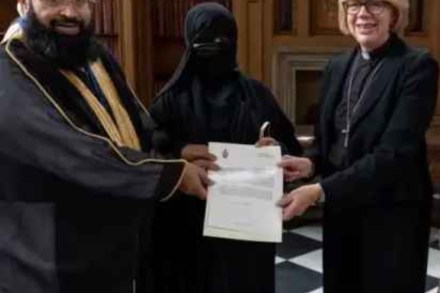
Dame Sarah Mullally has been announced as the new Archbishop of Canterbury. Previously the Bishop of London, she becomes the first woman to lead the Church in its almost 500 year history. She also had a 40 year career as a professional nurse, rising to be the most senior nurse in England and Wales. The Rev’d Marcus Walker, rector at St Bartholemew the Great in the City of London, joins Damian Thompson to react to the news – what can we expect from her leadership? Produced by Patrick Gibbons.

Letters: the Church of England still has something meaningful to say

Moscow mule Sir: While visiting Russia, James Delingpole learned from the patriarchate’s press officer that under communism the Russian Church wasn’t allowed to exist (‘Letter from Moscow’, 27 September). However, that doesn’t accord with my own experience of being in the USSR during the Brezhnev era. As a student, I visited the 14th-century Zagorsk monastery complex just outside Moscow one Sunday and was spellbound by the heavenly chant of the Orthodox liturgy which lifted my soul. The church was full of babushkas as well as younger believers crossing themselves and kissing the icons. For all his faults and human-rights violations, Brezhnev, unlike Vladimir Putin, had not been indicted by the

Reparations: the tyranny of imaginary guilt, with Nigel Biggar & Katie Lam

19 min listen

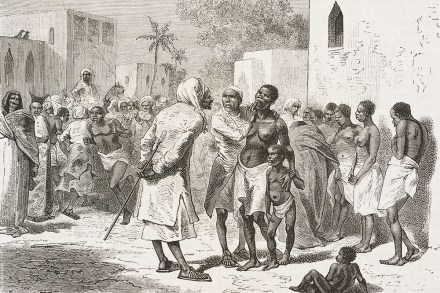
The past few years have seen growing calls for countries in the global west to pay reparations to former colonies for their role in the transatlantic slave trade. The debate over reparations was already part of the so-called ‘culture wars’, but became louder following the Black Lives Matter movement, as many groups sought to re-examine their histories. Calls for reparations have been embraced by the Church of England which set up a £100 million fund, with the aim of raising £1 billion, to pay reparations for the role the Church played in the slave trade. But do the arguments in favour of reparations really stand up? Conservative peer Nigel Biggar,

Let’s just ignore the Church of England

How important do you think it is to know what the Church of England thought about that ‘Unite the Kingdom’ march in London two weeks ago? There is a very good argument for saying it is about as meaningful and relevant as finding out what Bonnie Blue, that young lady touring the country flat on her back and welcoming anyone who fancies a bit of frictionless poking, thinks about the fractious border dispute between Thailand and Cambodia. There are many institutions in this country that are irrelevant to the great mass of citizens, but few more resolutely so than our established Church. That it is antithetical to the beliefs and

Archbishop of Canterbury: who's on the shortlist?

22 min listen

It is 10 months since the resignation of Justin Welby as Archbishop of Canterbury. Now, finally, the Crown Nominations Commission is believed to have drawn up a shortlist of candidates, and a successor to Welby could be approved by October. Theologian and author Andrew Graystone joins Damian Thompson to talk through what he calls ‘a weak list’ of potential candidates – weak because there are no obvious frontrunners and the Commission is choosing between ‘half a dozen equals’.  These range from the more talked-about Michael Beasley (Bath and Wells), Guli France-Dehqani (Chelmsford) and Rose Hudson-Wilson (Dover) [all pictured in the thumbnail] to the ‘others’: Stephen Lake (Salisbury), Martyn Snow (Leicester),

What I’ll miss about Norman Tebbit

This column comes to you from Auckland Castle, former palace and hunting lodge of the Prince Bishops of Durham. We, the Rectory Society, are here by kind permission of its saviour, Jonathan Ruffer, celebrating our 20th anniversary. Jonathan rescued the castle not from the heathen but from the Church of England. The last Anglican bishop to inhabit it was Justin Welby, in his brief year at Durham before being translated to Canterbury, but it had been run down for many years before that. Bishop Auckland is in one of the poorest parts of England but it did not occur to the Church authorities to use the heritage of this astonishing

Is God an Englishman?

32 min listen

Bijan Omrani joins Damian Thompson to talk about his new book God is an Englishman: Christianity and the Creation of England. They discuss the spiritual and cultural debt the country owes to Christianity. The central question of Bijan’s book is ‘does it matter that Christianity is dying in England?’. The faith has historically played a disproportionate role in many areas of English life that we take for granted now – for example, by shaping both charity and the welfare state. Yet this is influence is often ignored as congregations shrink and the UK slides into secularism. But are there unexpected grounds for hope? The publication of God is an Englishman has coincided with a modest but surprising

Easter special: in praise of faithful dissent, a conversation with Nigel Biggar and Mary Wakefield

24 min listen

The Easter issue of the Spectator includes two provocative articles exploring aspects of Christianity.  Nigel Biggar, Regius professor emeritus of moral theology at Oxford University, now a Conservative peer, celebrates the heroic ‘faithful dissent’ of Christian heroes such as Thomas More and Helmuth von Moltke, who lost their lives rather than defend injustice.  Meanwhile Spectator columnist Mary Wakefield interviews Roman Williams, former Archbishop of Canterbury. She’s inspired by his holiness but depressed by his use of ‘C of E bureaucratese’ to uphold liberal orthodoxy on subjects such as gender ideology. But, she says they can share an uncomfortable space together within faith. In this episode of Holy Smoke, Nigel and Mary join Damian Thompson, who