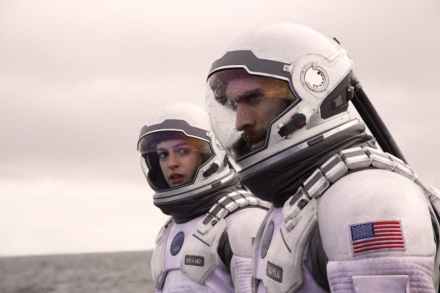
Christopher nolan

Oppenheimer and the triumph of Christopher Nolan

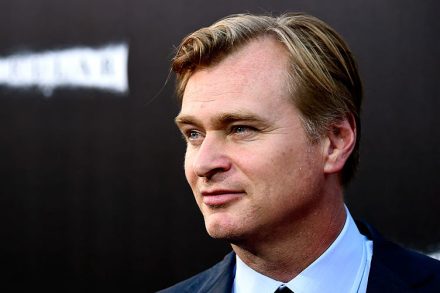
The Barbenheimer phenomenon — thought of by many as just idle chatter on the internet — has enduring power. Last weekend, Barbie and Oppenheimer earned a combined $511 million in global box office receipts; an unprecedented number where neither film is a superhero picture or a sequel. Barbie made more money, on the grounds that it’s an hour shorter and is PG-13 rated, but the vast box office success of the R-rated Oppenheimer, which made over $170 million in its opening weekend, is testament both to Barbenheimer excitement, and to the film’s very own brand: its powerful writer-director-producer, Christopher Nolan.  James Cameron aside, it is hard to think of any filmmaker who wields such power and influence in contemporary Hollywood.

Christopher Nolan

Japan deserves to see Oppenheimer

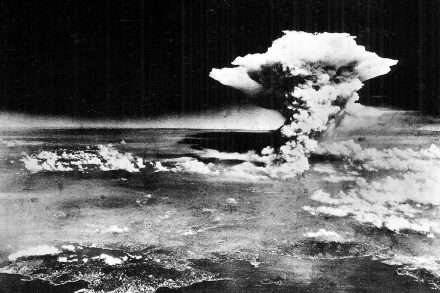
As millions of people across the world rush into cinemas this week to see Christopher Nolan’s latest epic thriller Oppenheimer, one notable country will not be part of the film’s initial release window despite the relevant subject matter — Japan. For reasons that are still unclear, Universal Pictures has not announced a Japanese release date. Yet if any place deserves to see a film based on the life of the theoretical physicist who played an essential role in developing the atomic bombs which ended World War Two, it should be the country that was most affected by them. Hollywood films being delayed for release in Japan is a very common occurrence, and it rarely ever has anything to do with politics.

japan oppenheimer
oppenheimer

Oppenheimer’s passenger

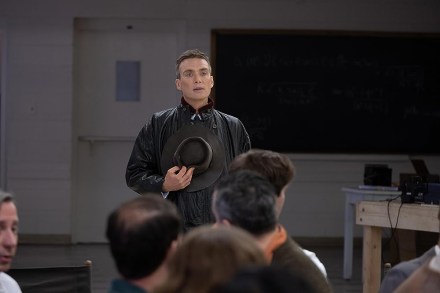
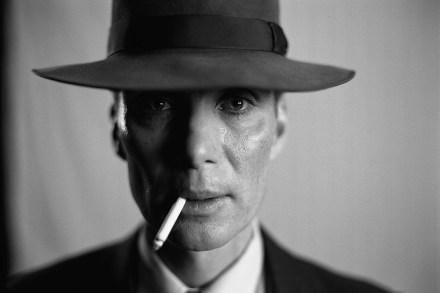
Ripples appear in courtyard puddle outside the Cavendish Laboratory at the University of Cambridge; a tornadic funnel erupts from the black atmosphere toward Earth. Between these images — the small one of intimate life and the colossal one of planetary death — a haunted young man looks on in curiosity and horror.  The man is Robert Oppenheimer, played to perfection by Cillian Murphy, a theoretical physicist “troubled by visions of a hidden universe.” This visionary, capable of conjuring apocalypse from the particles stowed inside atoms, spends the first fifteen minutes of the film looking bewildered — a gaunt, gray sliver of a man wandering through his life like a ghost.

The last stand for intelligent films?

This week, Christopher Nolan’s new picture Oppenheimer began production. Its star-studded cast features everyone from Cillian Murphy as the theoretical physicist J. Robert Oppenheimer to Emily Blunt (as his wife Katherine) to Matt Damon (Manhattan Project director Leslie Groves) to Robert Downey Jr. (as Oppenheimer’s nemesis Lewis Strauss), with Florence Pugh, Rami Malek and Kenneth Branagh in support. Nolan has been granted a $100 million budget by his new studio, Universal, after angrily leaving Warner Bros. in a row over their decision to deny their 2021 pictures an exclusive theatrical release. The implication is clear: Oppenheimer will be a very big deal indeed. Nolan himself possesses a unique level of influence in contemporary Hollywood.

christopher nolan oppenheimer

Christopher Nolan wants to save cinema

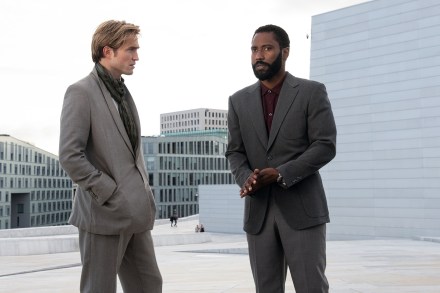
Few filmmakers today have as commanding a presence behind the camera as Christopher Nolan (The Dark Knight Trilogy, Interstellar, Dunkirk, Tenet). He’s one of maybe a handful of auteurs interested in telling thrilling big screen stories in the theater. This past summer, while his film Tenet was being used as an experiment to see if people were ready to return to theaters, studios were making other plans for the future. Nolan, however, does not intend to go down quietly.