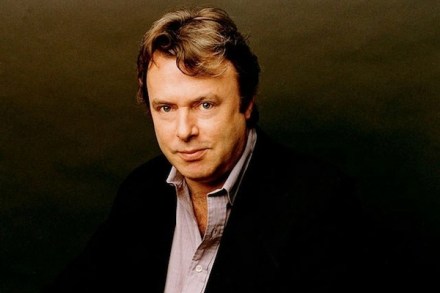
Christopher hitchens

A celebration of friendship – by Andrew O’Hagan

From our UK edition

When I interviewed Andrew O’Hagan ten years ago about his Booker longlisted novel The Illuminations, the most striking thing that he said was: Friendship is more important than almost anything. I always thought it was a sort of deliverance, having a good friend, that they would bring a generosity and an unprejudiced eye to your ambition, your hopes and your thoughts in a way that family can’t always do. I mean what is family but a lovable collection of prejudices, some in your favour and some not? Although I agreed with him, I was intrigued that someone who was both a parent and a sibling would feel this way. The importance of friendship is clearly an ongoing preoccupation.

The afterlife of Christopher Hitchens

In 2011, a terminally ill Christopher Hitchens faced death with droll stoicism: “To the dumb question ‘Why me?’ the cosmos barely bothers to return the reply: ‘Why not?’” he wrote. As his health declined and the end drew nearer, the skeptical Hitchens stuck to his atheist guns, clear-eyed in his confidence that death was final. Hitchens died in 2011, but his work and reputation live on. No paradox there, of course, but just how large Hitchens looms twelve years after his death would surely have surprised even this immodest author. It’s certainly a surprise to me, a reformed Hitchens fanboy. The face of twenty-first-century atheism is having quite the afterlife.

Hitchens

The Greatest Living American Writer on Salman Rushdie

In the late 1990s, author Neal Pollack developed an alter-ego character, "The Greatest Living American Writer," for the McSweeneys website, to satirize a generation of pretentious authors, particularly Norman Mailer and Gore Vidal, as well as macho literary journalists. That character formed the basis of Pollack's first book, the cult classic The Neal Pollack Anthology of American Literature. The GLAW has since appeared in numerous other publications,  left- and right-wing and completely apolitical, surfacing and de-surfacing as the times demand. Now he's back in The Spectator World, until we get tired of him.  I have been the Greatest Living American Writer across eight decades of world literature and have seen many shocking acts of violence.

greatest living american writer salman rushdie

My roaring thirties

I spent my twenties drinking beer. I spent my thirtieth birthday drinking beer and eating oysters. And I remember thinking how far I'd come. Thirty. That number can blaze with dread in the young adult imagination. For years, it loomed ahead of me like some kind of buzzkill apocalypse, the exact moment when everything I loved would come to a screeching halt. The carousing would stop, the long nights would turn to early mornings, the glittering friends would metamorphose into glowering Dursleys. Thirty meant adulting, as our pathetically adolescence-obsessed culture calls it, and adulting meant not freedom but obligation. Admittedly some of that has come to pass.

Fall of the godless

No religious season passes without it being insulted by the kind of person who lives in fear that somewhere some believer is not having his faith offended by someone to whom faith itself is offensive. This Eastertide was no exception. On Good Friday, which coincided with the first night of Passover, the New York Times printed an essay by a former yeshiva student proposing that in this year of violence and suffering it would be best to “pass over” God, adding, “Killing gods is an idea I can get behind.” This sort of village-atheist raspberry — which largely disappeared during the twentieth century along with American villages themselves — has enjoyed something of a revival early in the twenty-first century with the appearance of the so-called New Atheists.

atheists

The undying Christopher Hitchens

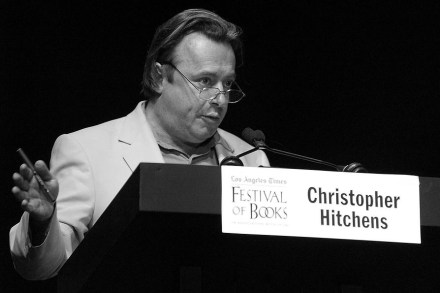
Today marks ten years since the death of the writer Christopher Hitchens, one of the most distinctive voices in twentieth and early twenty-first century journalism. He probably would have been amused by the way virtually every sector of political and social thought has subsequently claimed him as their own in his posthumous form. Whether you’re a right-wing demagogue, a left-wing woke activist or a hand-writing neocon, you can surely find the perfect Hitchens quote to suit your purposes. Hitchens died far too young at 62, but then he had already lived the kind of full-throated bacchanal existence that his peers could only look upon in envy. He wrote over thirty books, which alternated between the profound and the provocative, and millions of words of journalism.

hitchens

The hitch with Hitchens

From our UK edition

It hasn’t taken 20 years to work out that Christopher Hitchens was a dud, but this week’s collapse of Kabul obliges us to reexamine the Hitchens back catalog — because Hitchens had an outsized influence on debates about the supersised errors of post-9/11 foreign policy. The briefest of looks exposes the deficits of the neoconservative mind. An even clearer picture emerges of the hubris that led American policymakers, and the West in general, to justify the invasions of Afghanistan and Iraq as the spread of liberal enlightenment, rather than subjecting them to the tests of Realpolitik. Never trust a man whose favorite sport is politics.

Tenderness and sorrow: Inside Story, by Martin Amis, reviewed

From our UK edition

Inside Story is called, on the front cover, which boasts a very charming photograph of the author and Christopher Hitchens, a novel. It also has a good and comprehensive (14-page) index. I’ve been a book reviewer for 35 years and I’ve lost count of the number of times I have wished, professionally, for larger novels to have an index; but I’m not sure I can remember seeing one before. A non-facetious one, that is. This index is very much non-facetious. Novel or not, then? I’ll try to get rid of this question as quickly as possible, but it has to be addressed (as I write these words, I have a feeling most of this review will be taken up with this, one way or another).

Why I changed my mind about Catholicism

From our UK edition

I grew up in a traditional English family, surrounded by cousins, chivvied by aunts, presided over by my grandmother, who insisted on Sunday church. We weren’t religious but Anglicanism (of a 19th-century sort) was in the air. We read the Revd Charles Kingsley’s Water Babies, C.S. Lewis’s Narnia books and if I thought about Jesus it was in an English setting. I imagined him barefoot walking through fields, rescuing the lambs that had fallen into cattle grids. Our family viewed Catholicism with suspicion. For us it was voodoo: foreign and crowded with unnecessary intercessors.

Milo Yiannopoulos, fursona non grata

Bill Maher once called Milo Yiannopoulos the 'young, gay, alive Christopher Hitchens.' Now a few years removed from his stint as a Breitbart editor and shunned by polite society for some unorthodox comments about pedophilia, the right-wing provocateur is trying to start a new life among furries — a vibrant community of individuals who are interested in anthropomorphic characters and bestial fetishism. According to Yiannopoulos’s Telegram, he has registered for a furry convention called Midwest FurFest. The event site explains FurFest is 'an annual convention which takes place in the west suburbs of Chicago, Ill.…to celebrate the furry fandom, which includes art, literature and performances based around anthropomorphic animals.

The uneasy legacy of Christopher Hitchens

Winston Churchill looked forward to an expansive lunch. He was in his late seventies, prime minister for a second time, and this cabinet meeting was dragging on. It was nearly one o’clock and they were down to the eleventh item on the agenda, a memorandum on town planning. Wearily, Churchill said: ‘Ah yes, I know town planning, densities, broad vistas, open spaces...give me the romance of the 18th-century alley with its dark corners, where footpads lurk.’ It is possible to have this exact feeling watching cable news today. Somehow, you’re watching CNN or MSNBC, and some bloviating no-mark like Don Lemon or Chris Hayes or Ezra Klein is grimacing through air time.

christopher hitchens

High life | 14 July 2016

From our UK edition

The Spectator readers’ party was as always a swell affair, with long-time subscribers politely mingling with ne’er-do-wells like myself, the former having cakes and drinking tea, the latter desperately raiding the sainted editor’s office for Lagavulin whisky. But for once I was on my best behaviour, first out of respect for our readers, secondly because of the man I had personally invited to the party, Hannes Wessels, a Rhodesian-born 14th-generation African, whose book A Handful of Hard Men has me shaking with fury at our double standards where whites are concerned, and at the gauzy mythology of PC that has painted white Rhodesians as oppressors.

If I were Richard Dawkins, I’d count my blessings

From our UK edition

It reflects rather well on Richard Dawkins that he still hasn’t joined his followers – the religious connotations of the word are intentional – in objecting to the Church of England tweet on Friday about praying for his recovery from a stroke. https://twitter.com/c_of_e/status/698249409663000577 Presumably the CofE did so on the basis of Christ’s exhortation to 'Love your enemies, do good to those who hate you and pray for them that persecute and calumniate you', as well as genuine affection for the old boy. But of course the kindly post got the inevitable response from more than 1,000 outraged Dawkinsites: 'Sarcastic or ignorant?' one asked.

Atheism may be fashionable, but most intelligent people believe in God

From our UK edition

Have we ever needed Christianity more than we do today? It’s a rhetorical question, for sure, because the loss of our faith and the inability to confront Islam have never been greater. When I was a little boy during the war, my mother assured me that if I believed in Jesus everything would be OK. This was during the Allied bombing on Tatoi, the military airfield near our country house where the Germans concentrated their anti-aircraft guns. My Fräulein, the Prussian lady who brought me up, was more practical. She handed me a beautiful carved knife that made me feel safer than my prayers ever did. Today, of course, 74 years later, my prayers are far more likely to give me peace of mind than a knife in my pocket. That’s the difference between being five and 79 years of age.

We need Christianity more than ever in this Age of Atheists

From our UK edition

Have we ever needed Christianity more than we do today? It’s a rhetorical question, for sure, because the loss of our faith and the inability to confront Islam have never been greater. When I was a little boy during the war, my mother assured me that if I believed in Jesus everything would be OK. This was during the Allied bombing on Tatoi, the military airfield near our country house where the Germans concentrated their anti-aircraft guns. My Fräulein, the Prussian lady who brought me up, was more practical. She handed me a beautiful carved knife that made me feel safer than my prayers ever did. Today, of course, 74 years later, my prayers are far more likely to give me peace of mind than a knife in my pocket. That’s the difference between being five and 79 years of age.

Diary – 1 October 2015

From our UK edition

Party conference season is the most pointless waste of money, time and liver quality ever devised. I attended these sweaty, drunken gatherings for ten years during my newspaper-editor days and achieved nothing constructive other than clarity over which is the best way to treat a monstrous hangover. (Answer: my late grandmother’s recipe of vine tomatoes on toast, laden with thick Marmite and gargantuan grinds from a pepper mill.) But they were fun, so long as I adhered to the golden rule: always leave the bar before 2 a.m., thus avoiding the moment when enough alcohol emboldens other delegates, and indeed one’s own staff, to tell you what they really think of you.

A hero of our time

From our UK edition

I have met Dr Kissinger, properly, only three times. First, in Cairo, in 1980, when, as a junior diplomat escorting Edward Heath, I had to secure for an almost desperate former British prime minister a meeting with the former US secretary of state, also in town. Once with Kissinger, Heath promptly subsided into a deep slumber. I had the alarming experience of trying to keep the conversation going. The other occasions were more recent, but almost as scary. My hostess at the ‘secret’ (but much publicised) transatlantic talkfests which Kissinger (92 this year) still attends twice summoned me to sit beside the great man at dinner. On each occasion I felt like the luckless passenger in the Economist’s vintage television commercial.

Christopher Hitchens and The Spectator: writing full of curiosity, indignation and analytical rigour

From our UK edition

After Christopher Hitchens died in December 2011, Douglas Murray wrote in the Spectator that he’d had 'a talent for making us, his readers, want to be better people. He used his abilities not to close down questions and ideas, but to open them up. In the process he made you, the reader, aware that you needed to do more, engage more, think more and know more. Writers often feel a need to impress their readers. Christopher made his readers want to impress the writer.' To nearly everything he wrote, Hitchens brought curiosity, indignation and analytical rigour and a vast frame of reference. It’s been a great pleasure looking through the recently digitised Spectator archive for Hitchens highlights.

Pippa Middleton to write for Vanity Fair

From our UK edition

There is some shock in Fleet Street tonight, following news that Pippa Middleton is a contributing editor at Vanity Fair. The magazine was the last of the late Christopher Hitchens’ haunts; that’s a very long way for a bottom to have wiggled in such a short space of time. On hearing the news, a friend of mine put down his glass and remarked, ‘Dear Lord and Father of Mankind, forgive Graydon Carter his foolish ways.’ Then he turned a reddened eye to your humble correspondent and declared, not without a clear note of resentment, ‘You’re responsible for this!’ He was referring, I believe, to Pippa Middleton’s two outings in these pages. You can read Pippa in Waitrose’s in-house mag.

Hitchens vs Galloway

From our UK edition

Since he has previously been elected in Glasgow and London, I don't know if it is so astonishing that George Galloway won a by-election in Bradford. Anyway, if you have a couple of hours to spare ou might enjoy this debate between Galloway and Christopher Hitchens. As Christopher put it: "The man's hunt for a tyrannical fatherland never ends. The Soviet Union let him down, Albania's gone. Saddam's been overthrown. But on to the next, in Damascus." Quite.