Christopher Columbus

Trump has given America back its heroes

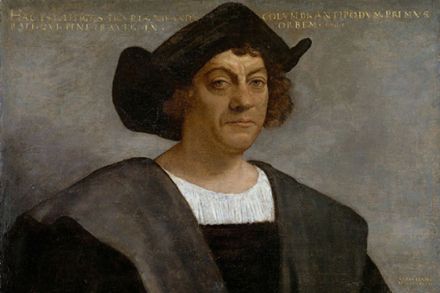
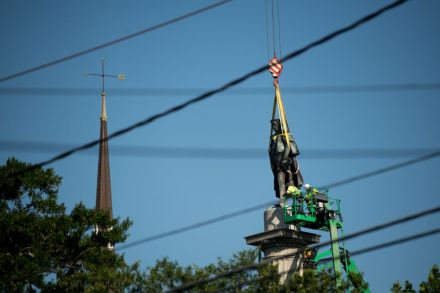
This weekend, two statues were installed on the White House grounds. On the north side of the Eisenhower Executive Office Building stands a statue of Christopher Columbus. On the south side is “Freedom’s Charge,” a life-size portrayal by Chas Fagan of two soldiers in the Continental Army, one with a rifle, the other with a billowing Bunker Hill flag. In ordinary times, the temporary placement of such tokens of America history at the White House might pass without comment. These are not ordinary times. On the contrary, America is just now emerging from a destructive frenzy of woke self-loathing and iconoclasm.  Just a few years ago, no emblem of American achievement was safe from crusading vandals.

Christopher Columbus (Getty) heroes

The long history of kidnapping Latin American chieftains

One of the few benefits of being an anthropologist is the uncanny exhilaration one feels watching novel current events as re-runs from previous episodes in the history of mankind. Donald Trump’s capture of Nicolás Maduro, President of Venezuela, is no exception. Kidnapping Latin American emperors is a continental tradition. It’s simply the most practical method for breaking the chain of command in the region. It triggers succession chaos, enables the extraction of resources and keeps the rest of the hierarchy more or less intact. In earlier centuries, it was Spain and Portugal. Today, it’s the United States. In the colonial era, the objective was to secure enough gold to beat European rivals.

latin american

A brief history of flat earthers

In 2020, an American pilot and daredevil named “Mad Mike” Hughes launched himself in a homemade steam-powered rocket, hoping to achieve enough altitude to prove to himself that the Earth was flat. Unfortunately, the rocket crashed and Mad Mike was no more. “I’m not going to take anyone else’s word for it, or NASA, or especially Elon Musk with SpaceX,” he had once explained in an interview. “I’m going to build my own rocket right here and I’m going to see it with my own eyes what shape this world we live on is.” In this way he became a martyr to the modern conspiracy theorist’s mantra: “Do your own research!

Flat earthers

Barbecue is America’s food

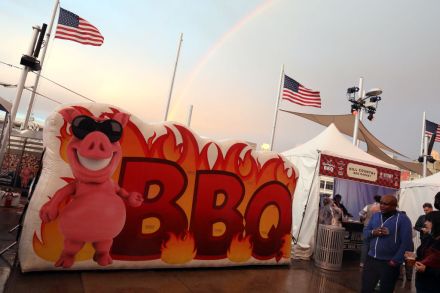
Summer is fading fast, and though, according to my calendar, “the Autumnal Equinox” (is that the newest model of Hyundai?) isn’t until September 22, all the things we love about the season — swimming, county fairs, outdoor drinking, the August congressional recess — are essentially over after this weekend. And while people mark Labor Day in different ways, one of the best is with a barbecue, one of the few culinary traditions America can truly call its own. Smithsonian Magazine tells us barbecue has its origins in the first indigenous tribes Christopher Columbus encountered, who had a “unique method for cooking meat over an indirect flame, created using green wood to keep the food (and wood) from burning.

Under the skin of Seville

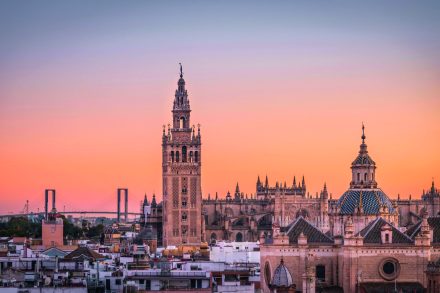
It was night when I arrived in Seville. A taxi took me through a maze of winding backstreets then came to an abrupt halt at the head of a pedestrian-only lane. ‘You’ll have to walk from here,’ said the driver. Uncertainly I dragged my suitcase down one dark alley after another, then suddenly came out onto a plaza lined with orange trees. Soaring above me, spotlit against the black sky, was the cathedral steeple. It was a breathtaking sight with its delicately latticed walls of golden stone, so tall I had to tip my head back to see the spire at the top. The cathedral stretched beside it, filling an entire block. Four hundred years have passed since Seville was the greatest and most glamorous city on earth, as glittering and alluring as New York City is today.

seville

Is this the end of history?

Midway through Hemingway’s The Sun Also Rises, there occurs this exchange between two characters: ‘“How did you go bankrupt?” Bill asked. “Two ways,” Mike said. “Gradually, then suddenly.”’ The process of civilizational bankruptcy takes a similar course. Casual, seemingly isolated attacks on the fabric of civilization feel at first like so many harmless insect bites. A speaker is shouted down. A statue is vandalized or removed. A college course once deemed essential is rebaptized as offensive: first it is pilloried, then it is canceled. People start quoting Tocqueville’s warning that in a democracy, as large inequalities dissolve, small inequalities are magnified, growing both rancid and rancorous.

end history

Do we erase black history when we take down statues?

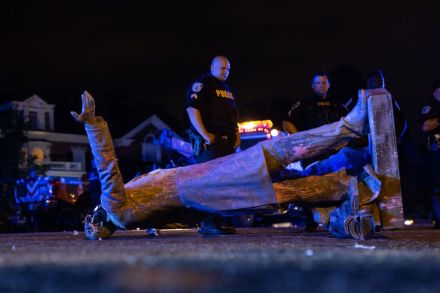
The Summer Of Our Discontent is in full swing and the social guillotines — at first applied to legitimate injustice and prejudice — have now come for history itself.We watch as mobs tear down statues and monuments to the past. The destruction is supposedly performed in the name of justice, but can we seize true justice by destroying the past?American history is a fascinating and sometimes tragic tale of oppression and rebellion, injustice and progress. There is a push and a pull to it all that has led us to be the most successful and prosperous society in human history.Undoubtedly there has been much pain: but how can we know how far we’ve come if we’re not allowed to see where we’ve been?The history of black America is an exhaustive tale of overcoming.

statues black america

Self-righteous vandals

Violent left-wing activists have taken to styling themselves as antifa, short for ‘anti-fascists’, though their street-fighting tactics resemble nothing so much as the Brownshirt thuggery practiced by fascists themselves. This did not stop NPR national political correspondent Mara Liasson from likening these hooligans to the heroes of World War Two. On the anniversary of D-Day, June 6, while America’s cities still smoldered after days of riots and looting, Liasson took to Twitter to call the Normandy invasion the ‘biggest antifa rally in history’. Dumb jokes are nothing new on Twitter. For many liberals today, however, it’s no laughing matter.

statues vandals history

The war of the statues is a battle for freedom

The war of the statues is no longer a battle over the memory of slavery, or the Confederacy, or the deployment of stone dead generals to reinforce Jim Crow. It is a battle over the legitimacy of the United States which, despite all the evils, is history’s greatest and possibly final experiment in human freedom.The struggle has turned from Confederate generals to the Founders: from those who seceded from the United States to those who laid its foundations. Students at the University of Missouri are petitioning for the removal of a statue of ‘racist slave owner’ Thomas Jefferson, whose statue at Birmingham, Alabama was damaged in an arson attack. Last week at George Washington University, Washington’s bust was toppled from its plinth.

statues