Christmas

What did psychics predict was going to happen in 2019?

From our UK edition

Bah humbug Some of the things reported to have been banned this Christmas: — Mulled wine banned from being sold by street traders at Christmas fayres in Castleford, West Yorkshire, on the grounds it would break a Public Spaces Protection Order designed to stop street drinkers. — Christmas lights banned by health and safety officers in Pembury, Kent, on the grounds they each weighed more than 4kg. — Children banned from sending more than one Christmas card each to classmates at Belton Lane Primary School, Grantham, on the grounds that cards are environmentally unfriendly. — Glitter banned from Marks and Spencer cards, wrapping paper and decorations.

Beer, sweat and jockstraps: the real history of the CBSO

From our UK edition

In childhood, the theme tune to The Box of Delights was the sound of Christmas. The melody was ‘The First Nowell’ but that wasn’t what cast the spell. It was the way the harp glinted and pealed, and the eerie wisp of the ‘Coventry Carol’ that drifted through on muted violins: a masterclass in orchestration for a BBC teatime audience. After inquiries at Circle Records in Liverpool (this was pre-Amazon), my father established its identity: the Carol Symphony, by a composer with the pleasingly Edwardian name of Victor Hely-Hutchinson. And that was that, for me anyway, until three decades later, rifling through the archive of the City of Birmingham Symphony Orchestra, I noticed the initials ‘VHH’ on files from the 1940s.

The best Christmas gift you can give yourself is to learn some poetry by heart

From our UK edition

Every Christmas I find I am living in the past. I blame my father. He was born in 1910 — before radio, before TV, before cinema had sound, so he and his siblings made their own entertainment at Christmas. He brought up his children to do the same, which is why my unfortunate offspring have a Christmas that’s essentially a century out of date. There are three elements at its heart: board games that end in rows, parlour games that end in tears, and party pieces performed around the Christmas tree. I owe my very existence to my father’s love of board games. As a boy, his favourite was a game of military strategy called L’Attaque, invented in France in 1908.

The King of Christmas: A short story by Owen Matthews

From our UK edition

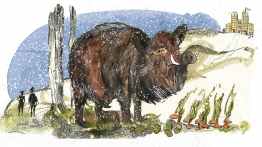
The Christmas King steps slowly from his house and sniffs the evening’s chill. His tread is dainty, for all his heft, and his handsome head swings proudly as he surveys a kingdom of carrot tops and mud. He smells woodsmoke, the sows’ reek, the night’s damp rising from the river. From the kitchen door he hears the teasing voices of boys, the clatter of scullions’ ewers loaded with his dinner. On the hill, Wytham Wood hisses like the sea. All summer Harry has dined on sour curds and burned crusts, lettuce roots and swedes, and the rich scrapings of the pottage pot. Now winter brings him even greater plenty. A mess of oats and gravy bones cooked special for his Majesty.

Gay giraffes and dead in ditches: The Spectator 2019 quiz

From our UK edition

They said it   In 2019, who said: 1. ‘You have stolen my dreams and my childhood.’ 2. ‘I didn’t sweat at the time because I had suffered what I would describe as an overdose of adrenaline in the Falklands War when I was shot at.’ 3. ‘Ninety per cent of giraffes are gay.’ 4. ‘I have been wondering what the special place in hell looks like for those who promoted Brexit without even a sketch of a plan how to carry it out safely.’ 5. ‘No clapping.’ 6. ‘I’d rather be dead in a ditch.’ 7. ‘Anyone who attempts to split any region from China will perish, with their bodies smashed and bones ground to powder.’ 8.

Christmas without God in the Appalachians

From our UK edition

Christmas: without being grand and Proustian, this is a season when time present inevitably takes one back to time past. When we are very young, despite the grown-ups’ best efforts to promote moral uplift, Christmas means presents. I remember being given King Solomon’s Mines when I was nine or ten. No book has ever thrilled me with more sensual pleasure and I devoured all of Rider Haggard’s related oeuvre. The other day, I came across a shelf-load in a friend’s house. They did not work. The magic could not be reconjured. For me, the Haggards ride no more (though at least the Rudyards have not ceased from Kipling). But I hope that today’s boys will still follow Allan Quatermain and Umslopogaas, and be awed by She. It should be part of a gradus ad Parnassum.

Neil Woodford could do the washing-up at my fantasy Christmas lunch

From our UK edition

It’s the season for kindness and conviviality. In that spirit — and recognising that business, like personal life, rarely follows an easy or predictable path — here’s a list of corporate heroes and anti-heroes who deserve your sympathy and a place at my fantasy Christmas table. First, those who are moving on. Bob Dudley put BP back on its feet after the Gulf of Mexico disaster; if many shareholders thought he was paid too much for doing so, he can make amends by bringing the wine. Ross McEwan didn’t solve all the problems of RBS, but dragged the crippled bank a long way back towards normality. Mario Draghi gave new clout to the European Central Bank.

White Christmas: the magic of the festive drugs binge

This article is in The Spectator’s December 2019 US edition. Subscribe here. An effective antidote to all this thoughtless zealotry, I find, is to go out for the evening with my friend Trevor. When despair hits total, I know it’s time to ring him up and suggest a small sherry: code for drinking and taking drugs until we’re totally out of our minds, then partying all night. Trevor is a big, strong, hard-working country boy for whom life is invariably a momentous affair. Though he’s a tolerant man, there is a point at which forbearance ceases to be a virtue, and he is an old-school puncher and the man you have to beat if you want the magnetic title of Hardest Man in Town. His catchphrase is ‘Who’s the Daddy?

drugs

The joy of spending Christmas alone

This article is in The Spectator’s December 2019 US edition. Subscribe here. I’ve always resented Christmas — because Christmas is a holiday that makes liars out of us all. Let’s not get into whether Jesus was born of a virgin. Suffice it to say, I struggled with this idea from a young age. Back in kindergarten, having no idea what a virgin was, I consulted Anne, my precocious neighbor and classmate at the Convent of the Visitation School. Anne showed me a biology book, which presented in very graphic detail the mechanics of intercourse. Anne explained that being a virgin meant you hadn’t had sex. ‘Mom, how did the Virgin Mary get pregnant with baby Jesus?’ I asked. ‘Oh, God did that,’ she explained dutifully.

christmas alone

Andrew Sullivan: The evidence against Trump is overwhelming

From our UK edition

When people ask me what the mood is in DC these days, the only word I can come up with is ‘surreal’. Everyone in this town — including almost all the Republican senators — knows Trump is guilty as charged over Ukraine, and then some. The evidence is overwhelming. And seeking to get a foreign power’s help in a domestic election is such a textbook case for impeachment — the Founding Fathers were obsessed with foreign meddling — it really should be over by Christmas. It won’t be because of Roy Cohn. That legendary lawyer had a simple technique whenever his clients, Fred and Donald Trump, were sued. He would sue back. And Trump has a simple technique when accused of anything: immediately accuse the accuser of the exact same thing.

The unwritten rules of sending Christmas cards

From our UK edition

No one sends Christmas cards any more. Except that I do, and you might, and a few other people do too. But overall, cards have become so expensive, time-consuming and, let’s admit it, unfashionable that many people have abandoned them with some relief. Some of them rather piously tell us the money thus saved is now going to charity. Others, even more piously, say they are no longer sending cards because of the waste of planetary resources, and they now prefer more ecologically sustainable methods of celebrating Christmas. These are often the people who then fly to New York to go Christmas shopping. I love cards. I like buying them, I like writing them, and most of all, I like receiving them.

The best gadgets to buy this Christmas

From our UK edition

Nuraphone headphones From £9/month, Nuraphone I confess – the idea of buying headphones on a subscription plan is daunting. But one 60-minute session with these headphones and you’ll understand why people are raving about them. A fun ‘pairing’ session configures the headphones to your personal heading tastes (I can’t emphasise how cool this was) – before letting you flick between your ‘personal profile’ and neutral audio. Having tried these headphones out, it’s hard to go back to listening to music the normal way again. A must-buy for the music-lover in your life. Larq self-cleaning water bottle From £78 from Larq The market for cool-looking, hip water bottles is fairly saturated right now (excuse the pun).

Boycott Christmas!

O little town of Bethlehem, how still we see thee lie. Largely because of the big concrete wall that divides you from Jerusalem, and prevents Islamists from Hebron from blowing up Jewish civilians in the holy city. Such are the facts on the ground, and such is the world in which we live, and the chasm between religious aspirations and political realities. I was reminded of these facts on Saturday night when, as I flailed through the chords at our neighborhood carol-singing party, Phillips Brooks’s lyric of 1868 shot past my eyes. Now, some Jews complain about Christmas.

israel palestine christmas

The tweeness of religion in America

From our UK edition

Today’s Americans are extraordinarily twee about religion. On the one hand they print ‘In God We Trust’ on banknotes, insist their leaders have a religious belief, and cite ‘the Creator’ as granting the rights of the Constitution — at least 50 per cent say religion is very important to them, compared with 17 per cent in the UK. On the other hand, when it comes to Christmas, they row back. ‘Happy Holidays’ is the only acceptable greeting. Anything more specific might be judged offensive, intrusive, coercive. Jon Sopel, himself of Jewish stock, spotted a banner in Dulles airport, reading: ‘We hope you like our holiday trees.’ They were Christmas trees.

Why does Britain have to shut down for Christmas?

From our UK edition

Christmas in Britain means misery not merriment. It's why I prefer France, which doesn't shut down lock, stock and bauble. This year I'll be in Aveyron, as profonde as La France profonde can be, and the highlight will be the Quine – that's Bingo to Brits – which starts at 4pm on Christmas Day in the village hall. It's an annual event organised by the local rugby club and it pulls in punters from dozens of outlying villages, all desperate to win one of the prizes on offer. You know you're in France when the prize-winner who gets the most envious glares isn't the one who scoops the flat-screen TV but the lucky devil who makes off with the hind leg of ham.

Christmas music is hell on earth…

Young people are revolting. The word now is that Frank Loesser’s ‘Baby It’s Cold Outside’, an irritating Christmas flirt-fest from a bygone age, is a date-rape narrative. The same goes for The Pogues’ ‘Fairytale Of New York’, a recitative by two dipsomaniacs in the drunk tank. The young people have a point when they insist that when two alcoholics argue, they shouldn’t use offensive language. But that’s an impossible expectation. I suggest an easier solution.Erase the infamy, as that music critic Voltaire said. Ban all Christmas songs. Bury them under an avalanche of fake snow in a grotto of styrofoam igloos. And not because I’m particularly against Christmas songs or Christmas itself. While we’re at it, ban everything.

slade christmas music songs rock

Why do men love Christmas more than women?

From our UK edition

There’s a Christmas poem of mine, written in the 1980s, that ends with the line ‘And the whole business is unbelievably dreadful, if you’re single’. When I read Bridget Jones’s Diary I was interested to find that the central character felt the same, and even more interested to see that Helen Fielding had included my poem. The first thing I did was to check the acknowledgements to make sure that her publishers had asked permission from my publishers. They had. Having established that, I was delighted. I wrote to Helen and got a nice reply. When I heard that there was going to be a film I had high hopes that it might do for me what Four Weddings and a Funeral had done for Auden by including his poem ‘Funeral Blues’.

How terror changed Europe’s Christmas markets

From our UK edition

The traditional Christmas market is one of the great sights in any European capital at this time of year. But as with all traditions it evolves over time. A few evenings ago, I went to visit the Duomo in Milan and walked through the beautiful Christmas market in the square surrounding it. It was all there: the Christmas lights, the chalet-like huts selling warm food and drink, the fake snow. And, of course, the crash barriers. For since December 2016, when Anis Amri hijacked a truck in Berlin, shot the driver and then ploughed the vehicle into the local Christmas market (killing eleven more people) crash barriers have become a necessary feature of any European Christmas market.

Alexis de Tocqueville’s Christmas parade

According to corporate retailers, Christmas begins sometime between Halloween and Thanksgiving. From the day after Turkey Day, it’s full-bore shopping until that last lonely evergreen leaves the Boy Scout lot on Christmas Eve.Staunton, the small Virginia town where I write, is no exception to this feature of life in our great commercial republic. Shopping trumps every other reason for the season. The churches push back, but they’ve only got one day a week to do it, and that isn’t enough when you’re up against Wal-Mart and Amazon. Even so, we retain one civic observance in our age of commercial supremacy and militant multiculturalism.

staunton de tocqueville’s