China

Why the national divorce worked: a future history

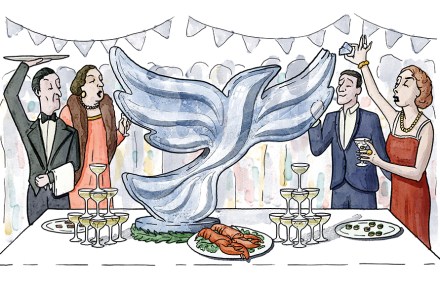
The following is an excerpt from Yale University law professor Elizabeth Friedkin’s remarks to the 2026 International Federation of United Conscious Uncoupling Professionals. When then-Representative Marjorie Taylor Greene first proposed the dissolution of the United States of America in 2023, many feared she was threatening a second Civil War, including most of us in this room. Over the past two years, however, we have witnessed a benign break-up that is now a beacon to dissatisfied land conglomerates the world over. I was skeptical when I was chosen to serve as arbitrator, but I will be the first to admit that I underestimated the shrewdness of Ms. Taylor Greene.

national divorce

Why DeSantis’s Ukraine statement matters

Why DeSantis’s Ukraine statement matters Ron DeSantis’s statement on Ukraine issued Monday night, an answer to Fox host Tucker Carlson’s policy questionnaire for possible presidential candidates, is proving to be one of the most significant moments yet in the still nascent 2024 campaign.  The closer DeSantis gets to formally announcing his bid, the less he can stick to the policy ambiguity which being a state executive, rather than a Washington lawmaker, affords you. The Florida governor took Tucker’s invitation to expound on Ukraine and ran with it, issuing a statement that outlined a far less hawkish position than many had expected him to adopt.

GOP seeks answers from NBA over Chinese soft power display

House and Senate Republicans, along with a basketball star, are demanding answers from the NBA about its financial relationship with the Chinese Communist Party following an “in-your-face” display of CCP soft power in the nation’s capital. Following reporting from The Spectator, eight congressmen and four senators wrote to NBA commissioner Adam Silver to express “grave concerns about Chinese Communist Party propaganda being broadcasted and promoted at National Basketball Association games.

China's National People's Congress - Press Conference

Banning TikTok: a how-to guide

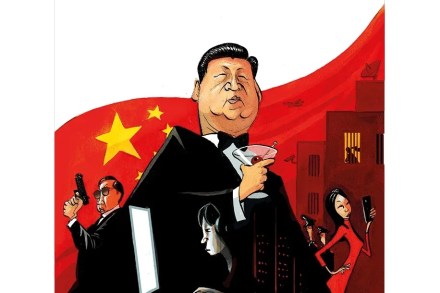
“Whoever controls big data technologies will control the resources for development and have the upper hand,” Xi Jinping declared shortly after assuming control of China. In the years since, the Chinese surveillance state has exploded at home and abroad, thanks to espionage-adjacent apps such as WeChat, but none has raised as much ire as TikTok. Following reams of data showing that your teenager’s favorite app is poisoning their mind and spying on them, the calls to ban TikTok are now coming from inside the House… and Senate. But how would such a ban actually work? What does it mean to ban an app that is supported by the technological infrastructure of the CCP?

tiktok

The coming fight over the government’s surveillance powers

You've been warned: a fight over the government’s ability to spy on its own citizens is coming to Congress. Section 702 is up for renewal again in December. Section 702 grew out of an illegal post-9/11 program called Stellarwind, exposed by NSA whistleblower Tom Drake. It refers to a provision of the Foreign Intelligence Surveillance Act (FISA) that was enacted in 2008. It authorizes the government to collect the communications of non-Americans located outside of the United States for the purpose of obtaining foreign intelligence information. But the program also allows for the incidental collection of information about Americans who may be communicating with the targeted foreigners.

TikTok may be the real test of the China Select Committee

The primetime launch event for the House China Select Committee shows the bipartisan consensus that has formed in Washington on the threat represented by China. It also illustrates the priorities for members of Congress, and their divisions over the appropriate response to Chinese influence as a military, economic and cultural adversary. Witnesses, including former Trump deputy national security advisor Matthew Pottinger and retired Lieutenant General H.R. McMaster, encouraged members to take Xi's words at face value — and emphasized that for too long Washington has looked the other way while China ate America's lunch.

china select committee

Why aren’t we more focused on cleaning up the pandemic mess?

Unless you work for the White House, where the emergency declaration doesn’t expire until May, the pandemic has long been over. March marks three years since Covid upended Americans’ lives and, for all but a tiny minority, it has ceased being a day-to-day consideration. After long and bruising fights over everything from lockdowns to vaccine mandates, perhaps the only thing Americans can agree on is that the country’s response to the pandemic was a failure. From that starting consensus, arguments about what went wrong soon diverge sharply.

school education american pandemic

Germany’s folly: Berlin has miscalculated on Russia and China

The notion that closer trade connections with the West will necessarily set less enlightened nations on a course toward prosperity and liberty is nonsense, but convenient nonsense. Germans have a phrase for it — Wandel durch Handel, change through trade — often given as a justification for their business dealings with Russia and China. Unfortunately, the change they triggered was in Germany. In one case it has been for the worse; in the other it appears to be headed that way. To start with Russia, it’s true that Germany’s ultimately disastrous dependency on natural gas from the east has its origins in the Ostpolitik years: by 1989 the Soviets were supplying West Germany with around a third of its gas.

germany

A short list of people who said the lab leak theory was a conspiracy

With the Energy Department joining the lab-leak party, will the apologies ever roll in to those so thoroughly excoriated for questioning the animal-human theory of Covid's origins? Cockburn has done a little digging and would like you to join him on a trip down memory lane, to revisit the litany of enlightened elites who proclaimed the lab-leak theory a conspiracy. From scientists to media talking heads, the condemnation of the lab-leak hypothesis was pretty universal in the early months of the pandemic, even going so far as to proclaim it racist.

second wave lab leak covid

Washington’s yes-men in Japan

It was nighttime in Davos, 8:31 on January 18 to be exact. Japanese journalist Ganaha Masako had been standing out in the cold for three hours near the entrance to a building which, she had heard, was being used as a venue for a World Economic Forum event that evening. Ganaha had picked up on some additional chatter. Klaus Schwab, the head of the WEF, was rumored to be inside. It was a long shot, but Ganaha wanted to ask Schwab some questions about globalism. And then, suddenly, Schwab appeared. Fleshy cheeks jiggling slightly as he shuffled along the snow-dusted sidewalk, he stepped cautiously out of the WEF event forum with a few handlers. Ganaha pointed her camera at Schwab and asked him for an interview. He ignored her and kept shuffling along.

China’s useful idiots in Virginia

A disturbing trend is emerging among Virginia Democrats in Richmond, as the entire state House and Senate chambers are up for reelection in just a few months: by word and deed, they are increasingly serving as useful idiots for the Chinese Communist Party. In recent weeks, Virginia Democrats have warned that so-called “China-bashing” could lead to mass internment of Chinese Americans, and argued against requiring taxpayer-funded universities to disclose grants from the CCP. It wasn’t supposed to be this way. Democrats were excited to focus on abortion this year in the hopes of further stymying Republican governor Glenn Youngkin’s legislative agenda, much of which the Democratic-controlled State Senate has stopped. Youngkin, however, had other things in mind.

xi china virginia

One year of war in Ukraine: six experts predict what will happen next

As the war in Ukraine enters its second year, today seems as a good time as any to reflect on its first, and see what the future might hold. Six foreign policy experts from across the spectrum of opinion offered their thoughts to The Spectator. As the war in Ukraine enters its second year, how do you foresee the conflict ending? Ted Carpenter: There are several possible outcomes, but the most likely is a ceasefire without a formal peace accord. That move would end the bloodshed, but it would leave the underlying disputes unresolved. Such an outcome would be similar to the armistice that ended the Korean War. It also would create the world’s largest and most dangerous “frozen conflict.

ukraine war nato

The virtues of American ‘nation-building’

Newly minted senator JD Vance of Ohio has wasted no time in extolling the virtues of a soft isolationist foreign policy. In a January 31 op-ed for the Wall Street Journal, Vance endorsed Donald Trump for president largely because Trump isn't a hawk. A prominent member of the GOP's national conservative wing, Vance has made skepticism of American leadership abroad a centerpiece of his political identity. The senator attacks the “bipartisan foreign policy consensus that has led the country astray many times.” Never mind that the so-called "consensus" only really exists under extreme circumstances, such as after the 9/11 terror attacks. Think of the deep divide between right and left over how to deal with Cuba and Saudi Arabia, for example.

Enes Kanter Freedom on LeBron, Erdoğan and the earthquake

Basketball player and human rights activist Enes Kanter Freedom was invited as Leader Kevin McCarthy's guest of honor to the State of the Union last week, an address in which President Biden barely touched on foreign policy. The former Boston Celtics and Oklahoma City Thunder center spoke with The Spectator about democracy, autocracies and hypocrisy. John Pietro: How far does China’s influence reach into the NBA, in your estimation? Could you see the NBA ever standing up to China in the way the Women’s Tennis Association did in defense of Peng Shuai? Enes Kanter Freedom: I didn’t know how deep the relationship between the NBA and China was until Daryl Morey tweeted and said "stand with Hong Kong" and after that obviously the NBA lost millions and millions of dollars.

enes kanter freedom

China is playing the US for fools over the spy balloon

The Chinese balloon debacle has shone a light on America's security vulnerabilities, but it has also revealed just how audacious and deceptive the Chinese Communist Party is. As with their reaction to Covid-19's origins, they have brazenly lied from the day that the balloon’s presence was made public. It is abundantly clear that the craft was not a weather balloon, not least because of its uncharacteristically massive size. Yet China opted to construct a tall tale about a wandering weather balloon that somehow ended up over America. Oh, and the balloon over Latin America? That was just another errant storm tracker. Sure, China regrets the mishap, but there is no need to overreact. What makes the lie so extraordinary is that it is so easily debunked.

xi

Biden’s strategy-free SOTU

Biden delivered a strategy-free State of the Union The loudest line of Tuesday’s State of the Union was ad-libbed. “Name me a world leader who’s change places with Xi Jinping,” he shouted in a departure from his prepared text. “Name me one, name me one.” There may not have been a Chinese spy balloon drifting above the United States as Biden was speaking, but foreign policy hung awkwardly over the president’s address. In the wake of a major spat with America’s most powerful adversary and in the longest speech of his presidency, Biden spent about as much time talking about hotel resort fees as he did discussing the US’s relationship with China.

Biden’s State of the Union went quiet on China

Joe Biden's meandering State of the Union left out a great many things, as his voice toggled between insincere whisper and frail bellow. The loudest moment of the night was when, going off-script from his prepared remarks, he insisted that really — c'mon, I really mean it! — China's Xi Jinping is being isolated from the world for some reason. https://twitter.com/greg_price11/status/1623157950654078977 "Name me a world leader who would change places with Xi Jinping! Name me one! Name me one!" Biden yelled. The comment had an air of frustration given that the humiliating Chinese spy balloon was fresh in the minds of all on Capitol Hill. "I’ve made clear with President Xi that we seek competition, not conflict," Biden said in his prepared remarks.

Trump is wrong that the US should negotiate peace in Ukraine

The GOP’s foreign policy doves and soft isolationists have grown stronger, with 40 percent of “Republican and Republican-leaning independents” saying the US is giving too much aid to Ukraine. Former president Donald Trump has now taken up the mantle of this movement, firmly anchoring himself to the anti-Ukraine aid faction of the party. Trump recently gave an interview to radio host Hugh Hewitt in which he made one thing clear: he’s no fan of aiding Ukraine. Asked about sending F-16s, Trump said, “I think the United States should negotiate peace between these two countries, and I don’t think they should be sending very much.” When Hewitt asked if the former president would cut aid to Kyiv, Trump responded, “we’ve got to make peace.

Former defense secretary: yes, Trump would have shot down the Chinese spy balloon

Former acting secretary of defense Christopher Miller challenged several of the major claims being made about the Chinese spy ballon that recently entered US airspace during a podcast interview Monday with The Spectator World.  Miller joined The District podcast to discuss the Chinese spy balloon and his new book, Soldier Secretary: Warnings from the Battlefield and the Pentagon about America's Most Dangerous Enemies. The Biden administration shot down the balloon off the South Carolina coast on Saturday after it had been floating across the United States for nearly a week. Following its destruction, administration officials claimed that other Chinese spy balloons had entered the US "at least three times" during the Trump administration.

National Counterterrorism Center Director Christopher Miller testifies at a Senate Homeland Security and Governmental Affairs Committee hearing (Photo by Joshua Roberts-Pool/Getty Images)

AP stealth edits its Chinese spy balloon report

The Associated Press (AP) appeared to stealth edit a major report on the Chinese spy balloon, which was the origin of the claim that two such balloons also entered US airspace during the Trump administration. The AP first published the article on Saturday. The balloon was then shot down after floating for several days over the US. Deep into the report, the AP cited one unnamed Biden administration official who claimed that two similar incidents "happened twice during the Trump administration but [were] never made public." [caption id="attachment_45048" align="aligncenter" width="1024"] The Associated Press's first iteration of the Chinese spy balloon story (Screenshot: Internet Archive)[/caption] However, the AP article looked different on Sunday.

spy balloon