China

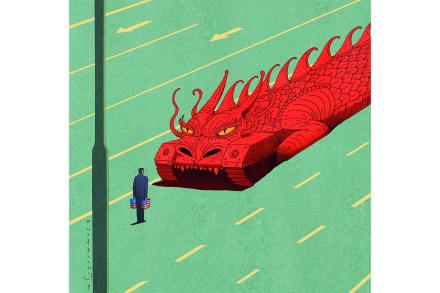
America’s military isn’t ready for a war with China

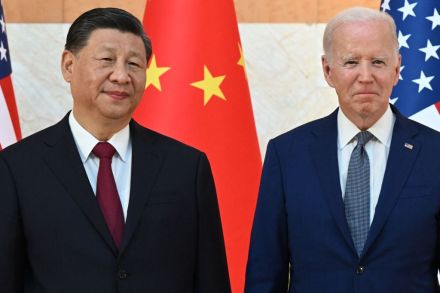
China’s 20th Party Congress concluded on October 23, and President Xi Jinping secured a norm-breaking third term as leader of the Chinese Communist Party (CCP). With the Politburo Standing Committee stacked with close confidants and dissent virtually wiped out, Xi is the strongest he has ever been. Xi has also redoubled the Party’s commitment to taking the island of Taiwan, by force if necessary. Secretary of State Antony Blinken recently said that China “was determined to pursue reunification on a much faster timeline.” The alarm has been repeatedly sounded by American military officials, with speculation that a Chinese invasion of Taiwan could occur as soon as 2023.

Why journalists shouldn’t be on TikTok

Americans: watch your backs. Last week, Forbes released a bombshell report that ByteDance, the parent company of TikTok, the popular video recording and meme app, was planning to monitor and track the physical location of Americans. It’s not the first time there have been national security and human rights questions swirling around ByteDance, the China-based technology company that owns all of TikTok’s offshore data and could easily be leveraged by the Chinese government. Forbes would not specifically say which Americans ByteDance was targeting, but it would not be too farfetched to assume they would be influential figures in media and politics — the same folks China tracked during Hong Kong’s volatile freedom and democracy protests.

tiktok

Portrait of the week: Sunak in No. 10, pasta gets pricier and Russia hits Ukraine’s energy grid

From our UK edition

Home Rishi Sunak, aged 42, became Prime Minister. At the weekend Boris Johnson had flown back from a holiday in the Dominican Republic in response to the resignation of Liz Truss. She said she could not ‘deliver the mandate on which I was elected by the Conservative party’. The 1922 Committee devised a hurdle of 100 nominations for any MP to be considered as leader, with secret ballots of MPs and, if two candidates remained, an online vote by party members. It was thought that if Mr Johnson secured 100 votes, the membership would elect him. At 9 p.m. on Sunday, the day before nominations closed, he withdrew from the contest. Next day, a minute before nominations closed, Penny Mordaunt withdrew. So Mr Sunak won.

The US knows the main threat is China

From our UK edition

China's President Xi Jinping opened the CCP’s 20th party congress by doubling down on four key issues: no let up on zero-Covid; no renunciation of force when it comes to Taiwan; a promise to build up China’s military strength; and no tolerance of any opposition to his rule. As he enters his third term, the most important new challenge he has to address are the export controls announced by the US on the eve of the congress that threaten to undercut China’s ability to develop semiconductors and supercomputers. Xi remains defiant: he promised to ‘resolutely win the battle in key core technologies.

Portrait of the week: Truss says sorry, Hunt reverses mini-Budget and Kanye West buys Parler

From our UK edition

Home Liz Truss said in a BBC interview as Prime Minister that she wanted to ‘say sorry for the mistakes that have been made’. Declaring that she would lead the Conservatives into the next election, she addressed blocs of MPs: the One Nation group one day, the European Research Group the next. She watched Jeremy Hunt, the Chancellor of the Exchequer whom she had just appointed to replace Kwasi Kwarteng, deliver a statement to the Commons reversing most of the provisions of the ‘fiscal event’ of 23 September. The new Chancellor announced the end of current subsidies for domestic energy bills in April, preferring something that ‘will cost the taxpayer significantly less than planned while ensuring enough support for those in need’.

Why are our universities still cosy with China?

From our UK edition

It sounds like something from a spy novel: scientists linked to the Chinese military complex working at UK universities on sensitive technologies, which can be used for weapons development by the Chinese Communist party. Except, this is no novel. This is very much reality. New research uncovered by Civitas has revealed that there are at least 60 individuals from tech and defence conglomerates in China, in addition to military-affiliated defence universities, who have either worked alongside UK universities or who are even formally associated with them. This figure includes at least two active members of the Chinese army (the People’s Liberation Army) who are still working at two separate British campuses, alongside many others who were previously listed at army organisations.

The threat of Chinese headhunters

From our UK edition

It is hard to say what is more shocking, dozens of former British military pilots lured by vast salaries to work for China’s People’s Liberation Army or the fact there appears to be no law to stop it. At least 30 experienced pilots, who have flown Typhoon, Jaguar, Harrier and Tornado fighters, as well as piloting advanced helicopters used for anti-submarine warfare, have been lured to China on packages worth as much as $270,000 dollars, according to the Ministry of Defence. The information they are passing on will be especially important should there be a conflict over Taiwan, and the PLA comes face to face with western military aircraft.

Joe Biden has jolted China

From our UK edition

The chip war between China and America is heating up, with an increasingly assertive Joe Biden battling with Xi Jinping as he enters his third term as Chinese leader. The US last week further restricted China’s access to advanced American know-how, in what were some of the most stringent export controls for decades. Xi didn’t mention semiconductors in a speech on Sunday marking the opening of the Communist party’s twice-a-decade congress in Beijing, but he did pledge that China would ‘resolutely win the battle in key core technologies’. To compete with the US, China will need better tech. These new export controls will make Xi’s vision much harder to achieve.

The right’s dangerous embrace of soft isolationism

Traditionally, the GOP has been the favorite of those concerned with safety and national security. The party of Ronald Reagan emphasized the need for strong engagement abroad, a willingness to project power when necessary, and a commitment to the free world. Yet the contours of the conservative movement have begun to change in recent years, calling into question the GOP’s credibility on the issue of security. The growing support for a sort of soft isolationism is a problem. It is also fundamentally not conservative. Prominent voices from the American right have been carrying the banner of soft isolationism for years, from Tucker Carlson and J.D. Vance to Senator Josh Hawley and former president Donald Trump.

It’s time for the US to revoke China’s ‘normal trade’ status

In April 2022, six weeks after Moscow’s invasion of Ukraine, President Biden signed legislation to suspend Russia’s Permanent Normal Trade Relations (PNTR) status. “Revoking PNTR from Russia,” he said, “is going to make it harder for Russia to do business with the United States… The free world is coming together to defeat Putin.” PNTR status, also known as Most Favored Nation (MFN) status, is a designation granted among World Trade Organization members. Receiving nations are awarded all trade advantages that any other nation receives. Revoking PNTR status from Russia was a strategic move. It opened the door to deliver comprehensive economic strikes against Moscow and sent a clear signal to markets.

The Russia-Iran axis that’s menacing Ukraine

Russia’s brutal war in Ukraine is coming up on its eighth month, and the costs to the Kremlin’s military have been immense. Increasingly isolated on the world stage, Vladimir Putin has joined the world’s club of pariah states, the only group willing to give him support. Chief among his allies is the Islamic Republic of Iran, a state with similarly imperialistic designs and global isolation. This axis has been brewing for some time — the two nations worked together extensively in Syria, for example — but the relationship has reached new heights as the Russian armed forces buckle under the strain of war. Perhaps the most potent symbols of this relationship are the hundreds of Iranian drones flooding into Ukraine to fill a gap in Russia’s weapons inventory.

America’s chip war with China

There is a joke in Taipei that if China invades Taiwan the best place to shelter is in microchip factories, the only places the People’s Liberation Army can’t afford to destroy. The country that controls advanced chips controls the future of technology — and Taiwan’s chip fabrication foundries (“fabs”) are the finest in the world. Successful reunification between the mainland and its renegade province would give China a virtual monopoly over the most advanced fabs. Given that Xi Jinping has made clear his intention to take control of Taiwan by 2032, it is no wonder that the American government is worried about the concentration of cutting-edge semiconductor technology on the island.

semiconductors

Why did North Korea fire a missile over Japan?

From our UK edition

It was a new dawn, a new day, and a new North Korean missile test. The land of the morning calm – as South Korea is affectionately-nicknamed – awoke to the launch of the fifth North Korean ballistic missile in ten days. Over the past ten months, the international community has become accustomed to a growing number of North Korean missile launches, of an increasingly diverse range of missiles. Kim Jong-un’s determination for North Korea to become a nuclear state, and be recognised as such is only heightening. Russia and China are now more reticent than ever to side with the West and support sanctions on North Korea Last night’s launch was of a Hwasong-12 intermediate-range ballistic missile.

Manufacturing in the US shouldn’t be so hard

There’s an automotive parts manufacturer in my hometown. The company has grown over the course of its 19-year life, from around 20 employees two decades ago to 45 full-time employees today. Despite the dirty nature of much of the work, the facility is kept clean, open, airy, and bright. There are no shavings on the floor or fumes in the air. The men who weld, bend, blast, and powder coat the metal parts and send them to the warehouse for packaging and shipment do so energetically. “Honestly, [the work] is very satisfying,” the shop’s lead welder, Joe, told me during a recent tour of the facility. “I’ve always wanted to do things with my hands, and I’ve always enjoyed welding.

Is Amazon’s newest competitor a Trojan horse for China?

Chinese e-commerce is synonymous with one company: Alibaba. With a market cap of $400 billion, the multinational tech giant is responsible for 80 percent of online sales in China. Yet while Alibaba is ridiculously popular in China, it’s not popular in the US. It’s notorious, yes, but it’s not popular. That’s why there’s another e-commerce giant trying to penetrate the American market. As TechCrunch’s Rita Liao recently noted, Pinduoduo, a sort of Alibaba 2.0, “has quickly gained momentum for its first international endeavor in the U.S.” Headquartered in Shanghai, the financial capital of China, Pinduoduo recently launched Temu, an American online shopping site. The site, we’re told, seeks to challenge Amazon, the king of online shopping.

Why was Biden stuck in the nosebleeds at the Queen’s funeral?

Cockburn was glued to the television during the memorial and funeral services for Queen Elizabeth II — naturally. There were many highlights, but Donald Trump made sure to spotlight on one of the more unfortunate lowlights of the week’s events, surrounding our very own President Joe Biden. During the funeral service at Westminster Abbey, you see, Biden and First Lady Jill were seated “in the 14th row… only seven rows from the very back,” reports Business Insider. This led Trump to roast the Bidens on Truth Social, declaring that the less-than-stellar seating situation would have been different if he were still commander-in-chief: Indeed, Cockburn had trouble picking out the Bidens, who blended into a blur of the more than 500 other dignitaries in attendance.

Putin and Xi herald a rising authoritarian axis

Russian President Vladimir Putin and Chinese President Xi Jinping met in Uzbekistan during this week’s Shanghai Cooperation Organization (SCO) summit — and a lot had happened since their last meeting. With the Russian Army on the back-foot in Ukraine and its economy forecasted to contract by over 4 percent in 2022, Putin is in a far worse position. Whether this impacted the meeting is hard to tell, though Putin indicated that Xi had “questions and concerns about [Ukraine].” Nevertheless, both countries expressed support for one another, touching on their respective concerns. Xi stated that China wanted to work with Russia “to set an example of a responsible world power,” a jab at the Western powers that both countries are positioning themselves against.

It’s wrong to ban China from the lying-in-state

From our UK edition

Unlike some Americans, China’s communists have no problem getting their heads around hereditary monarchy. Last week, President Xi sent his condolences to the United Kingdom. Now, he’s sending one of his most trusted deputies to pay respects at the Queen’s funeral. China has called off its wolf warriors, its diplomatic ideologues known for berating the West. Beijing is on best behaviour. Instead, the bellicose rhetoric is coming from a few British MPs, indignant that Chinese officials have been invited to the funeral. Vice-president Wang Qishan, the man tasked with representing China, is one of Xi’s most reliable lieutenants, having led the President’s flagship anti-corruption drive.

An outcast in Xinjiang: The Backstreets, by Perhat Tursun, reviewed

From our UK edition

Like Dostoevsky’s Underground Man, Perhat Tursun’s unnamed protagonist is an outcast. A young Uighur in an increasingly Han city (Urumchi, the capital of Xinjiang), he is alone, angry, unstable and homeless. The events of The Backstreets take place over one long night, as he looks for somewhere to stay (‘I just wanted a small space – the space a person would need in a graveyard’) or, more accurately, somewhere to belong. In this poignant and disturbing short novel, the influence of Dostoevsky and Camus, among others, is clear. It’s not meant to be comfortable reading. Identity permeates the book in the same way that a fog forever buries Urumchi. Almost everyone the narrator meets, as he walks through the smog-filled streets, seems terrified of him.

What Xi wants from Central Asia

From our UK edition

President Xi Jinping hasn’t stepped outside his country since the pandemic began. For almost three years, China’s elderly leaders have been swaddled inside Beijing; journalists granted an audience with Xi have told me that they had to go through days of hotel quarantine before the meeting. Today Xi returns to the global stage. His first stop is Kazakhstan, a country rarely on the minds of western politicians. It goes to show how important China’s western backyard is to the country. Washington and London are attempting to pivot to the Indo-Pacific to respond to Chinese influence in the South and East China seas; what they’ve failed to focus on is Beijing’s alliance-building in the mountains and deserts to the west.