Children

It’s no wonder young people have ‘eco-anxiety’

From our UK edition

Is it any wonder that children and young adults are going down with ‘eco-anxiety’ , as claimed in an opinion piece in the BMJ this week? One of the pieces of evidence it cites is a survey published in 2020, which claimed that 57 per cent of child psychiatrists had dealt with patients who were feeling anxious about climate change. It would be easy to dismiss this as another case of the ‘snowflake generation’ lacking the toughness of their forebears. But even if it is true that earlier generations of children, such as those brought up during the second world war, seemed to cope much better with the genuine threat of being wiped out by the nightly bombing of British cities, I think we ought to take it seriously as a mental health issue.

antiracist baby children

Biden’s tax credit won’t convince women to have more kids

President Biden’s proposed federal budget includes a permanent expansion of the child tax credit that would cost $556 billion by 2025. Putting between $250 and $300 in the pockets of almost every American family every month sounds like a dream come true, both for those eager to alleviate child poverty and for pro-natalists. The latter group, though, should temper its enthusiasm. As my colleague Matt Purple argued in the American Conservative earlier this year, sending checks to parents would probably put a huge dent in child poverty. It might even be worth doing for that reason. But as country after country has learned, it won’t necessarily bring births back above replacement rate. For that, we’ll need a change in culture.

The rise of the secular godparent

From our UK edition

I always knew that I didn’t want children, but also always knew that I wanted godchildren. Lots of them. One of the less-discussed aspects of the decline of the church in our secular age is the fact that this precious relationship, more than a millennium old, is increasingly scarce. Previously godparents were there to ensure a child’s spiritual development, as well as to have in reserve some handy grown-ups should something awful befall the parents. All this is still important, but the role has shifted. Its primary benefit now is to provide a wonderful extrafamilial link that spans the generations, creating an instant and enduring bond between a child and the wider world.

When child abuse was avant-garde

Last month the New Yorker published an essay about a grotesque experiment that took place in West Germany in the 1970s, in which young boys who had been taken from, or abandoned by, their parents were placed with known pedophiles. It was no accident. It was quite deliberate. The powerful sexologist Helmet Kentler believed that pedophilic guardianship would foster an open and unashamed attitude towards sex that would preclude the development of fascistic attitudes. As the New Yorker says: ’Kentler’s goal was to develop a child-rearing philosophy for a new kind of German man. Sexual liberation, he wrote, was the best way to “prevent another Auschwitz.”’ A sensible reader could guess what happened to the boys.

pedophilia child abuse

Lambeth’s children suffered because of the council’s war on Thatcher

From our UK edition

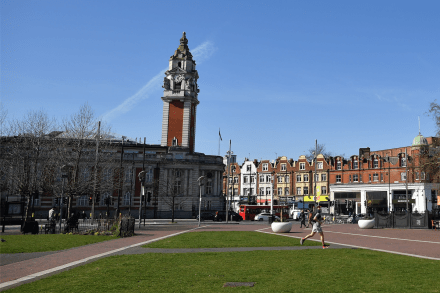
As if Rotherham, Rochdale, Telford and other places were not enough, last week we had another local authority child sex abuse scandal, this time from Lambeth. The child sex abuse inquiry’s damning report concluded that for years councillors and local authority managers in the borough were too indolent, too concerned with politics, and at times too compromised with local pressure groups, to take steps to protect some of the most vulnerable children in their care. The sufferers, as ever, were the children. Meetings, inquiries and promises to do better from Lambeth and other councils up and down the kingdom are a certainty. But it may be time for some more blue-sky thinking. True, any decent state needs to look after the young, the old and the vulnerable.

The sorry state of the modern apology

From our UK edition

I think I would like to apologise for this article in case someone who reads it takes offence. I will not mean the apology, of course — it will simply be an attempt to get me out of the mess occasioned by own words. It will not get me out of the mess, however, but make things worse, because an apology is an admission of guilt. This is Type One of the Modern Apology — meaningless and counter-productive, usually something enforced by employers or party bosses, people in charge. A desperate attempt to save one’s skin which always, always, does the reverse. It is usually accompanied by a painful explanation, along the lines of: ‘I deeply apologise for any offence I may have caused.

Stop using toddlers as pawns in the COVID war games

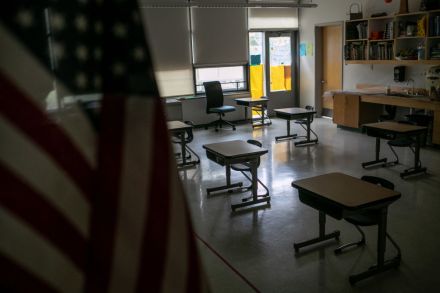
Maddie, my three-year-old daughter, is home this week because one of her classmates tested COVID positive. You read that right. It’s July 2021, but our toddler, who is at virtually no risk of transmitting or getting sick from COVID, is forced by the ruling class to be out of school, as are her 23 tiny classmates. So while I try to do work as I listen to Maddie talk to her imaginary friends, I’d like to pose a question to those making and enforcing policy in Sacramento and Los Angeles. When is it enough? The folks now telling our beloved Montessori school to shut down the offending class do not seem to be the brightest among us — what with their unwillingness to grasp and apply basic science — so I’ll define the ‘it’.

toddlers covid

It’s time to repair the damage done to the Covid generation’s education

From our UK edition

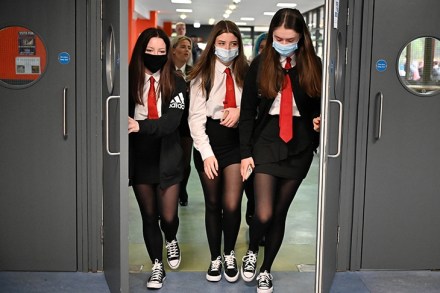
Aswitch of personnel at the Department of Health this week has brought a welcome change in the government’s tone. No longer, it seems, are ministers looking for reasons to delay the final stage of lifting lockdown restrictions. After 16 months of curtailments on liberty, 19 July is inked in as the day when society and the economy will finally throw off the shackles of Covid restrictions. The vaccines mean that the virus has been downgraded to the status of flu and pneumonia: nasty bugs, sometimes fatal, but not enough to warrant locking down society with all the immense collateral damage that entails. Yet as pubs, theatres and concert halls are allowed to fill again, it is important to remember that recovering from the pandemic is about more than just reopening society.

Why Chinese women don’t want more children

From our UK edition

Years after my mother and I left China, I found out the real reason why. A neighbour had reported my mother for being pregnant with her second child. She was paid a visit by local officials who gave her a choice: she could either take herself to the abortion clinic or they’d take her there themselves. She chose a third option: to move to London to join her husband, who was working in the UK. In August 2004, when six months pregnant, she left her family and friends behind in Nanjing. My brother was born later that year in Kingston Hospital. Other families weren’t so lucky. Beijing demographers were concerned that food production would not keep up with population growth. And it wasn’t just the Chinese who were worried.

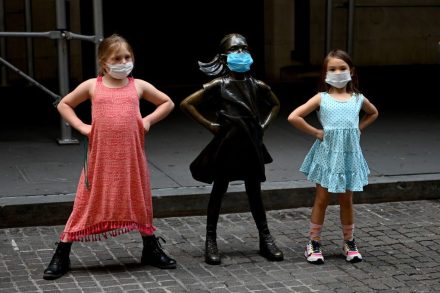
Why are we making kids under 12 mask up?

Yesterday, the American Academy of Pediatrics released an embarrassment of a statement urging kids under 12, who can’t yet get the vaccine, to keep wearing their masks. AAP president Lee Savio Beers said in the statement, ‘Children under age 12 are not yet eligible for the vaccine, so it’s smart to be cautious and careful, especially when they are playing with friends, accompanying their parents to the grocery store, attending school or camp, and in any other situation in which they are around groups of people, some of whom may not be fully vaccinated.’ Notice there is no reference to a study or any data that supports the assertion that masks on children are at all useful. There aren’t any.

mask

The problem with Britain’s mental health

From our UK edition

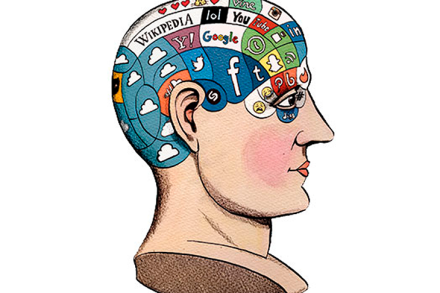
Experts tell us that we are facing a mental health ‘time bomb’ in the UK, partly as a consequence of Covid restrictions and partly because we have a Conservative government which has as its apparent main priority a malevolent desire to see people go insane and, hopefully, kill themselves. I am paraphrasing the experts here, all of whom hate the Tories and want more money spent on their area of expertise, i.e. mental health.

Bad news, Boris – childcare has cost me £500,000 (and counting)

From our UK edition

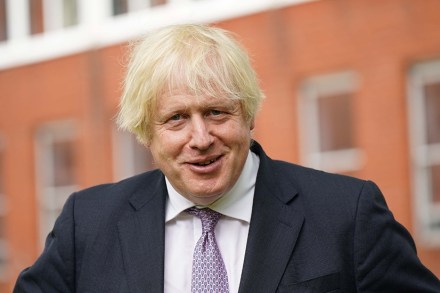
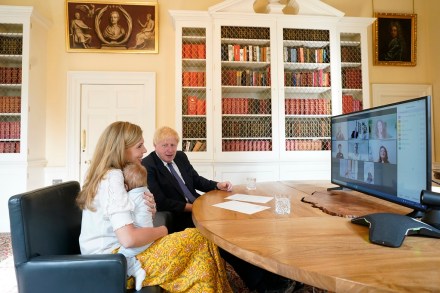
Has Boris Johnson only just discovered the ruinous cost of childcare in this country? He has, allegedly, been seeking a rich donor to pay for a nanny for his one-year-old son Wilfred. What’s surprising is not that the Prime Minister has apparently told friends he needs £300,000 a year to keep on top of his outgoings (life gets expensive when you have multiple dependents and properties), but that he has only now realised the cost of finding someone to look after his son. And how even a dual-income couple will struggle. Especially in London. I should know: I have been paying for full-time childcare for almost 14 years. For the most part, I have been in denial about the crippling cost.

Westminster and the truth about the class ceiling

From our UK edition

I come from the Lancastrian town of Ormskirk, which, though pretty, provided little in the way of opportunity or aspiration. No one in our family had been to university. I qualified for free school meals. Expectations for my future were low. But I was lucky. I had great mentors and ended up in Downing Street. I also worked for a Prime Minister who believes in social mobility and put ‘levelling up’ at the very centre of his premiership. This was the reason I came into politics too. Boris Johnson understands that the need for social mobility is now more urgent than ever, as we emerge from lockdown. While the food poverty debate raged last summer, and the government found itself losing a PR war with the footballer Marcus Rashford, I attended a cabinet meeting.

The problem with ‘role models’

Watching the funeral of the Duke of Edinburgh at the weekend — that Land Rover, that lack of eulogy — I felt an alien emotion steal over me. Shortly after the last blast of the bagpipes faded away, I realised what it was: I’d like to be like that. Amusingly, the only person this working-class radical feminist has ever felt this emotion towards was a reactionary prince. Somehow, the very incongruity made perfect sense; I can’t think of anything drearier than having a ‘role model’ who was in any way like me. There are quite a few modern phrases which annoy the heck out of me. ‘Reaching out’ should only be used by a member of the Four Tops, while ‘Going forward’ should only be used of cars.

Do schools really have a problem with sexual violence?

From our UK edition

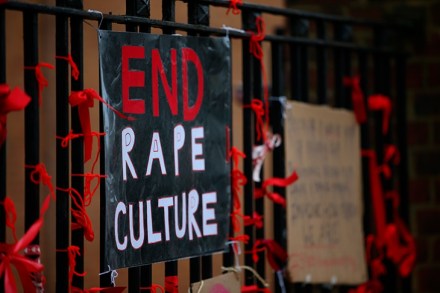
I hadn’t heard of Everyone’s Invited until a few weeks ago, despite being mother to a 15-year-old girl. I was a little surprised to learn that the forum making the front pages, on which predominantly teenaged schoolgirls share their experiences of every-day sexism, sexual harassment and worse, was actually founded in June last year. The site received no prominence until it went viral following the death of Sarah Everard. As I write, the testimonies of those Wikipedia is terming ‘survivors of rape culture’ number almost 14,000.

Britain’s Covid baby bust is bleak news

From our UK edition

These are lean times for hospitality and retail. But at least pubs and shops have their champions, popping up on our television channels and radio stations. The squeaky wheel gets the oil, or in this case, taxpayer-funded grants. Where, though, are the voices raised for another activity – also struggling before lockdown – and now facing its own unprecedented crash. Who cares about babies? Truly, births need a push. Predictions of a boom in coronababies were way, way off. Britain, in common with many other developed nations, is experiencing a sharp new slump in fertility, the full extent of which remains unclear. If our neighbours are anything to go by, we are in for an epidemic of empty cradles. The number of babies born in France is down by 13 per cent.

What my misspent youth taught me about handling ‘problem’ children

From our UK edition

I’m teaching a boy named Drayton. He’s from a typical Coventry family. I should know. I went to school in ‘Cov’. It seems like only the day before yesterday I was hopping the fence with Drayton’s older brother to go to KFC. But that was ten years ago. These days, Drayton orders an Uber Eats to be delivered through the palisade bars of the steel fence. And I’m the one in authority who is supposed to be reining him in. ‘Easy, Bossman. What we doing today?’ is how he addresses me as he enters my classroom. ‘Now, now, Drayton. It’s Sir, to you,’ I say. ‘Yeah, dat’s calm, innit.’ Which means that’s OK with him. He asks me for a pen, then a pencil and finally a ruler as he does his work.

Why is it racist to wonder what colour your child’s skin will be?

From our UK edition

Maybe I missed something here. Or maybe I am just completely naive. But why is it racist to ponder what the skin colour of a new baby will be? According to most of the American and British media, post the Harry and Meghan interview, it absolutely is racist. It’s horrendous. Evil. Bigoted. Especially so in the US (a country where barely over 10 per cent of the married population is actually inter-racial). But these are generally the views of people who don’t actually know what they are talking about. Because they are not part of, or in the slightest bit close to, an inter-racial couple. So first the obvious declaration of interest: I was born in Mauritius. I look Asian. Or brown if you prefer. My wife was born in Slovenia. She is white and blonde.

What did Spectator writers really get up to at school?

From our UK edition

Rod Liddle If you leave a Bunsen burner on for about ten minutes, then quickly put the rubber pipe over a water tap and turn it on full, you get a small explosion and a scalding stream of water to be directed at a boy called Harris. Similarly, if you attach crocodile clips to Harris’s jacket and then wire it up to a power source, it makes him jump about a lot. I loved physics lessons. Jeremy Clarke Snow in the playground. The tall caped figure of the headmaster appeared on a short outside staircase — a rare balcony appearance of a benign, reclusive demigod. One long-distance snowball among the flying hundreds, arcing higher than the rest, travelling through the air in slow time, apparently laser guided, is fixed in the memory of all who saw it.

The conservative appeal of drug gangs

From our UK edition

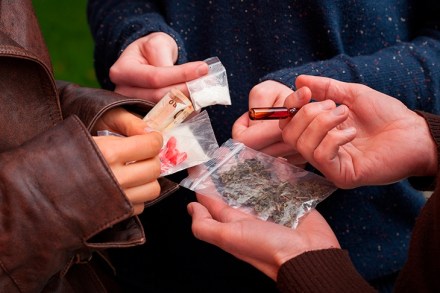
According to the Metropolitan Police Commissioner Cressida Dick, the easing of lock-down will be accompanied by a rise in crime in the capital, including the violent type associated with drug gangs. Just last week, the police recovered two zombie knives, two Rambo-style blades and a kitchen knife at the scene of an attack on a 16-year-old boy in Brixton. But it would be wrong to view this coming crimewave as a problem that just affects London’s underclass. According to Sheldon Thomas, the chief executive of an outreach organisation called Gangsline, a rising number of middle-class teenagers are being sucked into the gangster lifestyle in the wake of Covid. Thomas rather uncharitably attributes this to ‘the phenomenon of loveless middle-class homes’.