Childlessness

Are we failing the next generation? – with Camilla Cavendish & Gloria de Piero

From our UK edition

52 min listen

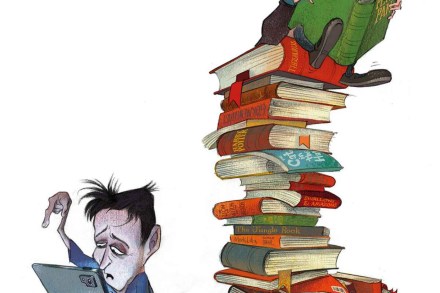
For this week’s Edition, William Moore is joined by the Spectator’s commissioning editor Lara Brown, Financial Times columnist and peer Camilla Cavendish and broadcaster and former Labour MP Gloria De Piero. This week: are screens creating a new education divide? Lara examines the growing backlash against technology in schools. What began as an attempt to create a generation of ‘digital natives’ has left children as young as four doing reading and maths on gamified apps – despite little evidence that they improve learning. State schools are spending hundreds of millions of pounds on 'EdTech', while some of Britain’s leading private schools are moving back towards books, handwriting and screen-free classrooms.
Are we failing the next generation? – with Camilla Cavendish & Gloria de Piero

Where have all the children gone? A demographic winter sweeps the world

From our UK edition

A gorgeous blonde crosses the threshold of a softly furnished Parisian hotel room, hand in hand with a man. It is, we are told, the same room in which she was conceived 30 years earlier. The scene opened ‘Do It For Denmark’, a 2014 ad campaign by a Danish travel company, attempting to turn Paris into a sales pitch for parenthood after the country’s birth rate had plummeted to a 27-year low. Tongue in cheek, the advert claimed that 10 per cent of children are conceived on holiday.   More than a decade on, the same story is unfolding worldwide. In Generation Maybe, Camilla Cavendish, the former head of the Downing Street Policy Unit under David Cameron, charts an ‘extraordinary wave’ of childlessness sweeping the world.

The ordeal of sitting for my father Lucian Freud

From our UK edition

The frontispiece of this book is Lucian Freud’s portrait of his daughter Rose naked on a bed. Rose says that when her father asked her to sit, which she had long hoped he would do, she naturally assumed he would want her naked, but asked him not to paint her hairy legs. He, in turn, asked her to remove her mascara, but she refused. When she saw the canvas she was shocked at how much it focused on her vulva, but she did not object. She sat for him at night – he had other sitters during the day – and he sometimes gave her purple hearts to keep awake. When the portrait was finished, she took on the task of cleaning Freud’s studio, which ‘made me feel special, downtrodden, and loved for all the wrong reasons’. Rose was born in 1958, 18 months after her brother, Ali.

Picture study: Second Self, by Chloë Ashby, reviewed

From our UK edition

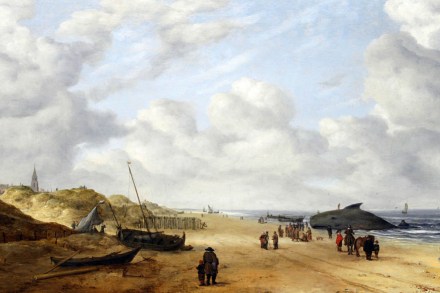
Having established a name for herself as a talented art critic for the national press, Chloë Ashby employs her expertise with illuminating effect in her fiction. In her first novel, Wet Paint, she used the uncomfortable gaze of the barmaid in Manet’s ‘A Bar at the Folies-Bergère’ to explore how her protagonist sees and is seen. In her new novel, Second Self, the central painting is ‘View of Scheveningen Sands’ by Hendrick van Anthonissen, which again becomes an insightful parallel to the protagonist’s life. Cathy, 35, an art conservationist, is happily married to Noah, 11 years her senior, an academic and authority on international relations.