Charles darwin

Why spiders deserve our respect, not fear or disgust

From our UK edition

I had not thought much about spiders until I read Maria Tatar’s Arachnomania; now I can think of little else. I even watched a film mentioned in the book – Eight-Legged Freaks. It was awful, though it did bring home how very scared people can be of spiders, especially large ones. But, as Tatar shows, spiders are also part of human history and culture; and they really are different. I use fly sprays to get rid of insect intruders. I would never now use them against arachnids as well. Tatar was first drawn to spiders by the Covid pandemic which locked us all down. It was then she discovered that the eight-legged freaks offered the possibility of ‘finding a model for survival and creativity in times of seclusion, darkness and gloom’. They are, as we shall see, paragons of survival.
The theater of the Galápagos Islands

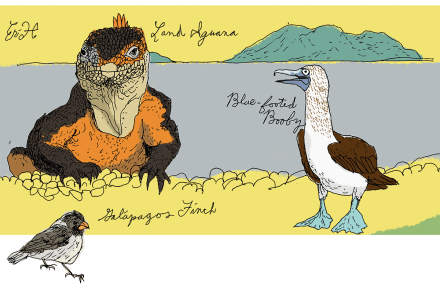
It was stiflingly hot in the middle of the Pacific Ocean. I was exploring the eastern Galápagos Islands, living cheek-by-jowl on a former casino ship with a cast of characters plucked straight from a murder mystery novel: a former British supermodel, an Ecuadorian presidential candidate, the ex-drummer of a band who once supported the Who and an influencer couple who looked like they had stumbled off the set of Triangle of Sadness. The stars of the show – and boy did they know it –were the sea lions While the trip had all the ingredients to cook up an irresistible whodunit, I was not just there to inspect the wildlife on board but to observe the wildlife off it.

Charles Darwin’s contribution to Patagonia’s grim history

From our UK edition

It was a journey Bruce Chatwin hankered to make: to Southampton and the grave of General Juan Manuel de Rosas, the exiled Argentine dictator described in the Southampton Times after his funeral in 1877 as ‘one of the most cruel, remorseless and sanguinary tyrants who ever existed on Earth’. Chatwin died before I could accompany him to the Hill Lane Cemetery, but four years later I stood with his widow in front of Rosas’s ornamented tomb in Buenos Aires as we prepared to meander south on a 2,000-mile car journey in his footsteps. In 1989, the year of Chatwin’s death, President Menem decided to have Rosas’s remains repatriated as a gesture of national reconciliation. Their arrival was greeted by mounted lancers wearing Rosas’s signature red uniform.

Survival of the hottest: evolution’s fun side has been long overlooked

From our UK edition

The theory of evolution is dominated by the utilitarian logic of natural selection: adapt or die, survival of the fittest. But consider that ‘fit’ has two meanings these days: ‘healthy’ but also ‘hot’. There is another evolutionary mechanism that scientists have taken a longer time to appreciate – seduction by the hottest, rather than survival of the fittest. It generates very different and much stranger outcomes. Perhaps even the big brains of human beings evolved as seduction devices more than survival aids. When an animal selects a mate, it can shape the future of its species just like breeders of dogs shape different breeds. Sexual selection through mate choice is the ‘fun’ version of evolution, able to generate random, arbitrary and bizarre innovations.

The Galápagos evolution even Darwin didn’t foresee

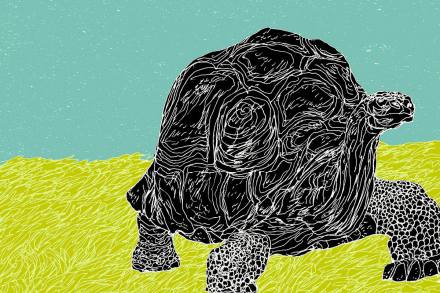
Lonesome George, a Pinta Island giant tortoise, spent the latter half of his hundred years munching on cacti and roaming around the Charles Darwin Research Station on the Galápagos island of Santa Cruz. He borrowed his name from the 1950s American comedian and actor George Gobel and one of the three B-52 Stratofortresses that completed the first non-stop jet circumnavigation of the world in 1957. But the name was ultimately more fitting for the tortoise who was the last of a million-year-old species. In 1959, fishermen introduced three goats to Lonesome George’s home of Pinta Island, one of the smallest islands of the Galápagos archipelago. Just ten years later, they had multiplied to around 40,000.

Galápagos

What Charles Darwin got wrong

Have you noticed that whenever the conversation turns to the subject of Charles Darwin, an extraordinary amount of dogmatism is often on view?  What’s curious is that the dogmatism is patent on both sides of the debate, on the side of the Darwinists just as much as the side of Darwin’s critics.  I have often noted with amusement how sensitive to criticism the Darwinian faithful are. Any hint of a shadow of dissent and they rush for the garlic, the wooden stake and a signed copy of On the Origin of Species. I think I understand the psychology of the response. They are terrified lest acknowledging the strength of this or that criticism start them down the road toward creationism and teaching the Book of Genesis in Biology 101. Where does the truth lie?

charles darwin

There’s nothing shameful about hypochondria

From our UK edition

The hypochondriac is the butt of jokes. Even his butt is the butt of jokes. A story doing the  rounds in the 16th and 17th centuries concerned a Parisian glassmaker who, believing himself to be also made of glass, fastened a cushion to his buttocks in case they broke when he sat down. His anxiety was mocked by a character in a play called Lingua, Or the Combat of the Tongue: ‘I am a Urinal, I dare not stirre,/ For fear of cracking in the Bottome.’ The aim of A Body Made of Glass is to take hypochondria, or ‘illness anxiety disorder’, seriously. But in a moment of levity, Caroline Crampton compares laughing about hypochondria to laughing about farts being made visible ‘like soap bubbles in the air’.

Dinosaurs, dogma and the Victorian mind

From our UK edition

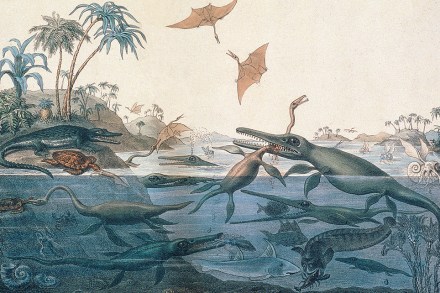
In March 1860, shortly after The Origin of Species was published, Charles Darwin wrote to Leonard Horner thanking him for some surprising information. ‘How curious about the Bible!’ he exclaimed. Horner had taken aim at the marginal notes that were printed in the standard (and ubiquitous) Authorised, or King James, Version. These began with the date of creation, 4004 BC, as calculated by Archbishop James Ussher in the 17th century. Darwin was astonished. ‘I had fancied that the date was somehow in the Bible,’ he wrote.

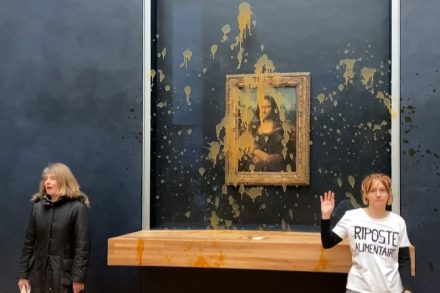
Environmentalism: from concern about clean air to throwing soup at the Mona Lisa

Garrett Hardin was a professor of biology and environmental studies at UC Santa Barbara. His “commons” was a metaphor drawn from the traditional English practice of shared grazing and agricultural land to which all members of a community had access. Commons were inherently prone to abuse, Hardin argued, because every user of the commons will exploit it to maximize personal benefit without regard to the other users, leading ultimately to the collapse of the commons as a useful resource. Hardin extended the metaphor of the commons to include all natural resources, including the air, water, other species, even the entire Earth. The tragedy of Hardin’s expansive commons was the inexorable march to environmental doom, driven by the folly of human freedom.

tragedy commons

The mad, bad and dangerous theories of Thomas Henry Huxley

From our UK edition

Racism lies at the heart of the Victorian rewrite of the creation myth. What happened in prehistory, according to Thomas Henry Huxley, Darwin’s representative on Earth, was that while Homo sapiens emerged from its primitive state among the other apes and lemurs, some – Europeans – developed at a faster rate. Humankind had evolved from a ‘hairy, tailed quadruped’, which was itself ‘probably derived from an ancient marsupial animal’ (Darwin). But once the human species emerged, ‘men differ more widely from one another than they do from the apes’.

My literary heroes have led me astray

From our UK edition

Gstaad   Good manners aside, what I miss nowadays is a new, intelligent, finely acted movie. Never have I seen so much garbage as there is on TV: sci-fi trash, superhero rubbish, dystopian crap and junk about ugly, solipsistic youths revolting against overbearing parents. The director Jimmy Toback blames the subject matter for the lousy content, driven as it is by the need for diversity. I think lack of talent is the culprit. The non-stop use of the F-word is a given in Hollywood productions. Combined with constant violence, it makes for a lousy and unwatchable film.

The Spectator, war and slavery: a note on our history

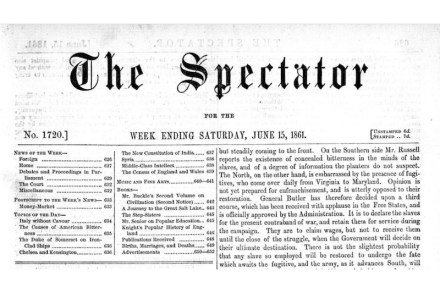
In her article about the point of protest, Tali Fraser mentions the support of Manchester in the 1860s for the North against the slave-owning South in the US civil war. At the time, this was an unpopular cause amongst the British elite. Of all the publications still around today, only one backed Abraham Lincoln then: The Spectator. The magazine almost went bust as a result. I remarked a few days ago that what sets us apart from other long-running magazines is that our values have not changed much since we were founded in 1828 – or, indeed, since the The Spectator appeared in its original form in 1711. That aroused some teasing: surely, some asked, a magazine needs to change with the times?

slavery

Where did birds first learn to sing?

From our UK edition

The crisis inflicted by Covid-19 has been a source of anguish for everyone; yet we frequently hear how people are rediscovering solace in nature, especially in their gardens or in the surging renewal of life in the spring. According to Tim Burt and Des Thompson, the editors of a collection of essays about the importance of field research, this fulfilment reveals something much more profound than a distraction from lockdown.They argue that a response to the natural world is hardwired in the human psyche. Out of that fundamental reflex has evolved not just our prowess as hunters, then agriculturalists, but the entire edifice of science, whose assembled vision of the physical universe was described by C.P.

An American in Darwin’s family

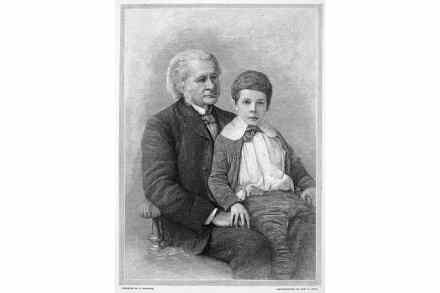
In the spring of 1883 my mother, Maud Du Puy, came from America to spend the summer in Cambridge with her aunt, Mrs Jebb. She was nearly 22, and had never been abroad before; pretty, affectionate, self-willed, and sociable; but not at all a flirt. Indeed her sisters considered her rather stiff with young men. She was very fresh and innocent, something of a Puritan, and with her strong character, was clearly destined for matriarchy.The Jebbs, my great-uncle Dick, and my great-aunt Cara, lived at Springfield, at the southern end of the Backs, and their house looked across Queens’ Green to the elms behind Queens’ College.

raverat darwin

A gas-lit world

For me, a home without Period Piece is like a house without a cat — lacking an essential cheering and comfortable element. I have loved Gwen Raverat’s memoir of growing up in Cambridge in the 1890s ever since I first read it 20 years ago when recuperating from a bad bout of ’flu, at that blissful moment when you are feeling better but not quite strong enough to get up and do anything. I can still recall the delicious feeling of reading and dozing, dozing and reading, snug in the gas-lit world of Victorian Cambridge, until the January afternoon outside the bedroom window gradually turned purple and faded into dark.

period piece