Champagne

Why is the wine industry dying?

Most wine columns resemble recipes from Larousse Gastronomique or Mastering the Art of French Cooking in this way: they have happy endings. This column, alas, proceeds with a melancholy burden. The world of wine, it pains me to report, is in the doldrums. Is it because of a new infestation of phylloxera, the blight that devastated French vineyards in the 19th century, or some other pest? Is it some novel tyranny of teetotalers, outlawing the production and consumption of wine? No. It is something closer to original sin or what Immanuel Kant on a dreary afternoon called “the crooked timber of humanity” out of which nothing straight can be fashioned. In short, it is the news that the wine industry itself is dying. Why?

What doesn’t kill Egly-Ouriet makes it stronger

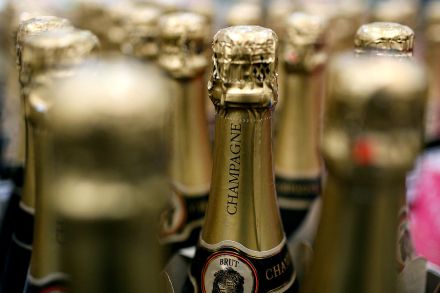
In recent columns, we have visited some lesser known spots in Burgundy – Saint-Romain, Maranges, Ladoix – where the wines are good and the prices reassuring.  This time, I’d like to travel to Champagne to introduce you to one of my most exciting recent discoveries, the wines of Egly-Ouriet. You know about Dom Pérignon, Krug, Bollinger and Taittinger. They can be very good. Egly-Ouriet is something else. Remember that Champagne occupies the northernmost precinct of French wine production. The northeastern bit of the area borders Belgium. It’s chilly up there, and damp. Nietzsche famously declared that, “What doesn’t kill me makes me stronger.” That may not be true of people. I am pretty sure it is not. But the observation has a certain application to wine.

egly-ouriet

Why I am confident the Champagne tariff will not last long

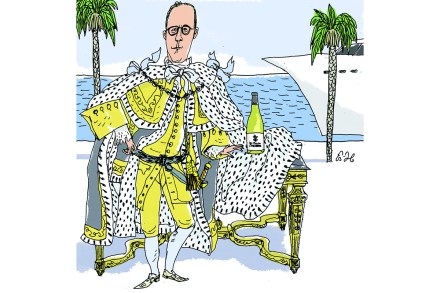
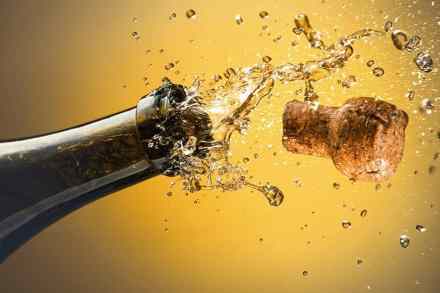
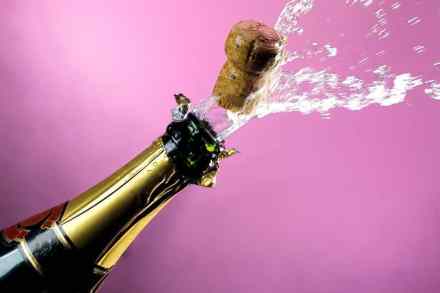
I have to begin this column with a glass of Pol Roger cuvée Winston Churchill. It’s fancy stuff, and — according to some — it’s a bit early in the day to be quaffing Champagne.  “How early is too early?” I’ve often wondered that. The jury is out but most of the best authorities say that any time before actually awakening is too early.   Why the shampoo (as David Niven was wont to denominate the beverage)?  It seemed like the appropriate expedient in response to a bulletin I received from a Trump-skeptical friend. It came in over the headline, “Trump’s first mistake.

palm beach wine champagne

Catching my breath in Paris

September felt like a long month — and I needed to escape London. The Spectator had just been sold — and while the transition from one editor to another brought excitement, it was also exhausting for everyone. Paris felt like the perfect retreat. And of course, the Eurostar is the fastest — and most enjoyable — way to get there from London. A friend of mine lives near the Gare du Nord, and as she was in London for a night, I borrowed her keys, jumped on the train and arrived in Paris as evening fell. Alone and hungry, I made my way to Les Deux Gares, a stylish hotel nestled between Gare du Nord and Gare de l’Est. Designed by Luke Edward Hall, whose aesthetic is unmistakably English, the restaurant inside is quintessentially French — and superb.

Paris

A Champagne winter

Most readers will come to this column in February. “That’s the dead of winter,” you say (if you are in the Northern hemisphere, anyway). But I write at the absolute nadir of daylight. For some years now, I have kept a daylight diary. I generally start in mid-October and go through the return of daylight-saving time in March. It takes that long to convince me that summer really is on its way back. When I started, I simply noted the time the sun rose, when it set and how much daylight we had that day. I eventually got a little more elaborate, noting the phases of the moon and such, and making very brief annotations about significant events. Every year (so far), it’s been a story with a happy ending.

winter

Breakfast wine is where it’s at

In the old days (2019), mimosas and Bloody Marys were really the only the socially acceptable forms of alcohol that could cross your lips before 12 p.m. To drink earlier would be a worrying indicator that you’re an alcoholic, or worse, a professional writer.  That benighted era is safely in our rearview.  Of all of the widespread cultural habits that have emerged post-Covid — obsessive hand-washing, a prickling fear of close-talkers, a desire to squeeze every morsel of conviviality possible out of even the dullest social exchanges — by far the best is the wholesale rejection of A.M.-drinks policing. And the biggest winner is the breakfast wine.

breakfast wine

Champagne and America is a love story without end

From the beginning, Champagne has never been just a drink, or a region: it’s a celebration, an occasion, a trophy, a reward; a symbol of joyful decadence and glamorous debauchery; the overflowing drink of the American Dream. In short, it’s a boozy cheat sheet for the zeitgeist and the anxieties and dreams of the people who sip it. And, for the past seventy-five years or so, that zeitgeist has been driven by the United States. “American culture pervades everything,” says Christian Holthausen, a dual French-American citizen and founder of the Paris-based Champagne consulting firm Westbrook Marketing Partners. “Driving through Paris just now, I saw a Coca-Cola machine on one street, and a billboard for Apple on the next.

champagne

Succession is a foodie’s nightmare

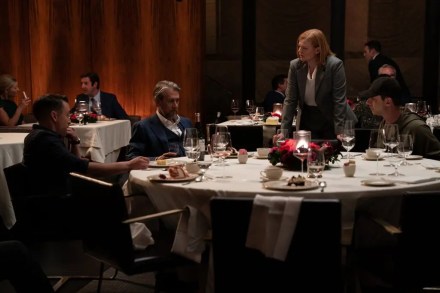
What does the man who has everything really want for dinner? A humble hamburger — at least, that’s what Succession seems to be telling us. In the season four opener, Murdoch-esque media mogul Logan Roy slips away from his lavishly catered birthday party and decamps to a low-key diner, where he mulls the meaning of life in the company of monosyllabic bodyguard Colin. “What are people?” asks the tycoon, before concluding, depressingly, “Economic units.” This existential crisis with a side of fries is (spoiler alert) Logan’s on-screen Last Supper, and it reveals more about him and his ilk than a disdain for canapés. Food is everywhere in Succession — yet rarely is anybody enjoying it much.

Succession

How to drink like the Queen this weekend

Cockburn joins the rest of the world in mourning the good Queen Elizabeth II, a stalwart figure of grace and warmth who endured much during her long life and seventy-five-year reign — often, incredibly, with an impish twinkle in her eye. The Queen worked as a truck mechanic during World War II, served alongside fifteen prime ministers, including Winston Churchill, lived through fourteen US presidencies, and weathered the marriage scandals of Princess Diana and Prince Charles, the heartache of Diana’s tragic death, Meghan Markle’s endless attention-seeking antics, and an exhausting schedule of public appearances. It's no wonder the woman liked to enjoy a drink — or four?

The vineyards of Kent

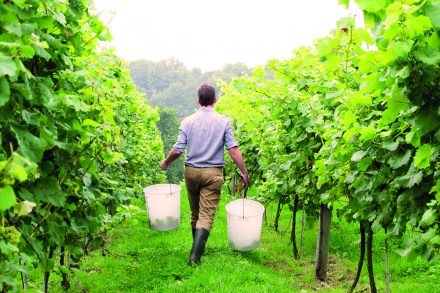
Driving home through Kent the other day, I was struck by how much the topography has changed. When I was growing up there in the 1970s, first in Rolvenden and then in Hawkhurst, there were hop gardens. Today there are vineyards. I’m not sure Alfred Jingle would recognize the county about which he stated in Pickwick Papers: “Kent, sir — everybody knows Kent — apples, cherries, hops and women.” The apple and cherry orchards are not nearly as numerous as they were in either his day or mine, and the hop gardens have largely, although not entirely, disappeared. As for the women, I can’t vouch for their numbers, but I’m delighted to report they remain very easy on the eye. I loved picking hops.

kent

Let Cockburn debase himself at your Christmas party

It is, as Andy Williams memorably put it, the most wonderful time of the year. Christmas party season has hit the Swamp — and naturally Cockburn is in his element. He has dusted off his dowdiest Clark Griswold cardigan and Santa hat. He has stocked up on milk thistle and Brita filters to abate the inevitable daily hangovers. His social calendar is quickly filling up with invites from think tanks, embassies and slightly grubbier magazines than this one — but it could be fuller still. Email your party invitations to cockburn@thespectator.

christmas party

The finest festive fizz

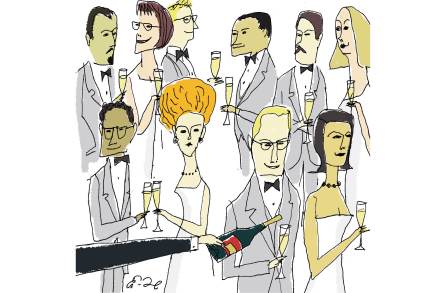
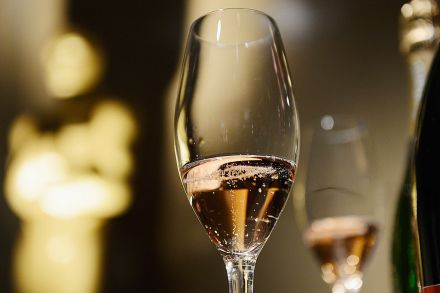
A dinner party without good conversation is like flat Champagne: pretty pointless. It’s like that not-so-funny joke about the inscription on an atheist’s tombstone: “All dressed up and nowhere to go.” Of course at a miserable dinner party you and your glad-rags have reached a destination of sorts, but (as for the late atheists) it’s not the one you were expecting. How to avoid such an infernal disappointment? Jean-Paul Sartre famously felt that hell was other people; all I can say is, that’s no attitude to bring to the table.

champagne

Drinking with James Bond

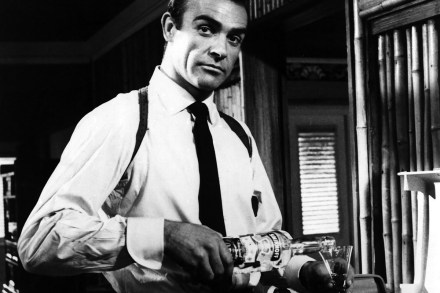
James Bond’s most impressive talent is not his prowess as a spy or his skills of seduction. It’s his ability to always get exactly what he wants at the bar. In the 1954 novel Live and Let Die he orders a round of Old Fashioneds while on a train to meet Felix Leiter, his CIA opposite number. Not only does the buffet car make them for Bond, they even have his preferred brand of bourbon, Old Grand-Dad. You try pulling that sort of thing on the Acela from Penn Station to DC. ‘Sorry Solitaire, they wouldn’t do us a cocktail, but I’ve got a cup of Lipton’s and a bag of pretzels.’ We’d all like to drink like Bond but, lacking his miraculous powers, we need to be in the right sort of bar to do it.

bond

Bubbles in paradise

I remember being taken aback when reading, in Geoffrey Madan’s delightful Notebooks, a cynical remark by Lord Lyons: ‘If you’re given Champagne at lunch, there’s a catch somewhere.’ Au contraire, my dear Lord. But then that same peer stated that ‘Americans are either wild or dull.’ Obviously he was an unreliable source. Lily Bollinger, former manager of the Champagne producer, admirably summed up my own view. ‘I only drink Champagne when I’m happy,’ she said, ‘and when I’m sad. Sometimes I drink it when I’m alone. When I have company, I consider it obligatory. I trifle with it if I am not hungry and drink it when I am. Otherwise I never touch it — unless I’m thirsty.

champagne

In praise of the Midwestern steakhouse

This article is in The Spectator’s February 2020 US edition. Subscribe here. In the 20th century, you joined a city or country club for status and a good meal on the regular. But who wants to eat the same food from the same chef every meal for the rest of your life? Now we go to restaurants. There’s always a new spot, a new dish, a new someone you need to impress by swiping right across the menu. It’s been my lifestyle choice for over a decade now. My life revolves around food, and most of my monthly budget goes on gastronomy. But I’m tired. Most of these hotspots just aren’t that hot. My jaded palate needs something new — or rather, something old.

steakhouse