Ccp

The ‘great man’ era is passing away

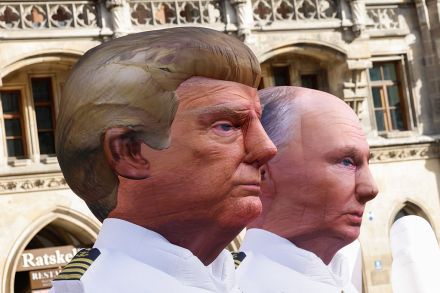
Not long ago, I participated in one of the many off-the-record discussions in Washington about ending the war in Ukraine. This conversation was quite detailed, with American academics and policy wonks asking a European who was especially well-informed on Russian matters just what a land-for-peace deal or security guarantees acceptable to all parties might look like. When my turn to speak came around, however, I had to wonder whether all this wasn’t moot. There just isn’t much time to reach an agreement – let alone implement one –before the end of Donald Trump’s second term. And when America elects its next president in November 2028, Vladimir Putin will be 75 years old.

China has quietly taken over America’s food supply

For all the talk about artificial intelligence and quantum supremacy, the fate of civilizations still depends on breakfast. ChatGPT can’t grow corn. Empires rise on stomachs as much as on silicon. And America’s food system – long dismissed as safe and self-sufficient – has quietly become a front line in the US-China rivalry. We act as if lunch is inevitable, but Beijing knows that food is power. A new report from the America First Policy Institute should wake us up. Washington long treated agriculture as a post-political space where globalization could do no harm, and was therefore happy to let much of the nation ship its growth to China. As Ambassador Kip Tom and Royce Hood argue, China has thus taken over critical pieces of the US agricultural system and food supply.

china america food supply

How China bought Britain

From our UK edition

Somewhere in the bowels of the Foreign Office, civil servants are still working on the government’s ‘China audit’. The report was commissioned by the new Labour government to ‘assess trade-offs in the UK-China relationship’ and to ‘ensure consistency across government, business and academia towards engagement with China’. Little is known about its workings or who’s being consulted. Instead of bringing clarity, the process is deepening confusion, and there are worrying reports that the audit has been pared back to support Keir Starmer’s ‘pragmatic’ approach. All the while, there have been a series of troubling events that demand extreme caution about Beijing. The British Steel debacle is only the latest.

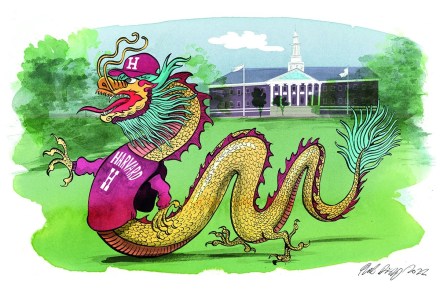
Harvard’s intricate China ties

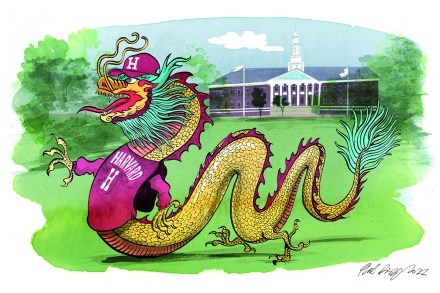
Scratch almost any major US political story and sooner or later you’ll hit a big red nerve that belongs to the Chinese Communist party (CCP). Tariffs, energy, TikTok, the border, Fentanyl, Greenland, Panama, the Gulf of America – on all these subjects the Trump administration is, one way or another, trying to limit Beijing’s power in the West. And Donald Trump’s "war on Harvard," it turns out, is no exception. It’s clear that the President is pushing against anti-Semitism and the Diversity, Equity and Inclusion madness on America’s most famous campus, as well as in countless other colleges and universities.

Harvard

What does it take to be ‘an old friend of the Chinese people’?

From our UK edition

38 min listen

The term ‘old friend of the Chinese people’ might seem a colloquial, almost sentimental, phrase to appear in official diplomatic language, but in the Chinese context, those words have a very specific meaning. Most often, they refer to high profile foreigners whose actions have helped the Chinese Communist Party in one way or another. The most famous of these is Henry Kissinger, who led the way for American rapprochement with China. That the CCP gives various foreigners this honour is revealing of China’s priorities over the decades, but also of its attempts to co-opt foreign forces to its cause. Think back to the United Front strategy, which we looked at on the podcast earlier in the year.

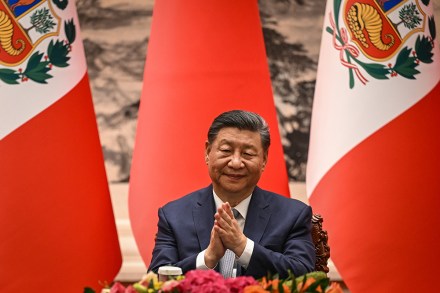
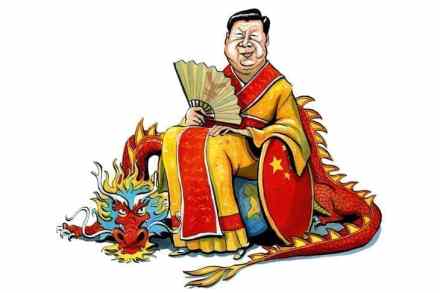
Xi Jinping’s alarming blueprint for the future

From our UK edition

I don’t know what books Rachel Reeves keeps at her bedside, but, since the Treasury still seems to be setting the UK’s China policy, I heartily recommend that she read the former Australian prime minister Kevin Rudd’s magnificent On Xi Jinping. Ideology and -isms may or may not be Reeves’s thing, but while the book is primarily a dissection of Xi’s Marxist, Leninist and nationalist ideas – ‘a form of intellectual biography’, in Rudd’s words – it is of practical value to policy-makers. In laying out how Xi is applying his ideology to China, Rudd provides not only a guide to understanding the Chinese Communist party’s path over the past decade but also a convincing look into the future.

Trump must follow the law on TikTok

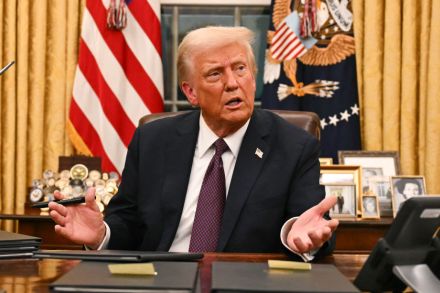
Donald Trump ended his first term in praise of Xi Jinping and China’s overall handling of a global pandemic that up-ended the world, which likely led to his opponent’s election victory over him — and now he appears to re-enter office with same kind of capitulation. It’s not a good look.Trump has attempted to insert an unconstitutional level of presidential power with an Executive Order on his first night in office by blocking the Department of Justice from enforcing a US ban on the popular Chinese spyware app, TikTok. Trump himself once called for a ban on the app, but told reporters in the Oval Office on Monday night that he had never used it before.

Is time up on TikTok?

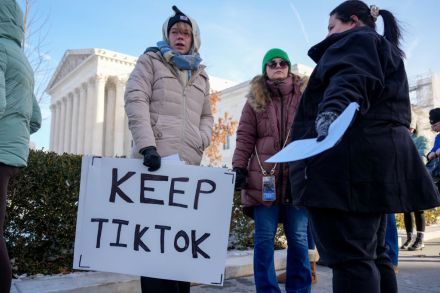
TikTok is hoping that 2025 can be its year — but what comes next for the social media company is truly anyone’s guess. Will someone buy it? Will it divest from its Chinese Communist Party ownership? Will it exist in America next week (the app is fully banned in China as is)? Stay tuned.The social-media app is seeking yet another revival at the eleventh hour. Despite a bipartisan bill signed by President Joe Biden that restricts the ability for foreign adversaries to run social-media companies in the United States, TikTok is activating its army of supporters once more (the app is presumably hoping that its child soldiers will not threaten to kill themselves or lawmakers this time)... and it just might work.

Time is running out for TikTok

TikTok’s days may be numbered in America after all. Following a presidential campaign in which both Donald Trump and Kamala Harris promoted themselves heavily on the platform, despite bipartisan national security concerns over its ownership’s ties to the Chinese Communist Party, a federal appeals court today ruled that the app must break ties with the Beijing-based ByteDance within a few weeks or be banned in the United States.Until the decision, everything was looking up for TikTok. Trump trounced Harris on the platform, and his campaign and top surrogates were active all over the popular social media app.

Why do people join the CCP?

From our UK edition

36 min listen

At last count, the Chinese Communist Party has 98 million members, more people than the population of Germany. Its membership also continues to grow, making it one of the most successful and resilient political parties of the last a hundred years, perhaps with the exception of India’s BJP, which boasts 180 million members. And yet the CCP's track record is strewn with bloody crackdowns and systematic persecution. So what would drive someone to join the CCP, and what accounts for its success? Do party members today all support the atrocities committed by their government? I think these are important questions to ask, because without understanding the answers to them, one couldn’t understand China’s modern history or its society today.

Taiwan can’t escape China’s shadow

From our UK edition

The Taiwanese rock band Mayday – ‘the Beatles of the Chinese-speaking world’ – are being investigated by the Chinese Communist party for the crime of lip syncing. Local authorities are combing through recordings of Mayday’s Shanghai concerts from November looking for evidence of ‘deceptive fake-singing’, as the CCP calls it, which has been illegal in China since 2009 (although the law is rarely enforced). Last month, an anonymous Taiwan-ese government source told Reuters that the investigation had been cooked up because the pop stars refused a request from Beijing to say something nice about China in the run-up to Taiwan’s election this Saturday. The band found itself at the centre of a row between the presidential hopefuls about Chinese interference.

What Beidaihe reveals about the changing nature of Communist leadership

From our UK edition

26 min listen

178 miles to the east of Beijing, there’s a beach resort called Beidaihe. The water is shallow and the sand is yellow and fine. Luxurious holiday villas dot the coastline. Starting from the 1950s, leaders of the Chinese Communist Party have moved their families and work to Beidaihe in the summer, making the beach resort something of a summer capital. Secrecy clouds the gatherings, and though this tradition continues, today the resort seems to serve a much more leisurely purpose when the CCP visits. On this episode, I’m joined by the historian James Carter and Bill Bishop, editor of the very popular Sinocism newsletter, to discuss where Communist leaders go, when they go on summer holiday.

Where has Xi Jinping’s foreign minister gone?

From our UK edition

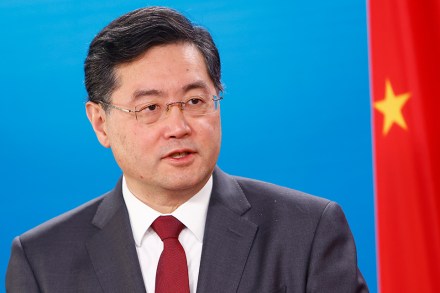
This is the week that James Cleverly planned to be in Beijing to ‘engage, robustly and also constructively’ with China’s communist leaders. But the Foreign Secretary put his trip on hold because the man he planned to engage went missing. Since 25 June foreign minister Qin Gang has vanished without trace, leaving Cleverly twiddling his thumbs and the world wondering what on earth is going on at the top of the Chinese Communist party. The whole bizarre spectacle underlines the challenges of engaging with a system that is so deeply opaque. The mystery deepened on Tuesday when state media reported that Qin was being replaced by his predecessor Wang Yi after just seven months in the job. There was no explanation, and no word on the fate of Qin.

The secret life of China’s Banksy

From our UK edition

The crypt of St John’s Waterloo feels serene and secure, a world away from the bustling city above. ‘I will spend the day here, because I feel safe here,’ Badiucao tells me. The dissident political cartoonist, who has been called ‘China’s Banksy’, is preparing to display his work on the crypt’s newly restored brick walls as part of an exhibition by exiled artists. ‘I don’t walk alone in any city. I don’t feel safe,’ he says. I meet him soon after he flies in from Warsaw, where the Chinese government tried to close down his solo show, ‘Tell China’s Story Well’. Chinese diplomats pressured the Polish government and the Ujazdowski Castle Centre for Contemporary Art, which hosted him.

The Supreme Court is under fire — again

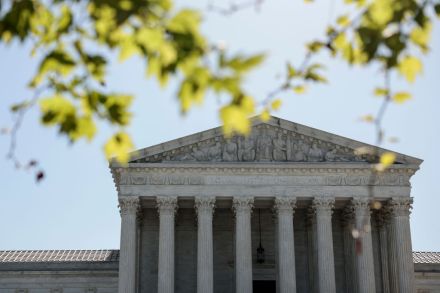
Some weeks it feels like the line between politics and the law has all but vanished. From Hunter Biden’s plea deal and Donald Trump’s ongoing criminal woes to the brouhaha surrounding gifts accepted by Supreme Court justices and John Durham’s appearance before the House Judiciary Committee to defend his report on the FBI and Russiagate, this is one such week.  For more on the Hunter story, check out my colleague Ben Domenech’s latest. Meanwhile, a fresh row about the Supreme Court bubbled up in an unusual way overnight.

The Baltic nations show the world how to defend freedom

It is not inevitable that the Baltic States of Estonia, Latvia, and Lithuania would be among freedom’s most potent defenders. Nestled between the Russian mainland and Moscow’s exclave of Kaliningrad, their only direct connection to their NATO allies is through the vulnerable Suwalki Gap. For its part, NATO only has small rotational forces stationed in the three countries. At first glance, one would expect these tiny nations (Lithuania is the largest at 2.8 million people) to prefer flying under the radar. Instead they have become some of the most vocal and powerful defenders of the Western way of life. Tiny though they may be, the Baltic countries have managed to stand up to the two greatest enemies of freedom at work today, Russia and China.

Mike Gallagher’s China challenge

Twenty-five years ago, bipartisan American consensus about China was built on hope, spin and money. Despite the trauma of Tiananmen Square and caution about China’s true economic intentions, many believed in the potential of capitalist principles to move the Chinese Communist Party into a more open, less aggressive posture. Henry Kissinger wrote books about it; pundits and think-tank scholars gave speeches about it; Republicans and Democrats alike parroted the line well into the twenty-first century. Tom Friedman even dreamed ambitiously of what the United States could accomplish if only it were willing to be “China for a day.” What followed? As Harold Macmillan put it, “Events, dear boy, events.

Gallagher china ccp confucius institutes china

Is an anti-Xi resistance emerging?

From our UK edition

From the 1980s to 2017, at least every five years, China’s National Party Congress would be a moment of intriguing flux in the usually staid public politics of the Chinese Communist party. Rising stars are promoted, the old retired and, every other Congress, a new Secretary General would be appointed. Beforehand, a flurry of papers and opinion editorials would be published as various factions jostled for influence. This year’s Congress wasn’t meant to be exciting. Having abolished term limits, this is the moment when Xi Jinping is meant to be affirmed in his third term. There are few viable successors on the horizon.

How China meddles in American academia

"Congress has dropped language from a must-pass bill governing US defense policy that would have effectively prevented US scientists from participating in Chinese programs aimed at attracting foreign scientific talent,” reported Science, the journal of the American Association for the Advancement of Science (AAAS) in December. The journal cautions, however, that the provision may reappear in another bill. The AAAS is the most authoritative voice for American scientists. It has generally opposed any restrictions on relations between US academics and China, and favored the US government’s stepping back from investigating and prosecuting scientists for lying about their service to China.

china ccp

The BBC’s mysterious missing Xinjiang evidence

From our UK edition

Parliament has packed up for the holidays, with MPs and peers spending their final days in SW1 desperately dodging the omnipresent Omicron variant. But Mr S was intrigued to see an interesting intervention in the Lords on the day that recess was declared. Crossbench peer Baroness Finlay popped up to grill Foreign Office minister Lord Ahmad about China's treatment of Uighurs in Xinjiang, an unusual topic for the professor of palliative medicine to raise.  She told Ahmad that she understood the BBC 'has film evidence of the atrocities' that have been addressed in the Uyghur Tribunal, but that the Corporation has been 'reluctant to show the programmes to date, having set the evidential test so unrealistically high that it cannot be met.